Chapter 1: A Quiet Checklist in a Loud Future
In the year 2197, space travel didn't feel like magic anymore. It felt like work—careful, measured work done by people who double-checked their seals and cleaned their filters and wrote notes in tidy lines.
Cities on Earth had turned brighter at night, not because they wasted energy, but because they used it wisely. Rooftops held gardens in glass domes. Streets hummed with silent buses that glided like skates. Above the clouds, cargo rails arched around the planet like thin silver bracelets, sending supplies to orbit in sealed pods that looked like falling stars—except they were rising.
Out in space, the stations were no longer lonely tin cans. They were neighborhoods. They had warm lights and painted hallways and tiny cafés where astronauts argued about the best way to brew tea when water wanted to float away.
And farther still, beyond the familiar routes, there were places that made every experienced navigator sit up straighter.
One of those places was Zephyria.
Zephyria was a floating city—an engineered ring of platforms and towers—suspended above the endless storm-ocean of a gas giant called Vesper. Vesper had no solid ground to land on. It was layers and layers of swirling gases, stacked like invisible seas. Its clouds were the color of honey and ink, braided by lightning. At certain depths, pressures could crush a ship like a soda can. At higher layers, the winds could grab you and fling you sideways for a thousand kilometers.
Zephyria stayed afloat by doing something that sounded simple and was not: it balanced. Thousands of buoyancy cells filled and emptied, not with air, but with carefully mixed gases that could survive Vesper's chemical moods. Magnetic anchors hummed against the planet's powerful field, steadying the city the way a tightrope walker steadies a pole. Every tower had weather skin—smart panels that flexed and hardened when storms slammed into them.
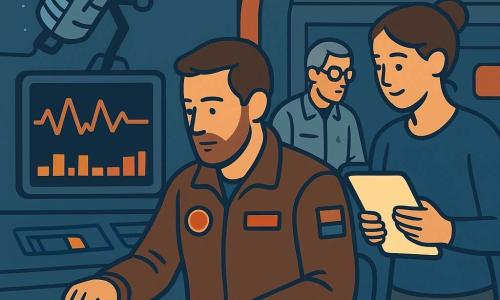
Commander Mara Elian stood in the departure bay of the research ship Calypso, her boots locked to the deck with magnetic soles. She wasn't tall. She wasn't flashy. But her eyes had the calm look of someone who could hold steady in a shaking room.
Mara's mission patch—still blank, just the outline—waited on her sleeve like a promise.
Her co-pilot, Juno Park, drifted in on a handhold, hair puffing around his head in low gravity. “Commander,” he said, trying to sound official and failing, “tell me again why we're going to a city that floats over a planet that wants to eat us.”
Mara tapped her tablet. “Because Zephyria asked for help. Their lower collectors are clogging. They can't get clean samples from the deep atmosphere anymore.”
“And we're… plumbers,” Juno said.
“We're scientists,” Mara corrected, though her mouth twitched. “Also, yes. Sometimes scientists are plumbers.”
Behind them, the ship's onboard intelligence—named NELL—spoke in a calm voice from the wall speaker. “Pre-flight checklist at ninety percent. Commander Elian, please confirm sample containment canisters are secured.”
Mara opened the cabinet, touched each canister with two fingers, and watched the green indicator blink. “Secured.”
NELL continued. “Confirm core sampler integrity.”
Mara lifted the core sampler from its cradle. It looked like a short metal spear with a thick, clear chamber. It was designed to bite into dense cloud layers, hold a pressurized column of gas and aerosols, and keep it stable for analysis.
She ran a hand over its smooth casing. “Integrity confirmed.”
Juno watched her. “You always do that.”
“Do what?”
“Touch the gear like it's a pet.”
Mara clipped the sampler back in place. “If you treat your tools like strangers, they'll act like strangers.”
A low chime sounded through the bay. The ship's lights shifted from white to a steady blue—the color of “go.”
Mara strapped into her seat. The harness tightened with a firm, comforting pressure across her shoulders.
“Juno,” she said, “say it.”
Juno sighed dramatically. “We will not do anything heroic. We will do everything correctly.”
Mara nodded. “Exactly.”
The Calypso slid away from the station and into the dark. Ahead, Vesper hung like a giant marble painted by a storm—beautiful, dangerous, and very far from any rescue that arrived quickly.
Mara stared at it and felt the familiar mix: wonder, worry, and the steady backbone of training.
“Take us in,” she said.
And the ship turned toward the floating city in the sky of a world with no ground.
Chapter 2: Zephyria, City of Wind and Light
Two days later, Vesper filled the viewports.
From orbit, the gas giant was not just big. It was alive—bands of cloud sliding over each other like slow rivers, lightning flickering under the surface. A massive storm spiraled near the equator, its center a dark eye that seemed to watch the sky.
Zephyria appeared as a thin glittering arc, a bright necklace suspended above the cloud tops. As the Calypso descended, the city grew from a line into a place: towers like reeds, platforms like lily pads, bridges like strands of spun glass.
The approach lane was marked by beacons that pulsed in calm intervals. Mara followed them, hands light on the controls. The ship shook once as it hit a boundary of turbulent air.
“Wind shear,” Juno muttered, reading the numbers. “Vesper says hello.”
“Say hello back,” Mara replied. “Politely.”
NELL chimed. “Atmospheric density increasing. Hull temperature stable. Zephyria traffic control is requesting visual confirmation of docking clamps.”
A voice crackled over comms, clear but brisk. “Research vessel Calypso, welcome to Zephyria. Docking Bay Nine is pressurized and ready. Mind the crosswinds. They like to surprise newcomers.”
“Understood,” Mara said. “Commander Mara Elian, responding. We'll take it slow.”
“Slow is smart,” the voice agreed. “This is Dockmaster Rell. See you inside.”
As they slid into the docking bay, Mara caught a glimpse through a side window: outside the bay's open mouth, nothing but cloud and distance. The city's platforms hovered over the gas layers like stepping stones over an endless ocean of air.
Clamps locked with a heavy thunk. The bay sealed. The pressure equalized with a soft hiss that felt like a held breath being released.
Mara stood, stretched her shoulders, and checked her suit seals even though she wasn't wearing a full suit—just a pressure vest and utility belt. Habits mattered.
The airlock door opened to Zephyria's interior: a corridor lined with weather skin panels. The panels had tiny moving patterns, like fish scales shifting to catch light. Through wide windows, the clouds of Vesper rolled past below, so close that Mara felt as if she could reach out and stir them with her hand.
Dockmaster Rell met them with two technicians. Rell was older, with silver hair cut short and eyes that missed nothing. A ring of tools hung at their belt like a musician's instruments.
“Commander Elian,” Rell said, offering a hand. “You brought your own weather with you?”
Juno blinked. “We did?”
Rell pointed to the window. A small swirl of cloud below had turned slightly darker, as if offended.
Mara's lips pressed into a line. “Vesper reacts to our descent?”
Rell's expression softened. “Not emotionally. Not exactly. The pressure wake of ships stirs the layers. Here, little things can become bigger things if you ignore them.”
Mara nodded. “We won't ignore anything. Show me the collectors.”
They walked through the city. Zephyria wasn't crowded like Earth, but it was busy. People moved with purpose: engineers with tablets, botanists tending vertical gardens, kids in school uniforms gliding on magnetic shoes along a practice rail, laughing when they bumped shoulders.
A small café sat at a corner platform. The scent of toasted bread drifted out. Someone had painted a mural on the wall: a bright fish swimming through clouds, wearing a tiny helmet.
“This place is… warmer than I expected,” Juno said quietly.
Rell heard him. “Warmth is maintenance,” they said. “You don't just fix machines. You fix people.”
They reached an observation deck. Beyond it, thick cables led downward into the clouds: the city's collectors. They were like long, flexible straws, reaching into deeper layers to sip gases and particles for fuel processing and research.
On a screen, the collector status bars glowed orange.
“Clogging,” Rell said, tapping a graph. “Our filters catch too much. The chemistry has shifted. We suspect there's a new aerosol formation—sticky compounds. It's gumming up everything.”
Mara studied the data. “You need a fresh sample from below the clog point.”
“We tried,” one of the technicians said. “The drones can't stabilize. The winds twist them. Last week, we lost two.”
Juno swallowed. “Lost as in…?”
Rell's voice stayed even. “Lost as in: the storms took them. We can't chase them. Vesper doesn't give things back.”
Mara stared at the orange bars. She felt the weight of responsibility settle, heavy but familiar. She had come because Zephyria needed help. And because she had promised herself, years ago, that careful people didn't look away when things got hard.
“We'll take the Calypso down to the lower layer,” she said. “Not deep enough to crush us. Deep enough to sample clean gas. We'll bring up a core sample.”
Rell's eyes narrowed. “You'll ride the winds.”
Mara nodded once. “And we'll ride them correctly.”
Chapter 3: Down into the Amber Storm
Preparation took hours, and Mara loved that. Not the waiting, exactly, but the way careful steps built a bridge over fear.
She and Juno ran system checks while Zephyrian technicians attached an extra stabilization fin and recalibrated the ship's magnetic field couplers for Vesper's powerful magnetosphere.
In the bay, Mara fitted the core sampler to an external mount on the ship's belly. It sat there like a tooth ready to bite.
Juno floated beside her on a maintenance harness, tightening a panel. “If I say something dramatic, like ‘We may not return,' will you throw a wrench at me?”
Mara didn't look up. “I would never waste a good wrench.”
He grinned. “Comforting.”
NELL's voice came through Mara's earpiece. “Commander, updated forecast: turbulence probability seventy percent. Lightning probability forty percent. Recommendation: maintain ascent corridor at all times.”
Mara clipped her tools away. “Noted, NELL. Save the corridor. We're borrowing it.”
Rell appeared at the bay door, holding a small object. “Before you go,” they said, “a Zephyrian tradition.”
They offered Mara a thin strip of adhesive material—like a sticker, but more serious. On it was Zephyria's emblem: a stylized tower above a swirl of clouds.
“You stick it on your suit when you do work for the city,” Rell said. “Not as luck. As record. Proof that someone did something hard and came back to tell us what happened.”
Mara took it carefully and pressed it onto the outer pocket of her pressure vest. “We'll bring you a story,” she promised.
The Calypso undocked.
As they left the bay, Zephyria fell away behind them, towers shrinking into a gleam. Ahead, Vesper's clouds rose up like mountains made of air.
Mara angled the ship down. The hull began to vibrate—a steady, insistent tremble.
“Entering Layer One,” NELL announced. “External visual: amber clouds. Wind velocity: high.”
The windows filled with swirling gold and brown. The clouds weren't soft; they moved like thick smoke mixed with sand. Light filtered through in ribbons, turning everything inside the cockpit the color of late afternoon.
Juno read the instruments, voice tight. “Crosswind's pushing us east.”
Mara adjusted thrusters in small pulses. “Let it push. We ride with it, not against it. Keep our nose steady.”
A sudden jolt made the ship shudder.
Juno grabbed his armrests. “Okay, that one felt personal.”
“Not personal,” Mara said, though her heart sped up. “Physics.”
Another jolt. The amber outside darkened. The clouds thickened until visibility dropped to almost nothing.
NELL's tone remained calm. “Warning: microburst ahead.”
Mara's fingers tightened on the controls. She pictured the ship like a swimmer entering a rapid. Panic would make her thrash. Precision would let her slip through.
“Juno,” she said, “call out the pressure trend.”
“Rising fast,” he replied. “Still within safe limits—barely.”
Mara nodded. “We'll take the sample at the first stable pocket.”
Stable pockets in Vesper's atmosphere were like quiet corners in a shouting crowd: they existed, but you had to find them.
The ship dipped, then leveled. For a breath of time, the shaking eased. The amber outside smoothed into gentle waves.
“There,” Mara said. “Deploy sampler.”
Juno pressed the sequence. On the screen, the core sampler extended downward. A small light blinked as it pierced into a denser cloud band.
Mara watched the readouts: pressure in the chamber climbing, chemical sensors ticking through their checks. The sampler was filling with a layered column—gases and tiny suspended particles, captured like a slice of an invisible ocean.
“Hold steady,” Juno whispered, as if speaking loudly might scare the atmosphere.
Mara barely breathed.
A flash lit the clouds—white-blue lightning, branching like a cracked mirror.
The ship's systems beeped.
NELL spoke quickly. “Electrical activity increasing. Recommend abort sampling.”
“Three more seconds,” Mara said.
Juno stared at her. “Commander—”
“Three,” Mara counted, voice calm on purpose. “Two. One. Retract.”
Juno hit the command. The sampler withdrew, chamber sealed.
A second later, turbulence slammed into them. The ship pitched sideways. Warning lights flared red.
“Magnetic couplers are slipping!” Juno shouted.
Mara forced the ship's nose into the wind, making tiny corrections. “NELL, stabilize with field pulse—low, not strong!”
“Executing,” NELL replied.
A deep hum vibrated through the cockpit as the ship's magnetic field interacted with Vesper's. The shaking didn't stop, but it changed—less like being thrown, more like being shoved.
Mara exhaled. “Good. Now climb. Corridor, now.”
Juno plotted the ascent path, hands moving fast. “If the storms let us.”
“They'll let us,” Mara said. “Not because they're kind. Because we're careful.”
Another jolt. Something clanged in the rear.
Juno looked over his shoulder. “What was that?”
NELL answered. “External mount strain detected. Core sampler secure. However, lower fin panel has partial detachment.”
Mara's stomach tightened. A loose panel could catch wind like a sail and rip more away.
“We can't do an EVA in this,” Juno said, voice rising.
“We won't,” Mara said. “We'll get back to Zephyria and fix it in the bay.”
“Assuming we don't spin into soup,” Juno muttered.
Mara shot him a look. “No soup. Not today.”
They climbed, engines straining. The amber thinned, turning lighter. The trembling eased from violent to annoying.
At last, a break in the cloud revealed Zephyria above—bright, steady, waiting like a lighthouse in a stormy sea.
Juno sagged back in his seat. “I have never been so happy to see a city that doesn't touch the ground.”
Mara allowed herself one small smile. “Mission isn't over.”
But the sample was sealed. They had what they came for.
And sometimes, that was the hardest part.
Chapter 4: The Missing Beat
Back in Docking Bay Nine, the airlock opened with a welcoming hiss. Technicians swarmed the Calypso like careful bees, scanning the hull and attaching safety lines.
Rell met Mara at the base of the ramp. “You're back,” they said, and the words held more relief than their face showed.
“We're back,” Mara confirmed. She tapped the sampler's status display. “Core sample secured.”
Rell's eyes flicked to the ship's underside. “And you brought a souvenir. That fin panel is hanging like a loose tooth.”
“We felt it go,” Juno admitted. “Couldn't fix it down there.”
Rell waved a technician over. “We'll handle it. Commander—come to the lab. Now.”
The Zephyrian lab smelled faintly of metal and citrus cleanser. It was bright, with tables that could lock equipment in place so it wouldn't slide when the city shifted. Transparent screens floated above stations, displaying atmospheric models like glowing sculptures.
Mara watched as a lab specialist connected the core sampler chamber to a sealed analysis unit. The unit equalized pressure slowly, like someone opening a door into a room full of wind.
On the screen, the sample's composition appeared: hydrogen and helium, of course—but also complex aerosols, carbon chains, and something that made the specialist's eyebrows jump.
“This,” the specialist said, pointing, “is a polymerized haze particle. It sticks to filters. It grows in clumps. It's… new.”
Rell leaned closer. “Can we break it down?”
The specialist nodded slowly. “Maybe. With heat cycling and a catalyst. But—”
An alarm cut through the lab. Not loud, but urgent.
NELL's voice came through Mara's earpiece from the ship network. “Commander, urgent message from Zephyria structural systems. Buoyancy Cell Cluster Seven is losing efficiency. Cause: collector intake blockage worsening.”
Rell's face went still. “Cluster Seven supports the east arc,” they said.
Mara's mind snapped into motion. “If it loses lift—”
“The city tilts,” Juno finished, eyes wide. “Like a boat taking on water.”
Rell turned to the wall display. A model of Zephyria glowed, showing lift vectors as arrows. On the east arc, the arrows shortened.
“We can redistribute lift,” Rell said, voice tight, “but it stresses other cells. If the blockage continues, we risk a cascade.”
Mara looked at the polymer haze data. “Your collectors are clogging faster because this stuff is multiplying in your pipes.”
The specialist spoke quickly. “It forms when certain trace chemicals meet cold surfaces. Your collectors run cool.”
Rell clenched their jaw. “We built them to resist Vesper. And now Vesper is changing the rules.”
Mara felt that familiar pinch: the moment when a plan stopped being a plan and became a problem.
“Rell,” she said, “we can help you clean the collectors, but we need time to design a solution.”
“We don't have much,” Rell replied. “Winds are rising. If Zephyria tilts during a storm—”
A younger technician, eyes shining with anxious energy, blurted, “We could detach the collectors!”
Rell snapped their gaze to the technician. “And lose our fuel processing and half our research capacity? We'd survive, but barely. Zephyria would become a lifeboat instead of a city.”
Mara studied the lift model. “There's another option. We can use the sample data to make a quick catalyst mix—something to coat the filters so the haze can't stick.”
The specialist frowned. “That's risky. If the chemistry is off, you could make it worse.”
Mara nodded. “Risky, yes. But controlled. We test it on a small filter first. If it works, we push it through the collector lines as a cleaning pulse.”
Juno rubbed his forehead. “So… we fight sticky cloud slime with science soap.”
Mara looked at him. “Basically.”
Rell exhaled. “Do it. But keep your procedures tight. We can't afford guesswork.”
Mara's chest loosened a fraction. A clear task was a rope to hold onto.
“Juno,” she said, “back to the ship. Pull the chemical kit and the heater coils. Lab team—give me your best estimate on the catalyst.”
The specialist nodded. “We'll draft three candidates. Fast.”
As they moved, Mara caught her reflection in a glass panel. Her face looked tired, but her eyes were steady.
Resilience, she reminded herself, wasn't about feeling fearless. It was about doing the next correct step, even when your stomach fluttered like a trapped bird.
Outside the lab windows, Vesper's clouds rolled past, indifferent and enormous.
Inside, humans and machines prepared to keep a city afloat.
Chapter 5: Cleaning Pulse
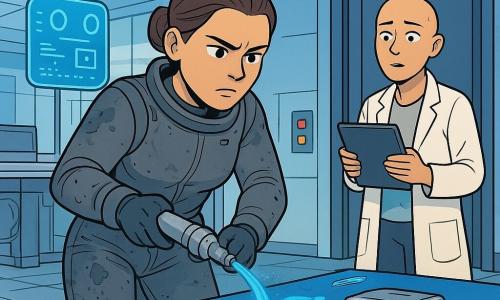
They built the test rig in a maintenance nook near the collector controls. It wasn't glamorous. It was a sealed box, a small filter section, heater coils, and a vial of catalyst solution mixed from the sample's analysis.
Mara stood with Rell and Juno as the specialist—Dr. Sato, according to her badge—loaded a clump of the sticky haze onto the filter.
“It looks like burnt sugar,” Juno murmured.
“Don't eat it,” Rell said automatically, then blinked as if surprised at their own joke.
Mara almost smiled. Almost. Her focus was a narrow beam.
Dr. Sato injected the catalyst mist. Mara watched the sensor readings: temperature, pressure, adhesion coefficient—numbers that told a story if you listened.
For a moment, nothing happened. The haze clung stubbornly.
Juno leaned in. “Come on, science soap.”
Then, slowly, the adhesion value dropped. The haze loosened, breaking into smaller particles that floated free in the sealed box like dust in sunlight.
Dr. Sato let out a tight breath. “It's working. The catalyst changes the surface tension at the particle level. It stops the polymer clumps from bonding.”
Rell's shoulders lowered a fraction. “How long does the effect last?”
“Hours, maybe a day,” Dr. Sato admitted. “It buys time. Not a permanent fix.”
Mara nodded. “Time is what we need.”
NELL's voice came through a nearby speaker, tied into Zephyria's systems. “Buoyancy Cell Cluster Seven efficiency at eighty-one percent and decreasing.”
Rell's mouth tightened. “We're running out.”
Mara turned to the collector control console. “Route the cleaning pulse to Collector Line Seven first.”
Rell hesitated. “That line is deep. If the pulse fails, we lose it entirely.”
“If we do nothing,” Mara said, keeping her voice level, “we lose lift anyway.”
Rell met her gaze. The air felt heavy, like the city itself was listening.
“Do it,” Rell said.
Juno's fingers danced over the console with a speed that came from nerves and practice. “Pulse ready. Catalyst tank pressurized. Heat cycling engaged.”
Mara checked each step. “Confirm line seals.”
“Confirmed,” Juno said.
“Confirm return flow path.”
“Confirmed.”
“Confirm emergency cutoff.”
“Confirmed,” Juno repeated, then added, “and I confirm I would like a nap after this.”
“Later,” Mara said.
She pressed the final authorization.
A low thrum ran through the deck as pumps pushed the warm catalyst mist into the collector line. On the screen, sensor nodes along the line lit up, tracking flow.
At first, the pressure rose—too high.
“Uh, Commander?” Juno's voice cracked. “Pressure spike.”
Mara leaned in. “Reduce flow rate ten percent. Increase heat by two degrees.”
Juno obeyed. The pressure steadied, hovering near the limit.
Rell's hands clenched behind their back. “If the line ruptures—”
“It won't,” Mara said, not as a wish but as a command to herself. She watched every number. Every beat.
Then the pressure dipped.
The return flow indicator blinked green.
Dr. Sato whispered, “It's clearing.”
On the city model, the lift arrows on the east arc lengthened slightly.
NELL announced, “Buoyancy Cell Cluster Seven efficiency stabilizing at eighty-three percent.”
Rell exhaled so hard it was almost a laugh. “Do the other lines,” they said. “All of them, starting with the worst.”
For the next hour, Mara and the team ran pulse after pulse. Some lines cleared quickly. Others fought back with stubborn spikes that made Mara's palms sweat inside her gloves.
One line refused to respond.
“Collector Line Twelve is not clearing,” Juno said, voice strained. “Pressure's rising again.”
Mara studied the line map. Twelve ran near an external junction—the same area where their fin panel had loosened. A small shiver ran through her. “Could be mechanical damage. A flap creating turbulence inside the duct.”
Rell looked at her sharply. “Can you fix it?”
Mara stared at the window beyond the maintenance nook. Outside was Vesper—clouds and wind and the knowledge that you were floating over a world that didn't care.
An external repair would mean going out along Zephyria's underside, near the collector junction, in a safety suit, while the city swayed.
Juno read her face. “Commander… you're not thinking—”
“I'm thinking,” Mara said. She checked the city's tilt forecast. If Line Twelve stayed clogged, the redistributed stress would return. The storm forecast wasn't improving.
She made the decision the way she made all of them: by choosing the least-bad option.
“I'll go out,” she said. “I'll inspect the junction. If it's damaged, I'll secure it.”
Rell's voice softened. “You're not Zephyrian. You don't owe us that.”
Mara touched the Zephyria emblem on her vest pocket. “You're a city full of people. That's enough.”
Juno swallowed. “Then I'm coming too.”
Mara shook her head. “One of us stays inside to run the console. That's you.”
He opened his mouth to argue, then closed it. “Fine,” he said, pointing at her with two fingers. “But you do everything correctly.”
Mara nodded. “Always.”
Chapter 6: The Handhold and the Storm
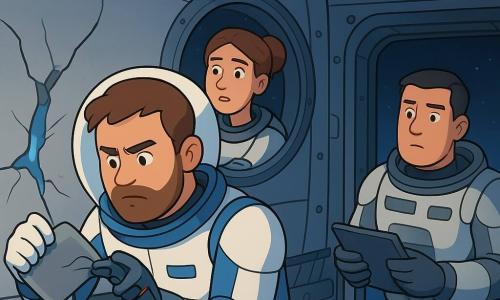
Mara suited up in a Zephyrian pressure suit—sleek, flexible, with magnetic grips in the palms and boots. She checked the seals twice, then again. The suit's visor displayed her oxygen, tether status, and a calm blue horizon line that helped keep orientation when “up” and “down” felt like opinions.
Rell met her at the external hatch. “Tether anchors are solid,” they said. “Follow the orange markers. Don't improvise.”
Mara's voice came out steady in her helmet. “Copy.”
Juno's voice crackled through comms. “I'm on the console. If you sneeze, I'll see it in the data.”
“Try not to faint,” Mara replied.
He huffed. “No promises.”
The hatch opened.
Wind noise wasn't sound in vacuum, but here, in Zephyria's pressurized outer corridor, the airlock opened into a thin, harsh atmosphere. It wasn't breathable without the suit. It smelled faintly of chemicals even through filters—sharp, like cleaning fluid and rain.
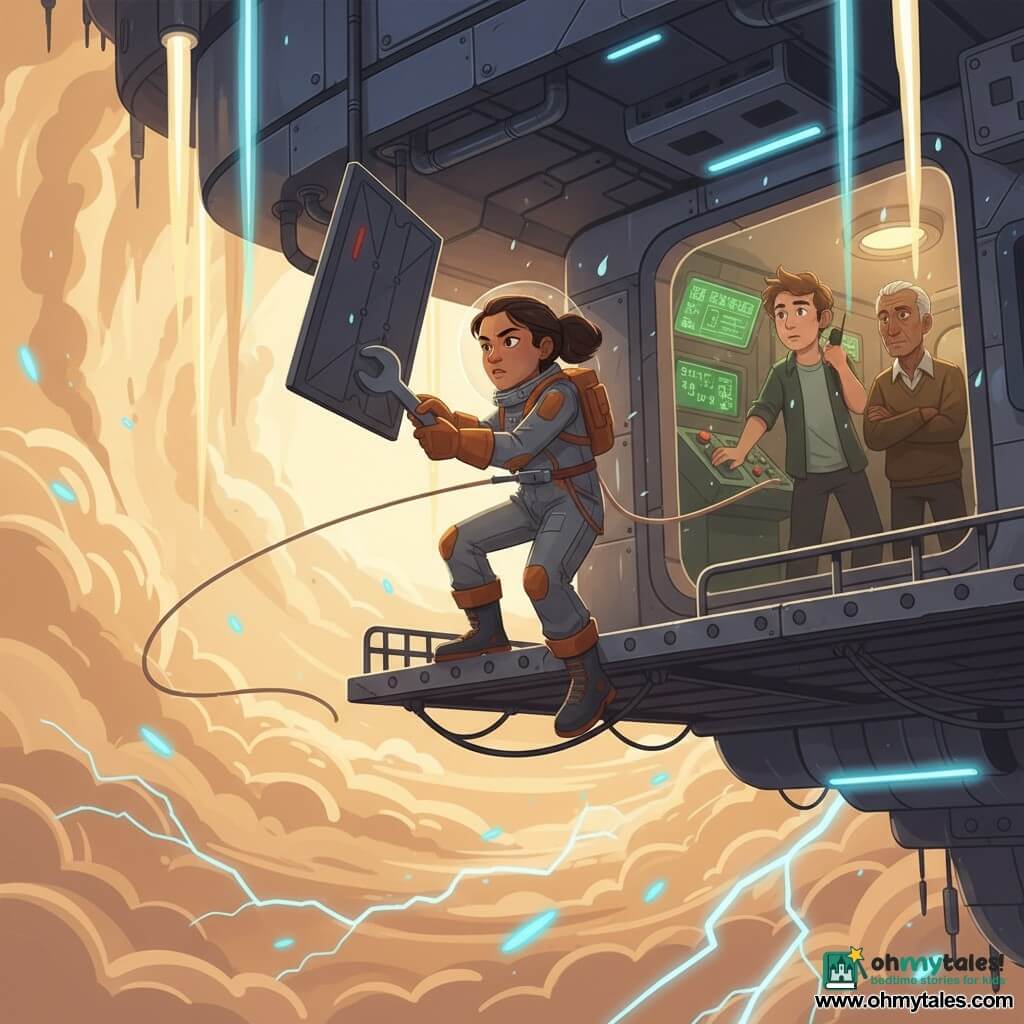
Mara stepped out onto the city's underside walkway.
Below her: clouds. Endless, rolling, amber-gray clouds lit from within by distant lightning. The sense of height wasn't like a mountain. It was like standing over an ocean that had decided to become sky.
Her tether clicked into the first anchor. She tested it with a tug. Solid.
“Moving,” she said.
She followed the orange markers painted on the walkway edges. The city vibrated gently under her boots—machines adjusting buoyancy, panels flexing against wind.
Halfway to the junction, the storm intensified. The clouds below churned faster, and the walkway shivered.
NELL's voice, routed through her suit now, sounded like a calm friend. “Wind velocity increasing. Commander, recommend shortening stride and maintaining three points of contact.”
Mara obeyed. Hand, boot, boot. Handhold, step, test.
She reached the junction platform: a cluster of pipes and valves leading into Collector Line Twelve. A maintenance panel hung slightly open, fluttering in the wind like a nervous bird.
“There,” Mara muttered. “Mechanical problem.”
She braced herself, clipped a secondary tether, and leaned in. The panel latch was bent.
Juno's voice: “Mara, your suit camera shows the panel flapping. That could be causing internal pressure waves.”
“I see it,” Mara said. “I'm going to secure it.”
She pulled a tool from her belt—a compact clamp driver. Her gloves were thick, making fine movements harder. She slowed down, forcing patience into her fingers.
A gust hit. The platform jerked sideways.
Mara's stomach lurched, but she held fast—three points of contact, just like NELL said.
Her mind flashed an old memory: training in a spinning habitat, instructors shouting while she learned to move through disorientation. Back then, she had failed once—slipped, hit a padded wall, embarrassed and angry. She had wanted to quit that day.
She hadn't.
She had come back the next morning. And the next. Resilience wasn't dramatic. It was returning to the problem until it gave up.
Mara set the clamp. One screw. Two. The panel stopped fluttering.
Juno's voice rose with hope. “Pressure in Line Twelve is shifting—downward trend!”
“Good,” Mara said. She checked the pipe seals. A thin line of frost marked where cold gas met warmer metal. The haze liked cold surfaces. She activated a small heater strip along the junction, as per Dr. Sato's quick plan, raising the surface temperature just enough to discourage clumping.
“Applying heat strip,” she reported.
Rell's voice joined the comms. “City tilt decreasing. Cluster Seven stabilizing further.”
Mara's chest loosened.
Then lightning flashed below—closer than before. The clouds lit up, and for an instant Mara saw a shape in the storm: a towering column of darker gas, twisting upward like a slow tornado.
Her visor beeped.
NELL warned, “Updraft plume approaching. Potential for structural sway.”
The city shuddered. Mara's boots clanged against the walkway as she absorbed the movement through her knees.
Juno's voice turned sharp. “Mara, get back. Now.”
Mara looked at the anchor line ahead. She was thirty meters from the hatch. Thirty careful meters.
“Moving,” she said, forcing her voice to stay calm.
Handhold. Step. Clip. Test.
The sway increased. The horizon line on her visor tilted, then tilted back. The clouds below roared silently, a visual roar, like watching waves slam into cliffs.
Mara's breathing sounded loud in her helmet. In. Out. In. Out.
Halfway back, a gust caught her side. Her boot slipped an inch.
Her tether snapped tight, stopping her from drifting away. The jolt rang through her bones.
She froze.
In that frozen moment, fear tried to write a story: You'll fall. You'll fail. You'll be the cautionary tale.
Mara wrote a different one.
“Three points,” she whispered. “Hand. Boot. Boot.”
She found the rail with her gloved hand, locked her boots, and moved again—slower now, but steady.
Juno's voice softened, as if he could feel her tightness through the radio. “You're doing it. Just keep talking.”
“I'm walking,” Mara said. “I'm breathing. I'm counting.”
She reached the hatch. Rell stood inside the airlock window, ready to pull her in if needed.
Mara crossed the threshold, and the hatch sealed behind her with a solid, final thump.
Pressurization hissed. Warm, filtered air returned. The suit's tension eased as the environment stabilized.
Mara leaned her helmet lightly against the wall for one second—just one—and let herself feel how tired she was.
Then she straightened.
“Collector Twelve junction secured,” she said. “Heat strip applied.”
NELL updated, “Collector Line Twelve clearing. Pressure returning to nominal.”
Over comms, Juno exhaled loudly. “I can feel my heart again.”
Rell's eyes shone. “Zephyria owes you,” they said.
Mara shook her head as the suit released at the collar. “You don't owe me. You just keep floating.”
Outside, Vesper's storm continued, enormous and indifferent.
Inside, the city steadied—because people had refused to give up.
Chapter 7: The Sample and the Sticker
By the next day, Zephyria's lift vectors were stable. The collectors still needed deeper redesign, and Dr. Sato's catalyst wasn't a forever fix—but it had bought breathing room, which was sometimes the most precious resource in any crisis.
Mara stood in the lab as the core sample was transferred into long-term containment. The chamber looked like a clear spine holding a slice of storm. Under the lights, the captured aerosols shimmered faintly, as if they still remembered lightning.
Dr. Sato folded her arms, looking satisfied and exhausted. “This is the cleanest deep-layer core we've had in months,” she said. “We can model the haze formation properly now. We can build better filters, maybe warm-surface intakes. You didn't just fix today. You helped fix next month.”
Juno, sitting on a stool, sipped tea from a pouch with a straw. “Next month sounds excellent. I'm a big fan of next month.”
Rell entered, carrying a small case. “Commander Elian,” they said, “we've prepared your mission emblem.”
Mara blinked. “Already?”
Rell opened the case. Inside was a thin, circular sticker—durable, glossy, meant to survive vacuum, heat, and time. It showed the Calypso as a simple silhouette above Vesper's swirling bands, with Zephyria's arc shining like a crescent. Along the edge, in crisp letters, it read:
CALYPSO — ZEPHYRIA SUPPORT — CORE SAMPLE RETRIEVED
Mara stared at it. Something warm moved in her chest—not pride exactly, but a quiet sense of completion.
Rell held it out. “Our custom is simple,” they said. “The mission ends when the logo is stuck. Not because a sticker is powerful, but because finishing matters.”
Mara took the logo carefully, as if it were fragile.
Juno leaned forward. “Where are you going to put it? If you put it crooked, I'll never recover.”
Mara looked at the Calypso's inner hatch, the one the crew touched every time they left or returned. The hatch was covered in other emblems—small circles and shapes from past missions. Not trophies, she realized, but memories of work done right.
She pressed the new logo onto a clean spot near the edge, aligned with the hatch seam. She smoothed it with her palm until it adhered completely.
The sticker sat there, bright and calm, as if it had always belonged.
NELL's voice sounded from the ship's speaker, gentle as a closing note. “Mission record updated. Congratulations, crew.”
Juno raised his tea pouch. “To not becoming soup.”
Rell allowed a real smile. “To staying afloat.”
Mara rested her hand on the hatch for a moment, feeling the cool metal beneath her fingers. Outside, the universe was enormous. Inside, there were small acts that kept people safe: a tightened latch, a calm voice, a decision to try again after slipping.
“We'll send you the full analysis package,” Mara told Rell. “Filter designs, catalyst notes, everything.”
Rell nodded. “And we'll remember that careful doesn't mean timid.”
Mara met their gaze. “It means resilient.”
Later, as the Calypso prepared to depart, Mara glanced once more through the viewport at Zephyria—bright against the rolling clouds. The city held steady, balanced above a world that never stopped moving.
Mara turned back to her ship, to her crew, to the logo on the hatch.
Then she ran the checklist again—because some promises were kept one correct step at a time.