Chapter 1: The Echoes of Ancient Rome
Dr. Marcus Everett stood at the edge of the excavation site, his eyes scanning the landscape that lay before him, as if he were a painter contemplating a blank canvas. The sun was setting, casting a warm, golden hue over the rolling hills of what was once a bustling outskirts of ancient Rome. To a passerby, it might have seemed like any other field, but to Marcus, it was a thrilling puzzle waiting to be solved.
Marcus was not your ordinary archaeologist. With a keen eye for detail and an insatiable curiosity that often got him in trouble as a child, he had dedicated his life to uncovering the secrets of the past. His work was a marriage of history and detective work, and there was no greater pleasure for him than the thrill of discovery.
Today, Marcus was particularly excited. The site he was working on was believed to be an undiscovered villa that could date back to the time of Emperor Augustus. Rome, with its grandeur and complexity, was a civilization that had always fascinated him. The ancient Romans were known for their innovations in engineering, architecture, and governance, laying down the foundations of modern society in ways that still resonated today.
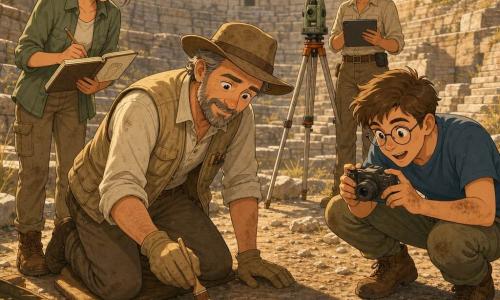
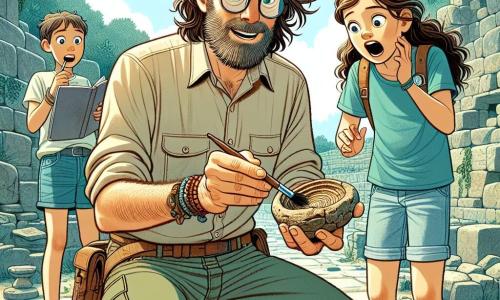
Marcus's goal for this expedition was to uncover artifacts that could shed light on the daily lives of those who lived outside the hustle and bustle of Rome's city center. He was equipped with a range of tools, each serving a unique purpose. His trowel was more than just a small shovel; it was a surgeon's scalpel, delicately peeling away layers of history. The brush was his best friend, its soft bristles revealing the treasures that lay hidden beneath the earth. A notebook was never far from his reach, filled with sketches and notes—a veritable diary of ancient stories waiting to be told.
His team of young archaeologists bustled around him, setting up equipment, marking grids, and cataloging finds. The air buzzed with the anticipation of discovery. Marcus called them over for a quick meeting. "Remember," he said, his voice calm yet commanding, "we're not just digging in the dirt. We're touching the past. Each artifact has a story. Let's uncover them with respect and curiosity."
With that, they dispersed, each heading to their designated areas. Marcus found himself drawn to a section where the remnants of an ancient wall peeked through the soil. Kneeling down, he gently began to scrape away the dirt, a look of intense concentration on his face.
As Marcus unearthed the stones, he let his mind wander back to the days of ancient Rome. He imagined the villa in its prime, with bustling kitchens preparing feasts for the family, the sound of laughter echoing through the halls, and the soft rustle of togas as people moved from room to room. How many stories lay hidden beneath this ground, waiting for him to breathe life into them once more?
Chapter 2: Unveiling Hidden Stories
The sun was now high in the sky, illuminating the site with its bright, unwavering light. Marcus took a sip from his water bottle, wiping the sweat from his brow. The sound of a distant bird song was punctuated by the rhythmic tapping of tools against earth. It was a melody that Marcus had grown to love, a symphony of history in the making.
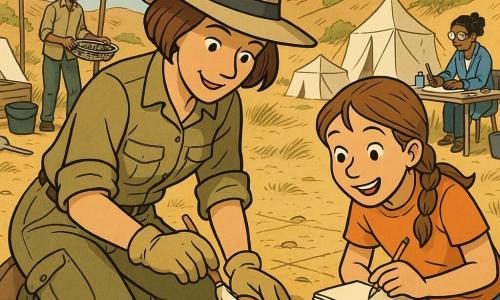
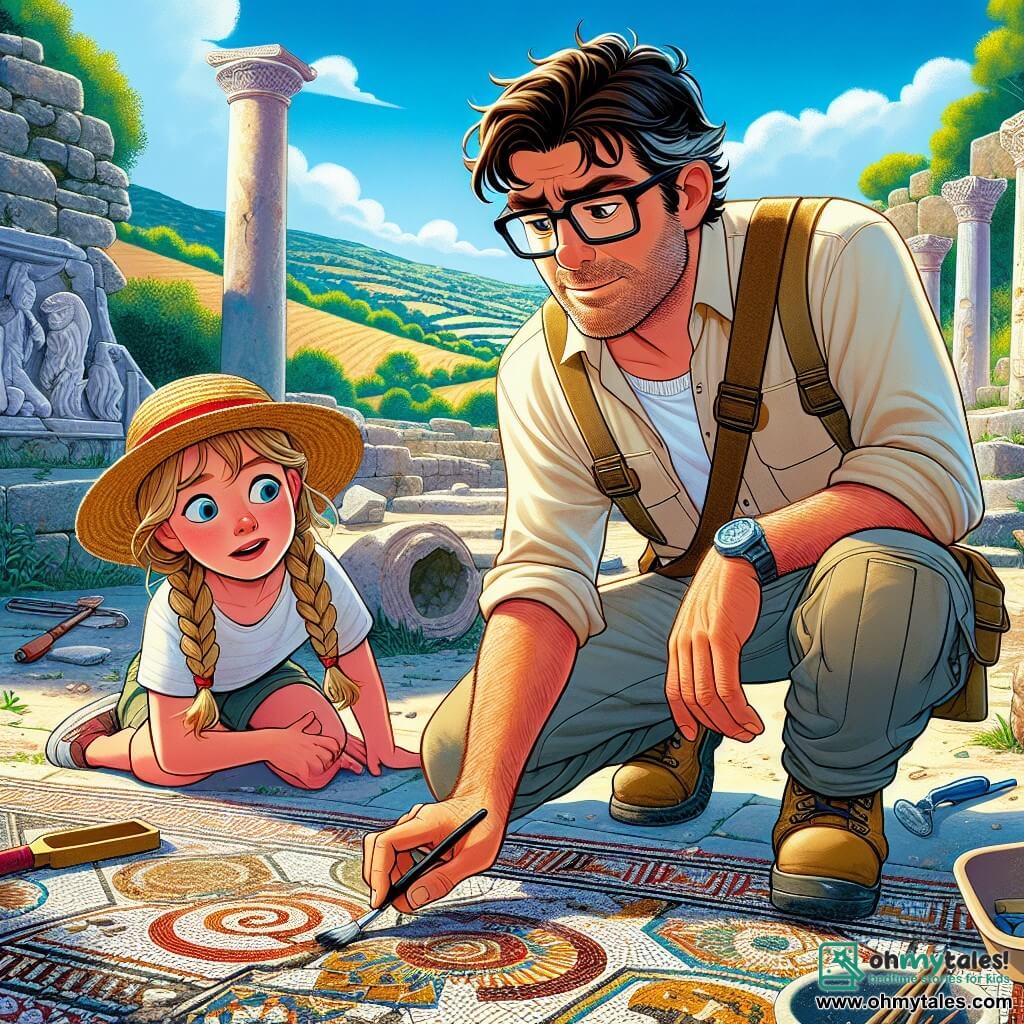
As the morning progressed, Marcus's attention was caught by a young archaeologist named Lily. She was carefully brushing away dirt from what appeared to be a mosaic floor. The colors, though faded, were still vibrant, depicting scenes of gladiatorial combat. Marcus approached, kneeling beside her with interest.
"Impressive, isn't it?" Lily said, her voice filled with awe. "I wonder what stories these tiles could tell us about the people who lived here."
Marcus nodded in agreement. "Mosaics like these often tell us about the interests and values of the villa's inhabitants. The presence of gladiators could suggest a connection to the Colosseum, or perhaps a patronage to the games."
The two continued to work side by side, each lost in their thoughts. As they revealed more of the mosaic, Marcus couldn't help but feel a profound connection to the people of the past. He imagined the artisan who painstakingly placed each tile, long ago, unaware that their work would one day be admired by future generations.
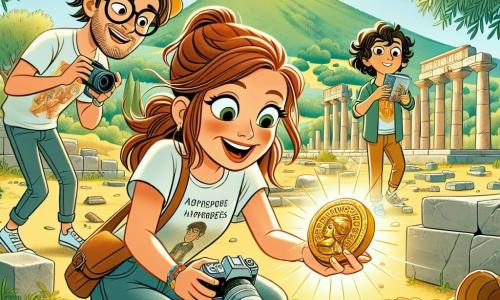
As the day wore on, Marcus took a break to examine some of the artifacts that had been found. Among them was a delicate glass vial, likely used for storing perfumes, and several pieces of pottery with intricate designs. Each item was a piece of the puzzle, helping to paint a picture of life in ancient Rome.
Gathering his team, Marcus began to explain the significance of their findings. "These artifacts are more than just objects," he said, holding up the vial for all to see. "They are windows into the daily lives of the Romans. This vial, for example, might have held a fragrant oil that was used by someone getting ready for a special occasion."
The team listened intently, their eyes wide with fascination. Archaeology wasn't just about finding objects; it was about connecting with the people who used them, understanding their joys, their struggles, and their triumphs.
As the sun began to dip in the sky, painting the horizon in hues of pink and orange, Marcus felt a sense of fulfillment wash over him. The day had been a success, not just because of the discoveries made, but because of the stories they uncovered—stories that would now be shared with the world.
Chapter 3: The Challenge of the Unknown
The following day, excitement crackled in the air as Marcus and his team arrived on site. They had stumbled across something extraordinary—a sealed entrance that seemed to lead to an underground chamber. The possibility of undiscovered rooms beneath the villa was tantalizing, and Marcus could hardly contain his enthusiasm.
However, his excitement was tempered by the knowledge that challenges lay ahead. Opening an ancient structure required precision and caution. There was always the risk of damage to the site or to the artifacts within. It was a delicate operation that demanded skill and patience.
As they prepared to enter, Marcus briefed his team. "We need to be cautious. The structure may be unstable, and any damage could destroy valuable historical evidence. Let's proceed with care."
Slowly, they began the process of removing stone and earth. The team worked diligently, each move calculated and precise. Marcus felt a thrill of anticipation with every inch they advanced, his mind racing with the possibilities of what lay within.
Finally, they reached a point where the entrance was accessible. Marcus took a deep breath and stepped inside, his flashlight cutting through the darkness. The chamber was small, but its contents were overwhelming. Shelves lined the walls, filled with scrolls and tablets covered in Latin script. It was a treasure trove of information, waiting to be deciphered.
Marcus's heart raced. These texts could be letters, records, or even lost works of literature. The potential was staggering. Yet, amidst the excitement, there was a challenge. The texts were fragile, their age making them vulnerable to the slightest touch. Carefully, he and his team began to document and photograph everything, ensuring their preservation for future study.
As they worked, Marcus felt a deep sense of responsibility. These were not just artifacts; they were a legacy of knowledge, passed down through centuries. He imagined the Roman scribe who had penned these words, their thoughts and stories echoing across time to reach him here, in this dusty chamber.
Emerging from the chamber, Marcus felt the weight of his discoveries settle on his shoulders. There was much work to be done, but he welcomed the challenge. Each scroll was a mystery, a puzzle to be solved, and Marcus was ready to dive in and uncover the truths hidden within.
Chapter 4: Triumph and Reflection
Weeks passed, and the excavation site became a hive of activity. Marcus and his team worked tirelessly, cataloging artifacts, preserving texts, and piecing together the narrative of the villa's inhabitants. Each day brought new discoveries, filling in the gaps of history and bringing the past to life.
The scrolls found in the chamber revealed a wealth of information. They contained everything from personal letters to administrative records and even a few philosophical musings. Each document was a precious link to the world of ancient Rome, offering insights that deepened Marcus's understanding of the civilization he had long admired.
One evening, as the sun set and the day's work drew to a close, Marcus sat alone at the edge of the site. He reflected on the journey he had undertaken, the challenges he had faced, and the triumphs he had achieved. Being an archaeologist was not just about digging and discovering; it was about connecting with the past, understanding its lessons, and sharing its stories with the world.
Marcus knew that the work of an archaeologist was never truly finished. There would always be new sites to explore, new artifacts to uncover, and new stories to tell. But as he sat there, surrounded by the echoes of ancient Rome, he felt a profound sense of satisfaction and purpose.
He imagined the villa as it once was, bustling with life, its halls filled with laughter and conversation. Thanks to his efforts and those of his team, those voices would not be forgotten. They would be heard again, through the artifacts and stories unearthed at this site.
As Marcus prepared to leave, he took one last look at the excavation, a smile playing on his lips. The past, he realized, was not a distant land but a part of the present, always there to teach, to inspire, and to remind us of where we have come from. With a sense of fulfillment and anticipation for the adventures yet to come, Marcus turned away, knowing that his journey as an archaeologist would always lead him back to the timeless stories of the earth.