Chapter 1: The Mysterious Island
Under the bright Mediterranean sun, Dr. Oliver Hughes stood on the sandy shores of Crete, a land steeped in deep history and ancient legends. He was an archaeologist, a passionate seeker of stories hidden within the earth. With tousled brown hair and a pair of well-worn hiking boots, he looked as though he had just stepped out of a history book. Dr. Hughes had always been fascinated by the Minoan civilization, a culture that once thrived on this very island thousands of years ago, renowned for its sophisticated art, elaborate palaces, and mysterious disappearance.
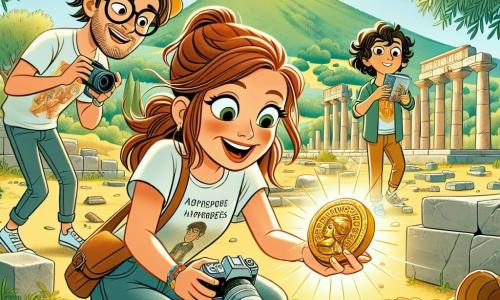
Today marked the beginning of what would be an exhilarating dig at the ruins of Knossos, an ancient palace said to be the heart of the Minoan civilization. Clutching his trusty backpack filled with tools—trowels, brushes, a notebook, and a camera—Dr. Hughes felt a rush of excitement. This expedition wasn't just any ordinary dig; it was a quest to uncover the secrets of a lost world.
As he made his way towards the excavation site, a gentle sea breeze ruffled his shirt, carrying with it the unmistakable scent of salt and thyme. The sun glimmered off the crystalline waters, and the distant sound of waves crashing against the cliffs seemed to whisper promises of discovery. Dr. Hughes couldn't shake off the feeling that something extraordinary awaited him under the layers of time.
Chapter 2: The Dig Begins
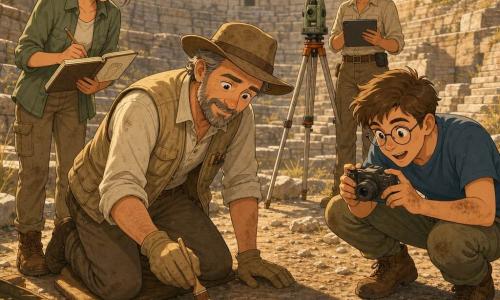
The excavation site was bustling with activity. A team of dedicated archaeologists and students worked tirelessly under the watchful eye of Dr. Hughes. Each person was armed with a variety of tools—some wielded brushes for delicate cleaning, while others used shovels to remove dirt and debris. The atmosphere buzzed with anticipation and enthusiasm.
“Alright, team!” Dr. Hughes called out, his voice ringing above the chatter. “Today, we're focusing on the central courtyard. We've recently discovered some walls that might lead us to the throne room of the palace!”
The team responded with cheers, their spirits soaring like the gulls above. As they gathered around Dr. Hughes, he explained the importance of the Minoan civilization. “The Minoans were remarkable builders and artists. They created vast palaces filled with intricate frescoes depicting their daily life, mythology, and rituals. What we find here could reshape our understanding of this incredible society!”
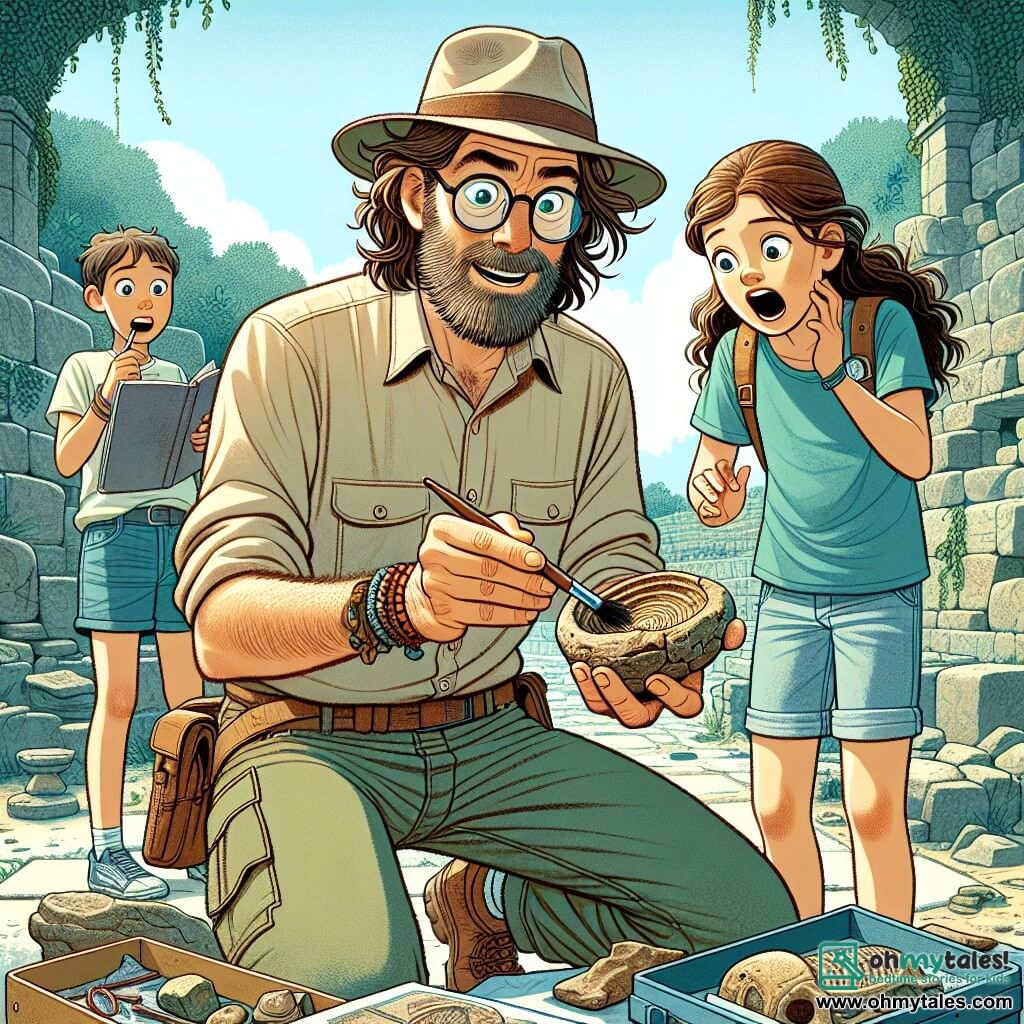
With a spark of enthusiasm in his eyes, Dr. Hughes demonstrated how to excavate carefully. “Gentle, everyone! Archaeology is like a puzzle; we can't rush it. We need to treat every artifact with care—who knows what stories they hold?”
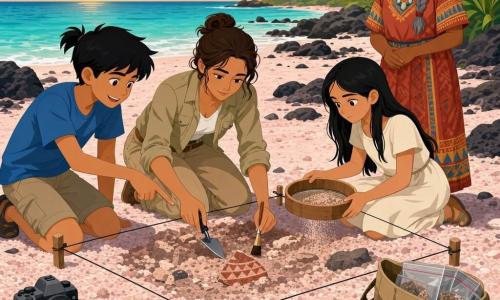
The students nodded, their faces a mix of concentration and excitement as they dug into the sandy soil. Hours flew by as they uncovered pottery shards decorated with delicate spirals, a small figurine of a bull, and even remnants of ancient food storage jars. Each item was carefully documented and examined.
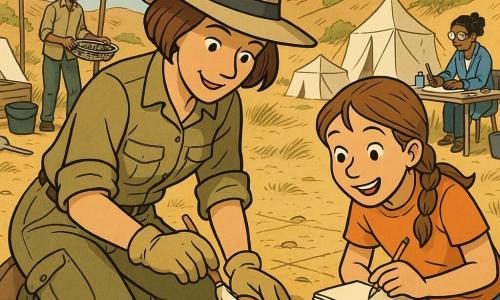
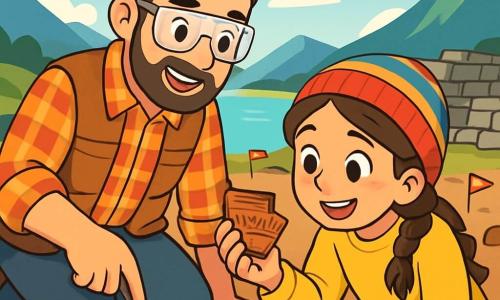
“Look at this!” exclaimed Lily, one of the enthusiastic archaeology students, holding up a piece of clay with a mysterious symbol inscribed on it. “Is it significant, Dr. Hughes?”
Dr. Hughes squinted at the clay fragment, rubbing his chin thoughtfully. “This could be a seal stone, possibly used for marking important documents or goods. It might tell us about trade relations or even religious practices.”
As the sun began to dip lower in the sky, casting streaks of gold and orange across the horizon, the team packed up for the day. Excitement filled the air, and Dr. Hughes felt a swell of pride for his team. They had made significant discoveries, and he couldn't wait to return the next day.
Chapter 3: The Night of Secrets
That evening, as Dr. Hughes sat on the terrace of his small rental house, he gazed out at the twinkling lights of the nearby village. The moon hung low, illuminating the path to the sea, and he felt a sense of calm wash over him. Just then, his phone chimed with a message from his colleague, Dr. Sarah Thompson, back in London.
“Excited about your findings! Remember the legends of the Labyrinth? Minoans were also skilled architects. Keep an eye out for hidden chambers!”
Dr. Hughes chuckled at the thought of the Labyrinth, a mythological maze that had housed the Minotaur. He loved how stories intertwined with history, sometimes blurring the lines between fact and imagination. With a determined glint in his eye, he resolved to delve deeper into the mysteries of Knossos.
The next morning, unease settled in as the team arrived at the site. They noticed something peculiar—a section of the earth had collapsed overnight, revealing a dark hole. “What could have caused this?” whispered Marco, another student, his brow furrowed with worry.
“Let's investigate,” Dr. Hughes replied. “It could be an important find or just a natural occurrence.”
The team gathered around the hole. Dr. Hughes peered into the abyss, his heart racing. “Prepare to lower down some lights,” he instructed, feeling the thrill of potential discovery rise within him.
As the beams of light illuminated the darkness, they gasped. The walls of the hole were adorned with ancient carvings, intricate designs that seemed to tell a story all their own. “This is incredible!” Lily exclaimed, her eyes wide with wonder.
Dr. Hughes stepped closer, studying the carvings. “These appear to be from the Early Minoan period, possibly depicting rituals or daily life. We might have stumbled upon a forgotten chamber!”
But as they continued to explore, something unexpected happened. The ground trembled slightly, sending small pebbles skittering away from the hole. “Maybe we should be careful,” Marco suggested, his voice wavering.
Dr. Hughes felt a knot tighten in his stomach. “You're right. Safety is our priority. Let's take a break and secure this area.”
Chapter 4: An Unexpected Challenge
The next day, they set up barriers around the hole. The crew worked diligently, but Dr. Hughes couldn't shake off the feeling that they might be onto something extraordinary. That night, he lay in bed, staring at the ceiling, his mind racing with the day's findings.
Suddenly, a loud crash jolted him upright. Rushing to the window, Dr. Hughes noticed a group of local teenagers, laughing and running away from the site. “Oh no!” he muttered under his breath, recognizing the potential for mischief.
In the morning, he arrived early at the site. What he saw made his heart sink—the protective barriers had been knocked down, and the area around the hole was in disarray. “No, no, no!” he exclaimed, rushing forward to assess the damage.
“Dr. Hughes!” Lily called out, hurrying to his side. “What happened?”
“Some kids must've thought it was a playground,” he mumbled, frustration etched on his face. “We need to fix this and make sure it doesn't happen again. This treasure could be important for understanding our past.”
The team got to work, reinforcing the barriers and establishing a watch schedule. They decided to divide their attention: half would continue excavating the surrounding areas while others would monitor the site.
Days passed, and as they worked tirelessly, the finds kept coming. They discovered miniature statues, ceremonial vases, and bone fragments. Each piece was meticulously cataloged, fueling their excitement. Yet, Dr. Hughes felt a growing sense of urgency; time was running out.
Chapter 5: The Race Against Time
As the days turned into weeks, the weather took a turn for the worse. Dark clouds loomed overhead, and stormy winds whipped through the site. “We need to cover this hole,” Dr. Hughes said, looking concerned. “If we have a storm, the last thing we want is mud and debris filling our findings.”
The team worked together, using tarps and wooden planks to protect their discoveries. They felt the pressure mounting; their time here was limited, and the secrets of the Minoans were just within their grasp.
That evening, as the winds howled outside, Dr. Hughes gathered the team for a discussion. “We've made incredible progress, but we can't afford any more distractions. We need to prioritize this chamber. Let's work overtime if necessary.”
Inspired by their leader's determination, the team agreed. They spent the next few days working late into the night, using all the resources at their disposal. They brushed away layers of dirt and carefully pieced together fragments of pottery and colorful frescoes.
Then, one fateful afternoon, just as the sun broke through the clouds, Marco stumbled upon something extraordinary. “Dr. Hughes! Come quick!” he shouted, excitement bubbling over.
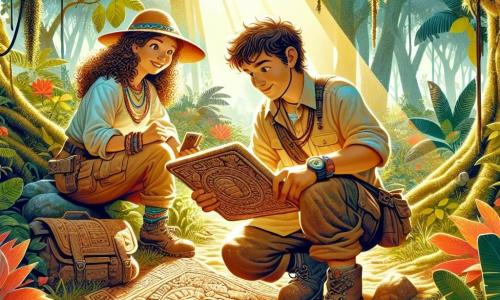
They rushed to his side, where he had uncovered a large stone slab etched with elaborate symbols. Dr. Hughes felt his heart race as he knelt beside it. “This… this is significant! This could be a record of the Minoan religious practices or administrative rules!”
As they studied the slab, Dr. Hughes felt a surge of excitement mixed with anxiety. They had uncovered an archaeological gem, but they also realized they needed to document it carefully before the weather turned yet again.
Chapter 6: The Climax of Discovery
Just as they were about to begin documenting the slab, ominous clouds gathered once more, darkening the sky. Thunder rumbled ominously in the distance. “We have to hurry!” Dr. Hughes urged. “We can't let this opportunity slip away.”
The team worked feverishly, sketching the slab's design and taking photographs. But suddenly, a gust of wind swept through the site, knocking over equipment and sending papers flying. “No!” Dr. Hughes shouted as he chased after a gusty page, his heart pounding.
At that moment, the skies unleashed their fury, rain pouring down in sheets. The team scrambled to cover their findings, but the river of water began to swell around them. “Get to higher ground!” Dr. Hughes yelled, guiding everyone to safer ground.
Once they found shelter under a sturdy awning, Dr. Hughes turned to his team, worry etched on his face. “We can't let the rain erase our hard work! We need to work together to protect our discoveries.”
The storm raged on, but with teamwork and determination, they saved as much as they could. When the skies finally cleared, they emerged to a transformed landscape. The excavation site looked like a muddy battlefield, but their spirit remained unbroken.
“I was worried we'd lost everything,” Lily said, her voice trembling with emotion.
Dr. Hughes smiled reassuringly. “We've faced challenges before, and we'll face them again. This is all part of the adventure!”
Chapter 7: The Treasure Through Time
With the sun finally shining, the team resumed their efforts. They worked tirelessly for the next few days, determined to finish the excavation before their time in Crete ended. More artifacts emerged from the ground—beautiful vases with bright colors, delicate beads, and even a stunning fresco fragment depicting a Minoan bull-leaping ceremony.
On their final day, they gathered around the stone slab, now fully documented. “This has been an incredible journey,” Dr. Hughes said, beaming at his team. “Our discoveries here will contribute to Minoan studies for years to come.”
With the dig complete, they loaded their findings into crates, preparing for transport back to the museum for further research and preservation. Each item was carefully packed, a testament to the civilization that once thrived on Crete.
As they stood together, looking out at the vast landscape, Dr. Hughes felt a wave of gratitude wash over him. “You all have shown such dedication and passion. Archaeology is more than just digging and finding; it's about understanding our past and sharing it with future generations.”
The sun began to set, casting a warm golden glow over the site as the team shared stories and laughter. They reminisced about the challenges they faced, the excitement of each discovery, and the bonds they formed.
Dr. Hughes knew this was only the beginning for all of them; the world of archaeology was vast and filled with endless mysteries waiting to be uncovered. With a heart full of hope and dreams, he looked forward to the many adventures that awaited him.
Chapter 8: A New Beginning
Back in London, Dr. Hughes couldn't wait to present their findings at the annual archaeological conference. As he stood in front of an audience filled with eager faces, he spoke passionately about the Minoan civilization, the myths surrounding it, and the importance of their discoveries.
“Archaeology is a bridge between the past and the present,” he proclaimed, his eyes shining with enthusiasm. “It teaches us not just about ancient peoples, but about ourselves. The stories we uncover can inspire us to cherish and protect our own culture and history.”
The audience erupted in applause, and Dr. Hughes felt a fulfilling warmth spread through him. His heart swelled with pride for his dedicated team, knowing they had ventured into the past and emerged victorious.
As the conference came to a close, Dr. Hughes looked towards the future, feeling a renewed sense of purpose. He was eager to return to Crete, to continue his exploration of the land that had captured his heart. He knew there were still countless stories buried beneath its surface, waiting for someone to unearth them.
And as he packed his bags for yet another adventure, Dr. Hughes smiled, ready to dive deeper into the wonders of archaeology and the mysteries that lay ahead. The journey was far from over; it had only just begun.