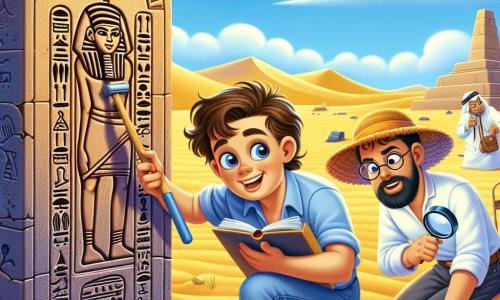
Chapter 1: The Whispering Sands of Time
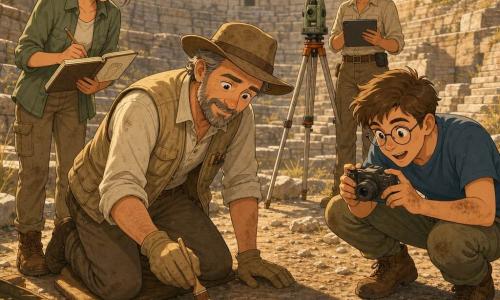
Dr. James Carter was not your average adventurer. Instead of wielding a sword or a whip, he carried a trowel and a brush. His battlefield was not some distant land filled with mythical creatures, but the sun-soaked sands of Egypt. As an archaeologist, his passion was unearthing the stories buried beneath layers of earth, dust, and time.
James's love for history had begun in his childhood when he first stumbled upon a dusty old book about the pharaohs of Egypt. Fascinated by the tales of ancient gods, majestic pyramids, and lost treasures, he had vowed to uncover their secrets himself one day. Now, standing amidst the golden dunes of the Giza Plateau, he was living his dream.
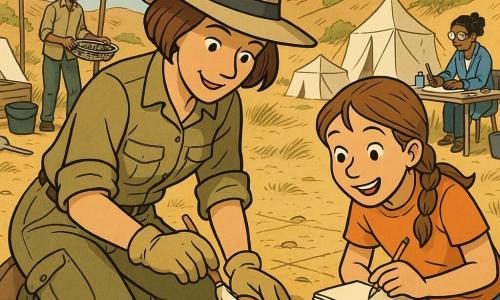
The site was buzzing with activity as workers and fellow archaeologists diligently sifted through the sand, each hoping to uncover a piece of history. The air was filled with the soft clinks of metal against stone and the occasional murmur of excitement when an artifact was uncovered. James felt a thrill every time he picked up his tools, each one essential in the delicate process of excavation. His trowel was sharp and precise, perfect for slicing through the earth with care, while his brush was gentle, used to sweep away the sands of time that concealed the treasures of the past.
Today, James had a specific goal in mind: to uncover the secrets of a newly discovered tomb believed to belong to a lesser-known pharaoh. Hidden beneath the shadow of the Great Pyramid, it had been overlooked for centuries. James was certain that within its depths lay clues that could unravel mysteries about daily life in Ancient Egypt.
As he worked, James marveled at the ingenuity of the civilization he was studying. The Egyptians had built monumental structures, developed a complex writing system known as hieroglyphics, and established a society that thrived for thousands of years. Yet, so much about them remained veiled in mystery. This was the allure of archaeology—every find was a piece of a colossal puzzle spanning millennia.
Chapter 2: Digging into History
The sun climbed higher into the sky, casting long shadows over the site. James paused for a moment, wiping sweat from his brow, and took a sip of water. The heat was relentless, but he was undeterred. He crouched down again, his fingers deftly working the earth, inch by inch.
As he dug deeper, he felt a familiar thrill. There was something here, he was sure of it. His instincts, honed over years of experience, told him that the sands were hiding something significant. Suddenly, his trowel struck something hard. He paused, heart racing, and carefully brushed away the surrounding sand. Slowly, a shape began to emerge—a fragment of pottery, its edges worn by time but its painted surface still vibrant.
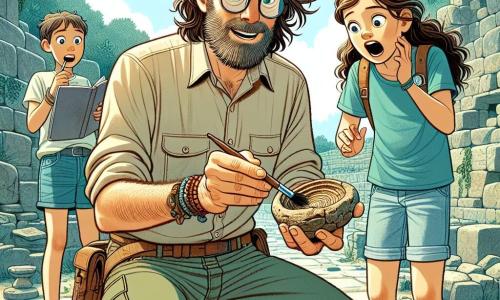
"Look at this," he called to his colleague, a young archaeologist named Sarah who had been working nearby. She hurried over, her eyes wide with excitement.
"It's beautiful," she breathed, peering at the intricate designs etched into the pottery. "Do you think it's from the tomb?"
James nodded, contemplating the artifact. "It's possible. This style of pottery is consistent with the period we're studying. It might tell us more about the burial customs or even the daily lives of those who lived here."
Together, they carefully cataloged the find, noting its location and context. Every artifact was a thread in the tapestry of history, and it was their job to weave them together into a coherent narrative.
As the day wore on, the team uncovered more fragments—beads from a necklace, a shard of an alabaster vase, and a small statue of a cat, symbolizing Bastet, the goddess of home and fertility. Each discovery was like a whisper from the past, hinting at the lives that had once thrived in this ancient land.
Chapter 3: The Unexpected Discovery
Just as the sun began to dip towards the horizon, casting a warm glow over the landscape, James stumbled upon something extraordinary. Beneath a layer of compacted sand, his trowel uncovered a hidden chamber. It was a small, narrow passage leading deeper into the earth. His heart skipped a beat. This was it—the entrance to the tomb they had been searching for.
"Sarah, get the team," James instructed, his voice steady despite his excitement. "We're going in."
Equipped with torches and cameras, they carefully entered the chamber. The air was cool and musty, untouched for centuries. The walls were adorned with hieroglyphics, their meanings a tantalizing mystery waiting to be deciphered. James's eyes scanned the symbols, recognizing some as prayers to the gods, others as depictions of the pharaoh's journey to the afterlife.
As they ventured deeper, the chamber opened into a larger room, its ceiling supported by intricately carved pillars. In the center, an ornate sarcophagus lay waiting, its gilded surface gleaming in the torchlight. James approached it reverently, his mind racing with possibilities. This was a rare and precious find, one that could shed light on a forgotten chapter of history.
Suddenly, James noticed something unusual. The sarcophagus was not alone. Beside it lay a collection of scrolls, perfectly preserved despite the passage of time. He gently picked one up, his hands trembling slightly. The scrolls were written in hieroglyphics, their contents a mystery.
"This could be a record," he mused aloud, "of the pharaoh's reign, or perhaps a religious text. We must document everything before moving anything."
The team worked tirelessly, photographing every inch of the chamber and its contents. James's mind was alight with questions. What secrets lay within these scrolls? How would they change their understanding of the ancient world?
Chapter 4: The Challenge
As the team continued their work, a problem arose. The scrolls were delicate, and the risk of damage during transportation was high. James knew they needed to be carefully analyzed and translated, but he was determined not to compromise their integrity.
"We need to build a temporary lab here," he suggested. "It's the only way to ensure the scrolls are preserved and studied properly."
It was a daunting task, but the team rallied together, bringing in equipment and setting up a mobile laboratory on-site. James coordinated with experts in hieroglyphics and conservation, ensuring that every step was taken with the utmost care.
Days turned into weeks as they painstakingly unraveled the contents of the scrolls. The work was slow and meticulous, but each day brought new revelations. The scrolls contained records of the pharaoh's achievements, as well as details about religious ceremonies and daily life in the court. They even found references to neighboring civilizations, offering insights into trade and diplomacy in the ancient world.
James was in awe. Each discovery felt like a conversation with the past, a chance to see through the eyes of those who had lived thousands of years ago. It was moments like these that fueled his passion, reminding him why he had chosen this path.
Chapter 5: The Triumph of Discovery
As their work neared completion, James took a moment to reflect. The tomb, once hidden beneath the sands, had revealed its secrets, enriching their understanding of Ancient Egypt. The pharaoh, once forgotten, now stood as a testament to the enduring legacy of a civilization that had shaped the course of history.
The discoveries made at the site would be shared with the world, offering a glimpse into a time long past. Museums would display the artifacts, and the scrolls would be studied by scholars worldwide, contributing to the ever-growing tapestry of human knowledge.
For James, the journey had been more than just an excavation. It had been a reminder of the power of curiosity and the importance of preserving our shared heritage. As he stood beneath the Egyptian sky, the stars beginning to twinkle above, he felt a profound sense of fulfillment.
This was the life of an archaeologist—one of adventure, discovery, and the endless pursuit of knowledge. And as long as there were stories buried beneath the earth, James knew he would continue to seek them out, piece by piece, uncovering the mysteries of the past for generations to come.
The sands of Egypt whispered their secrets once more, and James Carter was there to listen.