Chapter 1: The Exciting Expedition
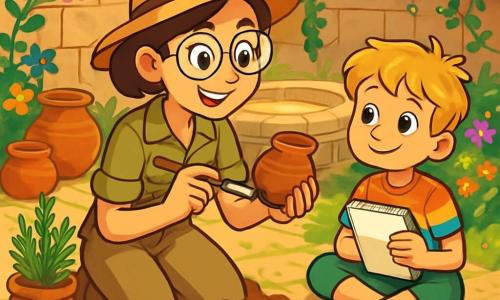
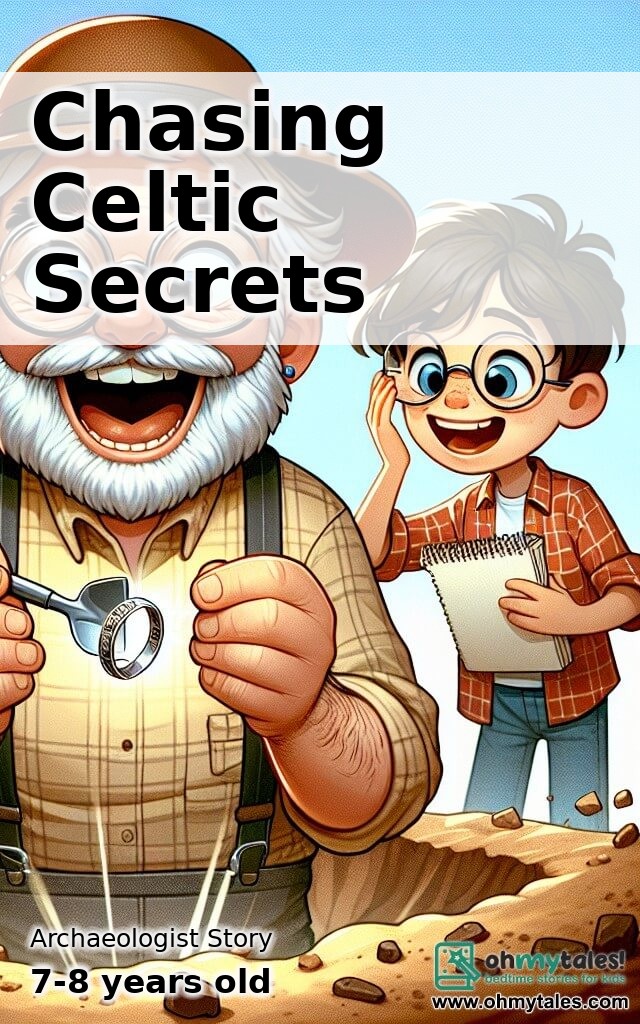
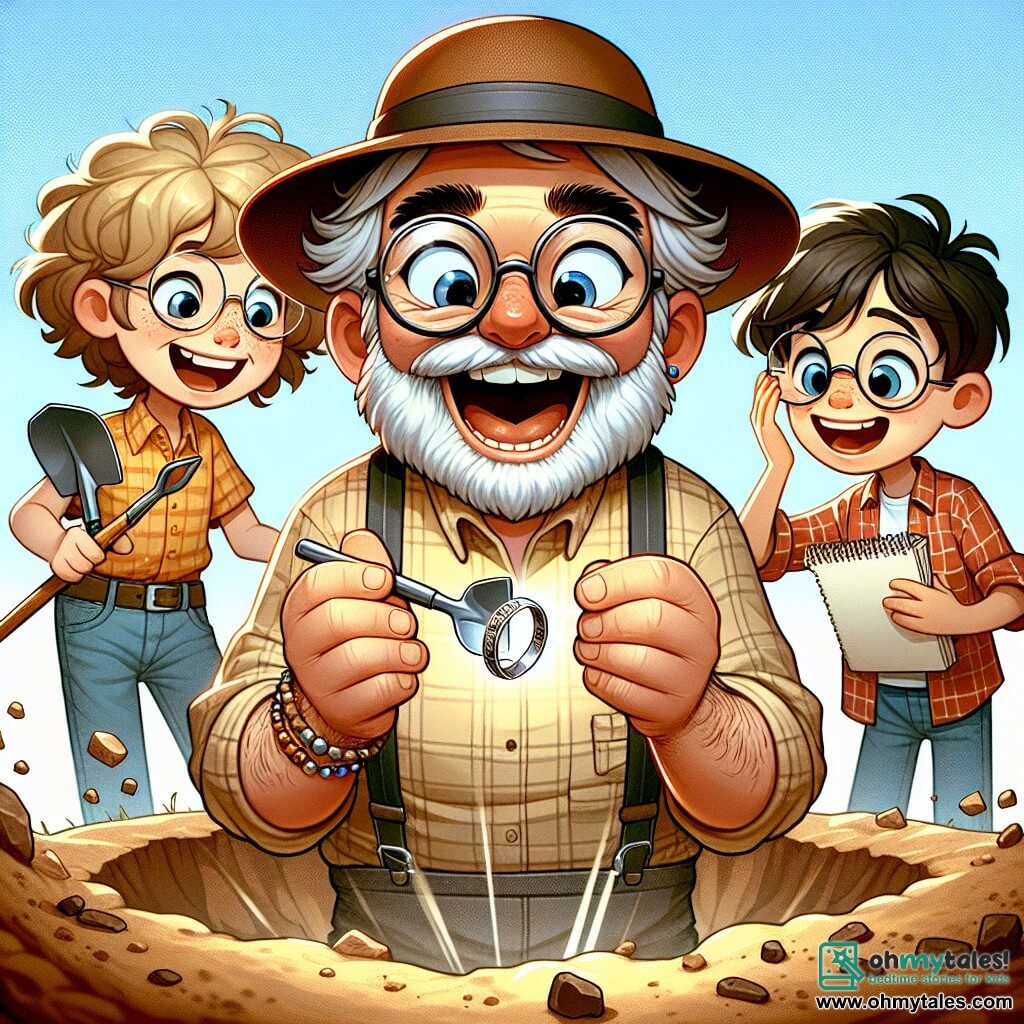
Deep in the heart of the lush green hills of England, where the grass danced in the gentle breeze and the birds chirped sweet melodies, there lived a passionate archaeologist named Mr. Oliver Stone. Mr. Stone was not just any archaeologist; he was a treasure hunter of the past! Every day, he donned his trusty brown hat and carried his backpack filled with tools that looked like they belonged to an explorer from a storybook. His tools included a small shovel, a paintbrush, a magnifying glass, and a notebook where he jotted down all his discoveries.
Mr. Stone's current adventure was taking place at an ancient Celtic site, known for its mysterious stone circles and long-forgotten artifacts. The Celts were an ancient group of people who lived in Europe over two thousand years ago. They were known for their fascinating culture, beautiful artwork, and incredible stories passed down through generations. Mr. Stone's heart raced with excitement as he thought about the secrets waiting to be uncovered beneath the soil.
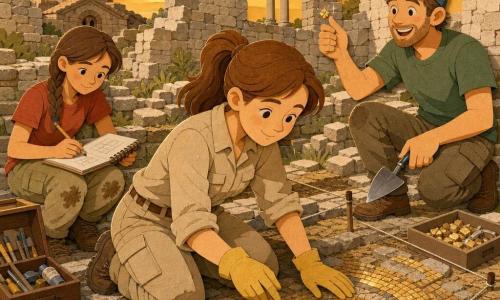
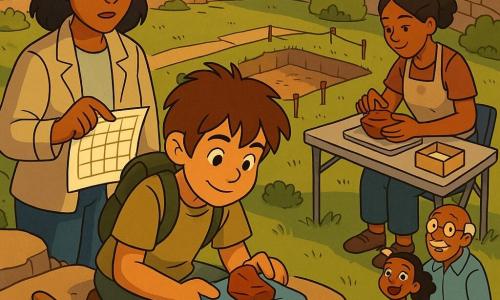
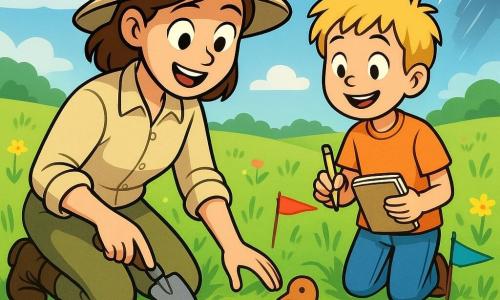
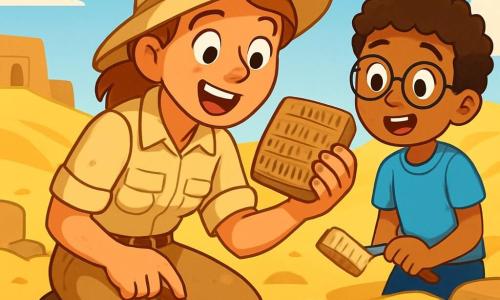
Today was particularly special. With a sparkle in his eye, Mr. Stone gathered his small team of enthusiastic students, who all looked up to him like he was a superhero of history. "Are you ready to dig into the past?" he exclaimed, grinning widely. The students cheered, their faces bright with anticipation. Each of them had their own mini shovels and brushes, eager to uncover the treasures hidden beneath layers of dirt.
As they arrived at the excavation site, a large stone circle loomed before them, covered in wildflowers and ivy. “This is where the magic happens!” Mr. Stone declared, waving his arms dramatically. “The Celts believed this circle was a place of worship and gathering. Who knows what we might find?”
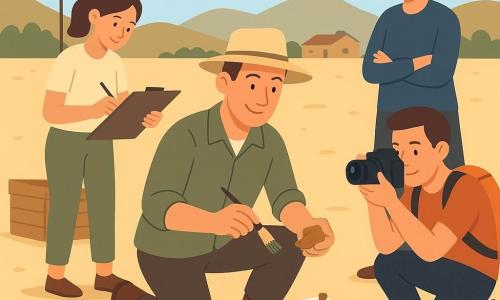
With the sun shining brightly overhead, the team got to work, carefully digging into the earth. Mr. Stone demonstrated how to use the shovel gently, as if they were handling a fragile piece of history. “Remember, we don't want to break anything valuable,” he reminded his eager students, who nodded seriously, their brows furrowed in concentration.
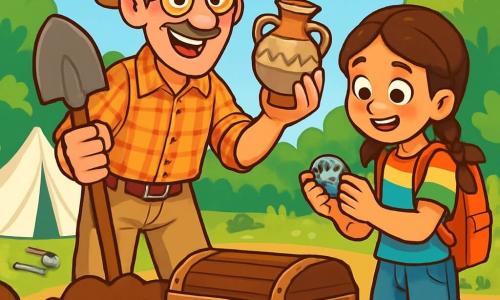
As they dug, they found small bits of pottery, shiny pieces of what looked like jewelry, and even some ancient coins! “Look at this!” shouted a student named Emma, holding up a delicate silver bracelet. Mr. Stone rushed over, his eyes wide with excitement. “That's a beautiful find, Emma! It could have belonged to a Celtic warrior or a druid!”
With each discovery, the students learned more about the Celts and their way of life. They talked about how the Celts used to make their own clothes, grow their own food, and even tell stories around roaring fires. The students exchanged tales of their own, drawing funny comparisons between the ancient past and their lives today. “Do you think they had pizza?” laughed Jake, and everyone erupted in giggles.
Chapter 2: The Mysterious Discovery
Days passed, and the team continued to uncover remarkable artifacts. Then one sunny afternoon, while Mr. Stone was examining a piece of clay with strange markings, something unusual caught his eye. “What's this?” he murmured, crouching down. There, half-buried in the dirt, was a peculiar object that looked like a small, rounded stone with intricate carvings all over it.
“Wow, Mr. Stone! What is it?” asked Lily, her eyes wide with curiosity.
“I'm not entirely sure,” he replied, rubbing his chin thoughtfully. “But it looks like it could be a druid's stone. Druids were the Celtic priests and believed these stones held magic.”
The students gathered around, peering at the strange object as if it were a rare gem. Mr. Stone carefully brushed the dirt off, revealing more of the carvings. They looked like spirals and knots, symbols that the Celts used to represent nature and the world around them.
“This is exciting!” Mr. Stone exclaimed. “We need to document it and see if we can find out more about it. Let's take a closer look at those markings.”
As they examined the stone further, Mr. Stone explained how archaeologists often have to interpret what they find. “It's like being a detective of history,” he said, his voice animated. “We piece together clues to tell the story of the past. Every artifact has a story, just like each of you!”
The students listened intently, their imaginations running wild. They imagined all the adventures the stone must have seen, all the ceremonies and celebrations it might have been a part of.
But soon, a challenge arose. “What if no one believes us?” Jake worried, scratching his head. “What if we can't figure out what it means?”
Mr. Stone smiled reassuringly. “That's part of the adventure! Sometimes discoveries take time. We might need to consult other experts or even do some research at the library. Remember, archaeology is a team effort!”
The students nodded, feeling inspired. They decided to call their parents, friends, and even their school librarian to gather knowledge. They were determined to learn everything they could about the mysterious stone.
Chapter 3: The Big Reveal
The next day, the team gathered in their campsite, surrounded by books, papers, and the stone they had found. Everyone was buzzing with excitement but also a hint of nervousness. Mr. Stone encouraged them to share their findings. “Let's put our heads together and figure this out!”
Emma flipped through a book about Celtic symbols. “Look!” she said, pointing to a picture. “These spirals are similar to what we found! They represent the cycle of life!”
“That's amazing!” Lily exclaimed. “So our stone could symbolize something important to the Celts about life and nature!”
As they continued their research, they came across stories of druids and their reverence for nature. “Do you think the stone was used in ceremonies?” Jake pondered aloud.
Mr. Stone nodded enthusiastically. “It's very possible! The Celts believed in the power of nature and often held rituals to honor it. Our stone could have been a special part of those events.”
The more they learned, the more connected they felt to the ancient Celts. The students realized that archaeology was not just about digging in the dirt; it was about understanding people, their beliefs, and their stories.
Finally, after hours of research, they gathered together to share their thoughts. “I think we should present our findings to the local museum,” Mr. Stone suggested. “They might be interested in our discovery and can help us learn even more!”
The students cheered, their excitement bubbling over. “Yes! Let's do it!” they shouted.
The following week, they prepared for their big presentation. Mr. Stone helped them create posters filled with colorful drawings and information about their discovery. They practiced speaking clearly and confidently, eager to share their findings with the museum staff.
On the day of the presentation, the museum was buzzing with excitement, and the students felt like real archaeologists. They stood in front of a small crowd, including parents and museum officials, ready to unveil the mystery of the druid's stone.
With Mr. Stone by their side, they took turns explaining their research, sharing their findings about the symbolism of the stone, and recounting their adventure at the excavation site. The audience listened intently, nodding and smiling, completely captivated by the young archaeologists.
When they finished, the crowd erupted into applause. The museum director stepped forward, beaming. “What a wonderful presentation! Your teamwork and enthusiasm for history are inspiring. We would love to display your stone in our museum for everyone to see!”
The students jumped up and down, their faces glowing with pride. They had not only uncovered a piece of history but had also learned the importance of collaboration and curiosity.
Chapter 4: A Journey to Remember
As the days turned into weeks, the druid's stone became a highlight at the local museum. Visitors came from near and far to see the artifact that a group of young archaeologists had discovered. Mr. Stone's team felt like heroes, and their adventure had sparked a newfound love for history in their hearts.
One sunny afternoon, as they revisited the excavation site, Mr. Stone gathered his students. “Today, I want to remind you that archaeology is not just about finding objects; it's about connecting with the past and understanding the world around us.”
Jake raised his hand excitedly. “Can we go on another adventure, Mr. Stone?”
“Absolutely!” Mr. Stone laughed. “There are many more stories waiting to be discovered, and I can't think of better explorers than the lot of you!”
As they stood together, overlooking the beautiful landscape, the students realized that archaeology was more than just a job; it was a way to explore the wonders of the ancient world and share those stories with everyone. Their hearts swelled with excitement for future adventures, knowing that each dig could unveil a new mystery and a deeper connection to the history that shaped their world.
And so, with laughter, curiosity, and a sprinkle of magic, Mr. Oliver Stone and his team of enthusiastic young archaeologists continued their quest to uncover the tales of the past, ready for whatever new discoveries awaited them. After all, every stone had a story, and they were just getting started!