Chapter 1
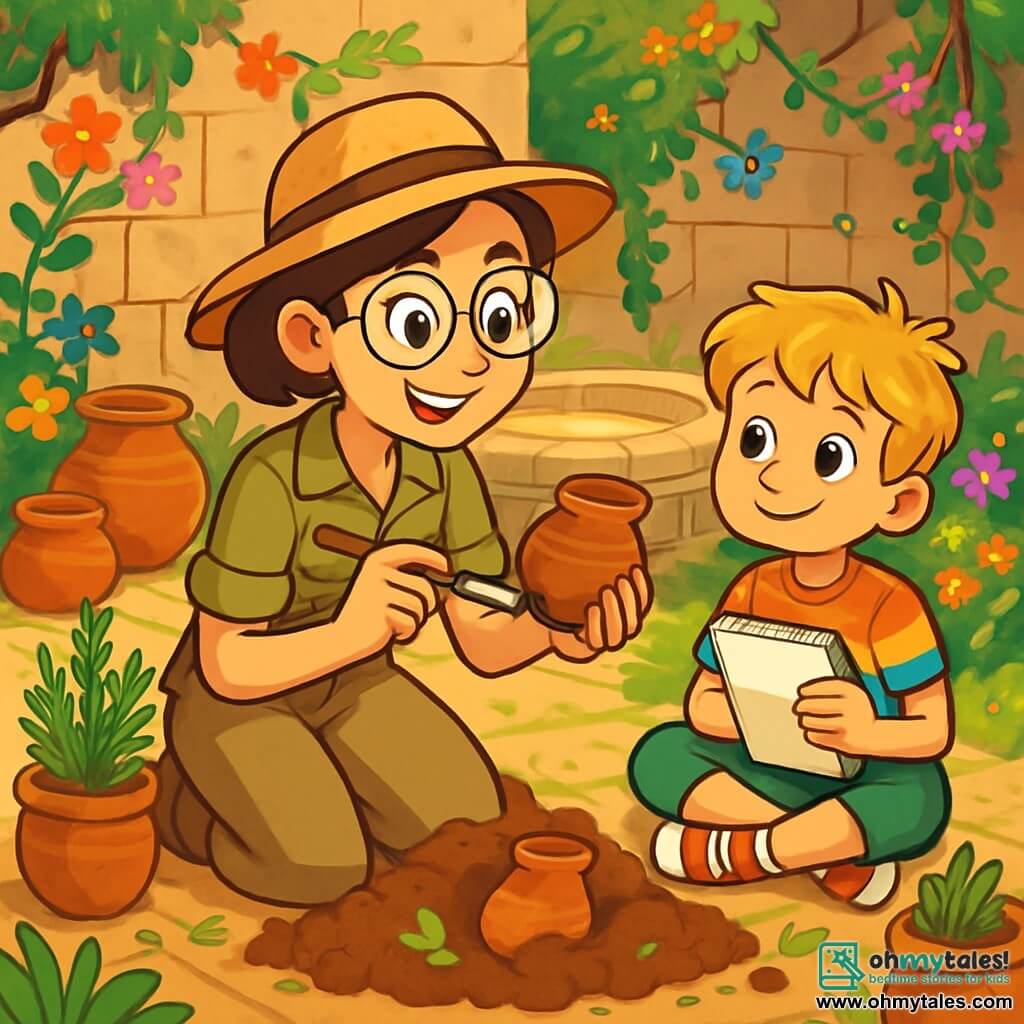
The morning was cool and quiet. Sunlight slipped between red tiles and warm stones. In the shadow of a patio, a small Aztec courtyard breathed. Fragrant herbs nodded in clay pots. A bird blinked at the sound of footsteps.
Marina walked slowly. She wore sturdy shoes and a soft hat. Her hands were steady. Her eyes were curious. She carried a thin notebook and a tiny box of tools. Today she would do something small and important. Today she would study tiny grains of dust. She would look at pollen.
Marina was an archaeologist. She searched for stories hidden in the ground. She listened to what rocks, seeds, and broken pots could tell. She was patient. When things seemed hard, she never gave up. She knew that the smallest find could change a big story.
The courtyard smelled of lime and cut grass. Ancient stones held cool in their pores. Children had once played here. Someone had once placed offerings of corn and feathers beneath a now-smooth ledge. Marina ran her fingers along a carved line. She read the shadow like a map.
She knelt by a shallow trench. The dirt was the color of warm bread. Tiny flecks of plant matter lay like secret letters. She brushed with a soft brush. She wrote notes in neat letters. Her pen made small, bird-like scratches across the paper. "Context matters," she whispered. Each layer of soil was a page in time. Archaeologists read those pages slowly.
A small bell tinkled above the kitchen door. The courtyard seemed to hold its breath.
Chapter 2
A group of children arrived for a school trip. They clattered across the tiles like bright stones. Their faces were round with wonder. A teacher stood by the fountain. The children carried small bags and big eyes.
Marina smiled. She loved when children asked questions. Questions were like keys. They opened locked boxes of thought. The little ones gathered around her trench. One child pointed at a tiny piece of pottery. "What is that?" she asked.
"It is part of an old bowl," Marina said. Her voice was soft and slow. "Long ago, someone used this bowl to eat their stew. We can learn what they ate." She held up the piece. The pottery was rough and warm. Little fingers traced the rim carefully.
Marina showed them how to brush gently. She let them feel the softness of the brush. She let them breathe near the dirt and listen for stories. "Archaeologists are careful," she said. "We do not take more than we need. We leave things for others to find."
One child found a tiny seed. It was dark and round. Marina showed them how she would carry it in a little paper bag. She explained that seeds held plant memories. "Pollen is like a tiny fingerprint from a plant," she said. "It tells us what flowers and trees grew long ago."
They walked together through the courtyard. Lantern light beads hung from beams. The children were quiet for a while. They imagined people talking beside the fountain. They imagined the smell of corn tortillas and cocoa. Marina listened to their imaginations. She asked them to guess what the garden might have looked like. Each child said a different thing. Marina tucked their words into her notebook like tiny feathers.
Then one child found something else. It was a flat stone with a carved line. The carved line pointed like a clue. It seemed to point toward the old wall. The children gasped. A needle of excitement brightened the courtyard. "Could it be a map?" the teacher whispered.
Marina smiled but kept calm. She knew maps were made of many things. Clues were not always a treasure chest. Some clues were only small pushes. Still, she loved the gentle charge of a new question. She marked the stone with a ribbon. She drew it in her notebook. She photographed the shadow where it had lain. She wrote the time and the weather. She labeled it with love.
Chapter 3
Back in the lab, light was cool and white. Microscope lamps hummed like quiet bees. Marina set the tiny bag of seeds on the bench. The children watched from a small window. They pressed their faces to the glass, curious as ducks.
Marina worked slowly. She wore gloves that smelled faintly of soap. She placed a grain of pollen on a slide. It was smaller than a crumb. The microscope looked like a tiny telescope. When Marina peered in, the world grew large. The pollen looked like a tiny sun, spiky and perfect.
She explained as she worked. "Pollen comes in many shapes," she said. "Some are round like beads. Some are spiky like stars. Each plant makes its own shape." She drew simple pictures for the children. They copied them in their small notebooks.
She talked about the story pollen could tell. "If we find pollen from corn, we know people grew corn here. If we find pollen from a cactus, we learn about dry days. If we find pollen from a tree that likes rain, we know the weather was wetter then." The children gasped. One little boy whispered, "So pollen is like a time machine?"
Marina laughed softly. "Yes," she said. "A tiny time machine that fits in your pocket if you are very careful."
The microscope showed her more. Dust from a hearth glowed like ash under a star. Tiny charcoal fragments told of cooking fires. Small bits of bone told of meals cooked long ago. She recorded each thing in her notebook. She labeled them with neat letters. Then she placed them into small envelopes, like little beds for sleeping things.
The children learned how archaeologists use numbers and notes. They learned how to draw sketches and take photos. They learned that every object has a story and a place. "We must always write where something came from," Marina said. "A pot without a place is like a word without a sentence."
One child, who loved to draw, traced the pollen shapes for a long time. "I want to be an archaeologist," she said shyly. Marina bent down and looked at the child's drawing. "If you are patient and gentle," Marina said, "you can be anything." Her voice was warm. "And remember to be humble. The land holds many stories before ours."
The teacher thanked Marina. The children waved when they left. As the courtyard emptied, Marina felt a small hush. She looked at the ribboned stone and thought of the carved line. Sometimes a small clue led to a big path.
Chapter 4
The carved line tugged like a whisper. Marina returned to the courtyard at dusk. The tiles had cooled. The smell of roasted agave rose faintly from a nearby market. A warm wind moved through the leaves.
She followed the carved line. It led around the fountain and under a vine-covered arch. At the arch, the bricks changed color. A stone almost hidden by moss showed another mark. The mark matched a drawing she'd seen in an old book. Her heart beat gently. Her hands did not tremble.
She dug carefully beneath the moss. The soil gave away like soft bread. Her trowel moved in small strokes. She listened to the sound of the earth. It sounded like a slow drum. Then she found a row of small stones set in the ground. They were smooth and placed like little teeth. They formed a path that seemed very old.
The path snaked away from the courtyard, between two walls, and vanished under a carpet of leaves. Marina wiped her hands on her trousers and walked the first steps. The air smelled of damp earth. Shadows leaned close but did not frighten her. The path was narrow. It felt like a secret.
At the end of the path was a low wall. On top of the wall rested a single bowl. The bowl was plain and warm and looked like it had been left there yesterday. Next to it lay an old broom of dried grass. A single feather rested in the bowl. The feather trembled in the breeze like a soft bell.
Marina sat on the wall and breathed. She thought of the people who had walked this path before. She thought of the hands that had swept with the same broom. The stone path had been a simple thing. Yet it connected a courtyard to a room, a garden to a kitchen. It was not a treasure map. It was a map of daily life. It told of small, steady living.
She took out her notebook. She sketched the path and the bowl. She wrote the time and the weather. She wrapped the feather in a soft paper and labeled it gently. She felt a warm humility. The path was not hers. It was a gift from the past. She felt grateful.
Footsteps approached behind her. A child from the class stood there with her teacher. "We wanted to see where the carved line went," the child said. The teacher smiled and said quietly, "It was kind of you to let us follow."
Marina showed them the bowl and the broom. She told them how small things tell big truths. She explained that archaeologists keep careful lists. They share what they find. They do not shout that they solved everything. They know there is always more to learn.
The sun sank. Lanterns glowed. The carriage of stars rolled slowly into place. The children yawned and tucked their hands into their pockets. Marina walked them back through the courtyard. She pointed to the stones and the fountain and the place where she had dug. She told a short story about a woman who cleaned this very courtyard every morning and listened to the birds. The children smiled and imagined the woman humming.
When the children left, the courtyard felt very still. The path and the bowl rested like a small secret. Marina closed her notebook. She thought then of the pollen slides, of the child's drawing, of the feather wrapped in paper. She had a plan. She would analyze the pollen in the lab tomorrow. She would compare it to other sites. She would write a report that might help other people learn.
She always tried to remember one thing. Being an archaeologist meant being humble. You listened to the land. You waited for the right moment to speak. You let the objects tell their stories. Sometimes you discovered nothing remarkable. Sometimes you discovered a path. Both were gifts.
She set a small candle near the bowl and thanked the quiet air. "Thank you," she whispered, softly, like a prayer. The stone felt warm under her palm.
Later, in the lab, she looked at the pollen and the charcoal under the microscope once more. She wrote her notes with care. There was a tiny grain that matched pollen from a flowering cactus. There were traces of maize. The plants told of gardens and fires and rainy years. The small story grew into a fuller picture as she added each line of careful writing.
Marina typed her notes slowly. She saved her photos and labeled each one. She prepared a small folder for the teacher and the children. She wanted them to see what their little hands had touched. She folded the feather into the folder and placed the child's drawing on top.
Before she turned off the light, Marina looked at the bowl, the broom, and the path one more time in her mind. She thought of the people who had walked there before her. She thought of the future children who might come with big eyes and small hands. She felt steady and small and glad.
At the very end, she wrote one line in the notebook in a calm, slanted hand. It read simply, "We are only careful guests." Then she closed the book like a lid on a warm pot.
Outside, the stars were bright. The courtyard slept under a blanket of night. Marina pulled her shawl close and whispered a thank you to the stones, to the pollen, and to the children. She felt humble and happy. She had followed a carved line and found a path. She had worked in the lab and learned about tiny grains. She had shown children how to listen.
Her work would go on tomorrow. She would never stop asking questions. But for now she let the hush settle. She let the gentle pride of a day's careful work bloom like a small, quiet flower.
"Thank you," she said again, to the past and to the present. The words were warm in the dark. The courtyard seemed to answer with a soft sigh.