Chapter 1: Dr. Ava and the Whispering Sands
Dr. Ava Patel loved old stories, dusty books, and ancient mysteries. But more than anything, she loved being an archaeologist. Every morning, she jumped out of bed, grabbed her lucky sun hat, and hurried to her favorite place: the dig site in the heart of Mesopotamia.
Mesopotamia was a land of wonders. Long, long ago, it was called “the cradle of civilization” because people there built the very first cities, wrote with cuneiform on clay tablets, and invented the wheel! Dr. Ava often imagined what life was like thousands of years ago, when the mighty rivers Tigris and Euphrates flowed through bustling towns filled with traders, storytellers, and kings.
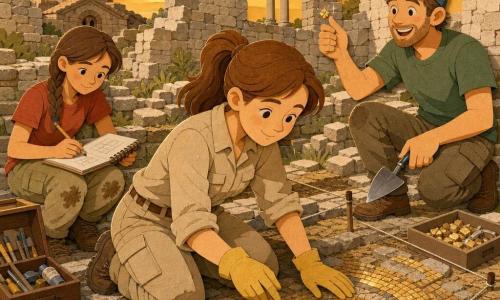
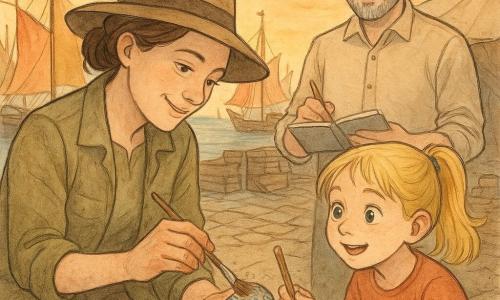
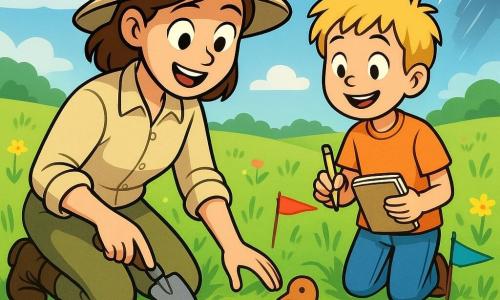
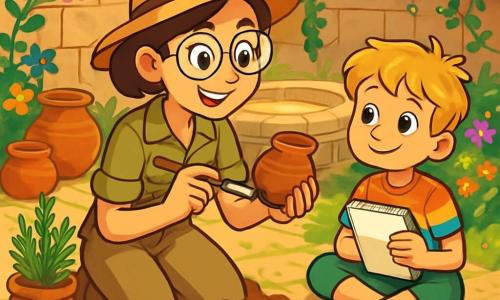
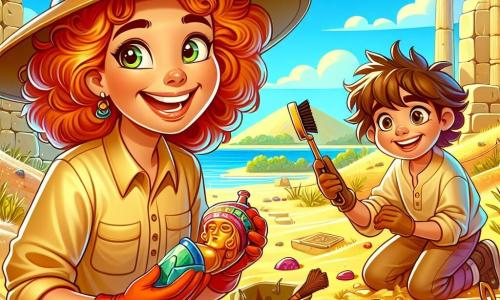
At the dig site, Ava's team used all sorts of cool tools. She had a tiny brush for sweeping away gentle layers of dust, a trowel for digging carefully, and a notebook filled with sketches and scribbles. Today, her goal was to find out what secrets the old city of Uruk still held beneath the sand.
“Hurry, Dr. Ava!” called Jamal, her assistant. “The sun's coming up and the sand is already hot enough to cook an egg!”
Ava grinned. “Let's just hope we don't find any scrambled artifacts!” she joked, making Jamal giggle.
Chapter 2: The Mystery in the Mud
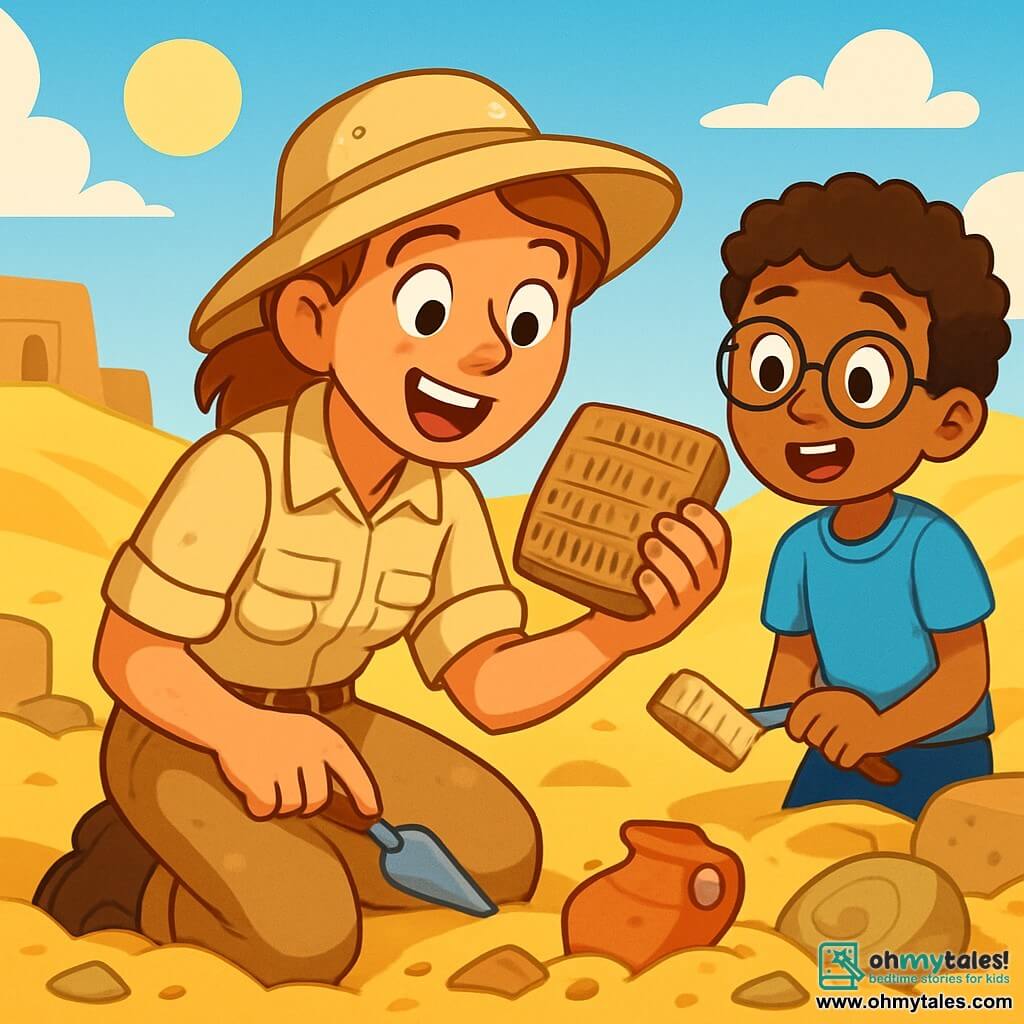
Ava knelt down and gently scraped away at the ground. Suddenly, her trowel made a soft clink. She brushed away the dirt, revealing a small clay tablet covered in strange marks.
“Look, Jamal! Cuneiform writing!” she exclaimed. “This is how people wrote in ancient Mesopotamia. It's like cracking a secret code from 5,000 years ago!”
Jamal's eyes grew wide. “What does it say?”
Ava smiled. “I'll have to study it closely. But first, let's see what else we can find.”
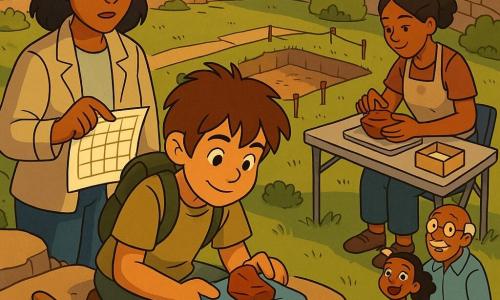
All around the dig site, their team carefully uncovered treasures from the past: a tiny clay bull, once used as a toy; a shiny bead necklace that sparkled in the sun; and a broken pot with pictures of people and animals dancing. Each discovery was like a puzzle piece telling a story about how people lived, played, and dreamed.
Suddenly, Ava heard something. “Thunk!” Her trowel hit something hard. She dug carefully and found a large stone slab. On it, there were carvings of people building a giant ziggurat—a huge temple that reached towards the sky!
“Wow!” whispered Jamal. “Imagine climbing all the way to the top!”
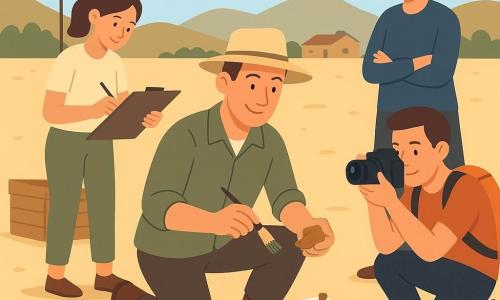
Ava laughed. “I'd need a snack halfway up!” Then she turned serious. “This slab could tell us so much about religion and daily life in ancient Mesopotamia. Let's take lots of photos and notes.”
They worked together, recording everything. Being an archaeologist wasn't just about digging—it was about being a detective, an artist, and a scientist all at once!
Chapter 3: The Great Puzzle of the Ziggurat
The next day, Ava studied the tablet and the stone slab. But something didn't add up. The carvings showed a festival at the ziggurat, where people brought gifts and celebrated. But the tablet's writing mentioned a big flood that swept through the city. Ava scratched her head.
“Hmm, these clues don't match. Did the festival happen before or after the flood? Or are they talking about two different ziggurats?”
Jamal frowned. “Maybe the flood spoiled the festival?”
Ava grinned. “Good thinking! But let's check the layers.” She explained, “Archaeologists look carefully at the layers of earth. The deeper something is, the older it is. If we find festival objects above the flood layer, we know the festival happened after.”
They hurried back to the trench. Ava carefully dug down, layer by layer, like peeling back the pages of a giant history book. Soon, she found more festival objects—drums, little statues, and even a clay whistle! All were above a thick, muddy layer filled with water-worn stones.
Ava's eyes lit up. “We've solved the mystery! The great flood happened, but the people rebuilt their city and kept their traditions alive. That's why the festival objects are above the flood layer.”
Jamal cheered. “Archaeologists really are detectives!”
Ava nodded. “We use clues from the earth, stories from artifacts, and a little bit of imagination. It's hard work, but it's also so much fun!”
Chapter 4: Secrets of the Sands
When the sun set, Ava and her team gathered under the stars. They shared stories of the day's discoveries and laughed about their sunburned noses and sandy sandwiches.
Jamal asked, “Dr. Ava, what's the best part about being an archaeologist?”
Ava smiled, looking at the clay tablet. “Every day, I get to travel through time and learn how people lived, loved, and faced challenges—just like us today. Every artifact we find is a message from the past, saying, ‘Remember us!'”
She showed the children from the nearby village how to write their names in cuneiform on wet clay. Their eyes sparkled with excitement as they pressed tiny reeds into the soft surface.
“Who knows?” Ava said. “Maybe one day, someone will dig up your names and wonder about your stories!”
That night, Ava looked out over the quiet sands of Mesopotamia. She felt proud and happy. Archaeology was more than digging up old things—it was about connecting people, past and present, and making sure the stories of long ago would never be forgotten.
And as the stars twinkled above, Ava knew she would be back tomorrow, ready for the next great discovery.