Once upon a time, there lived three beggars named Akron, Bemi, and Suvi in a city called Akron. As part of their daily routine, they would beg from morning till evening around the city to fill their stomachs and survive.
Akron and Bemi were greedy by nature, while Suvi was kind-hearted. All three were friends and often met in the evening near a hotel. One evening, after having food, they sat in a garden chatting.
Suvi noticed a bag lying unattended in the garden. When he pointed it out, the other two beggars immediately started snatching the bag from each other. Finally, they sat under a tree and opened it. Inside, they found some cash, which Akron greedily took, while Bemi took some other items. The last item, a diary, was taken by Suvi.
That evening, they returned to their small huts as usual. While cleaning his bed, Suvi noticed the diary again. Having some time to spare, he began reading it. The diary belonged to the person who had been carrying the bag. It described his daily life and how he cared for his sick mother, who was bedridden. He wrote about feeding her, cleaning her clothes, and treating her kindly.
Suvi's eyes filled with tears as he continued reading. On the last page, the man mentioned that he had gone to the market to buy cake and chocolates for his mother's birthday. Suvi realized that the accident in which they had found the bag had claimed the man's life. Overcome with grief, Suvi decided to find the old woman and care for her.
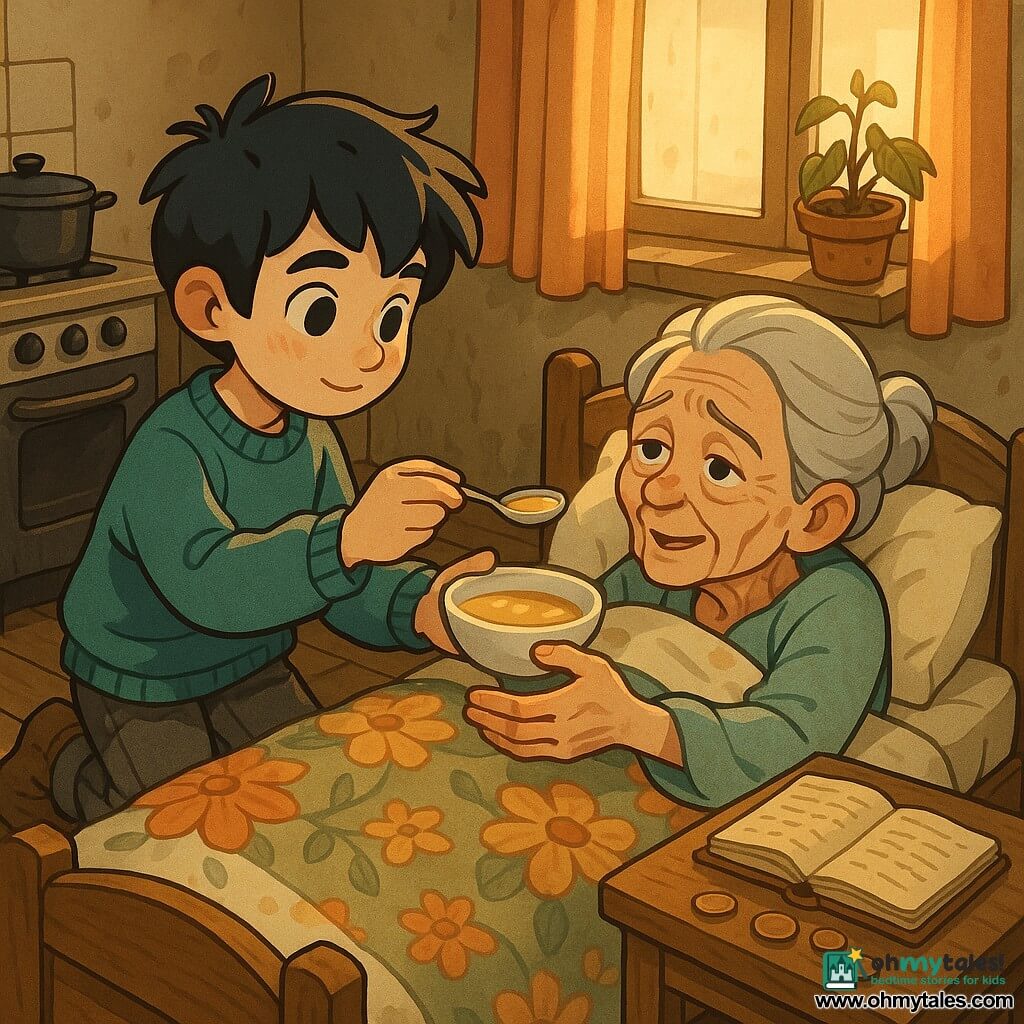
The next morning, Suvi checked the address in the diary and set out to find the house. After much effort, he finally located it. Upon entering, he found the old woman in critical condition. Suvi cleaned her, fed her, and gave her some medicine from the table. The old lady became stable and, after a while, asked Suvi about her son. Suvi, with a heavy heart, told her that her son had died in the accident.
The old woman started crying, but Suvi comforted her, promising to take care of her as if she were his own mother. Being an orphan himself, Suvi saw the old woman as a mother figure. He began looking after her diligently. Since there was no food or money in the house, Suvi started working outside to earn money and bring food for her.
One day, the old lady expressed her desire to make Suvi her legal son and leave her small house to him after her death. Suvi humbly refused, but the old lady insisted and legally made Suvi her heir.
This arrangement continued for months. As the old lady had no other relatives, Suvi became like a son to her. Eventually, the old lady passed away. Suvi was heartbroken, feeling orphaned once again.
After the old lady's death, the neighbors informed Suvi that she had some relatives in a nearby village named Baru, who should be called for her final rites. The relatives arrived and appreciated Suvi for his kindness toward the old lady.
The neighbors also revealed that the old lady owned a piece of land in her village. A government official had been searching for her because the land was found to contain expensive minerals. The government wanted to purchase the land for 100 million dollars. Since Suvi was the legal heir, the payment would be made to him.
Suvi, once a poor beggar, suddenly became a millionaire. He acquired wealth, cars, and bungalows, but remained humble. Remembering his struggles, he continued to help the poor and the elderly, staying true to his kind nature.
Moral of the Story: Patience and kindness are always rewarded.