Chapter One: The Room of Folded Maps
The boys met every Sunday in a small room at the top of the library. The room smelled of paper and lemon soap. On the walls hung rows of folded maps. They were not maps of countries. They were maps of thoughts. When you opened one, you might find a river of memories, a mountain of choices, or a quiet meadow of questions.
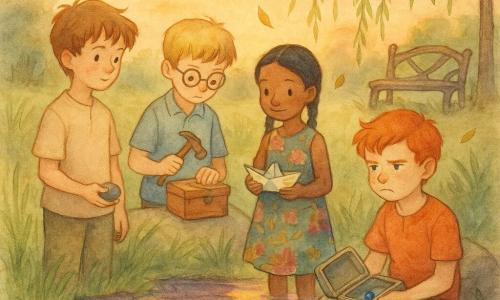
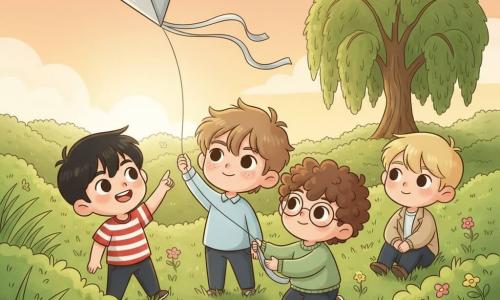
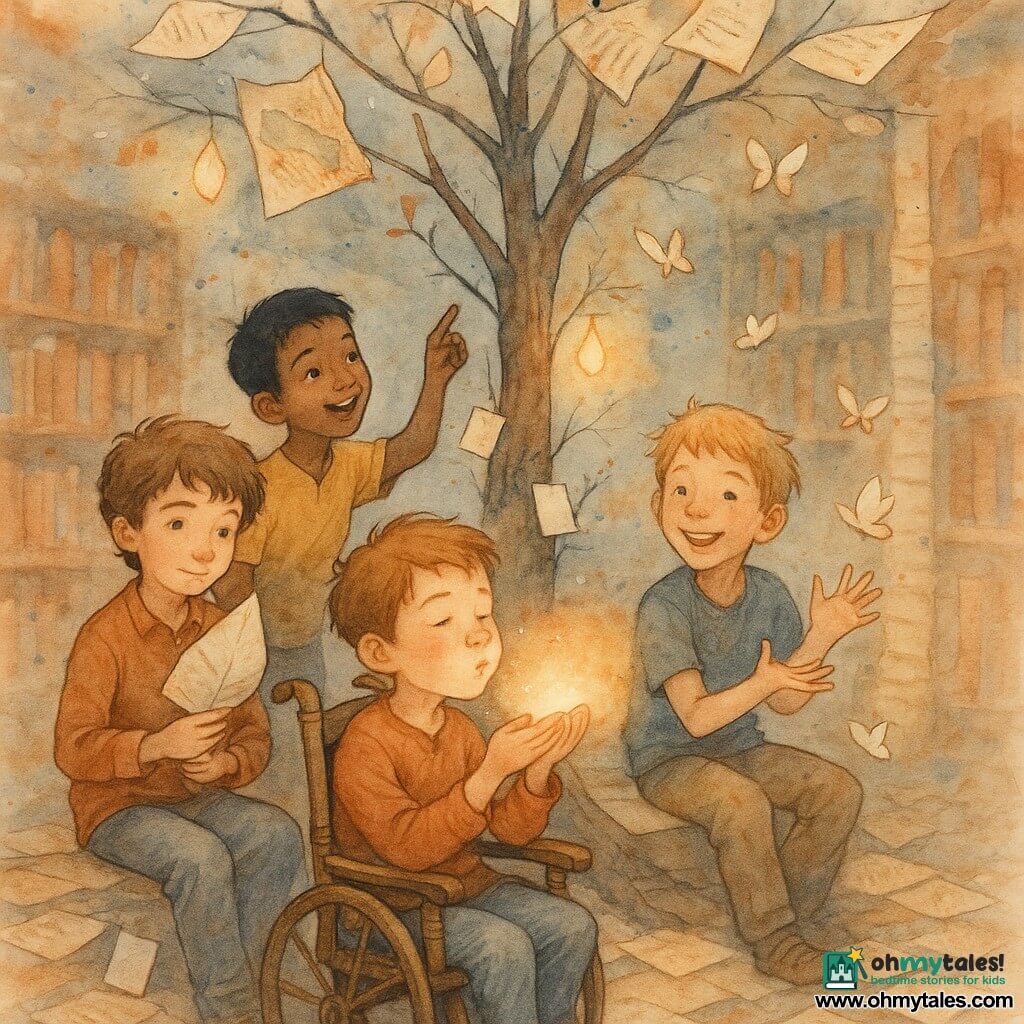
There were four of them. Milo, gentle as a willow. Aadi, quick as a kite. Ben, who laughed like rain. And Tomas, who traveled wheels like a small moon—he used a wheelchair, but he rolled as if the ground were glad to help. They were almost ten. They liked the way ideas folded into neat corners, like origami birds waiting to fly.
This Sunday, the room held a new map. It was tucked in a glass case, glowing faintly, as if the paper had caught the light of some faraway star. A small note lay beside it: Open only with a question.
Milo put a careful finger on the glass. "I want to know," he said softly, "where answers live."
Aadi grinned. "Maybe under the couch."
Ben poked the map. "Maybe answers are like marbles. If we shake the world, one will rattle out."
Tomas smiled. "Or maybe they sit inside us, like seeds. We just need to find the soil."
The map waited. It did not shout. It simply hummed like a chorus of tiny bells. Together they slipped their hands beneath the glass, and the map unfolded itself like a fan opening to show a picture no one could quite name.
A pathway of ink lines led through a town of small houses that looked like questions. At its center, a single tree grew. Its leaves were pages. Beneath it sat a figure with no face. The figure held a compass that pointed not north but inward.
"We must go," said Milo. "We must follow the path."
They gathered their courage like scarves and stepped into the map. The room sighed, and the floor became a street. The boys, now inside an idea, felt both very small and very large at once.
Chapter Two: The Town of Quiet Questions
The houses in the town asked things in polite voices. "Where do you keep your kindness?" one asked. "How heavy is a wish?" asked another. The boys listened.
A shopkeeper—an old lady whose hair was braided into a question mark—sold boxes labeled "Why" and "Because." She put them on the counter with a wink. "Some people collect Why," she said. "Others trade Because. But the best are the ones who learn to fold them together."
They entered a courtyard where a fountain spilled maps instead of water. Each splash made a thought bloom. Aadi tossed a pebble and watched a map ripple. Ben laughed, and the map turned its pages into bright butterflies. Milo picked up a small folded page. It said simply, How do you know what to do?
"Ask," suggested Tomas. "But also listen."
They sat beneath the tree of page-leaves and watched shadows move like soft questions across the ground. A child from the town joined them, carrying a lantern shaped like a thought. "Are you looking for an answer?" she asked.
"We are looking," Milo said. "But sometimes looking feels like chasing clouds."
The child smiled. "Chasing is fine for a while," she said. "But then you sit and wait. Answers like to be noticed, not hunted."
The figure with no face appeared by the tree. It spoke without words, and in their ears the sound was like a bell that made them remember a lullaby. "What makes you sure of anything?" it asked.
Milo thought of his mother's hands, folding shirts with care. Aadi thought of the kite string in his fingers. Ben thought of laughter shared until it felt like a blanket. Tomas thought of the wheels that carried him to school, the way they hummed a steady song.
"Trust," said Tomas, quietly. "Trust the small things."
The faceless figure nodded. The tree dropped a single page at their feet. On it was written: Answers are not treasures you find. They are rooms you enter with someone you trust.
Chapter Three: The Maze of Echoes
The path led them to a maze made of mirrors. Each mirror showed a different version of them—older, bolder, shy, brave. When a mirror smiled, their teeth felt like tiny moons. When a mirror frowned, their heart grew a gentle furrow.
"Who are we in here?" Ben whispered.
"You are the sound of your own footsteps," said a mirror that looked like Milo, with a small star in his eye. "You are the question turning itself over."
They wandered. Sometimes the same question repeated like an echo, louder and softer. "Where is the answer? Where is the answer?" The maze taught them patience. It let them stand still until each echo became a friendly voice.
At the center they found a small room with four chairs. The chairs were carved from the same paper as the tree's leaves. A table between them held a tiny compass. But this compass had no needle; instead, its face reflected their faces.
"To find an answer," read Aadi aloud, "you must first meet yourself."
They sat. They spoke about the things that tugged at their chests—the fear of being wrong, the wish to be brave, the sorrow of saying goodbye, the joy of playing until the stars yawned. Tomas spoke about trips to the park, how sometimes the path was rough, and how the wheels still found the song in the bumps. No one made his story small. They listened like rain listens to a roof.
"Maybe answers are not in one place," Milo said. "Maybe they are made when we put our stories together."
Ben tapped the compass. The face reflected their faces and then, like a slow dawn, their thoughts blended into one small, warm light. The light showed a doorway. Beyond it was quiet. It felt like the inside of a hug.
Chapter Four: The Room Where the Answer Lives
They opened the doorway and entered a room that had no walls, only gentle outlines. In the middle stood a mirror-tree. Its branches were questions, its fruits were answers, and its roots wound back into the boys' shoes like tiny threads.
The faceless figure sat beneath it, but this time a soft face appeared, as if sketched by moonlight. "You have walked far," it said. "Tell me, what do you seek?"
"Peace," said Milo. "And a way to know what to do."
"Look inside," said the figure. "Not to find what's missing, but to see what already shines."
Each boy peered into the tree's fruit. In Milo's fruit was the memory of his mother humming as she folded shirts. In Aadi's, the first time he let go of the kite and it soared. In Ben's, the sound of laughter that patched a rainy day. In Tomas's, the wheels learning a new path across a pebble-strewn lane and finding steady company.
The fruits tasted of kindness, of mistakes turned into lessons, of questions softened into possibilities. The room hummed like a lesson learned in a bedtime story.
"Answers are not treasures at the end of a map," the faceless figure said. "They are the light you carry that helps you make a map."
"How do we carry it?" asked Ben.
"Find it in your breathing," said Tomas, with something like a grin. He blew out a slow breath, and the light around them steadied. "Find it in small things. In the way you listen. In the way you help someone steady their hands. In the quiet you keep for a friend."
They understood slowly, like watching the tide come in. It was not sudden like lightning. It was steady like a lamp being lit.
Before they left, the map-tree dropped a dozen tiny folded maps into their pockets. Each was blank. The faceless figure winked. "These are for the journeys you will make. Unfold them when you need to remember that the answer begins inside you. Then share your map."
They stepped back through the doorway and found themselves under the library roof again. The glass case stood empty. The note beside it now read: The answer was always at home.
They looked at one another. Aadi nudged Ben. "So it's not under the couch?"
Ben laughed. "No. It's under our breathing."
Milo folded his hands. "And when we listen to others, we open more rooms."
Tomas spun his wheel gently and said, "Then we wish for peace. For our maps, and the maps of everyone we meet."
They whispered the wish together, soft as a sigh. "May there be peace."
Outside, the evening leaned down like a blanket. The library's lights twinkled. The boys walked home with blank maps in their pockets, feeling like gardeners who had just learned how to plant small, bright seeds inside themselves.