Chapter 1: The Girl Who Stacked the Days
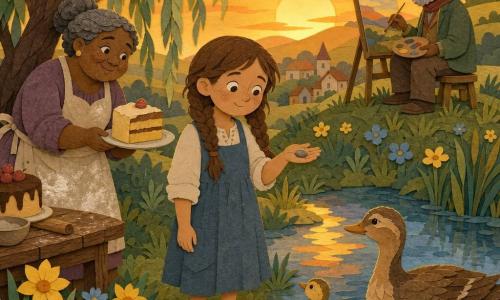
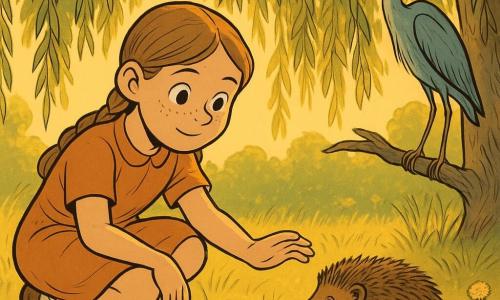
In a small village painted with the colors of gentle dawns, lived a girl named Hazel. Her hair was the color of toasted chestnuts, and her eyes shone like quiet ponds reflecting the sky. Hazel loved order. She arranged her shoes in pairs like twin stars and lined her pencils up by size on her desk. Even the leaves she collected on autumn walks were sorted by shape and hue, pressed flat as pancakes beneath her heavy books.
Hazel believed that when things were tidy, her thoughts could dance more freely. She folded her feelings like paper cranes and tucked them into the corners of her mind. But sometimes, when the wind howled at her window or laughter spilled down the street, Hazel wondered if she was missing something. Her heart beat softly, asking questions she couldn't quite hear.
One morning, as sunbeams tiptoed across her windowsill, Hazel sat in her favorite chair and wrote a list. “Things I Know,” she wrote at the top. She filled it with facts: The moon is round. Cats have whiskers. Rain helps flowers grow. But under her careful writing, something else wiggled—a wish for understanding, a gentle yearning that fluttered like a moth's wing.
Outside, the day stretched its arms wide, inviting her to step beyond her neat little world. Hazel placed her list in her pocket and tiptoed into the garden, where petals shivered with dew and birds practiced their morning songs.
Chapter 2: The Meeting Under the Willow
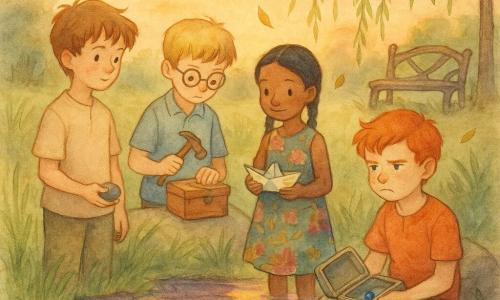
Hazel wandered to the willow tree at the edge of the garden. Its branches draped down like a grandmother's shawl, whispering secrets to the ground. Beneath this green umbrella, Hazel found Milo, a boy from her class. Milo's hair always stuck up like wild grass, and his socks never matched. He was building something strange with sticks, stones, and a piece of blue string.
“Good morning, Milo,” Hazel said, hands folded behind her back. “What are you making?”
Milo grinned and held up a lopsided bridge. “It's for the ants!” he declared. “Sometimes, I think they want to visit the garden across the ditch.”
Hazel watched as a procession of ants wobbled across the bridge, uncertain but determined. “Are you sure they want to go?” she asked. “Maybe they're happy on their side.”
Milo shrugged, his grin as wide as the sky. “Who knows what ants dream about? I just thought I'd give them a choice.”
Hazel sat beside him, curious. She had never built a bridge for ants or wondered about their wishes. Together, they watched the ants. Some crossed. Some turned back. In that moment, Hazel realized that even the smallest creature had its own story.
“If you could build a bridge anywhere,” Milo asked, “where would you build it?”
Hazel thought of her careful lists and neatly lined pencils. “Maybe… I'd build a bridge between what I know and what I feel,” she whispered.
Milo nodded as if he understood.
Chapter 3: The Festival of Lanterns
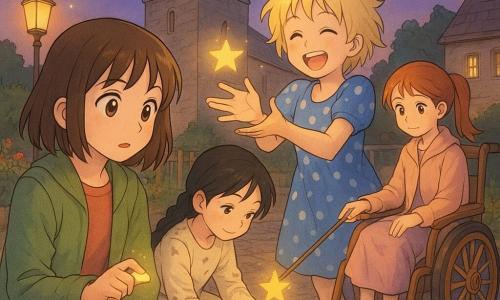
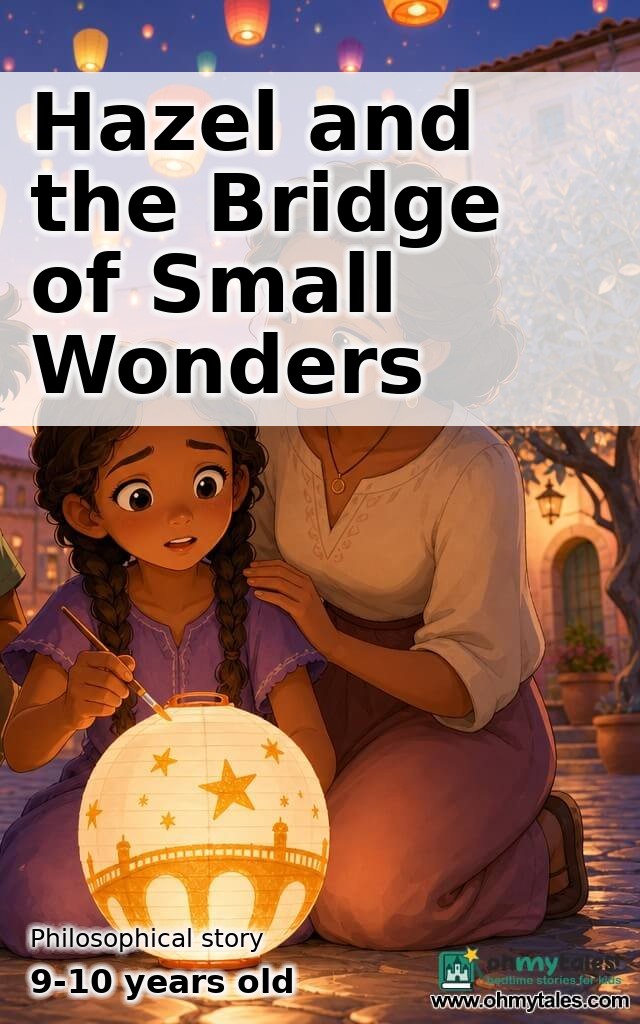
In Hazel's village, every spring, neighbors gathered for the Festival of Lanterns. People painted paper lanterns with wishes and floated them into the night sky. Hazel always painted hers with measured strokes, choosing calm blues and gentle greens. But this year, she lingered at the edge of the crowd, her lantern still blank.
Her mother noticed and knelt beside her. “What's on your mind, my starling?”
Hazel twisted her fingers. “I want my lantern to be just right. But I don't know what I wish for.”
Her mother smiled, wrinkles crinkling around her eyes. “Wishes don't have to be perfect. Sometimes, they grow as you do.”
Milo rushed over, his lantern a riot of colors and squiggly lines. “Let's paint together!” he insisted. “I like how you hold the brush like you're listening to music.”
Hazel dipped her brush into yellow, then blue, then red. The colors blended together, swirling into something new. She drew a bridge reaching across a river, stars twinkling above. When she finished, her lantern felt warm in her hands, as if her heart had left her chest to swim among the stars.
As the villagers released their lanterns, Hazel's floated higher and higher, carrying her wish—soft and shimmering—as far as the wind would take it.
Chapter 4: The Question in the Quiet
That night, Hazel lay in bed beneath her patchwork quilt. The moon peered in through her window, silver and silent. Hazel's mind wandered like a train through the gentle hills of her thoughts.
She remembered the ants crossing Milo's bridge, choosing their own path. She thought of lanterns drifting upward, wishes mingling like clouds. Hazel wondered, “Is it better to understand or to judge? Can I listen to my heart and my mind at the same time?”
Her questions rustled softly, like leaves in a gentle breeze. “What if someone's story is different from mine? Can I still be their friend?”
The moon seemed to nod at her, its light tender and patient. Hazel realized that understanding was not about knowing all the answers. It was about listening, about opening your heart like a window to the world.
She made a promise, whispered into the quiet: “Tomorrow, I'll listen more and judge less. I'll build bridges, not walls.”
Chapter 5: The Bridge of Stars
The next day, Hazel saw that Milo was teaching other children how to build bridges for ants. Some children laughed at the idea; others joined in, their hands sticky with mud and smiles. Hazel watched and understood both—the ones who laughed, afraid of being odd, and the ones who joined, eager for adventure.
Hazel found herself speaking gently. “It's all right to be different. Every story matters.” She helped a younger girl paint her own lantern, using colors she'd never chosen before.
As the sun set, Hazel climbed onto the roof of her house, a blanket wrapped around her shoulders. The world stretched wide and mysterious, stitched together by voices and dreams. Above the rooftops, a single star shone bright—a small, golden bridge in the velvet sky.
Hazel smiled, her heart full of warmth and wonder. She understood that to balance reason and heart was not to choose between them, but to let both sing together, like two notes in a lullaby.
And as the village drifted to sleep, the star above Hazel's roof glimmered with promises: of kindness, of curiosity, and of gentle understanding, lighting her way—always—back home.