Chapter 1: The Whispering Field
Morning spread its golden fingers over the sleepy town of Willowbrook. Dr. Maya Finch zipped up her sturdy red jacket, her boots crunching softly on dew-bright grass. The air smelled fresh and full of promise. Today was a day for discovery.
Maya was an archaeologist. She studied the secrets the earth kept hidden—bones, pots, and coins that told stories from long ago. Her hands were gentle and patient, trained to brush away the past with care. She loved the hush that fell over a field before a dig began. It was as if the ground itself was waiting to whisper its tales.
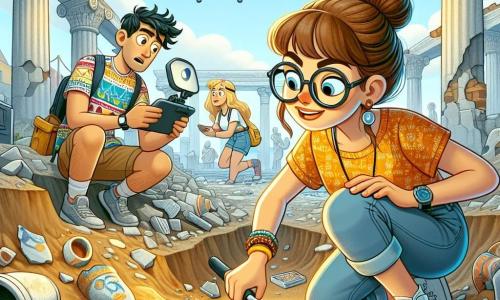
Today, Maya stood at the edge of a broad, green meadow that stretched under the sky like a soft blanket. Her team gathered nearby, their backpacks full of tools: tiny brushes, spades, and notebooks. Each tool had its own job, just like each member of the team. Archaeologists were detectives of history, and every clue mattered.
As Maya gazed at the field, she imagined the people who might have walked here hundreds, even thousands of years ago. Did they laugh and sing? Did they plant seeds, build fires, or dream beneath the stars? The earth remembered, even if people forgot.
“Let's begin,” Maya said softly, her voice warm as sunlight. The team spread out, marking squares with string—making a giant patchwork quilt on the grass. Archaeologists worked in careful, measured sections so they wouldn't miss anything important.
Maya knelt at the first square, her fingers tracing the soft earth. She took a deep breath, feeling both excitement and calm. It was time to listen to the field.
Chapter 2: The Gentle Dance of Discovery
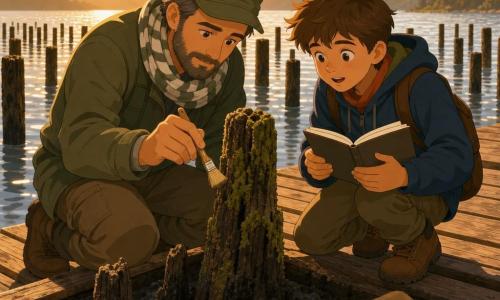
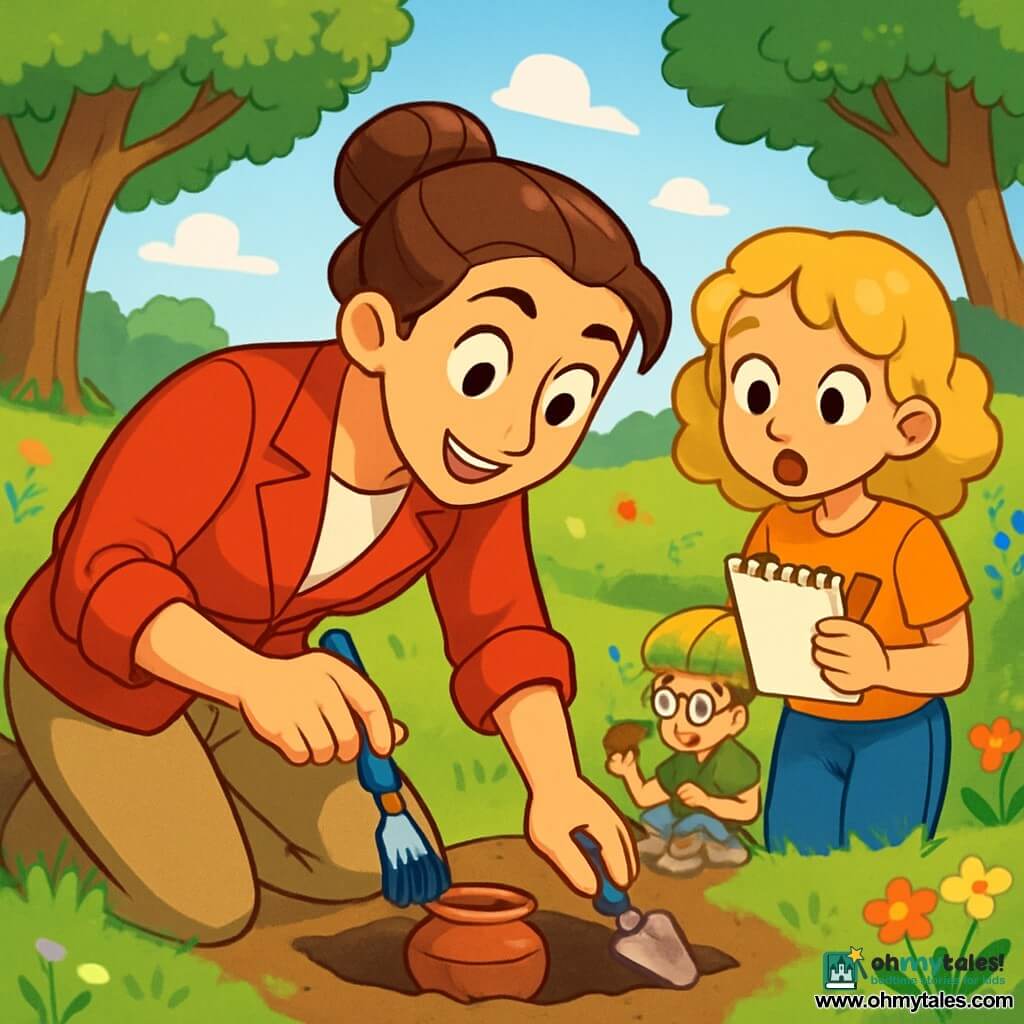
Digging was not about shoveling fast or making a mess. Maya showed the younger helpers how to use small trowels, scraping away just a little soil at a time. “Archaeology is about patience,” she explained. “We don't want to break what the earth has protected.”
The team worked in silence, broken only by birdsong and the soft swish of brushes. Every handful of dirt might hide something precious. Sometimes, they found nothing but roots and pebbles. But sometimes, a tiny glimmer caught the light—a piece of pottery, a bead, or a shiny shell.
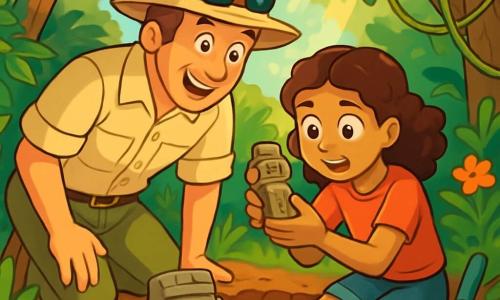
Maya's heart fluttered as she spotted something round and smooth. She called over the team, her voice barely louder than a whisper. Carefully, she brushed away the soil. A small, clay bowl appeared, its rim chipped but still beautiful.
“Look,” she said, holding it up. “Someone made this with their own hands. Maybe for eating, or maybe for a celebration.”
The team gathered close, eyes wide with wonder. Maya explained how archaeologists learned about ancient people from the things they left behind. “A bowl tells us what people ate or how they celebrated. Even the way it's painted can tell us about their favorite colors or stories.”
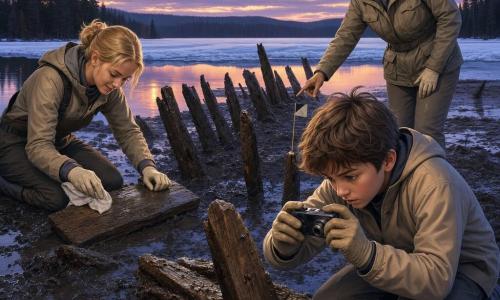
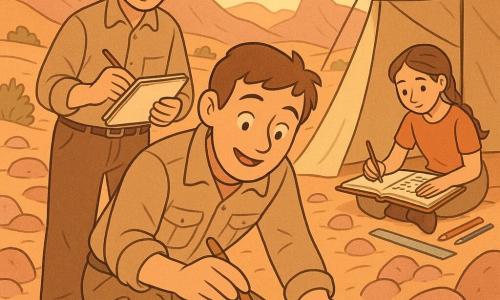
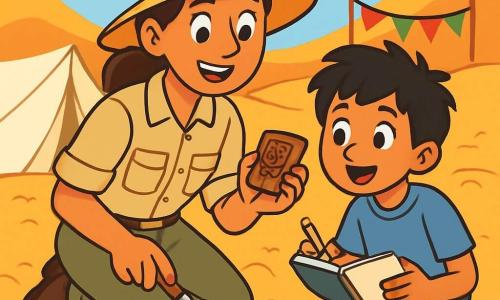
As the sun climbed higher, the team found more treasures: a bone comb, a stone arrowhead, a piece of blue glass. Maya wrote careful notes for each find, drawing tiny pictures and measuring the depth. “Recording everything helps us remember where and how we found each object. That way, we can piece together the bigger story.”
By lunchtime, their collection grew, and so did their curiosity. What kind of people had lived here? What adventures had they had?
Chapter 3: The Hidden Map
After a picnic lunch under a nearby tree, Maya gathered everyone for a special task. She unrolled a big sheet of paper and smoothed it on the ground. “This is our site map,” she said. She taught the team how to mark where each object was found, using a grid of squares. Every mark was a clue.
“The map helps us see patterns,” Maya explained. “If we find many cooking pots in one area, maybe it was a kitchen. If we find arrowheads together, maybe it was a place to make tools.”
Suddenly, one of the helpers, a girl named Zoe, shouted, “There's something strange in my square!” Maya hurried over. Zoe pointed to a circle of blackened stones, hidden beneath the soil.
Maya knelt beside her, heart beating faster. “This could be a fireplace,” she said. “People cooked here. Maybe they told stories around the fire, just like we do.” Zoe grinned, imagining laughter and warmth long ago.
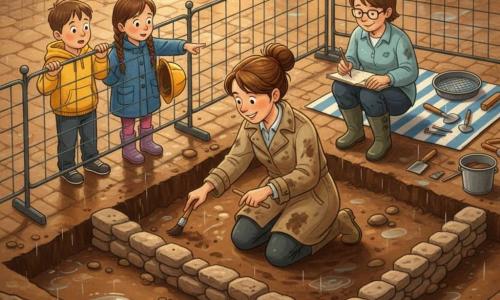
Working together, the team uncovered more stones, their shapes charred by ancient flames. Maya explained how archaeologists used clues like ash, bone, and charcoal to learn what people ate—deer, berries, nuts, and fish.
It felt magical to stand where others once stood, to share the same ground and sky. The field seemed to hum with old songs and secrets.
Chapter 4: The Mystery Deepens
The next day, clouds drifted across the sky, trailing shadows over the dig. Maya felt a tingle of excitement as she began to work. She trusted her instincts, and today, they led her to the farthest corner of the field.
There, her trowel hit something hard. She slowed, brushing aside the earth with the tip of her finger. A glint of metal appeared—a small, delicate brooch shaped like a bird, its wings spread wide. Maya's breath caught. This was special.
She called the team over, everyone gathering like birds themselves. “This brooch could have belonged to someone important,” Maya said. “Maybe it was a gift, or a lucky charm.” She explained how archaeologists sometimes used books and computers to compare finds. “We look for similar objects in museums. That helps us guess how old it is, and who might have worn it.”
The team talked about the person who lost the brooch. Was it a child, playing in the grass? A traveler, resting by the fire? Each idea spun a new story.
Maya smiled. “Archaeology is about asking questions. Sometimes we find answers, sometimes we find more mysteries. That's what makes it so wonderful.”
They carefully packed the brooch in a soft cloth, ready for more study. The day ended with laughter, stories, and the promise of more discoveries tomorrow.
Chapter 5: The Stories Beneath Our Feet
The final day of the dig arrived, soft and golden. Maya walked the field, her boots sinking gently into the earth. She felt thankful—for the work, for her team, for the secrets the ground had shared.
Together, they gathered all the finds: the bowl, the comb, the arrowhead, the brooch. Each object was cleaned, labeled, and stored with care. Maya explained how archaeologists didn't keep treasures for themselves. “Everything we find belongs to everyone,” she said. “We share it with museums, so all people can learn.”
Back in her small lab, Maya and her team used magnifying glasses to study every detail. They took photographs, made drawings, and wrote reports. Sometimes they used computers to scan objects, revealing patterns or writings too faint for the eye to see.
Maya loved this part of her work. It was like putting together a giant puzzle, each piece a little closer to understanding the past. She imagined children visiting the museum, eyes shining as they saw the brooch or the bowl. Maybe some would dream of becoming archaeologists too.
That night, as the moon rose silver over Willowbrook, Maya stood by her window. She thought about all the stories hidden beneath fields and forests, rivers and cities. She knew she would never finish finding them all. But that was the best part—there would always be more to discover, for her and for everyone who listened to the earth.
And somewhere in the whispering grass, the past and the present danced gently together, singing their secrets into the night.