Chapter 1: The Whispering Lake
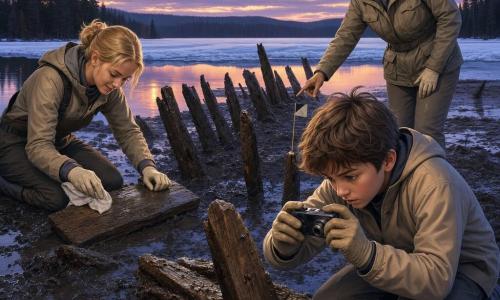
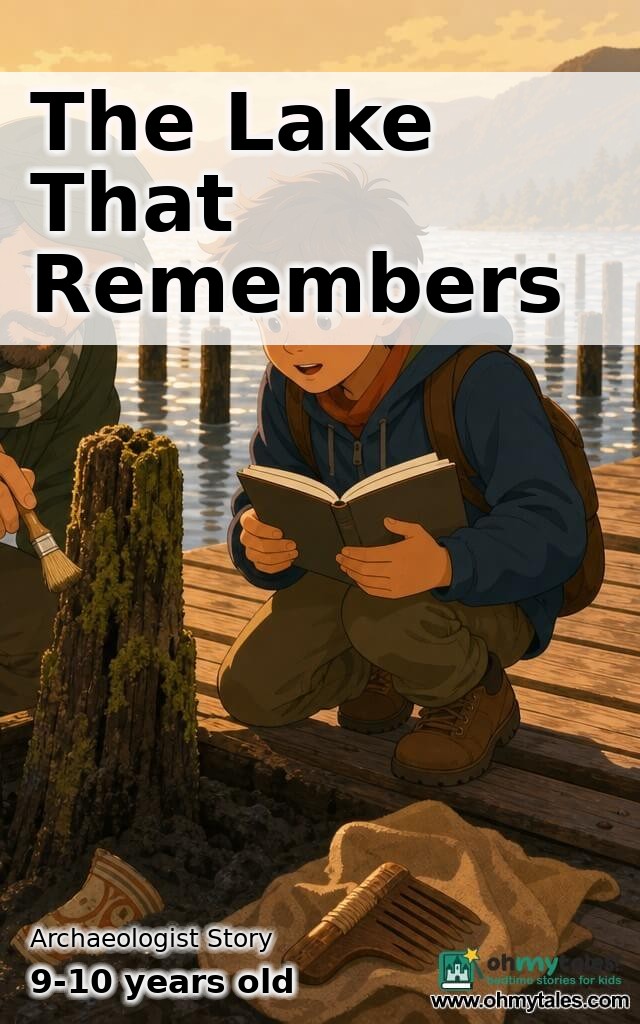
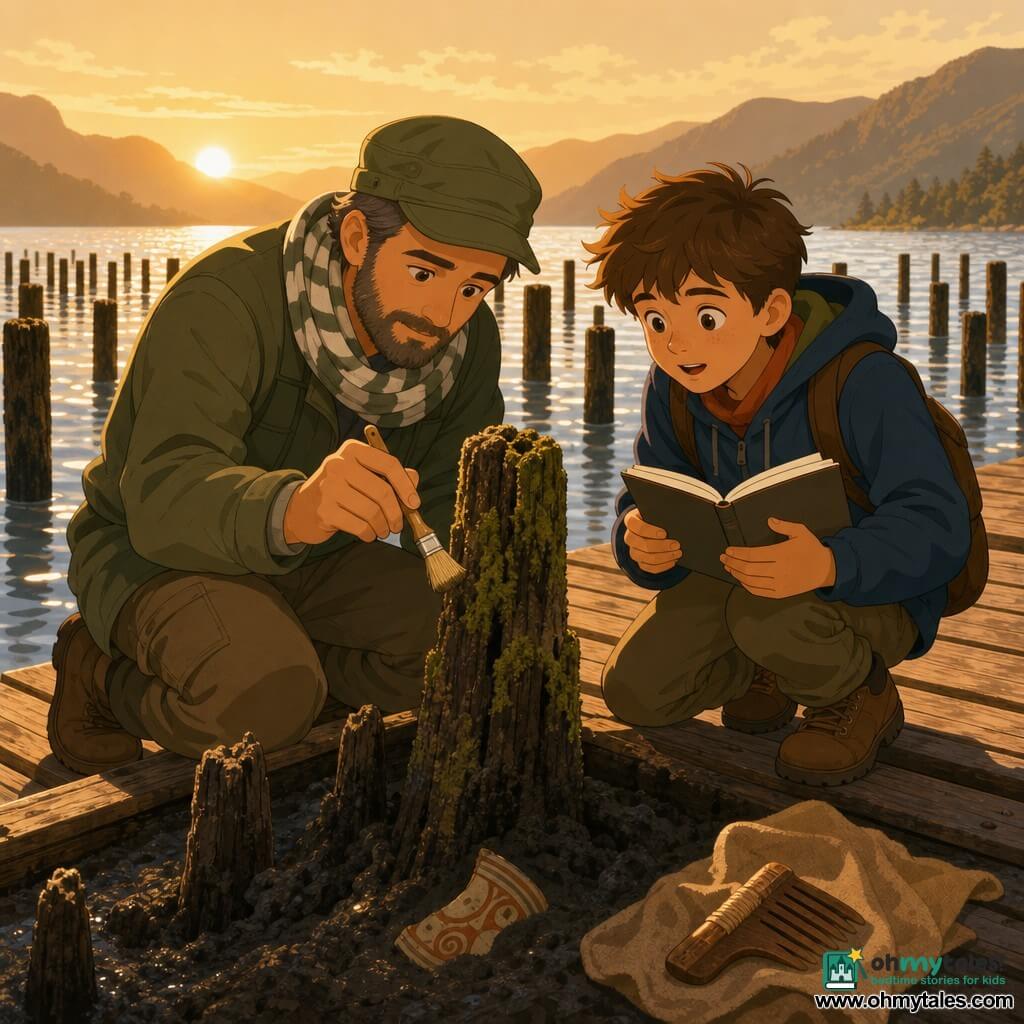
Mr. Eliot knelt by the silver shore, his breath sending tiny ripples over the mountain lake. The water was so clear he could see the pebbles glinting below like forgotten coins. A circle of wooden posts rose from the water nearby, silent and mysterious. This was the old palafitte village, built hundreds and hundreds of years ago above the lake by ancient people who lived close to nature. Mr. Eliot, the archaeologist, was here to learn their story.
“Listen,” he murmured to his apprentice, Leo, who squatted beside him with a notebook. “The lake remembers everything. If we listen carefully—and look ever so gently—we might discover how people once lived here.”
Leo grinned. “Do you think we'll find gold or jewels today, Mr. Eliot?”
“Ah! Archaeology isn't about treasure,” Mr. Eliot replied, smiling. “It's about listening to the past and helping protect it, so others can listen too.”
He unrolled a soft brush, a trowel, and a little wooden pick. “And remember, Leo: never rest your tools on the old wooden walls. They are fragile, like dried leaves in autumn. We must be patient, gentle, and always respectful.”
Together, they padded along the floating walkway built for the team. The air shimmered with the calls of distant swans. As they reached the first platform, Mr. Eliot knelt and closed his eyes, hearing the soft lap of water against the ancient beams. “Let's begin.”
Chapter 2: The Floating Village
The team gathered, each member with a job—photographs, sketches, soil samples. They worked quietly, listening for the lake's whispers. Mr. Eliot showed Leo how to brush away mud and algae from the posts without scraping the wood.
“Look, these posts are more than a thousand years old,” he said. “People built their homes here to stay safe and dry. Can you imagine living above the water, listening to the waves every night?”
Leo shivered, imagining moonlit nights and laughter echoing over the lake. “Did they fish from their windows?”
Mr. Eliot chuckled. “Maybe. Or perhaps they watched the seasons change, just as we do now.”
Suddenly, Leo spotted a glint beneath a tangle of roots. “What's that?” he whispered.
Carefully, Mr. Eliot brushed aside the roots and pulled out a small pottery shard, decorated with swirling patterns. “It's a piece of someone's bowl,” he said. “Imagine all the breakfasts and dinners that once filled this.”
He held the fragment for everyone to see. “We'll document it, measure it, then return it to the lab. Every piece helps us understand not just what people made, but how they lived, what they cared about, and who they were.”
As the sun climbed, the team moved slowly, never rushing, always listening—to each other and to the past.
Chapter 3: The Gentle Dig
The next day, a soft rain drummed on the lake as fog drifted low, making the world feel quiet and hidden. Mr. Eliot wore his green cap and his lucky scarf, ready for a day of gentle discovery.
“Remember,” he told Leo as they unpacked their equipment, “we're not digging for treasure, but for stories. Every layer of earth is a page of history. And please, Leo, never put a trowel on the old plank walls. They could crumble under the weight.”
Leo nodded, repeating, “Tools in the box, walls left alone.”
They began to clear a square near what had once been a doorway. Bit by bit, they brushed away the soil. Sometimes they found nothing but smooth pebbles; other times, a sliver of bone or a bead, pale as moonlight.
“Here's a fish bone,” Leo said, holding it up.
“That tells us these villagers fished,” Mr. Eliot explained. “Maybe they shared stories at dinner, laughing just like we do.”
Suddenly, the earth gave up something thin and round—a wooden comb, carved with tiny dots. Leo's eyes widened. “It's beautiful!”
“And very old,” said Mr. Eliot. “See how someone decorated it? That's care and pride, even in simple things. We must take good care of it, too. We'll photograph it in place before lifting it.”
He showed Leo how to gently set a scale beside the comb, snap a photo, then wrap the find in soft cloth before placing it in a special box.
As the day ended, the lake seemed pleased, shimmering with silvery rain, as if it approved of their careful work.
Chapter 4: Sharing the Past
A week passed, and the team's tent became a cozy hub full of maps, drawings, and muddy boots. Each evening, Mr. Eliot gathered everyone to share what they'd found.
“This bead was once bright blue,” he pointed out, holding up a tiny glass bead beside a lamp. “It traveled a long way, maybe from far across the mountains. What does that say about the people here?”
Leo thought hard. “Maybe they traded with other villages?”
“Exactly. Archaeology shows us how people connected with each other. It's not just about things, but about sharing, listening, and understanding.”
Whenever someone found something, Mr. Eliot made sure they recorded its location, drew a picture, and told what they saw and felt. “Every detail matters,” he explained. “Someday, someone else will read our notes and learn from them.”
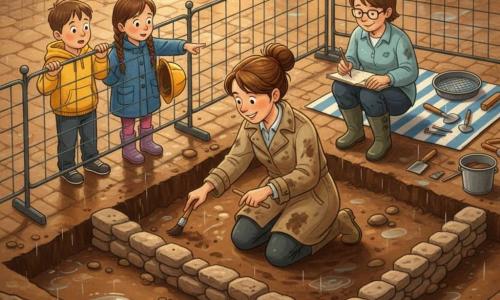
One afternoon, a visitor arrived—a group of local schoolchildren, eyes wide with curiosity. Mr. Eliot welcomed them with a gentle smile. “Would you like to see how we protect the past?”
He showed them how to brush the soil, how to wrap delicate finds, and most importantly, how to treat the site with respect. “Never climb on the walls,” he reminded gently. “They're ancient, and we're their guardians now.”
The children listened, asked questions, and even drew pictures of the village as it might have been, houses standing over the water like wooden birds.
Chapter 5: The Protected Village
As the excavation drew to a close, the team took down their tents, cleaned their tools, and made sure every post was safe and supported. Where there had once been confusion and old trash, now there were signs explaining the story of the palafitte village, ropes to keep visitors away from fragile spots, and paths to guide the curious.
Mr. Eliot stood by the lakeshore with Leo, watching the sun set behind the mountains. The floating beams glowed golden in the light, casting long, peaceful shadows.
“You know,” said Leo, “it feels good to protect this place. It's like we're part of its story now.”
Mr. Eliot smiled, a calm and steady smile. “We are. We listened to the past, learned from it, and made sure others can learn too. That's the heart of archaeology—patience, care, and listening.”
The swans glided past, and the lake seemed to whisper its thanks. The old village, once hidden and crumbling, was now safe for the future.
Mr. Eliot felt proud—not for any treasure, but for the quiet work of listening, learning, and protecting. And as the stars appeared above the mountains, he knew the palafitte village would keep telling its story, to anyone willing to listen.