Chapter 1: The Whispering Sands of Gujarat
Dr. Maya Rao squinted into the golden sunlight, her hat casting a determined shadow over her eyes. All around her, the sands of Gujarat shimmered with secrets. Today, Maya felt it in her bones: something extraordinary was waiting beneath her feet.
Maya was not just any archaeologist—she was one of the most passionate explorers of ancient India, a country bursting with stories hidden in its earth. As a child, she'd listened to her grandmother's tales of kingdoms long lost and treasures buried in time. Now, as an adult, she uncovered real pieces of those stories with her own hands.
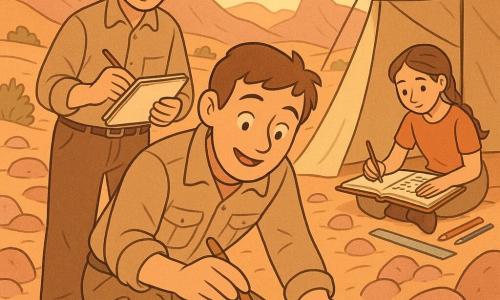
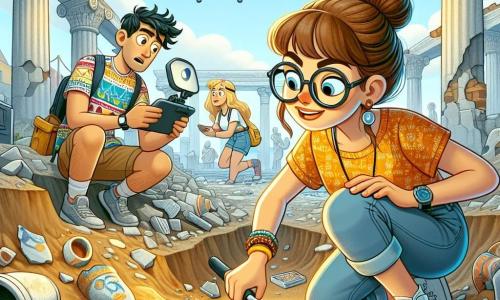
The dig site buzzed with excitement. Tents flapped in the gentle wind, and a team of archaeologists, students, and local helpers moved carefully around shallow pits marked with string and tiny flags. Maya checked her tool belt: trowel, brush, notebook, measuring tape, and her favorite magnifying glass. She patted her lucky compass for good measure.
This time, Maya and her team were searching for clues about the Indus Valley Civilization, one of the world's oldest urban societies, which had flourished over four thousand years ago. People living then built cities with straight streets, houses with bathrooms, and even had drains! They used mysterious symbols called the Indus script, and no one had yet cracked their secret language.
“Remember, everyone,” Maya called out, “dig slow and gentle. Every grain of sand could be a doorway to the past.”
Near her, a boy named Ravi, the youngest member of the team, looked up eagerly. “Dr. Rao, do you think we'll find something today?”
Maya smiled. “Every day is a day for discovery, Ravi. We just have to look carefully, listen hard, and never lose our curiosity.”
The sun climbed higher as Maya began her work. She knelt beside a marked square, feeling the cool shade of the canopy above. With her trowel, she scraped away thin layers of sand, eyes sharp for any change in color or texture. Sometimes, archaeology was like solving a puzzle with missing pieces and invisible clues.
As she brushed away the loose earth, she thought about the people who lived here so long ago. Did they play games? Did they tell stories under the stars? Did they wonder if anyone would ever find their lost cities?
Suddenly, her trowel struck something hard.
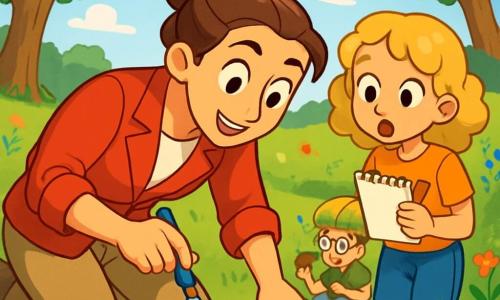
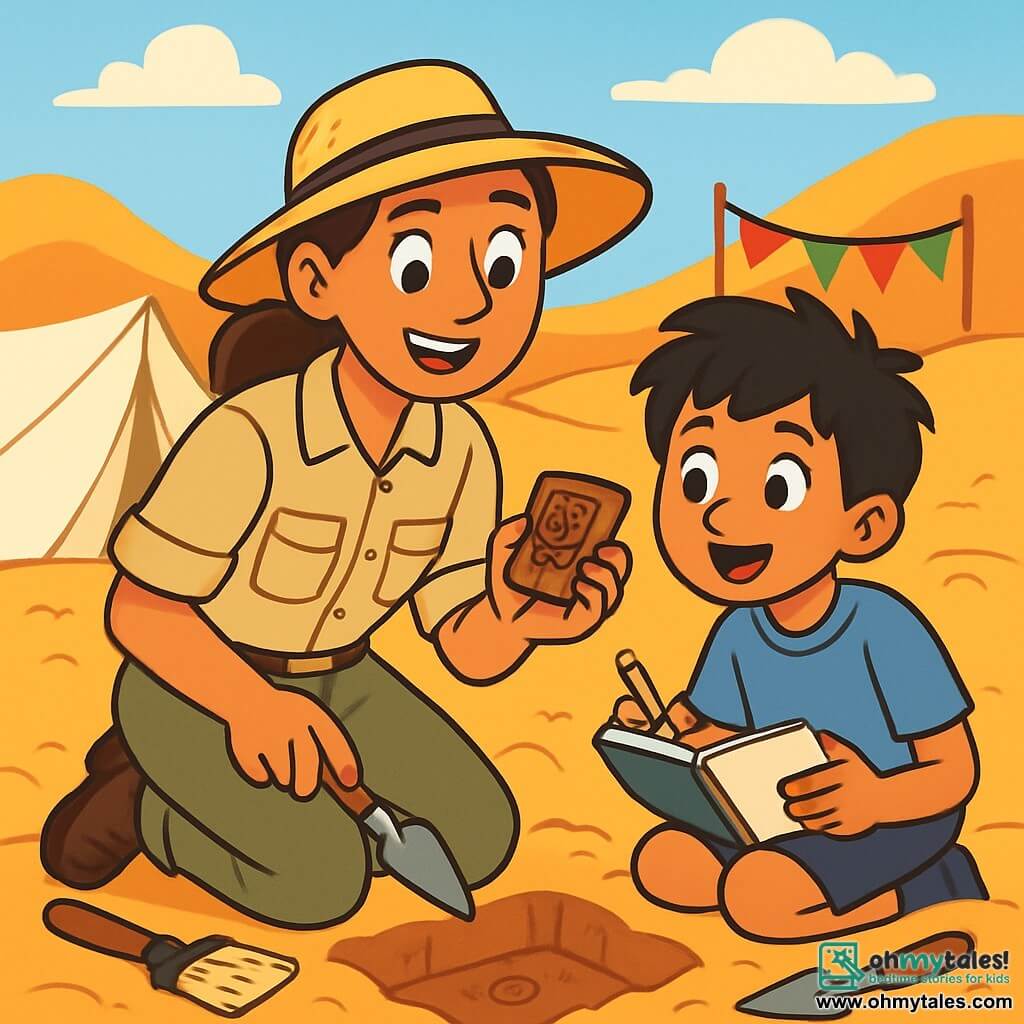
“Careful now,” Maya whispered to herself. She switched to her soft brush, gently revealing the edge of a small, baked clay seal—its surface carved with a strange animal and rows of symbols. Her heart skipped a beat.
She waved Ravi over. “Look at this! It's an Indus seal, perfectly preserved!”
Ravi gasped. “What do the pictures mean?”
“That's the mystery,” Maya said. “These symbols are the Indus script. We don't know how to read them yet, but every new seal brings us closer.”
Together, they carefully lifted the seal, recording its exact position and depth in Maya's notebook. She sketched the designs with quick, steady strokes. Nearby, the rest of the team gathered, excitement growing.
“We'll send this for analysis,” Maya explained. “Who knows what secrets it holds?”
As the sun set, bathing the site in pink and orange, Maya felt a spark of hope. The ancient city was whispering through the sands, and she was listening.
Chapter 2: The Puzzle Beneath the Earth
The next morning, Maya woke early to the sound of birds and the spicy aroma of chai. She sipped her cup, reviewing her notes from the day before. The seal was extraordinary, but it was only one piece of the puzzle.
At the site, Maya gathered her team for the daily briefing. “Today, we'll focus on the northern trench. We've found signs of brick walls. If we're lucky, we might uncover a part of an ancient house!”
Ravi's eyes widened. “A real Indus house? With rooms and everything?”
Maya grinned. “With rooms, maybe pots and tools, and if we're lucky, some toys or jewelry. These finds help us understand how ancient people lived.”
Archaeologists use many tools, she explained—trowels and brushes for digging, sieves for sifting soil, and tiny picks for delicate work. They also use technology: cameras to record finds, GPS devices to map locations, and computers to analyze data.
Maya led Ravi and two helpers to the trench. The soil here was harder, mixed with gravel and broken pottery. They worked slowly, Maya reminding everyone to look for changes in the earth's color—sometimes a dark patch meant a fire pit or floor.
Hours passed. Maya's knees were sore, but she didn't mind. Suddenly, Ravi stopped and stared at the ground.
“Dr. Rao, look!” he cried.
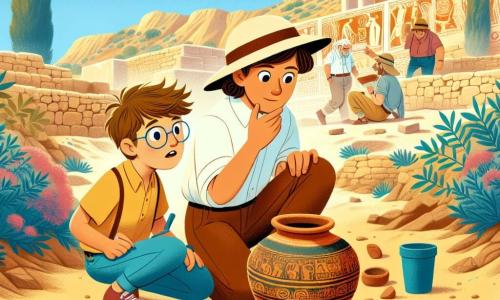
Maya hurried over. In the soil was a ring of blackened clay—charcoal from an ancient hearth! Nearby, she spotted a tiny, delicate bead.
She knelt beside Ravi. “This bead was probably part of a necklace. People in the Indus Valley loved ornaments. They made beads from carnelian, a beautiful red stone, and sometimes even gold!”
Ravi grinned. “Do you think they wore them to parties?”
“Maybe,” Maya chuckled. “Or maybe to show how important they were. Or just because they liked pretty things, like we do today.”
As the afternoon sun blazed, Maya and her team uncovered more: smooth bricks in perfect lines, fragments of painted pottery, and a broken copper tool. Each find told a story—of builders, craftsmen, potters, and families.
In the cool shade of the tent, Maya cleaned the artifacts with tiny brushes and water. She labeled each piece, noting where and how deep it was found. Archaeologists are like detectives, she explained to Ravi, always keeping careful records to solve the mysteries of the past.
As evening approached, Maya felt tired but happy. “We've uncovered a corner of an ancient home,” she told her team. “And with every find, we learn more about the world that once was.”
Chapter 3: The Monsoon Surprise
One week later, the sky darkened with heavy clouds. The monsoon had arrived early.
Maya checked her weather app, frowning. “We have to protect the site. Rain can wash away our work!”
The team rushed to cover the trenches with tarps, securing them with heavy stones. But as the first drops fell, a strong wind whipped through the camp. A corner of the biggest tarp came loose, flapping wildly.
“Hold it down!” Maya shouted, grabbing one end while Ravi and the helpers ran to the other side. Rain pelted their faces. The tarp slipped and slid, spraying mud everywhere.
With a final tug, they anchored the tarp just as thunder boomed overhead. Everyone was soaked and muddy, but they cheered.
“That was close,” Maya laughed, her ponytail dripping. “Archaeology isn't just about digging. Sometimes, it's about protecting what you've found!”
The next morning, the rain had stopped. The air was fresh, and the earth smelled sweet. Maya checked the trenches—nothing had washed away. She breathed a sigh of relief.
As she walked the site, she noticed something odd where the water had flowed. The edge of a stone poked out from the mud, different from anything they'd found before.
Maya knelt, heart thumping. Carefully, she dug around the stone. It was smooth, curved, and decorated with tiny carved elephants!
“Everyone, come here!” she called.
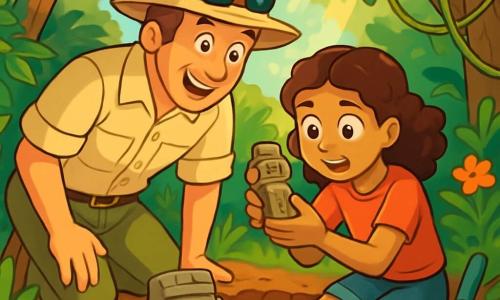
The team gathered as Maya uncovered a small, lidded box made of soapstone. The carvings were beautiful, showing elephants, tigers, and strange symbols.
“This is incredible,” Maya whispered. “A treasure chest from the Indus Valley!”
Ravi's eyes sparkled. “Do you think there's something inside?”
Maya nodded. “Let's find out together.”
With steady hands, she lifted the lid. Inside were tiny beads, a copper ring, and a folded piece of beaten gold.
The team gasped. “Jewelry! And what's this gold piece?” Ravi asked.
Maya examined it with her magnifying glass. “It's a gold amulet, shaped like a fish. Fish were important in Indus culture—they might have been good luck, or a symbol of water and life.”
The box and its treasures would help them understand who lived here, what they valued, and maybe even what they believed.
Chapter 4: The Mystery of the Lost Script
Days passed, and Maya's tent filled with artifacts and notes. She worked late into the night, drawing, measuring, and comparing finds. The seal with its strange symbols still puzzled her.
One afternoon, Ravi burst in, waving a sheet of paper. “Dr. Rao! Look at this! I made a drawing of the seal's symbols. Do you think they mean anything?”
Maya smiled, taking the paper. “Let's see. The Indus script is a big mystery. No one has figured out how to read it yet, but every new inscription helps us get closer.”
She pinned Ravi's drawing to her board, next to photos of other seals. “Maybe the symbols show names, or prayers, or even a story. Some believe they're about trade or important events.”
Ravi traced the fish symbol on the gold amulet. “Like secret messages?”
“Exactly! Archaeologists compare symbols, look for patterns, and share ideas with experts around the world. Sometimes, we use computers to analyze the shapes. It's like being a codebreaker!”
Maya handed Ravi a book full of pictures—ancient pottery, tools, jewelry, and other seals. “Look how the styles change from one region to another. Archaeologists study everything: what people ate, what they built, how they traded with others.”
Ravi's eyes widened at a photo of a toy cart. “They had toys?”
Maya laughed. “They did! Kids then probably played like you do now—with carts, animals, and games. Archaeology teaches us that people from the past were a lot like us.”
That night, Maya lay awake, thinking about the discoveries. The Indus script, the gold fish, the carved box—each find was a clue. But the biggest mystery remained: why did this great civilization disappear?
Some said it was climate change, or floods, or maybe disease. Maya believed the answer was hidden in the layers of earth, waiting to be revealed.
Chapter 5: The Secret Chamber
One morning, as Maya was checking the southern trench, her trowel scraped against something hollow. She paused.
“Ravi, get the brush,” she called.
Together, they brushed away the dirt, revealing a flat stone slab. Maya tapped it gently. It sounded empty beneath.
“A chamber!” Maya exclaimed. “Help me clear the edges.”
The team worked carefully, excitement building. Soon, they uncovered a small opening, just big enough to crawl through.
Maya shone her flashlight inside. The beam revealed painted walls—red, black, and ochre patterns swirling like waves. In the corner, a pile of pottery shimmered in the dust.
Maya squeezed through, her heart pounding. Inside, she found a low platform, covered with more beads, a tiny bronze statue of a bull, and a clay tablet covered in Indus script.
She called for the team to join her, one by one. Everyone stared in wonder.
“This must be a special room,” Maya said softly. “Maybe a place for ceremonies, or to keep precious things safe.”
Ravi picked up the bull statue. “Why a bull?”
“In the Indus Valley, bulls were symbols of strength and farming. They were very important to the people here.”
Maya held up the clay tablet. “This might be a record, a letter, or even a list of offerings. When we study it, along with the seal and the amulet, we might discover something amazing.”
They spent the day documenting the chamber. Maya explained how they would take careful photographs, draw detailed maps, and use computers to make 3D models.
That night, under the stars, Maya gathered the team around a campfire.
“We've made incredible discoveries,” she said, “but the greatest treasure is understanding how ancient people lived, dreamed, and hoped. Every artifact is a message from the past, waiting for us to listen.”
Ravi nodded. “I want to be an archaeologist like you, Dr. Rao.”
Maya smiled. “Then always stay curious, work carefully, and never stop asking questions. The past is full of adventures, and we're just getting started.”
Chapter 6: Echoes of the Ancient World
The expedition's final day arrived. Maya walked the site, feeling proud and grateful. The trenches were filled in for protection, the artifacts packed safely, and the records complete.
In her tent, Maya wrote her final report. She described the brick house, the jewelry box, the gold fish, and the secret chamber. She explained how each find added to their knowledge of the Indus Valley people—their creativity, their cities, their beliefs.
Maya knew their work would help other archaeologists and inspire new questions. Maybe, one day, someone would finally crack the code of the Indus script.
As the team packed up, Ravi ran to Maya, holding a small pottery shard he'd found that morning.
“Dr. Rao, for you. To remember the adventure.”
Maya took the shard, smiling. “Thank you, Ravi. But the real adventure is just beginning. Archaeology isn't just about digging up things—it's about connecting with the stories of people who came before us.”
They loaded the trucks and waved goodbye to the whispering sands. Maya looked back one last time, feeling the echoes of ancient voices carried on the wind.
She knew she would return. There were still so many mysteries waiting beneath the earth, and so many stories left to discover.
After all, every grain of sand has a story to tell—if you listen closely enough.