Chapter 1: The Whispering Sands of Crete
Dr. Sophia Lark woke up to the warm sunbeams streaming through her tent. She rubbed her sleepy eyes and smiled. Today was another day on the island of Crete, and she couldn't wait to start digging. Sophia was not just any explorer—she was a passionate archaeologist, always ready for an adventure. Her job was to find clues about people who lived thousands of years ago, and this time, she was searching for secrets of the Minoan civilization.
The Minoans were a mysterious people who lived long ago, building grand palaces, making beautiful pottery, and sailing across the sea. Their most famous palace was at Knossos, with twisting halls and colorful frescoes. Some people even called them the first great civilization of Europe!
Sophia loved learning about the Minoans. Their stories were like puzzles waiting to be solved. She packed her trusty trowel, brushes, notebook, and magnifying glass into her bag. She always wore a wide hat to keep the sun away and sturdy boots for walking over rocky ground.
As she stepped outside her tent, she saw her team already gathered by the dig site. The air buzzed with excitement. "Good morning, Dr. Lark!" called Alex, her eager assistant, waving a clipboard.
"Morning, team! Remember, every grain of sand could hide a clue," Sophia replied, grinning. She glanced at the map of the site. Today, they would be working near an ancient wall, hoping to find pottery or maybe even a hidden room.
Sophia knelt by the earth and gently pressed her trowel into the soil. The work was slow, but she didn't mind. Archaeologists had to be careful—not to break anything buried under the ground. As she worked, she imagined the Minoans bustling around in their beautiful city, wearing bright clothes and dancing to music.
Chapter 2: The Mystery in the Dirt
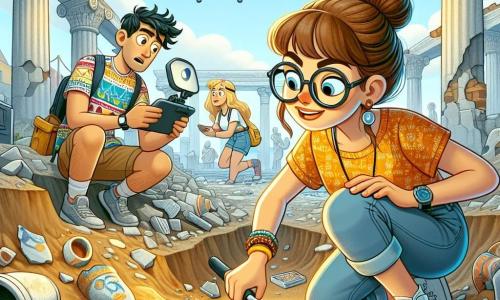
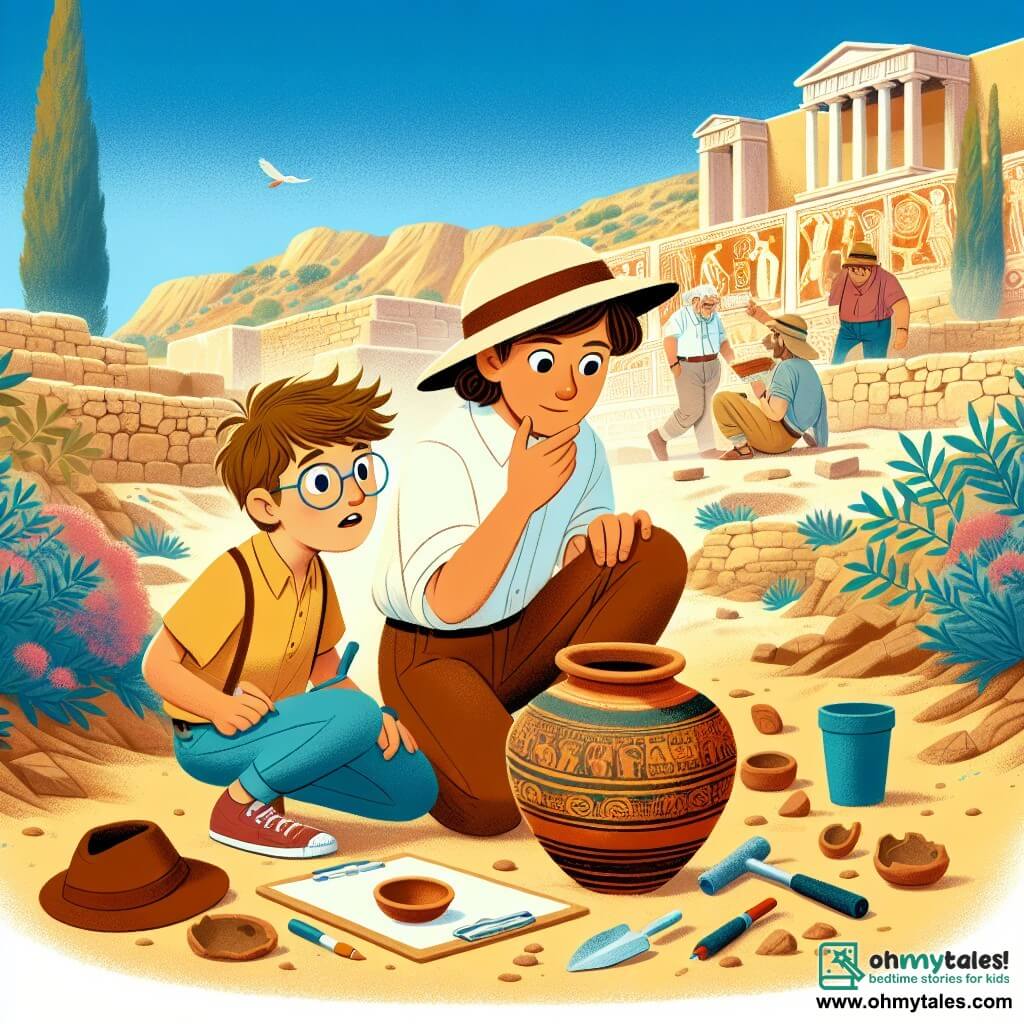
The sun climbed higher as Sophia and her team brushed away layers of soil. Suddenly, her trowel struck something hard. "I think I've found something!" she called.
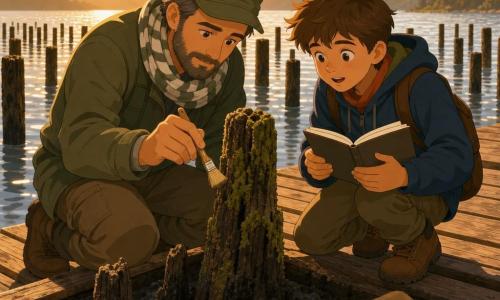
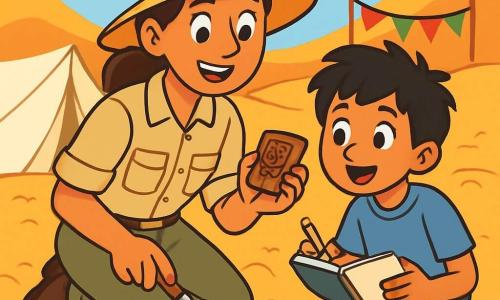
Everyone rushed over. Sophia began to brush away the dirt with a soft brush. Bit by bit, a shape appeared—a small, clay cup with strange patterns.
"What is it?" asked Alex, his eyes wide.
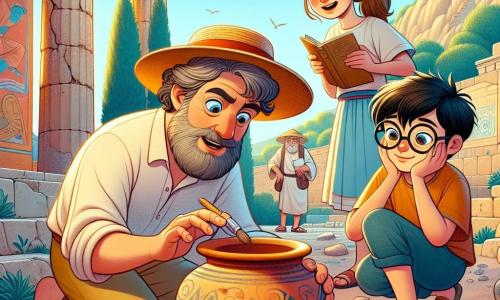
Sophia smiled. "This is a Minoan kylix, a kind of drinking cup. Look at these spirals—those are typical Minoan designs. They loved decorating their pottery with shapes from nature, like dolphins, flowers, and spirals."
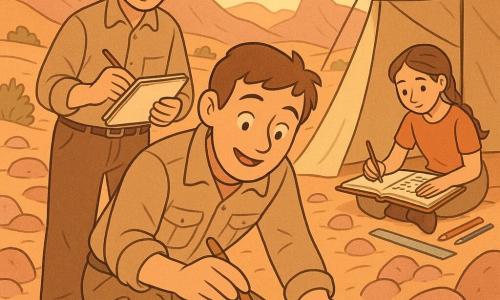
She carefully recorded the find in her notebook. Recording was just as important as digging. Archaeologists had to write down where every object was found, so they could figure out its story later.
"Did the Minoans really use these every day?" asked Maya, another team member.
"Absolutely," Sophia replied. "Some were for special ceremonies, and some for everyday meals. And every piece tells us something about how they lived."
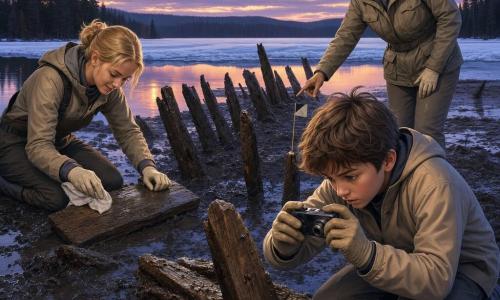
The team took turns examining the cup. Sophia explained how archaeologists used tools like brushes, sieves, and even toothbrushes to clean delicate objects. They also used cameras to take pictures and computers to make digital maps of the site.
But archaeology wasn't always easy. Sometimes the ground was hard, or the sun was too hot. Sometimes, there were swarms of buzzing flies. And sometimes, days went by without finding anything at all.
But Sophia never gave up. She knew that every discovery, big or small, helped piece together the story of the Minoans.
Chapter 3: The Forgotten Corridor
Later that week, Sophia was exploring a part of the site where the ground felt strangely hollow. She tapped her foot and heard a faint echo. "Hmm," she murmured, "that doesn't sound like solid earth."
She called the team over. Together, they carefully dug around the spot. Suddenly, the ground crumbled a little, revealing a hidden stone doorway!
Sophia's heart raced. "This could be a passageway," she whispered.
The team shined their flashlights through the opening. Inside was a dark corridor, lined with faded paintings. The air smelled ancient, like dust and mystery.
"Wow," breathed Maya, "do you think anyone has been in here for thousands of years?"
"Maybe not," Sophia said, her voice full of wonder. "Let's be careful. We don't want to damage anything."
Step by step, they entered the corridor. On the walls, they found paintings of bulls, dancers, and mysterious symbols. Sophia sketched the paintings in her notebook.
"Why are there so many bulls?" Alex asked.
"Bulls were very important to the Minoans," Sophia explained. "They had bull-leaping festivals and believed bulls were sacred. These paintings might show ceremonies or even legends."
Sophia took notes on each symbol and color. Sometimes, archaeologists had to become detectives, using clues to guess what things meant. She wondered if any of the symbols told a story, or maybe even a warning.
Suddenly, they came to a blocked doorway at the end of the corridor. It was sealed with heavy stones, as if someone long ago wanted to hide what was inside.
Chapter 4: The Challenge of the Sealed Door
Sophia felt her heart beat faster. What could be behind the stones? A treasure? A lost story? Or just more rocks? She took a deep breath. "We have to be extra careful," she said. "If we rush, we could destroy something precious."
The team started removing the stones, one by one. It was hard work. Dust made them cough, and some stones were heavy. But they worked together, encouraging each other. Sophia reminded them to check for signs that might tell them how old the door was, or why it was sealed.
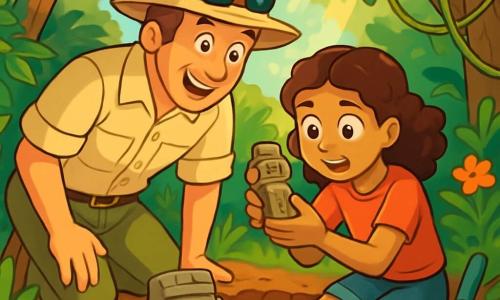
At last, the doorway was open. They peered inside and gasped. It was a small room, untouched for thousands of years! Inside, they found clay jars, bronze tools, and a painted box. The air was musty, but the treasures shone in the flashlight beams.
Sophia carefully lifted the painted box. "Look at this craftsmanship," she said, awestruck. "The Minoans were amazing artists."
Inside the box, they found tiny beads and a gold pendant shaped like a bee. Sophia's eyes sparkled. "This is incredible! The bee was a symbol of the Minoans. It stands for hard work and community."
She explained how archaeologists sometimes had to send objects to labs for testing, like carbon dating, to find out how old they were.
As they catalogued the finds, Sophia realized something important. "Archaeology is about more than treasure," she said. "It's about understanding people—how they lived, what they believed, and what they left behind."
Chapter 5: Secrets of the Past, Lessons for Today
Back at camp, Sophia and her team celebrated their discovery. They cleaned the artifacts, made drawings, and shared what they had learned with other scientists.
Sophia gave a talk to a group of local children, showing them the kylix, the bee pendant, and sketches of the bull paintings. She told them about the Minoans' love of art, their ceremonies, and their mysterious disappearance.
"Why do you love being an archaeologist?" one child asked.
Sophia smiled. "Because every day is an adventure! I get to travel, solve puzzles, and learn about people from long ago. And I get to share those stories with you."
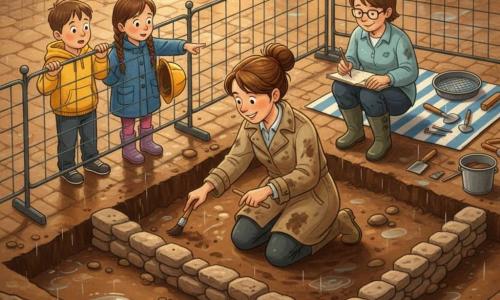
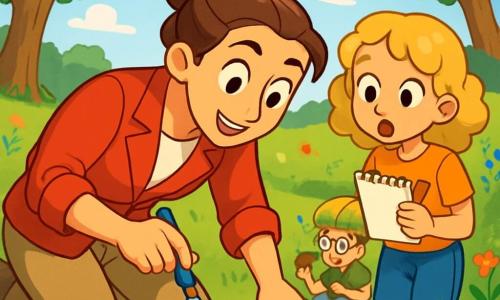
She showed the children how to use a brush to uncover a pretend artifact buried in a sandbox. Laughter filled the air as they worked together, just like real archaeologists.
As the sun set over the island, Sophia looked at the ancient ruins. She felt proud. She knew she had helped bring the Minoans' story back to life.
For Sophia, each day was a chance to explore, to learn, and to inspire others. The past was full of secrets, but with patience, curiosity, and teamwork, she knew they could uncover them—one grain of sand at a time.