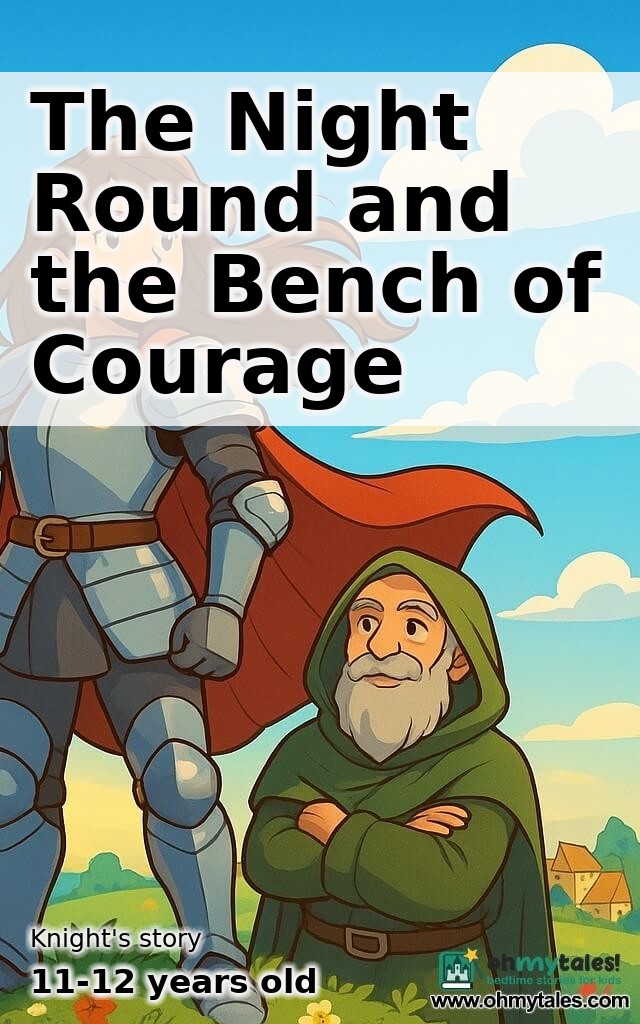
Chapter I — The Moonlit Gate
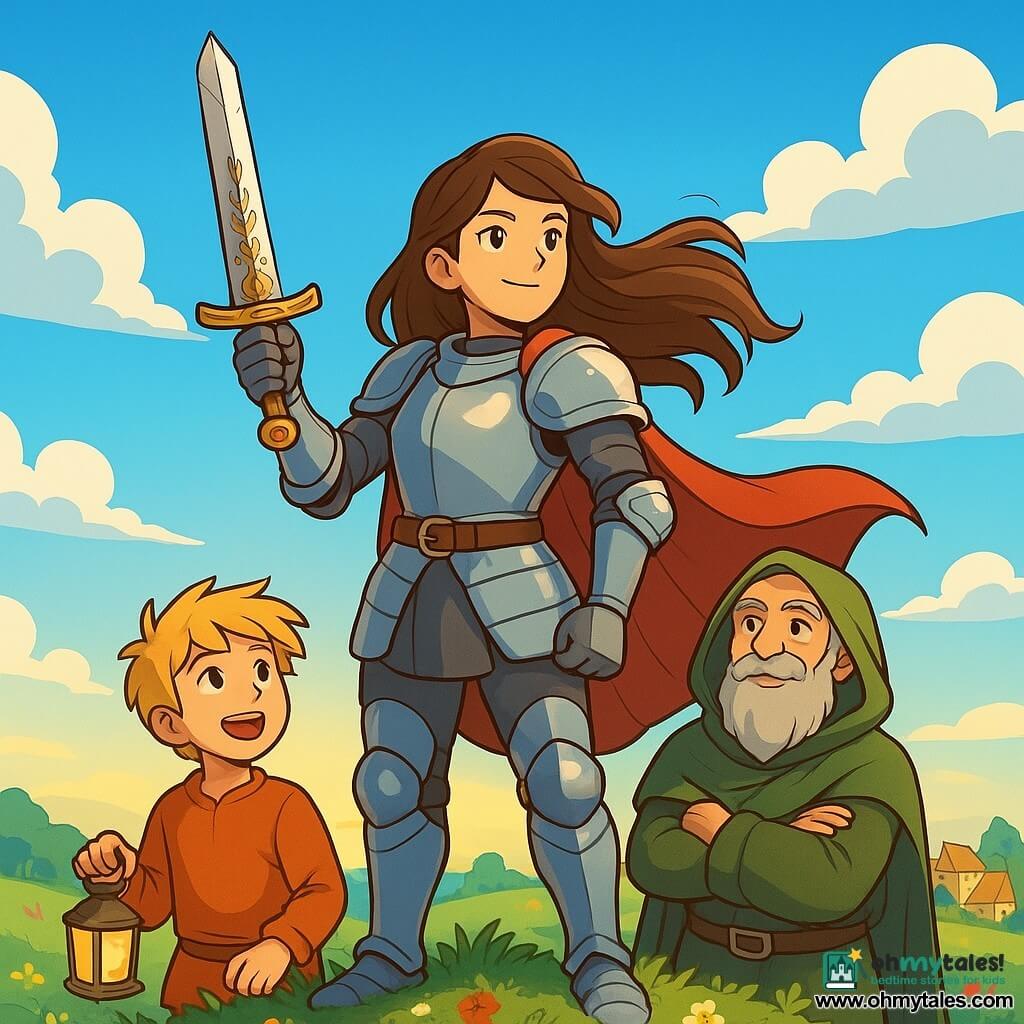
Lady Mirelle tightened the leather straps across her breastplate and glanced up at the pale crescent hanging over Castle Larden. Night wrapped the battlements like a cool cloak; torches spotted the stone with warm gold. Mirelle's horse, Brindle, stamped, its breath making small clouds in the air.
"Are you ready?" whispered Tomas, the stablehand, his face lit by nervous excitement. He had never joined a rounder before. Mirelle gave him a look that was both firm and kind.
"We walk with purpose," she said. "Tonight is not a parade. Listen, observe, and think. Courage without care is only noise."
They rode through the arched gate, the portcullis groaning as it closed behind them. The town beyond lay quiet; shutters drawn, the glow of hearths were little islands. Mirelle led the small band—Tomas, a young squire named Elin, and an old ranger called Osen—down the cobbled street. She held a lantern low so it would not betray them to any eyes above.
"Why does the moon look like a bow?" Elin asked, peering up.
Mirelle smiled. "A bow to steady aim. Remember that, Elin. Even when things seem curved or dark, there is a path."
They had been given the nocturnal round because a string of petty raids had troubled the roads—livestock stolen, a cartway sabotaged, frightened travelers. The castle expected vigilance; Mirelle expected more. A true round, she believed, sought not only thieves but reasons behind trouble.
At the square, Mirelle paused. A market stall lay overturned, its cloth flapping softly. The stallholder's crate had been pried open. Mirelle knelt, examining hoofmarks, a scrap of black cloth, and a small carved button.
"Taken in a hurry," she muttered. "And by someone who wears a cloak like this." She folded the button into a pocket, eyes bright. "We follow that sign. Stay quiet."
They moved like shadows until the town thinned and the road opened to moorlands where mist raced low over the grass. Mirelle thought of her grandmother's stories of knights who walked with the night, servants of the weak. She had trained for strength, but those tales had taught her gentleness too. Courage, she believed, was the willingness to risk comfort for others.
Chapter II — The Bridge of Whispers
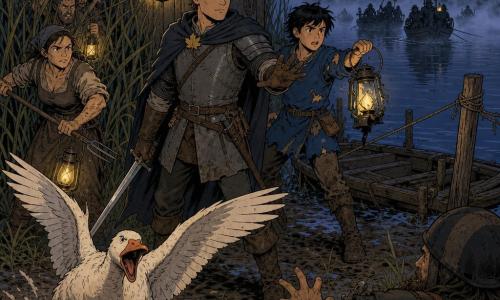
The wooden bridge over the Grest River creaked underfoot. Lamps along the parapet were unlit; someone had stolen the oil. Mirelle halted and listened. A whispering came from below—the river, or perhaps voices wrapped by the rush of water. From the gloom ahead came the distant glow of two lanterns.
"Two riders," Osen murmured. "They'll be carrying more than goods."
"Keep to the bank," Mirelle commanded. "No sudden light. We watch."
They crouched behind a line of reeds. Mirelle signaled with a sharp tilt of her head. Tomas and Elin edged forward, concealed. She counted the heartbeats in her chest and felt the old steadying pulse of training and compassion.
As the riders passed, Mirelle saw the glint of iron and the slitted eyes of men who knew how to take and leave little to be traced. One bore a sack with the same patterned cloth from the stall. The other had a child—small, pale, shivering with fear—strapped to the horse's front.
Mirelle had not expected a child. Her stomach tightened. She could call the guards and have these riders seized; she could shout. But the child, rubbing tiny hands together, looked too fragile for a scuffle. That was the moment invention found her: an idea as simple as a rope.
She slipped forward, not to strike but to block the path with a low line of braid she had carried for such times. The rope snagged the horse of the leading rider, causing a stumble that threw its rider's balance. The other, surprised and not wishing to hurt the child, pulled up.
"Who goes there?" the leading man demanded, voice rough.
Mirelle stepped out, bold as sunrise. "Good men of the road," she said, voice calm, "you have frightened a town. Leave the goods and tell us why you take from those who need warmth."
The men glared. "We take what keeps us alive," one spat. "The land gives little."
Elin moved as if to strike, but Mirelle lifted a hand. There was a soft sadness behind the thief's bravado—unused to being looked at with both strength and respect.
"Then tell me," Mirelle said. "Are you hungry, or are you hungry for coin?"
The man blinked. The child whimpered, clutching a small carved toy—its button matched the scrap Mirelle had found. She reached forward, placing a hand over the child's and, at the same time, offered the rider a measure of bread she had tucked away. "Help the town, and the town will help you," she offered. "Take less. Return what can be returned."
It was not a sentence filled with judgement; it was an invitation. The thief's shoulders sagged. He muttered something that might have been thanks and loosened his grip on the child's reins.
By dawn they had guided the riders back, the town forgiving in its stubborn charity, and the stolen goods were returned. Mirelle had stood between law and mercy, choosing both in balance. The town's healer took the child into a warm room and served porridge. Mirelle watched from the doorway, thinking that courage could be a shield and a soft hand at the same time.
Chapter III — The Lantern in the Marsh
As the sun climbed, the band turned towards the marshes where tracks led to an old collapsed causeway and, beyond it, a small chapel whose bell no longer rang. The marsh had long been a place of stories—of lost things and stranger things. Mirelle had a plan to set safe markers so travelers would not lose their way at night, but first they had to follow the trail of disturbances.
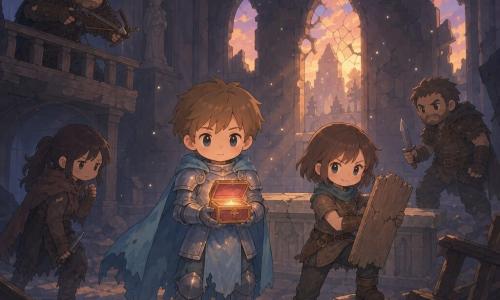
They found a single lantern hung upon a stub of dead oak, its glass cracked and its light guttering. Around it were symbols carved in the mud—three slashes like a trident. Osen frowned. "Mark of the Grey Circle," he said. "Border folk—raiders, but more cunning. They leave signs so others know where to strike next."
Mirelle's jaw tightened. This group sought to unsettle people, to make the road fearful so merchants would avoid it. "Then we unmake their map," she said. "We will mark safe paths and watch for tricks."
Tomas suggested tying coloured ribbons to willows. Elin wanted to set watchfires. Mirelle listened and combined ideas, shaping a plan that used everyone's strengths. She taught Tomas to braid reflective cords and had Elin learn to read the ribbons from memory. Osen took up a vantage point, listening with hawk ears.
Night fell again quicker in the marsh, a heavy blanket that muffled sound. The lantern dimmed but it still shone where the Grey Circle had left it. Mirelle approached, steady and deliberate. As she reached to snuff it, a net dropped from the trees, hissing like a beast. Two figures leapt out, their faces masked.
"Stand and yield!" one shouted.
Mirelle moved, not with blind force but with the rhythm of thought. She dodged low, grabbing the net's ropes and throwing them back tangled upon their attackers. Elin and Tomas leapt, using the net to bind an arm. Osen brought a stick down across a masked man's knees; the other gave a cry and dropped a lantern—its light cracked.
But during the skirmish, Mirelle spotted movement in the mist: a cloaked silhouette carrying a heavy sack of bells—the chapel's bells, stolen. Mirelle could fight here and risk the bells being taken, or she could trust her team. "Tomas!" she barked. "Go with Osen—guard the net. Elin, with me!"
They chased the silhouette across the soggy ground. Mirelle's boots sank; the marsh tried to pull at her like a jealous thing. She leapt a fallen beam and felt a cold shock of mud to the side, but she kept running. The silhouette was nimble, but not as sure-footed as Mirelle, who moved with a careful balance of courage and calculation.
At the water's edge, Mirelle lunged, seizing the cloak's hem. The thief stumbled, sending bells clattering across stone, ringing a hawkish, clear note that cut through mist. The sound startled creatures and people alike. The thief tried to wriggle free, but Mirelle had him pinned, her knee pressing into saturated ground.
"Why steal bells?" Mirelle asked. "What purpose is served by making prayers silent?"
The thief, panting, looked at the bells. "They pay," he muttered. "We needed coin for a winter store."
Mirelle's face softened. "Then bring your need to the town. We will help if you help others. Stealing silences everyone. Giving together makes a louder sound."
The thief's shoulders shuddered; something like shame and relief blended. He surrendered the bells. Mirelle helped him to his feet, not with scorn but with steady hands. "Stand by the bell," she told him. "Ring it when you know you've done right."
Chapter IV — The Trial at Hollow Hill
Word of her night patrol spread like warm smoke. Yet not all welcomed change. Hollow Hill, a ridge that watched over the valley, had been used as a meeting place by those who preferred fear's rule. They sent a challenger—a knight in tarnished armour named Sir Roder, who viewed Mirelle's gentleness as weakness.
He arrived on a grey horse, the sun throwing him into a silhouette of swagger. "A woman knight leading boys and old men," he declared loudly to the gathered. "Stay to your lamps, Mirelle, and keep your ribbons. Courage is steel, not ribbons!"
Mirelle stepped forward. "Courage is for all," she said. "It does not ask for who commands it."
Roder sneered. "We will see who commands it." He proposed a trial—test of skill and wit: traverse the hill, reach the old oak at its crown, and return with a token. If Mirelle failed, she would disband the night patrol. If she won, Roder would ride with them and learn.
Mirelle accepted. Not for pride, but because she knew many who watched—young faces on the edges, curious and hungry for example. The trial was not only for her but for them.
The course was treacherous. Wind flung leaves like arrows; paths were narrow. Roder rode hard, his lance raised, but Mirelle had her own arsenal: careful observation, knowledge of hidden footings, and a horse that trusted her. At mid-hill, Roder tried to bar her with a feint, but Mirelle ducked, slipping through a narrow pass used by shepherds. She found another way—an uneven stair carved by rain that Roder's heavier horse could not take without slipping.
At the oak, she found the token—a silver brooch shaped like a star, placed there long ago as a pledge of fair contest. Roder arrived just after, breathless and furious. He reached for the brooch, then hesitated, seeing Mirelle's calm face and the young eyes watching.
"You win this round," he muttered. "But do not think me changed."
Mirelle smiled, offering the brooch back. "Change is a slow road," she said. "Walk it awhile and see who meets you."
On the way down, Roder's horse slipped. Mirelle, seeing danger, did not go for victory. She dismounted and threw a rope to the knight, pulling him to solid ground. The boys on the hillside whooped and clapped not for the contest, but for the sight of courage used to save, not humiliate.
Roder's glare softened, if only a crack. He took the rope with a gruff nod, a small respect in his eyes she couldn't miss.
Chapter V — The Hearth and the Bench
When the round finally carried them home, the castle's kitchens were waking, and the town's people were beginning their day. Mirelle's patrol had not only returned goods and bells but had woven a new thread—an understanding between those who took and those who gave, between the frightened and the brave.
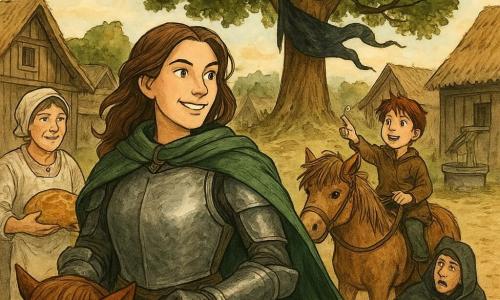
The mayor invited those who had helped to the square. Mirelle declined the formal chair offered to her and instead asked that a bench be brought from the chapel—a simple pew that had been spared from the bell's cost. It was heavy and needed four men to carry, but when it arrived, Mirelle set it under the great oak in the square, where the sunlight fell in a warm coin of gold.
She stood before the gathered crowd. "Courage is loud enough without being cruel," she said. "We did not win every battle. We made choices that hurt no one more than necessary. We guided, not commanded. Tonight's round belongs to everyone who stood with us."
Tomas blushed as he was singled out for the braids he had made. Elin, with a proud grin, took credit for the net. Osen bowed shyly when the healer recognized his keen ear. The thief who had taken the bells came forward too, head bent, and placed the silver brooch—he had kept it—as a pledge near the bench. "For a place to sit," he said. "For those needing to rest."
Mirelle took a plank and together they set the bench at the base of the oak. She sat first, but not in a regal posture. Instead, she opened her arms. "Come, share this bench," she said.
One by one, people met there—townsfolk, knights, those who had once taken from others and those who had given. The thief sat near the healer, his hands still dirty but his shoulders less tense. Tomas sat next to Mirelle, his eyes wide with the steady glow of a person who has learned that courage can be careful.
They shared bread and stories. Osen hummed a low tune. Elin told an exaggerated tale of the net that made children giggle. Roder stood a little apart, then, the sun warming his back, walked over and took a seat at the other end. He did not smile broadly, but he did loosen his jaw, and later left a small scrap of his cloak tied to the bench as a token—an odd form of apology that made Mirelle laugh.
As she watched the town come alive, Mirelle thought of the night round—the rope on the bridge, the scuffle at the lantern, the chase in the marsh, the trial at Hollow Hill. None of it had been easy. Each part had required thought, courage, and a willingness to help without spectacle. She thought of her grandmother's stories and how those tales had always ended with a simple act: a shared bench, a meal, a hand extended. That, perhaps, was the truest measure of knighthood.
The bell in the chapel rang that evening, a clear sound that trembled over the fields. It beat like the heart of the town—steady and true. People paused in their tasks and turned, smiles softening their faces. The thief, now called Jonah by the healer, lifted his head and listened. He nodded, as if learning a new language to say thanks.
Mirelle sat on the bench until the stars blinked awake. Brindle nuzzled her shoulder. The lanterns flickered like the eyes of watchful friends. Around her, laughter rose, not loud and boastful, but warm and sure.
"Will you lead the round again, Lady Mirelle?" Elin asked, voice sleepy.
Mirelle looked at the faces around the bench—the old, the young, the forgiven and the forgiving. "Yes," she said. "But not alone. A knight is not just armor and sword. A round is not just a patrol. It is the people who rise when someone stumbles. We will stand together."
They sat, shoulder to shoulder, sharing the bench beneath the oak. Night fell soft and certain, and the town slept more peacefully than it had in many months. Mirelle closed her eyes and thought of the road ahead. There would always be nights to watch, bellies to fill, hands to hold. She felt ready.
In the hush, the bench creaked as more joined. The moon leaned down like a guardian, and the sound of the bell echoed, keeping the rhythm of a community learning to be brave for each other.