Chapter 1: The Quiet Room Before the Storm
Dr. Amir Hale liked the emergency department at dawn. Not because it was dramatic—quite the opposite. For a few minutes, the corridors breathed slowly, like a big animal still half-asleep. The floor shone. The monitors blinked in steady rhythms. Even the coffee machine sounded polite.
Amir washed his hands the way he always did: soap, scrub, rinse, dry—between fingers, under nails, wrists. He did it so often that it felt like a small promise he kept all day.
Nina, a nurse with bright sneakers and a sharper laugh, nodded at him. “Morning, Doctor Calm.”
“Morning, Nurse Lightning,” Amir replied, and she grinned.
On the wall, a poster showed a cartoon pair of lungs wearing a scarf. WINTER TIP: COUGH INTO YOUR ELBOW. WASH HANDS. REST. Amir tapped the corner of the poster as he passed. Prevention was like putting up umbrellas before the rain.
A paramedic rolled in a new stretcher. Somewhere, a baby cried, then stopped. A cleaner hummed a tune that sounded like warm toast.
Amir checked the board: a few patients waiting, nothing frightening—yet. He adjusted his stethoscope like it was a seatbelt.
The automatic doors slid open again.
“Here we go,” Nina whispered, not scared—just ready.
Amir breathed in, steady and quiet. The day began to move.
Chapter 2: The Boy With the Dragon Breath
The first patient was a boy named Lucas, about twelve, sitting stiffly on a chair. His cheeks were red, and he held a jacket against his chest as if it could hold him together. Beside him, his dad looked worried in a tired sort of way.
Lucas spoke without looking up. “My throat is… kind of on fire.”
“Dragon breath?” Amir asked gently.
Lucas cracked a tiny smile. “More like… dragon throat.”
Amir rolled closer on his stool. “All right, dragon. Let's investigate.”
He began with the basics, because in emergencies, basics are like the first steps on a staircase: you don't skip them.
“How long has it hurt?”
“Two days.”
“Any trouble breathing?”
“No.”
“Can you swallow water?”
“Yeah… it just hurts.”
Amir looked at Lucas's color, his breathing, the way he held his neck. He felt the sides of Lucas's throat carefully. “Any pain here?”
Lucas flinched. “Ow.”
“Thank you for telling me.” Amir nodded. “In medicine, your words are important. You're the one living in your body. I'm just visiting.”
Lucas glanced up at that. His dad's shoulders loosened a bit.
Amir checked Lucas's temperature, then used an otoscope to look in his ears, and a small light to look at his throat. “Open wide and say ‘ah.'”
“Ah,” Lucas said, and it came out scratchy.
“Good job.” Amir kept his voice calm, like a soft blanket. “Your tonsils are swollen and a little spotty. That can happen with a virus or with strep bacteria. Strep is the one we can treat with antibiotics.”
Lucas's eyes widened. “Antibiotics are those super-strong pills, right?”
“Strong, yes,” Amir said. “But they're not magic for everything. They only work on bacteria, not viruses. If we use them when we don't need them, the bacteria can learn to fight back. That's called resistance.”
Nina leaned in. “Like when a video game boss levels up.”
Lucas nodded slowly. “Okay.”
Amir swabbed Lucas's throat. “This will feel weird for two seconds. Breathe through your nose.”
Lucas gripped his jacket. Amir moved quickly, gentle but efficient. “Done.”
Lucas blinked. “That's it? I thought you'd… poke around for, like, ten minutes.”
“I'm an emergency doctor,” Amir said. “Fast and careful is the goal.”
While they waited for the rapid test, Amir offered small, practical advice. “Warm drinks can soothe. Honey helps, but not for babies. Rest, water, and pain relief if your dad agrees. And wash hands—throat bugs love hitchhiking.”
When the result came back negative, Amir explained it plainly. “Good news: no strep. This looks viral. That means your body can handle it with time.”
Lucas looked disappointed. “So I just… wait?”
“Not just,” Amir said. “You rest like it's your job. You drink water like a champion. And if you get trouble breathing, can't swallow, or your fever gets very high, you come back. Deal?”
Lucas lifted two fingers like a scout. “Deal.”
As they left, Lucas called over his shoulder, “Bye, Doctor Calm.”
Amir raised a hand. “Goodbye, Dragon.”
The doors slid shut, and the department kept humming.
Chapter 3: The Broken Wrist and the Respect Rule
Later that morning, the storm arrived in a rush of sounds: wheels squeaking, voices overlapping, the beep-beep of a monitor calling for attention. Amir moved through it like a calm boat through choppy water.
A new patient came in: a girl named Mari, holding her wrist and trying hard not to cry. Her older brother hovered like a worried satellite.
“She fell off her skateboard,” the brother blurted. “It's probably broken. It's totally broken. Look at it!”
Mari glared at him. “Stop saying it's totally broken.”
Amir stepped in, smooth as a referee. “One voice at a time,” he said, gentle but firm. “Mari, you first. Tell me what happened.”
Mari took a breath. “I was going down the ramp. The board slipped. I put my hand out.”
“That's a very normal reflex,” Amir said. “Hands are brave like that.”
He looked at the wrist: swelling, tenderness, but the fingers were pink and warm. He checked her pulse at the wrist and asked her to wiggle her fingers.
Mari did, slowly. “Ow.”
“Good,” Amir said. “Pain tells us something's wrong, but your blood flow and nerves seem okay. That's important.”
Her brother interrupted again. “But it's like—”
Amir turned his head slightly. He didn't glare; he simply paused, like pressing a quiet button. The brother stopped mid-sentence.
Amir pointed to a small sign on the wall: PLEASE LET THE PATIENT SPEAK. “In the emergency room,” he said, “respecting the patient's words helps us treat them safely. You can add details after, but first we listen.”
Mari's eyes softened. “Thanks.”
Her brother looked embarrassed. “Sorry. I just… got scared.”
“That makes sense,” Amir said. “Fear talks loudly. We can teach it to take turns.”
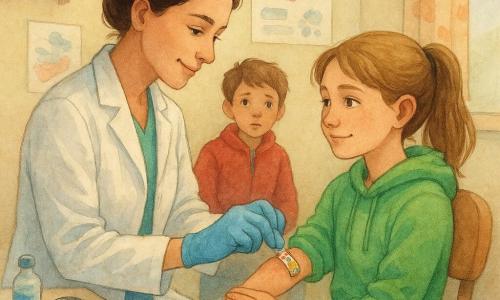
Nina brought an ice pack wrapped in cloth. Amir helped place it. “Never put ice directly on skin,” he told Mari. “Ten to twenty minutes, then a break. Like a cold snack, not a punishment.”
They sent Mari for an X-ray. While waiting, Amir explained what he was looking for. “Bones are like sturdy sticks. Sometimes they crack without snapping. Sometimes they snap. Either way, we line them up and keep them still so they can heal.”
Mari swallowed. “Does it mean… surgery?”
“Not usually for wrists like this,” Amir said. “But we don't guess. We check.”
The X-ray showed a small fracture—clean, not badly shifted.
Mari sighed with relief and annoyance at the same time. “So my brother was… kind of right.”
“Kind of,” Amir said. “But you told the story best. Your body, your voice.”
He placed a splint with careful hands. “This will keep it steady. You'll need a proper cast soon, and follow-up with an orthopedics clinic.”
Mari stared at the splint. “It looks like a robot arm.”
“Excellent,” Amir said. “Robot arms are very fashionable.”
Her brother finally laughed. “Okay. I'll stop talking over you.”
Mari smirked. “Please do.”
As they left, Amir felt that small satisfaction that came from more than fixing a bone. He had helped a family practice listening—like learning a new, useful skill.
Chapter 4: Team Huddle Under the Bright Lights
Just before noon, Amir joined the team meeting in a small room that smelled like markers and hand sanitizer. The table was crowded with cups, clipboards, and tired smiles.
There was Dr. Sato, the senior physician with kind eyes; Nina and two other nurses; a respiratory therapist named Jo; a social worker named Ms. Calder; and Karim, a young doctor in training whose pen always seemed to be falling.
Dr. Sato began. “Quick huddle. What's going well? What do we need to fix?”
Karim spoke first, words spilling out like marbles. “We're behind on triage times and the waiting room is—”
Amir lifted a hand, not to stop him, but to guide him. “One point at a time,” he said. “Let's make it easy to follow.”
Karim blinked, then nodded. “Okay. First: triage times are longer. Second: the waiting room is full.”
“Good,” Dr. Sato said. “Nina?”
Nina tapped her clipboard. “We're short one nurse on the evening shift. People are doing double tasks.”
Jo added, “And we need clearer signals when someone needs breathing support. Sometimes the call comes late.”
Ms. Calder leaned forward. “Also, some families don't understand what's happening. They hear medical words and panic. We could use simpler explanations and more updates.”
Amir listened carefully. In a meeting, listening was like holding a flashlight—if you waved it around too fast, you missed what mattered.
When it was his turn, he spoke calmly. “We can improve how we communicate without adding extra steps. For triage, maybe a quick ‘what to expect' card—simple language. For breathing support, a clear trigger list: oxygen level, breathing rate, work of breathing. And for families, a rule: update every hour, even if the update is ‘we're still waiting, and here's why.'”
Karim nodded fast, like a bird. “That would help.”
Dr. Sato smiled. “Amir, can you draft the trigger list with Jo? Nina, can you coordinate staffing with admin? Ms. Calder, the card idea—can you help with the wording?”
Everyone agreed. The plan formed in the room like a puzzle clicking into place.
As the meeting ended, Nina bumped Amir's shoulder. “Doctor Calm, you do meetings like you do stitches.”
Amir raised an eyebrow. “Neat and not too tight?”
“Exactly,” Nina said. “You leave room for breathing.”
Amir pocketed that thought. Teamwork was medicine too.
Chapter 5: The Wheeze That Sounded Like a Tiny Whistle
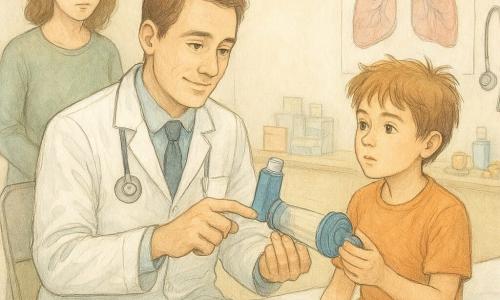
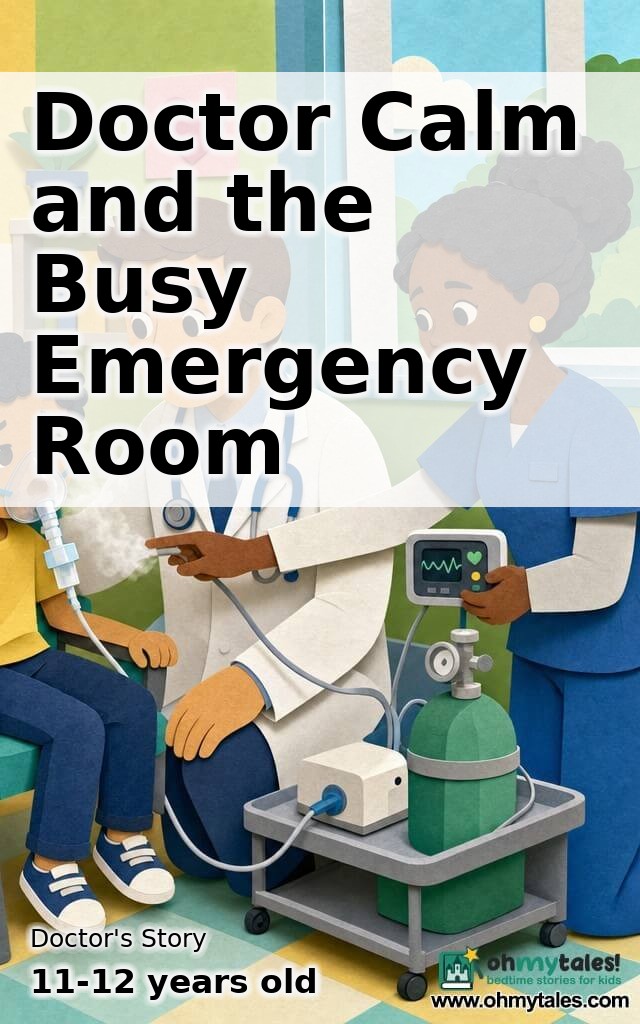
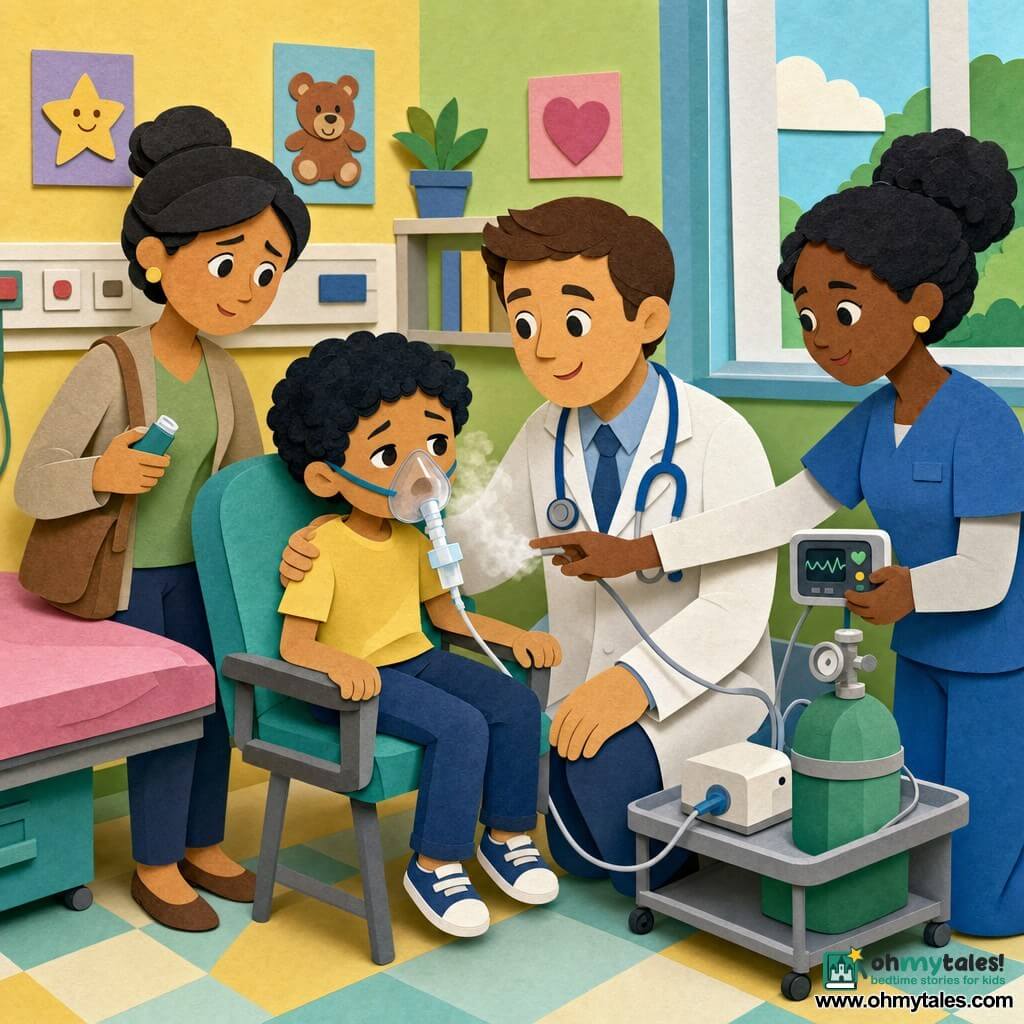
In the afternoon, an ambulance arrived with a boy named Theo who was breathing fast, shoulders lifting with each breath. His mother followed, eyes wide, holding a small inhaler like it was a fragile secret.
Theo tried to speak, but his words broke into short pieces. “I… can't… get… it.”
Amir moved close, staying low so he didn't loom. “Theo, I'm Dr. Hale. You're safe here. We're going to help your lungs open up.”
He listened with his stethoscope. Theo's chest sounded tight, like wind trying to squeeze through a narrow straw.
Nina clipped a sensor on Theo's finger. A number blinked. Amir checked it, then nodded to Jo, who had arrived with a breathing mask and a nebulizer.
Amir spoke to Theo's mother. “Has he had asthma before?”
She nodded quickly. “Yes, but it's never been this bad. He ran at school. Then he started coughing. I gave his inhaler, but…”
“You did the right thing by coming,” Amir said. He kept his voice steady, because calm was contagious. “Asthma is when the airways get swollen and tight. The good news is, we have tools for that.”
Theo's eyes flicked between the mask and Amir. “Is… it… going to… hurt?”
“No,” Amir promised. “It can feel strange. Like breathing in mist. Imagine your lungs are a crumpled paper bag. This medicine helps it open.”
Jo placed the mask gently. “Breathe normally, buddy.”
Theo breathed. The nebulizer hissed softly, like a tiny kettle telling secrets.
While they waited, Amir explained in simple steps, as if laying out stones across a stream. “We'll give a medicine that relaxes the muscles around the airways. Sometimes we also give a steroid medicine to calm swelling. We watch your oxygen and your breathing rate. When you can talk in full sentences and your wheeze improves, you can go home with a plan.”
Theo's mother whispered, “A plan?”
“Yes,” Amir said. “Asthma action plan. Green zone when he's well, yellow zone when symptoms start, red zone when it's an emergency. It tells you what medicine to use and when to get help. Prevention matters—knowing triggers, like cold air, smoke, dust, or running without a warm-up.”
Theo lifted a thumb weakly under the mask.
After the first treatment, Theo's shoulders dropped a little. He managed, “I… can… breathe… more.”
“Great,” Nina said. “Your lungs are unclenching.”
Amir smiled. “Nice work, Theo. You did the hardest part: you kept going.”
They gave another treatment and a dose of medicine to reduce inflammation. Slowly, Theo's breathing smoothed out. His words returned, threading together again.
When Theo could finally say, “I'm hungry,” everyone in the room felt lighter.
Amir handed the mother a printed action plan and went over it carefully, making sure she understood each step. He asked Theo to repeat the red-zone signs: “Can't speak, ribs pulling in, lips turning blue, inhaler not helping.”
Theo recited them like a serious spell. “Can't speak… ribs… blue lips… inhaler not helping.”
“Perfect,” Amir said. “And remember—if you're ever unsure, it's okay to ask for help. That's not weakness. That's wisdom.”
Theo's mother exhaled, long and grateful. “Thank you for talking to him like he's… like he matters.”
Amir met her eyes. “He does.”
Chapter 6: A Softer World at Night
As evening settled, the emergency department changed its sound. The sharp daytime clatter softened into a quieter rhythm. Lights glowed warmer. Voices lowered. Even the doors slid open with less drama, like they didn't want to wake anyone.
Amir finished his notes—careful records of stories and symptoms, tests and plans. Medicine wasn't only hands and tools; it was also words written clearly so the next person could understand and continue the care.
He walked past the waiting room. A few patients still sat there, but someone had brought extra blankets. A volunteer offered cups of water like small gifts. The new “what to expect” cards Ms. Calder had drafted were already on a table, printed in simple language: HOW WE DECIDE WHO GOES FIRST. WHAT TESTS MIGHT HAPPEN. WHEN TO ASK QUESTIONS.
A man reading one looked up and said to his daughter, “So it's not first come, first served. It's most serious first.”
The girl nodded. “That makes sense.”
Amir felt something loosen in his chest, the way a knot loosens when you finally find the right end.
Near the nurses' station, Karim approached, looking thoughtful. “Dr. Hale?”
“Yes?”
“I tried your ‘one point at a time' thing,” Karim said. “With a patient's family. It worked. They stopped arguing and actually listened.”
Amir nodded. “Respecting speech isn't just politeness. It's safety. If we miss a detail, we miss a clue.”
Nina called from behind the desk, “Doctor Calm, your shift is ending. Go be a normal human.”
Amir chuckled. “I'll do my best.”
He changed out of his scrubs and stepped outside. The night air was cool, clean. Streetlights made pale circles on the pavement, like gentle moons that had fallen to the ground. Somewhere, a cat crossed the road with silent confidence.
Amir thought of Lucas, resting his sore throat. Mari, learning to speak while others listened. Theo, breathing easier with a plan in his pocket. The team meeting, where ideas had taken turns and turned into action.
He knew tomorrow would bring new storms—new pain, new fear, new confusion. But tonight, the world felt a little softer, as if kindness had been laid over it like a quilt.
Amir walked home under the steady lights, calm as ever, carrying the quiet truth of his work: when people listen to each other—really listen—healing starts before the medicine even begins.