Chapter 1: An Unexpected Flurry
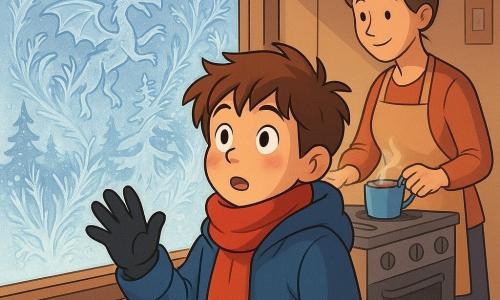
Thomas pressed his nose to the cold windowpane, watching as big, swirling snowflakes tumbled down from the sky. The world outside looked different, as if someone had painted everything white overnight. The rooftops were buried, the trees had frosty coats, and even the ugly school bike racks glimmered with icy crystals.
Downstairs, the smell of cinnamon oatmeal drifted up, but Thomas was still glued to the window. “Mom!” he called, voice muffled by his scarf. “It's really coming down!”
His mother laughed, coming into his room holding his thick winter coat. “You'd better bundle up, Thomas. School called—it's open, but there's a winter project day. You'll spend time outdoors, so dress warmly.”
Thomas's stomach did a happy flip. He loved school, but he loved nature even more. If he was lucky, he'd get to explore the woods behind school, maybe even find animal tracks in the sparkling snow.
He wolfed down his breakfast, packed his backpack with his science notebook, and pulled on his woollen hat and mittens. His breath puffed in white clouds as he hurried to the bus stop, feet crunching through the fresh snow.
On the ride to school, his best friends, Amir and Lucy, chattered excitedly.
“I read that squirrels stay active all winter,” said Lucy, hugging her sketchbook. “They dig up nuts they buried in autumn.”
Amir grinned. “And did you know some frogs freeze and thaw? My dad told me all about it.”
Thomas's mind buzzed with curiosity. What other secrets did the winter woods hold?
Chapter 2: Into the White Woods
The schoolyard had transformed into a shimmering landscape. Icicles hung from the big oak tree, and the playground was a hill of glittering drifts. Mr. Hall, their science teacher, greeted the class with a wide smile.
“Welcome, explorers! Today, we'll discover how animals survive winter. Look for signs—tracks, nests, or anything unusual. Keep your eyes open and write down what you find.”
Armed with clipboards and magnifying glasses, Thomas and his friends followed Mr. Hall into the woods behind school. The snow muffled their footsteps, and the whole class moved quietly, awed by the winter silence.
“Look!” whispered Thomas, crouching beside a cluster of prints in the snow.
Lucy knelt next to him, sketching. “That's probably a rabbit. See how the hind feet are longer than the front?”
Amir pointed to a tree. “There's a hole up there. Maybe a squirrel lives inside.”
Mr. Hall smiled. “Excellent observations! Animals are clever at adapting. Some hibernate, some grow thicker fur, and some, like birds, migrate to warmer places.”
Thomas scribbled notes, his cheeks red with excitement. Suddenly, a blur of brown zipped through the snow, disappearing into a thicket. “Did you see that?” he gasped.
Mr. Hall laughed. “That, Thomas, was a weasel in its winter coat.”
As they walked, Thomas wondered aloud, “How do animals stay warm when it's so cold?”
Mr. Hall paused, inviting the group to sit beneath a snow-laden pine. “Let's think. What do you do to stay warm?”
Lucy huddled in her scarf. “I wear layers.”
“Exactly,” said Mr. Hall. “Many animals grow extra fur or build warm nests. Some, like birds, puff up their feathers to trap heat.”
Thomas closed his eyes, picturing a tiny mouse curled in a nest of grass beneath the snow, cozy and safe.
Chapter 3: Hidden Worlds Beneath the Snow
After lunch, the class gathered for hot chocolate and compared notes. Thomas's notebook was filled with sketches: a squirrel's nest, mouse tracks, and the weasel's blur.
“Doesn't it seem like the snow's a blanket for everything?” Amir mused.
Lucy nodded. “It must be. I read that under the snow, it's warmer than above.”
Mr. Hall overheard and smiled approvingly. “Yes! It's called the subnivean zone. Small animals, like mice and voles, make tunnels between the ground and the snow. It shelters them from the wind and predators.”
Thomas imagined a secret city of tunnels right below where he stood. He jabbed his boot into a drift—soft, but sturdy enough to hold him.
What was life like down there? He squatted, ear to the snow, hoping to hear tiny feet scurrying.
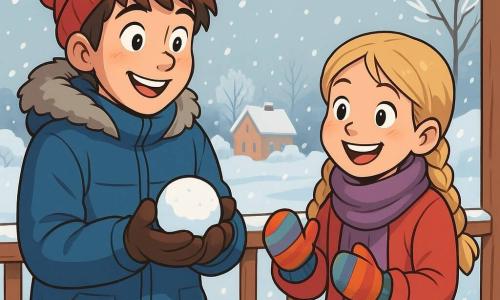
A sudden shout broke his reverie. “Snowball fight!” Amir whooped, flinging a perfect snowball at Lucy, who shrieked with laughter.
The group scattered, their laughter echoing through the woods as snowballs flew. Thomas dodged behind a tree, feeling the exhilaration of winter's play.
When the flurry of snowballs faded, Mr. Hall called them back. “Science can be fun, too. But remember, every snowflake is unique—just like you. Don't forget your winter discoveries!”
Chapter 4: The Winter Project
Back in the classroom, the heat from the radiators thawed their fingers. The walls were decorated with charts: hibernation schedules, animal tracks, migration maps.
Mr. Hall announced, “For our winter project, each of you will choose an animal and explore how it survives winter. You can build a model, make a poster, or write a report. We'll share our projects at the Winter Science Night!”
Thomas's hand shot up. “Can I do mine on foxes?”
“Absolutely. Do some research and observe if you can,” Mr. Hall replied.
Lucy chose chickadees, and Amir picked chipmunks. The three friends formed a study group, determined to uncover every winter secret.
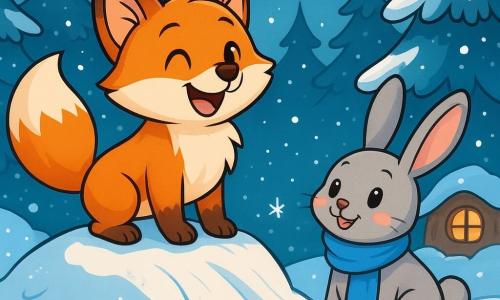
That evening, after dinner, Thomas huddled by the window with a library book about red foxes. He learned how their thick fur kept them warm, how they used their bushy tails as blankets, and how they listened for mice under the snow, pouncing in a perfect arc.
Fascinated, Thomas wrote everything down, drawing diagrams. The next day, he'd ask Grandpa if he'd ever seen a fox in the wild.
Chapter 5: Tales by the Fire
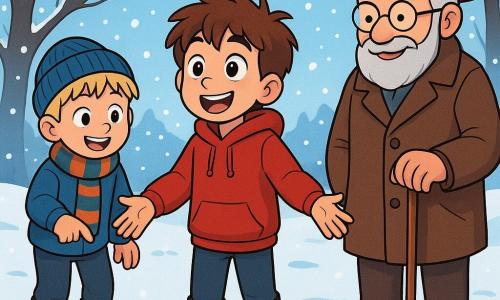
That weekend, a blizzard swept through the town. Thomas and his family gathered in the living room, watching the snow pile up outside. Grandpa settled into his armchair, a twinkle in his eye.
“Did you ever see a fox in winter?” Thomas asked, notebook ready.
Grandpa grinned. “Plenty of times. They're clever, those foxes. Once, I watched one hunting in the snow. It stood very still, listening. Then it leaped high and dove snout-first into a drift. Came up with a mouse in its jaws.”
Thomas's eyes widened. “How did it know where the mouse was?”
“Foxes have sharp ears. In winter, when it's quiet, they can hear the tiniest rustle. The snow muffles other sounds, so they can focus.”
Thomas scribbled fiercely, his imagination painting the scene.
Afterwards, the family made hot chocolate and played a board game. Thomas thought about animals in winter—not just surviving, but thriving.
Chapter 6: An Icy Adventure
The next week, the winter sun sparkled on the snow, and the school sent the science club to the local park for more observations. Thomas led the way, eyes peeled for tracks.
“Look! Fox prints!” he whispered, pointing to a line of neat paw prints crossing the frozen pond.
Lucy peered closer. “How do you know?”
“See how the prints are in a straight line? And they're bigger than a cat's but smaller than a dog's. The claws make marks, too.”
Amir found a patch of feathers near a thicket. “Something ate lunch here.”
Lucy shivered. “Nature in winter isn't always gentle.”
Thomas nodded. “But everything is connected. The fox gets food, and that keeps it alive through the cold.”
The group stopped by the pond, its surface glassy and smooth. Daringly, Thomas tested the ice with a stick. “Solid,” he grinned, and began to slide.
Soon, laughter echoed as everyone took turns gliding and slipping on the ice. Thomas spun wildly, arms outstretched, feeling free and alive.
When they returned to school, cheeks flushed and notebooks full, Mr. Hall congratulated them. “You're true winter scientists!”
Chapter 7: Wonders in the Night
One crisp evening, Thomas bundled up to help Dad fill the bird feeders. The yard glittered under starlight, and Thomas's breath curled in frosty plumes.
He listened. The world seemed silent, but then—a soft hoot in the distance. “An owl!” he whispered, heart racing.
Dad chuckled. “Owls hunt at night. They, too, have special adaptations. Silent wings, sharp eyes, and the patience to wait for prey.”
Afterwards, Thomas lingered outside, mesmerized by the quiet beauty. He spotted bunny tracks by the fence and followed them, discovering a tuft of fur on a branch—evidence of a rabbit's careful escape.
Back inside, he wrote in his winter journal:
Tonight I heard an owl. I saw bunny tracks. Winter is never really quiet. There's always life, even when you can't see it.
He drifted to sleep with thoughts of snowy forests and watchful creatures.
Chapter 8: The Heart of Winter
As January rolled on, winter deepened. The school organized Winter Science Night, filling the gym with displays: squirrel nest models, migration games, hibernation experiments, and Thomas's fox diorama, complete with a clay fox leaping into a tissue-paper snowdrift.
Parents and students marveled at the projects. Thomas felt proud as he explained how foxes used their tails for warmth and how they survived in harsh conditions.
Lucy showed off her bird feeder project, and Amir demonstrated a burrow model, explaining how chipmunks stored food.
At the end of the night, Mr. Hall gathered everyone. “You've all shown that winter isn't just a time to hide indoors. It's a time of change, challenge, and adaptation. By studying nature, we understand our world—and ourselves—a little better.”
Thomas and his friends exchanged smiles. They knew so much more about the hidden life of winter than they had just a few weeks before.
Chapter 9: Snow Day Wonders
One morning, Thomas woke to the radio's announcement: “School's closed for a snow day!”
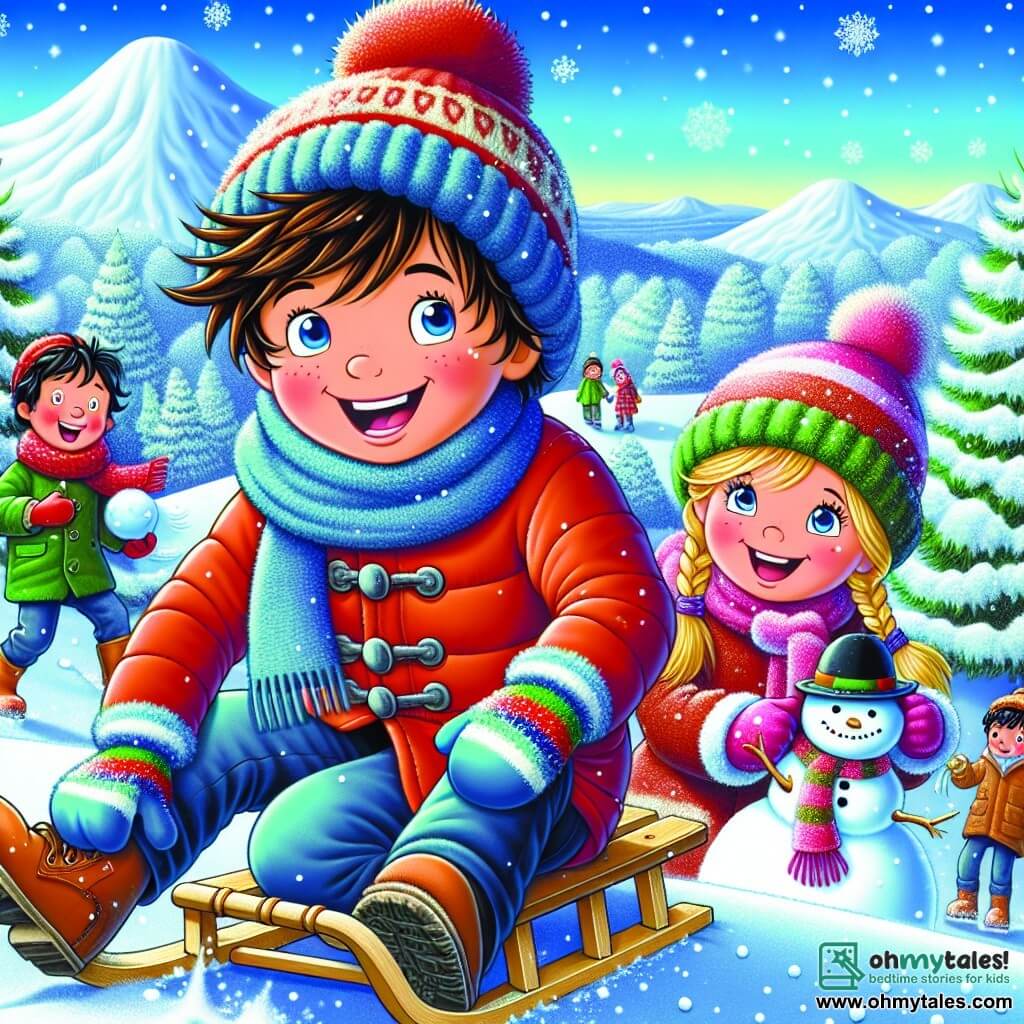
He raced outside, heart pounding with excitement. Overnight, fresh powder had transformed the world again. He joined Amir and Lucy for sledding on the big hill behind school. They raced down the slope, shrieking with laughter as snow sprayed their faces.
Afterwards, they built a snow fort, complete with tunnels and lookout posts. Thomas pretended he was a fox, darting through snow tunnels, while Lucy was a chickadee perching on a branch.
Between snowball battles, they paused to watch a real fox trot along the tree line, tail held high. Thomas watched in awe, feeling as if all he'd learned had come to life in front of his eyes.
Later, they warmed up with steaming mugs of cocoa at Thomas's house. The window was fogged, but outside, the snowflakes kept falling, each one unique.
Chapter 10: Lessons of the Season
As winter faded and the days grew longer, Thomas walked through the woods, his journal tucked in his pocket. The snow was melting, revealing muddy patches and the first hints of green.
He stopped at a spot where he'd seen fox tracks months before. He crouched, touching the damp earth, and thought about all the animals that had survived the long, cold months.
Lucy joined him, waving her sketchbook. “Spring is coming, but I'll miss winter. We learned so much.”
Amir grinned. “Let's keep exploring, no matter the season.”
Thomas nodded, feeling wiser. “Winter showed me that nature is always busy, even when it looks quiet. Animals adapt, and so can we. There's beauty in every season if you look closely.”
The three friends hiked back to school, ready for more adventures, scientific discoveries, and the promise of new wonders—no matter the weather.
And so, the lessons of winter stayed with Thomas: the patience of animals, the importance of adaptation, and the joy of exploring the world, one snowy step at a time.