Chapter 1
The first light of morning is pale and careful. Anna pulls her scarf up to her chin and peeks out the frosted window. The garden is a white hush. Trees wear sugar on their branches. Breath makes small clouds when she breathes.
She is eleven, with knobby knees and a secret pocket in her mind where she keeps gentle thoughts. Winter feels loud and soft at once. The days are shorter. The school bus is a bright square against the snow. Still, Anna likes the quiet the cold brings. It makes room for noticing.
Today she decides to try something small and brave. She will share the best moment of her day with someone. It feels oddly important, like carrying a candle in both hands.
Her mother is making toast that crackles like paper. Her father grins over a warm mug. Anna wraps her mittens around a cup of cocoa, the steam smelling of chocolate and cinnamon. "I'll tell you later," she says, but she knows the moment is already tucked in her pocket, warm as a pebble.
Chapter 2
The little street outside their house is friendly in winter. Cars have slow footsteps. Neighbours hug scarves tight and nod. The lamp posts wear icicles like chandeliers. Anna walks with her backpack, each step a soft thud on the salted pavement. Snow piles like folded blankets along the curbs.
A robin hops on a fence and looks at her with bright, sharp eyes. Anna stops to watch it. The bird is a tiny red punctuation mark in a grey sentence. She feels the tip of a small courage stirring inside her, like the robin's quick hop.
"Good morning," she says out loud, then smiles because hearing her own voice makes the world less big. The street seems smaller now, as if the houses leaned in to listen.
At the corner, Mr. Alvarez shovels his walkway. He hums a song she doesn't know but likes anyway. He sees Anna. "Morning," he calls, and his breath blooms in the air. Anna thinks of her promise to share the best moment. She gathers the pebble of warmth in her pocket and walks on.
Chapter 3
School is a room of wool coats and bright notebooks. Anna makes art in the margins and notices how light falls through the high windows. The afternoon is a stretch of math problems and a history page about explorers who felt small and kept going anyway. The teacher asks everyone to think of one small kindness they saw that day.
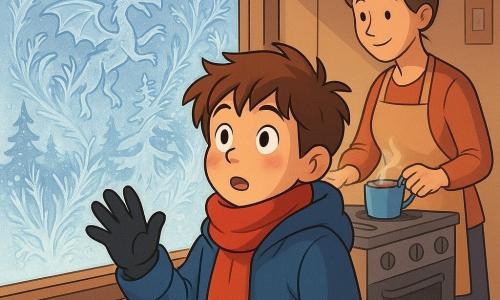
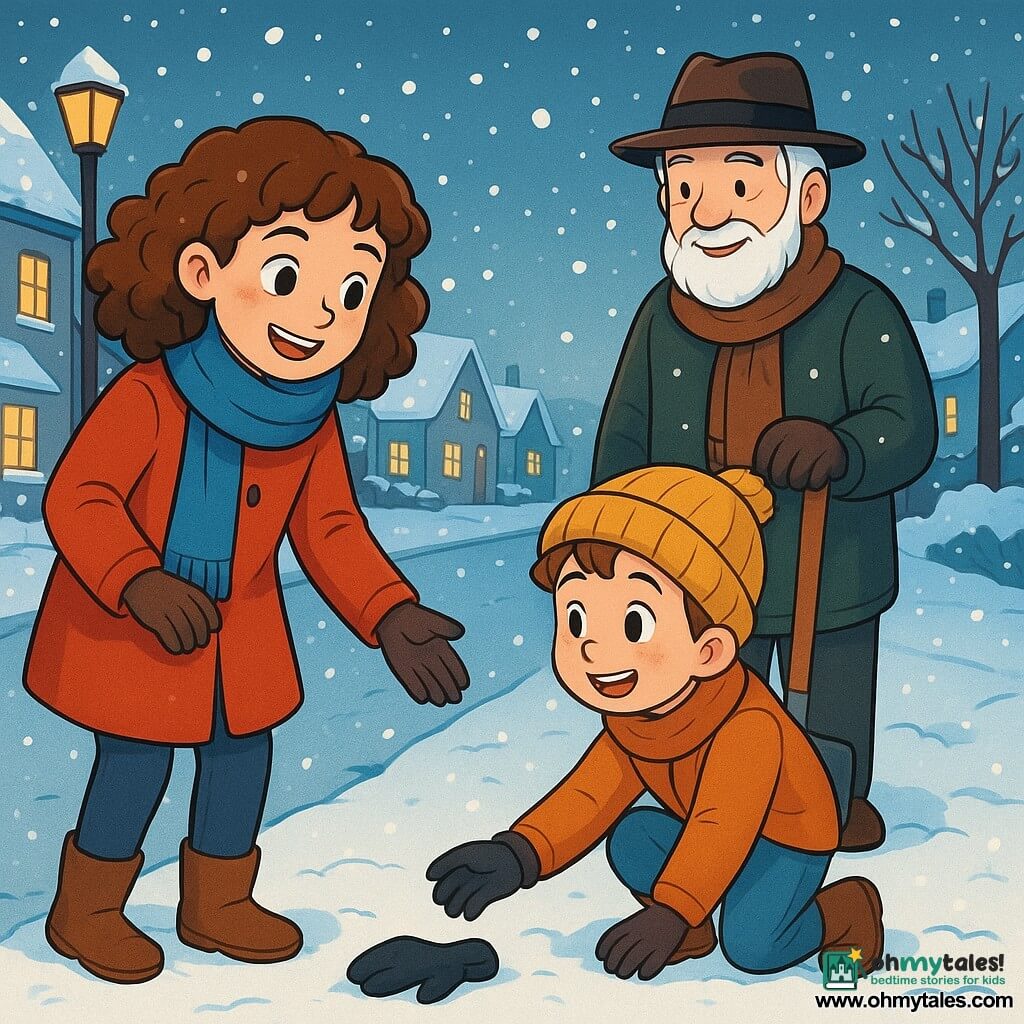
Anna eyes the clock. The best moment sits like a small stone in her palm. It had come during the walk. She had bent to help a younger boy whose glove had slipped from his fingers. He had been about seven, cheeks red, eyes wet from cold wind. The glove lay on the icy step, lonely and black.
Without thinking, Anna had dropped her bag and scooped the glove up. "Here," she said. The boy blinked like a sunrise. "Thanks," he said, and the glove was warm again on his hand because someone had noticed.
When the teacher asks, Anna's turn trembles. Her voice is small at first. "I helped a boy with his glove," she says. A few heads turn, then a smile blooms on the teacher's face. "That's lovely," she says. The classroom feels like a room that suddenly knows its own heart.
Chapter 4
After school, the street is a theatre of soft light. Street lamps spill amber onto the snow. Children make paths through drifts, and laughter sprays like tiny fireworks. Anna walks home slower than usual. She thinks about how the boy's "thanks" landed like a pebble in a pond and made ripples.
On her front steps, she meets Ms. Patel, their neighbour with kind eyes and a cat who likes to press its face to frost. Ms. Patel is holding a bag of bread and a small jar wrapped in brown paper. "These are for you and your family," she says. "My husband made extra jam. Winter needs sticky sweetness."
Anna's throat fills. This is another small kindness, like the glove. She takes the jar with both hands and feels the glass buzz with quiet heat. "Thank you," she says. The words feel bright and useful, a little like the robin's red chest.
That night, Anna sits at the kitchen table and carefully spreads the jam. The bread steams. Her family tastes it and hums. Her mother squeezes Anna's hand. "It's nice to share," she says. Anna thinks of the boy, Mr. Alvarez, Ms. Patel, and the robin. She begins to see a line of small lights all along her street.
Chapter 5
A week of short days and long evenings passes. Anna starts an idea that is half silly and half brave. On the little white street in front of her house she paints tiny stones — bright dots of color — and puts them along the path where neighbours walk. Each stone bears a word: "warm," "brave," "listen," "thanks."
At first she is nervous. What if someone thinks it is odd? What if the wind carries them away and her effort flutters and dies? She goes outside anyway with her coat buttoned up to her chin and a pocket full of painted pebbles.
The first passerby is a boy she sometimes sees at the bus stop. He picks up a stone and reads "brave." He grins. "Cool," he says, and he tells his friend. The friend picks up "listen" and reads it aloud like a secret. A dog wags its tail and makes a small happy trail in the snow.
More people notice. A mother stoops to place a pebble into her child's mitten. Mr. Alvarez pauses and lifts his hat, looking as pleased as if a small concert had begun. Anna watches from her doorway, cheeks warm beneath her scarf. Each smile she sees stacks itself inside her like kindling.
Chapter 6
One evening, a soft storm comes. Snow sits like new parchment across the painted pebbles, but faces on the street are soft with light. Anna's jar of jam is nearly empty, and her pocket of courage feels full. She stands on her porch and hears neighbours talking in low, careful voices. There is talk of making a community soup one night to keep everyone company. Someone suggests a book swap. Another wants to string lights across the lane.
Anna thinks of the best moments she has collected: the glove, the jam, the painted stones. She decides to share the best moment of the day with her family at dinner. "My best moment was when I helped the boy with his glove," she says. "Then someone gave us jam. Then I left stones on the street."
Her father smiles and says, "You made a place for other people to feel seen." Her mother nods. Her little brother announces his best moment was a marshmallow that didn't burn. Everyone laughs. The house feels like a warm bowl.
Before bed, Anna writes in her notebook. She writes how winter can seem sharp, how the cold makes people fold in, but also how it draws small kinds of bravery out of them. She writes three new words on the last line: say, thank, more.
The next morning, she wakes to a pale world and the smell of toast. She goes outside and finds that the street is cleaned and the painted stones peek through the snow like shy suns. A neighbour she barely knows meets her eyes and says, "Thanks for doing that." The words land soft and real.
Anna realizes something simple. Saying thank you changes the way you stand in the world. It is a way to hold warmth between two palms. She decides, quietly and firmly, that she will say thank you more often — to Mr. Alvarez, to Ms. Patel, to the robin and the bus driver and the boy with the glove. She will not wait for grand moments. She will collect small ones and name them.
Outside, the winter sky is thin and clear. Anna breathes and sees her breath bloom white. She feels steadier, like stepping onto a frozen pond and not fearing the ice because she knows where the safe paths are. She feels ready to be kind, ready to be seen, and ready to say thank you.