Chapter 1 — A Circle of Papers
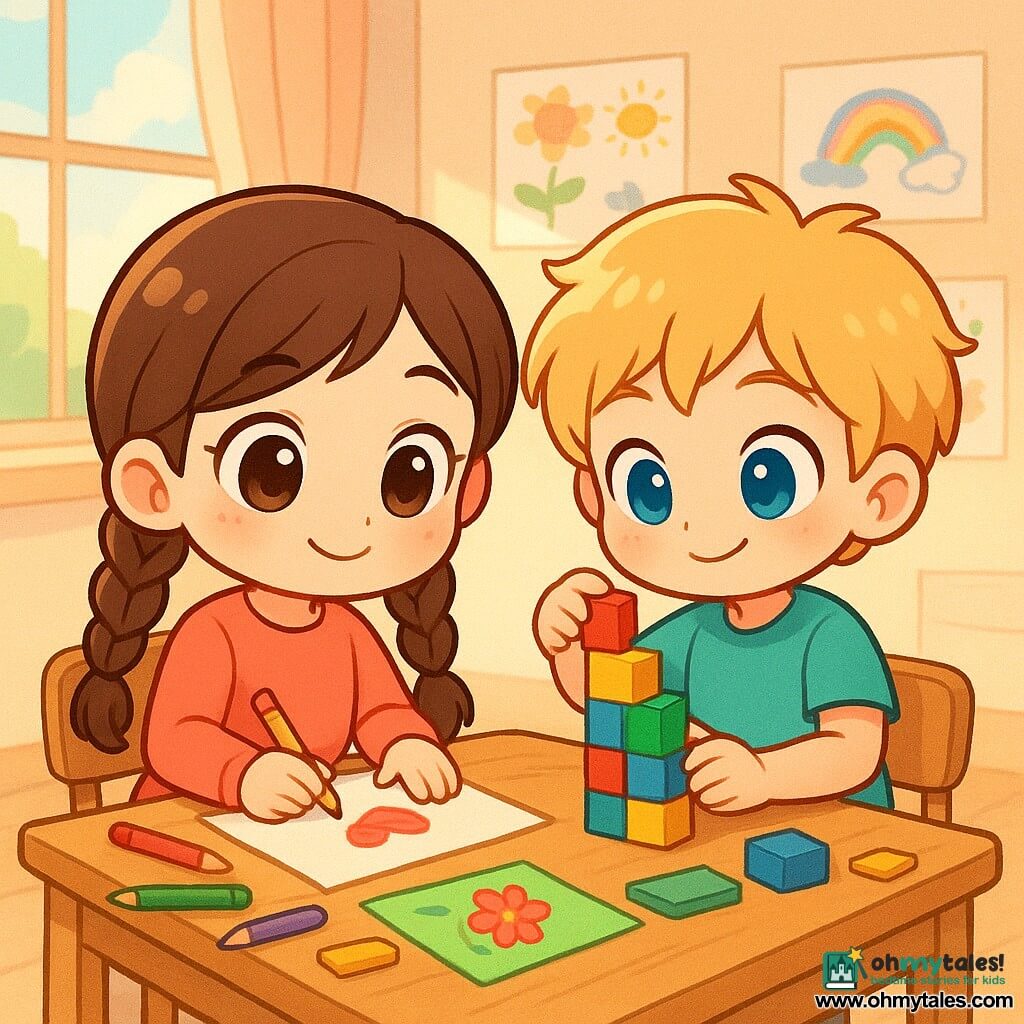
Maya sat at the round table under the window. Outside, the moon was already a thin silver line, though it was early evening. Inside, the classroom buzzed with quiet voices. Their teacher, Ms. Alvarez, had a folder of letters and pictures on her lap.
"We have a twin class," Ms. Alvarez said. "They live far away, where things are not calm right now. We will write to them and learn together."
Maya's pencil was sharp and ready. She felt a tiny squeeze in her chest. She did not know much about war. She knew it was something adults said in the news. She knew that sometimes places were loud and scary and people had to leave their homes. That thought made Maya's stomach feel heavy.
"Is that like when my brother and I argue?" whispered Leo, the boy next to her. He was seven and liked to build tall towers that always fell down.
Ms. Alvarez smiled. "Not the same, Leo. But feelings can be the same. People feel scared, brave, sad, and hopeful. We will help by listening and by sending friendship."
Maya looked at the first letter. It was from a girl named Lina. Lina had drawn a house with big windows and a cat on the roof. The handwriting was small and careful. The letter said they were safe for now and that they liked the moon.
Maya felt the squeeze in her chest ease. She whispered, "We both like the moon."
"Good," said Ms. Alvarez. "That is a start."
Maya decided she would write something true. She drew a moon and a cup of tea steaming on a windowsill. She wrote, "I am Maya. I am eight. I like drawing moons. Where do you draw your moons?"
When the letters left the class, Ms. Alvarez explained their project. Each student would learn about one thing in the other class's day. They would share songs, recipes, drawings, and math problems. They would also practice being kind when they wrote back.
"It is like being a bridge," Ms. Alvarez said. "A bridge helps people reach each other."
A bridge. Maya liked that image. Bridges were steady and safe. They helped people walk from one place to another.
Chapter 2 — Questions on the Map
A large map hung on the wall. Ms. Alvarez put a small flag where Lina's town was. The classmates leaned forward. The place was far, over sea and mountains.
"Sometimes we will learn words from their language," Ms. Alvarez said. "Sometimes we will learn how they solve small problems, like finding water or fixing a shoe. Sometimes we will simply listen."
Maya raised her hand. "Is it dangerous to talk to them?"
"It can feel worrying," Ms. Alvarez answered. "But letters and pictures and voices can be peaceful tools. We will ask what they are comfortable sharing. We will also share things that make us feel better, like a story or a song."
After school, Maya walked home with her mother. She asked more questions. "Mom, do people always leave home when there's fighting?"
Her mother held her hand. "Sometimes families move to protect themselves," she said. "Sometimes they stay and help neighbors. People do many things. What matters is that we remember they are people—children, parents, teachers—who like stories and moons and warm bread."
Maya thought of Lina's cat on the roof. She pictured Lina drawing the moon while her family drank warm tea. The images made the heavy feeling lighter. They were pieces of a real life, like tiles on a floor.
At dinner, Maya told her family about the twin class. Her father hummed a tune he learned as a child and suggested they bake something to send. "Bread travels well in pictures," he said with a wink.
Maya laughed. She loved the idea. Food could be a language, she thought. A picture of bread could say, "I care about you."
That night, Maya closed her eyes and imagined a string between her and Lina. On the string hung tiny drawings: a moon, a cup of tea, a bread loaf, a cat. The string made her feel connected.
Chapter 3 — Letters, Voices, and a Little Bridge
Weeks passed. The classes exchanged more letters and pictures. Lina sent a small poem about the moon and a recipe for a simple flatbread. Maya and her classmates tried the recipe in home economics. The kitchen smelled warm and yeasty. When Maya tore the warm bread, she felt a soft, alive joy.
They also practiced words from Lina's language. "Shukran," Ms. Alvarez taught them, "means thank you." Maya said it carefully, liking the quiet sound.
One day, a video arrived. Lina and her classmates shyly appeared on the screen. They sat in a classroom with curtains that fluttered. A boy waved and said, "Hello," in a voice like a bell.
Maya's heart knocked. She had not seen anyone from so far away before. Her palms went a little sweaty. The children took turns speaking slowly, learning to be clear and kind.
"Hello, Lina," Maya said when it was her turn. Her voice trembled but stayed steady. "I like your cat drawing."
Lina smiled. "Thank you," she said. "I like your moon. It looks like my moon."
They asked each other simple questions. What is your favorite game? What is your favorite food? The answers were so ordinary they felt like ladders—step by step up and across toward understanding.
After the call, Maya and her friends sat in a circle. Leo whispered, "They laughed when I said my sandwich is peanut butter and jelly. They laughed a happy laugh."
Ms. Alvarez nodded. "Laughter is a bridge too," she said. "It shows we are alike."
Maya found herself thinking about feelings as tools. A letter could carry comfort. A recipe could carry care. A video call could carry a smile.
One afternoon, Maya received a private note from Lina. It said she had been scared by loud noises and that sometimes she missed her home. At the bottom, Lina had drawn a small heart.
Maya read it twice, then three times. Her eyes stung. She wanted to fix everything, but she was only eight. Ms. Alvarez guided the class to respond with care. They drew calming pictures: a warm blanket, a quiet corner with a book, a small plant.
Maya wrote, "Sometimes I feel small when things are loud at home too. When I am scared, I hold my mother's hand and we breathe together. I hope the moon watches over you."
She added a tiny drawing of two hands holding and a moon smiling.
Chapter 4 — Quiet Actions, Big Meaning
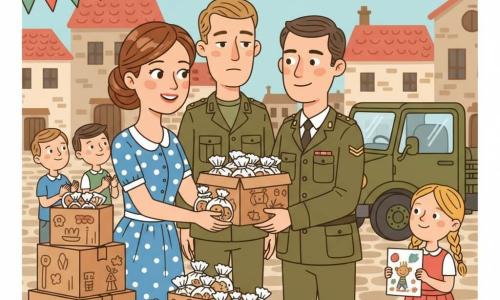
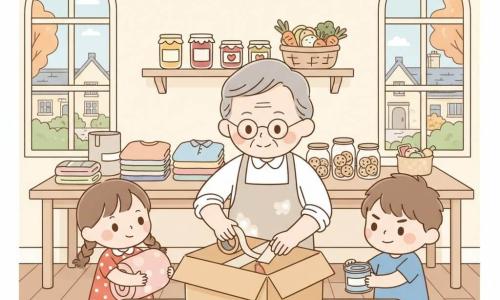
The project made headlines in the local paper. People in the town learned about the twin class. Some donated books and crayons. The donations were packed into bright boxes labeled "From friends under the same moon."
The boxes could not travel to Lina quickly, but pictures of the boxes did. In a video call, Lina's class clapped and showed their thanks with big, careful gestures. The children learned that help can be both near and far, and that sometimes giving is a way to be brave.
Maya found that every small action had weight. Holding a classmate's pencil when they fumbled, choosing a kind word, or sending a drawing—each was a tiny bridge. She learned to name feelings: "I feel worried," "I feel hopeful," "I feel calm." Naming them made them smaller and clearer.
At school, they planted a small garden. Each student chose a seed to plant. Maya picked basil. "It smells like summer," she told Lina during a call. Lina said she liked mint and would try to grow something too when she could.
As the basil sprouted, Maya watched it like a small miracle. The plant did not fix everything in the world. But it showed how steady care could help something grow.
One afternoon, Maya sat on the school bench and looked at the moon again. It was full and round. She remembered Lina's moon drawing. She felt a wave of calm.
Ms. Alvarez joined her. "How do you feel?" she asked softly.
"Brave," Maya said without thinking. Then she added, "and still a little sad sometimes."
Ms. Alvarez nodded. "That is okay. Brave and sad can be together. You are learning how to be a bridge. Bridges need care, and so do you."
Maya smiled. She liked the idea that bridges needed looking after. She decided she would water her basil and write one more letter that night.
In her letter, Maya wrote about the basil, the bread, and a silly song her father hummed. She drew two moons and two cups of tea. At the bottom she wrote, "We are looking at the same moon. I am your friend."
Chapter 5 — A Message of Peace
Time passed and the project continued. There were challenges. Some letters took longer to arrive. Some days Lina sounded tired, and Maya felt her own tiredness. But the connection stayed.
One morning, Lina's class sent a video. They had made a paper chain of hearts with messages. They lifted the chain to the camera and read a line each: "Hope," "Friendship," "Peace." Lina said, "Peace means our games can be loud and happy again."
Maya watched the paper hearts sway. She thought of the bridges they had built with small things. She thought of the basil, the bread, and the moons. Peace waited like a gentle neighbor who might come slowly but could be welcomed with open hands.
At the end of the school year, the classes made a shared map of small acts that help people feel safe. On it, Maya drew a bridge between two dots and wrote, "Kind letters. Listening. Sharing food. Saying hello."
When the last day of the project arrived, Lina taped a small photograph to the screen. It was a picture of a blue window, a cat looking out, and a moon sitting outside like a quiet friend. Lina waved and mouthed, "Thank you."
Maya waved back, her hand feeling warm. "Thank you," she said aloud. Then she whispered, as if the moon could hear, "We are under the same moon."
The class clapped quietly. Ms. Alvarez reminded them that peace was a long journey and that their small actions were part of it. Maya felt proud and small at the same time—a good feeling that hugged her like a soft blanket.
That night, Maya placed her drawing of two moons by her window. She looked up and thought about Lina, about the bridge they had built, and about the many small, steady things people do to help each other. The world was not suddenly perfect. But under the same moon, two girls had found a way to share kindness, and that felt like the start of something hopeful.