Chapter 1: Waiting for News
Eight-year-old Mia sat by the big window in her living room. Sunlight painted warm shapes across her hands as she carefully folded a paper crane. Outside, birds chirped and the wind danced through the leaves. But inside, Mia's thoughts were far away.
She pressed the smooth paper bird against her cheek. “Do you think Dad is safe, Mama?” she asked quietly.
Her mother, Mrs. Patel, knelt beside her. She smiled gently and tucked a strand of Mia's hair behind her ear. “I think he's very safe, my love. He's working with people who want to help others. And he promised to call us as soon as he could.”
Mia nodded. She knew her dad was in a faraway city where people sometimes argued and didn't always get along. He was there to help children go back to school and make sure everyone had enough to eat.
“Why do people fight, Mama?” Mia's voice was small. “Why can't they just talk?”
Her mother thought for a moment. “Sometimes grown-ups forget how to listen. When people want different things, they sometimes use angry words or even hurt each other. That's called a conflict. But there are always people who try to help everyone find peace again.”
Mia looked at her paper crane. She remembered her dad telling her that in some countries, cranes were a symbol of hope and peace. She brushed her thumb along its folded wings.
“Can I send Dad a picture of my crane?” she asked.
Mrs. Patel's eyes sparkled. “That's a wonderful idea. Your crane can remind him that we're thinking of him and hoping for peace.”
Mia smiled. She felt a little lighter. She didn't like waiting, but making something beautiful for her dad made the time pass more gently.
Chapter 2: Learning About Peace
At school the next morning, Mia sat next to her best friend, Tom. Their teacher, Mr. Carter, wrote the word “PEACE” in big blue letters on the board.
“Does anyone know what this word means?” he asked.
Tom raised his hand. “Isn't it when people aren't fighting?”
Mr. Carter nodded. “Yes, Tom. Peace means people are getting along, listening to each other, and helping each other. Sometimes, when there's a conflict, people need to work together to find peace again.”
Mia thought about her dad. She raised her hand. “My dad's helping people in another country. He says when there's war, it's hard for kids to go to school or play outside. But people can work together to make things better.”
Mr. Carter smiled. “That's right, Mia. Even when things are hard, there are helpers everywhere. Helpers try to solve problems by talking, sharing, and caring. They use peaceful actions, not angry ones.”
He picked up a small white dove from his desk. “This is a symbol of peace. Doves remind us to be gentle and kind.”
Tom whispered to Mia, “I like the paper crane you made. That's a peace bird too, isn't it?”
Mia nodded. “My dad taught me. When you make one, you wish for hope and calm.”
Mr. Carter smiled at the class. “Today, let's each make a symbol of peace. You can draw, fold, or build something that reminds you of kindness and friendship.”
Mia's heart felt warm. She began folding another crane, this time with blue paper.
Chapter 3: The Peace Project
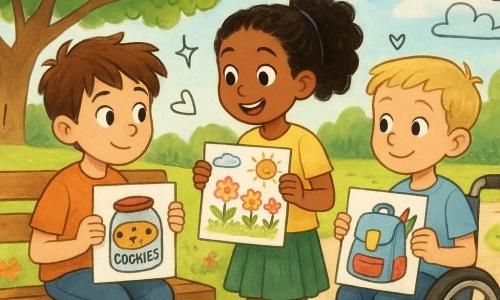
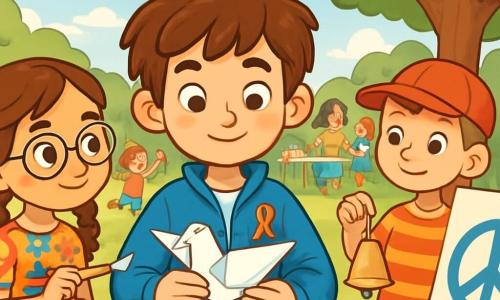
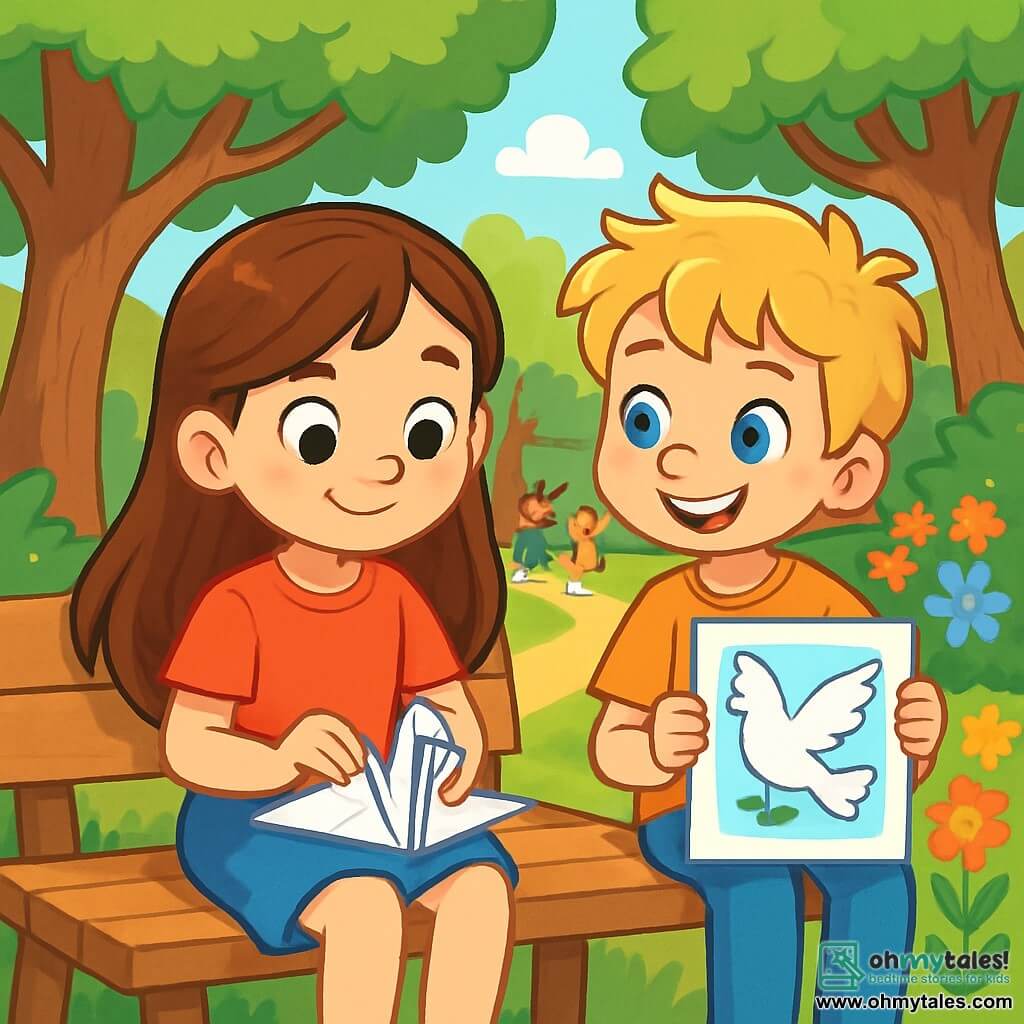
After school, Mia and Tom met in the park with their classmates. They carried their peace symbols—paper cranes, drawings of doves, and even a big heart made of leaves.
Tom said, “Let's hang our peace symbols on the old oak tree. Maybe someone who feels sad or worried will see them and feel better.”
They tied their creations to the branches. The tree looked colorful and hopeful, like a garden of wishes.
Mia's neighbor, Mrs. Lee, walked by with her dog. She stopped to look at the tree. “What a lovely idea!” she said. “What are these for?”
Mia explained, “We're hoping for peace. My dad is away helping people, and we want everyone to feel safe and cared for.”
Mrs. Lee nodded. “That's a wonderful wish. When I was a little girl, there were conflicts in my country, too. But every act of kindness helped us feel strong. You children are making the world brighter.”
Tom grinned. “If everyone did something kind, maybe there wouldn't be so many fights.”
Mia felt proud. She knew she was small, but her actions mattered.
Chapter 4: Good News and Gentle Words
That evening, Mia was reading her favorite book when the phone rang. Her heart thumped. Her mother answered, then smiled and handed the phone to Mia.
“Hi, Dad!” Mia said, her voice full of joy.
“Hello, starshine,” Dad replied. He sounded tired, but happy. “I got your picture of the crane. It made me smile. Thank you, Mia.”
Mia felt her worries melt away. “Are you okay? Is it very scary there?”
Dad's voice was calm. “Some things are hard, but I'm safe. I'm working with people from many countries. We share food, stories, and ideas to help everyone get along. Sometimes we have to listen very carefully, but it helps.”
Mia told him about the peace tree and the doves and cranes her friends had made. Dad laughed softly. “That's wonderful. You're spreading hope, just like the helpers here.”
Before saying goodbye, Dad said, “Remember, Mia, peace starts with listening, helping, and caring—at home, at school, and everywhere.”
Mia promised to keep spreading peace, even in small ways.
Chapter 5: The Book of Calm Words
The next day, Mia brought a little notebook to school. On the cover, she drew a dove and a paper crane. Inside, she wrote:
“Words for Peace:
Hope
Kindness
Caring
Sharing
Listening
Helping
Friendship
Calm”
She showed it to Tom. “I want to fill this book with gentle words. When someone feels worried, we can read from it.”
Tom smiled. “Let's ask the class to add their own words.”
Soon, the notebook was full of bright, happy words: “Welcome,” “Brave,” “Together,” “Smile.” Each word felt like a small light.
Mia realized that even though she couldn't stop every conflict, she could help bring peace to her own world. When she listened, helped, or shared a kind word, she made things a little better.
That night, Mia placed her paper crane on the windowsill. She whispered, “Thank you for teaching me, Dad. I'll keep being a helper.”
And as the moon rose, Mia felt safe, hopeful, and proud. She knew that peace could grow, one gentle word at a time.