Chapter 1
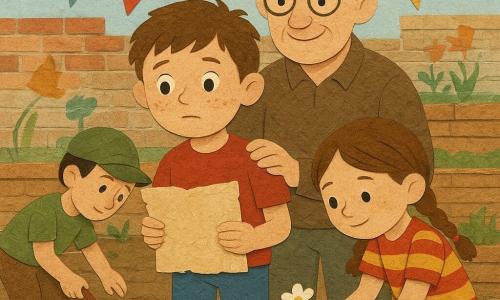
The classroom smelled like crayons and oranges. Sunlight made bright patches on the floor. Mrs. Hale placed a map on the table. The map had lines and names. It showed places where people lived, and places where people had to move away.
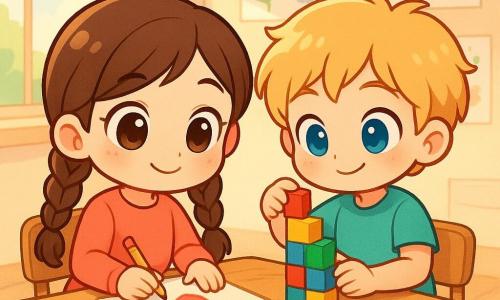
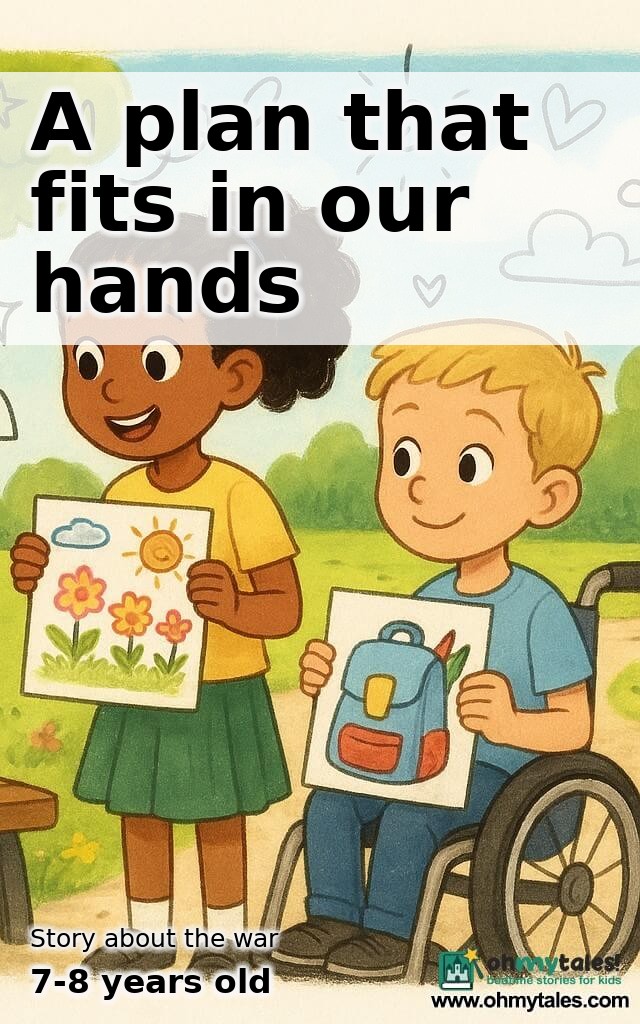
Tom, Aisha, and Milo sat close. They were eight years old. Milo used a small wheelchair. It rolled quietly under the desk. Milo liked drawing machines. Tom liked building forts. Aisha liked planting seeds.
Mrs. Hale spoke softly. She talked about words like "conflict" and "refuge." She used simple sentences. "War is when people in a country fight," she said. "It can make families leave their homes. It makes life hard for many people."
The children listened. Their faces were serious. The classroom felt like a library for a moment. Outside, a bird hopped on the windowsill. The bird was calm.
Mrs. Hale showed pictures with no frightening details. There were families holding hands, small backpacks, and crowded buses. There were also pictures of helpers giving water and a teacher in a tent writing on a board. "People help in many ways," she said. "Sometimes help is food. Sometimes it is a safe place to sleep. Sometimes it is a kind word."
Tom asked, "Can kids help too?" His question was small but clear.
Mrs. Hale nodded. "Yes. Children can help in ways that fit their hands and hearts. Little things can matter a lot." She handed each child a paper and a pencil. "Today we will think of plans that fit in our hands."
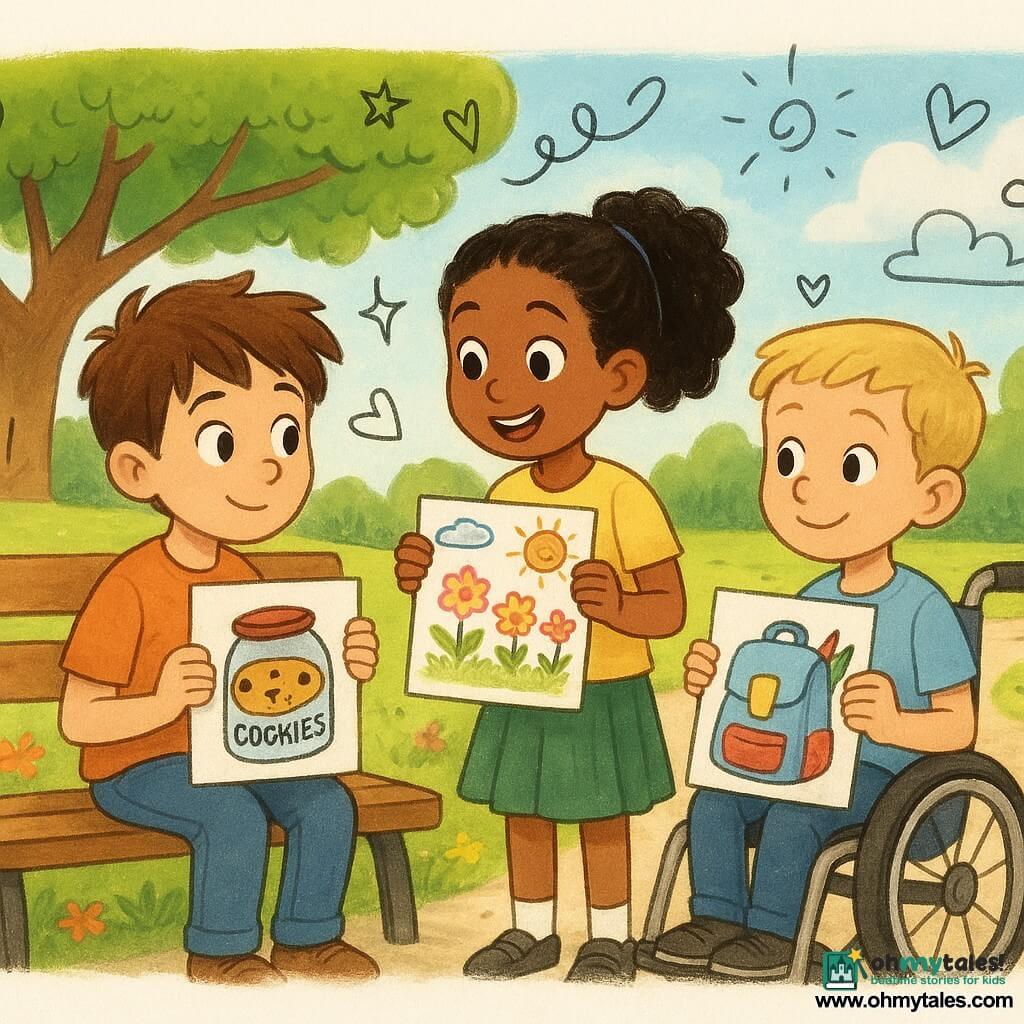
Aisha drew a picture of a garden. Milo sketched a small bag with crayons and a notebook. Tom drew a box with cookies and a map. Their drawings showed hope and care.
Chapter 2
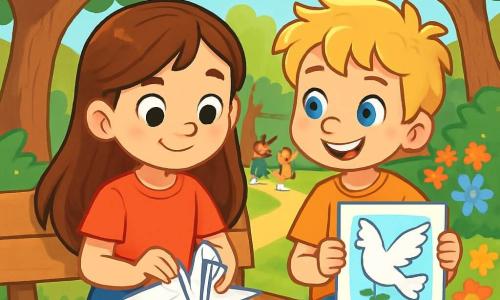
After school, the three friends met at the park. The park had long benches and a tall oak tree. They sat with their drawings. The sun warmed their shoulders.
"Let's make care kits," Aisha said. Her voice was bright. "Small bags with useful things. They can fit in a backpack."
Tom tapped his pencil on the bench. "We should put notes in them. Notes with good words."
Milo smiled. "I can draw pictures for the notes. And make a sound book." He showed a small recorder he liked to carry. "Sounds of home can be calm. My little brother sleeps with a song."
They made a list. Cookies, toothbrush, a small notebook, crayons, a simple toy, a warm pair of socks, and a note. Each item was chosen because it could bring comfort. The list was simple and real.
They asked their parents for help. Mrs. Warren, Milo's mother, had extra socks that no one wore. Mr. Chen from next door gave a box of new notebooks. Aisha's grandmother baked a batch of plain biscuits. Tom's older sister donated a jar of colorful marbles.
Every item was wrapped gently. The children wrote short notes. Aisha wrote, "You are not alone." Tom wrote, "May you find a safe place." Milo drew a sun and a small house. The notes used clear words. They were warm, not heavy.
The friends talked about safety. Mrs. Hale had taught them to choose words that calm. "Tell people where to get help," she had said. "Tell them someone cares. Be honest and gentle."
They practiced the notes out loud. "You are not alone," they said. "We care for you." The sentences felt friendly on their tongues. Saying them made their hearts steady.
They filled forty small bags. Forty fit into a cardboard box. The box slotted neatly under Tom's bike. They felt proud. The plan fit in their hands and in a small box.
Chapter 3
A help center at the community hall agreed to take the bags. The hall was a bright room with long tables and a bulletin board covered in flyers. People moved with careful steps and kind faces. A volunteer named Lina thanked the children.
"These will help," Lina said. "Little comforts mean much to someone who has traveled far."
Tom wondered about the families they could not meet. "Will they get these?" he asked. "Will they like the notes?"
Lina smiled. "Your care and words travel further than you think. Volunteers will add the bags to rest stops. They will reach people who need them."
The friends walked home light-footed. Along the way, Milo heard a small argument between two boys over a bicycle. Their voices were sharp at first. Milo wheeled closer and said, "Do you want to swap turns? I can time it." His voice was even. The boys calmed. They agreed and laughed. The bicycle became a game again.
That evening, the children talked about feelings. They felt proud and a little sad. Aisha said, "I miss things I read in the papers. I can't sleep. I think about children away from home."
Tom touched his notebook. "I feel small," he said. "But I think our bags matter."
Milo nodded. "Words help. They stop the heavy parts for a moment." He hummed a quiet tune. It sounded like the song his brother played when he was upset. The tune made Aisha smile.
Their parents listened and answered with calm honesty. "It's okay to feel many things," said Mr. Chen. "You are learning. Small actions matter." He suggested they write a story about their plan to share with other children.
Chapter 4
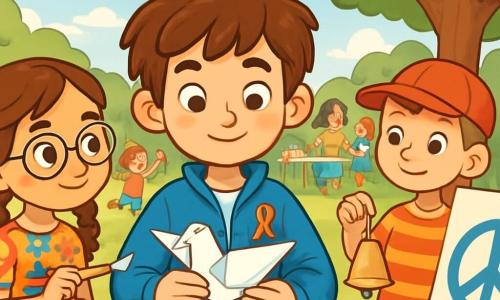
The story took shape. It was short and steady. It told of a map and a bird and three friends with hands that fit small plans. The friends included a list of practical steps: listen to trusted adults, make care kits, learn a calm sentence, and plant quiet things close to home.
They read the story aloud at school. Their voices were soft and sure. Other children listened. Some wanted to help too. A boy named Javier offered to teach a simple song to add to the kits. A group of girls planned a small garden near the school gate to grow herbs and flowers for volunteers to gift.
The principal smiled. "This shows how we can be kind every day. Peace can be in our actions and our speech."
People at the school made more kits. The gardening club grew quick plants in pots. The music class recorded songs. Each small action was not loud but steady. It looked like many small lights in a line.
One afternoon, the postman delivered a letter from another town. It was from a child named Sami. Sami wrote, "Thank you for the note. My family used a bag on a long trip. The socks were warm. The song helped my sister sleep. Your words mattered." The letter had a drawing of a window with three stars.
The three friends read the letter together under the oak tree. Aisha's eyes shone. Tom laughed softly. Milo traced a star with his finger. The letter was simple and strong. It showed that small plans can travel and reach people.
They learned another important thing. Not everyone wants the same help. Some people needed information, some needed food, and some needed time to rest. Listening and asking gently is a kind act. The friends decided to always ask before giving. Their care kits changed to "offer bags." The words mattered.
The friends also learned to take care of themselves. Helping could make them tired. So they set rules: they would talk about their feelings at dinner, play at the park on Saturdays, and draw quietly when things felt heavy. These were peaceful habits.
Chapter 5
Spring arrived. The school garden grew rosemary and marigolds. The scent followed the children down the hall. Volunteers brought news that the boxes reached several rest areas and some shelters. Messages came back, short and warm. "We found this," one message said. "It helped my child smile." Another said, "The notebook was used for drawing. Thank you."
The friends looked at the map again. They saw lines where helpers were. They also drew small stars where letters had come. The map turned into a story of care.
One morning, Milo's wheelchair stopped at the curb and would not move. He sighed. Tom and Aisha stood close. "Let's try together," Aisha said. They knelt and checked the wheel. Tom found a small pebble stuck in the wheel. He picked it out. Milo turned the chair; it moved smoothly.
They cheered in a small way. Problems sometimes have simple fixes. Sometimes they need patience and a second pair of hands.
At the end of the year, the three friends gave a short presentation at the town hall. They spoke about simple plans, about how words can calm, and how small comforts can be carried in a backpack. They showed the letter from Sami and photos of the garden.
People clapped. A woman stood up and said, "You taught us that we can help without being adults. You taught us how to listen." Her voice shook a little. Aisha handed her a small plant the children had grown.
The friends felt a quiet joy. Their plan had started at a table with crayons and a map. It had fit into their hands and then into the hands of many others. They had found ways to turn worry into action. They had learned that peace is not only the absence of fighting. Peace is also the presence of care.
That evening, the three friends sat by the oak tree and counted small things they were grateful for. A warm cup of tea. A letter with a star. A pair of socks. A song that makes sleep easier. Each thing was ordinary and important.
They made one more list. It was simple: listen, offer gently, help where you can, and take care of yourself. Then they folded the paper and put it in the little box they kept for plans. They agreed to add notes to it whenever they thought of new ways to be kind.
The night sky came up with a soft glow. The bird returned to the windowsill in the classroom. The map lay neat on Mrs. Hale's desk. The children's plan fit in their hands, and it had reached much farther. They slept that night with steady hearts. The world felt large, but the next morning they would wake and find new small ways to help.