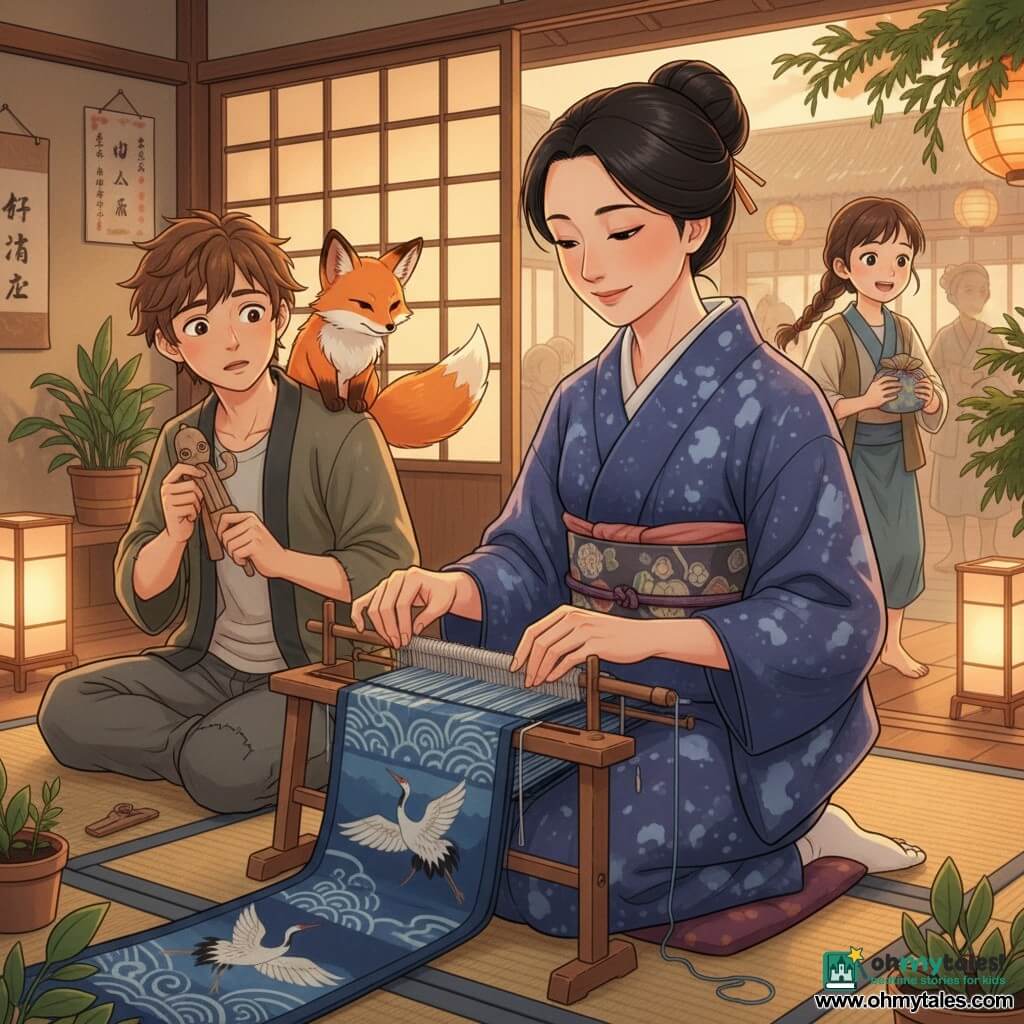
The Weaving of the First Thread
In a village tucked between a slow river and a forest that breathed in cedar and moss, Hana lived in a house of paper screens and soft light. Her hands remembered the song of the spindle; every morning she woke to the same quiet ritual—boiling tea, laying out threads, blessing the tools with a bow toward the mountain. The old ways had wrapped themselves around her like a warm robe: the way to fold a kimono, the way to tie a tidy knot, the way to listen first and speak second.
One spring, when the plums were humming with bees and the river wore a silver ribbon, a boy named Kaito arrived by the bridge. He was a traveler with pockets full of small, earnest questions. He had lost his lute and an old companion, a fox spirit called Tama, had gone nowhere and everywhere, it seemed. Hana took him in because her home had space for more stories, and because the shrine behind her house hummed with a promise—this year would be the season to hold a ceremony that sealed a friendship, as practiced in the village for many moons.
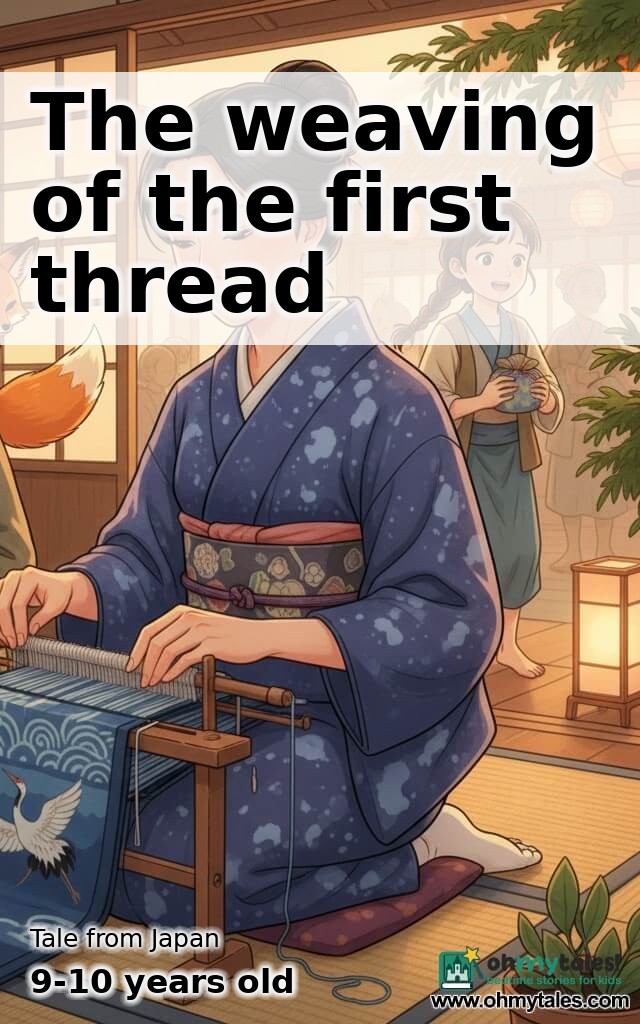
Hana's task was simple and careful: to prepare the ceremonial cloth that would bind two hearts as friends before the shrine's lanterns. She would dye the cloth with indigo from the river and stitch a pattern that spoke of respect, of listening, of hands that work together. In the old ledger, her teacher had written: "Patience is the thread that keeps knots from fraying." Hana set to work, moving like a small wind around her loom.
The Loom Among Spirits
The loom stood in Hanami room, where paper panes filtered sunlight into gold. Each thread Hana chose had a memory: one from her mother's apron, one from a child's sleeve, one from a fisherman's net. She hummed a tune that the forest could hum back. Outside, the cedar branches bowed as if listening; inside, the threads curled against one another like young foxes warming to sleep.
There were small spirits about the house—komainu of the garden stone, a teapot spirit that sighed when water boiled too quickly, a paper sprite that lived beneath a shutter. They liked the rhythm of Hana's hands. They liked when she worked slowly, because slow meant space for them to tip their tiny heads and help. A paper sprite would tidy a stray thread, a teapot would whistle twice to mark a minute. Their help was gentle and patient—never loud, often unseen.
As Hana wove, a pattern emerged: spirals like river eddies and tiny cranes for blessings. She dyed the cloth in layers of indigo so that its colour kept secrets beneath secrets. Each dip of the cloth into the vat was a promise; each rise was a lesson in waiting. Kaito watched with a restless eagerness, fingers fiddling with a small carved fox he had found, hoping to coax Tama back with a song. But the fox spirit would have to choose, and that choice could not be hurried.
The Dilemma of the Sealed Knot
A week before the ceremony, a sudden storm came like an unsettled drum. The river swelled, the lanterns in the shrine guttered, and a messenger arrived breathless: the village elder's granddaughter, who had been meant to be the other friend in the ceremony, had been called away by a family duty in a far valley. The sealing was to bind two people who had chosen each other; without the granddaughter, the rite could not be done as planned.
Kaito's eyes brightened with an idea. He suggested the fox spirit, Tama, should stand as the other friend. In the stories, animals and spirits often carried the vows of humans. But the village rules were old as the mountain roots; a spirit could not be bound in the same knot without consent, and consent cannot be pulled out quickly like a thorn. Hana felt the hush of the room tighten around her like the silence before rain. Her loom waited. The teapot whistled three soft notes as if to say, "Consider."
She sat with the dilemma like a gardener sits with a seed. To allow Tama to stand in place of the girl would be kind and fiery, and might fix Kaito's longing. To wait for the granddaughter would keep the rite true to time-honoured care, but might leave Kaito's heart feeling without music. The spirits rustled; the paper sprite nudged a crooked thread toward her foot. Hana closed her eyes and listened to the sound of the mountain far beyond the rice fields. Patience, she thought, is not only waiting; it is tending while waiting.
The Ceremony of Quiet Threads
Hana chose a way that kept both kindness and truth. She finished the cloth, but she would not seal the knot in haste. Instead, she invited the villagers to the shrine for a different kind of weaving—one of waiting together. She arranged the ceremony to be two-part: the first would be a sharing of promises between Kaito and the returning granddaughter when she could come, and the second, for that evening, would be a public offering: songs for lost companions, lanterns for those who wait, and a blessing for the fox spirit.
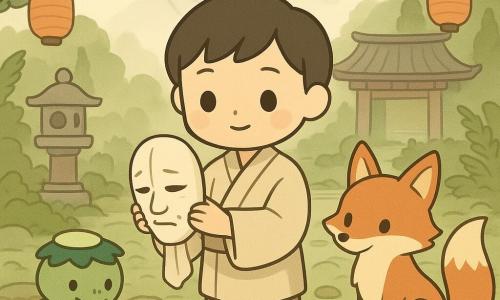
Kaito learned to make small offerings of thanks, to place a tiny cup of tea at the shrine edge and bow. He stitched a simple charm for Tama from leftover scraps, and when he tied it, his hands trembled less each time. The villagers, who had watched many seasons fold into one another, brought their own quiet patience—an old fisherman mending a net, children weaving paper cranes, women braiding straw into rings. Each act was a stitch in a larger cloth of community.
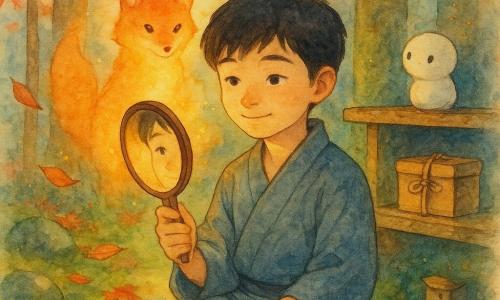
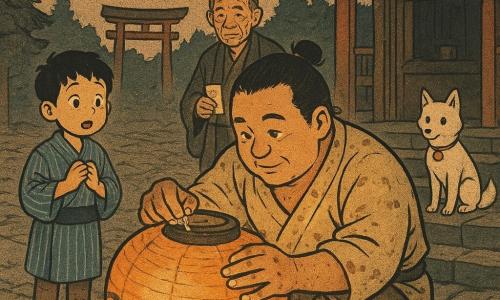
At twilight, the shrine filled with the soft geometry of lantern light. The elders spoke in low tones about patience being a living thing, like a tree that bends with wind and roots deeper after storms. Kaito sang a short song—a slow, crooked melody like a river finding a new bank. At the edge of the clearing, a pale shape moved among the trees. It was neither rush of wind nor trick of moonlight but a small, careful fox, whose eyes held a laugh and an old sorrow. Tama had returned, not because Kaito had demanded it, but because he had learned to wait while working at his craft and his kindness.
When the time came to knot the ceremonial cloth, Hana was steady. She folded the indigo twice, placing a pebble from the river and a paper crane in the fold. Kaito and the granddaughter—who arrived quietly with the dawn, having hurried as kindly as duty allowed—each laid a hand upon the cloth. Hana tied the knot slowly. The ribbon of thread crescented like a smiling moon. The knot was simple but perfect: patience shown as a band of blue, a promise kept in the hush between breaths.
Tama sat on Kaito's shoulder as if to say, "I have always been near," and the fox's warmth settled a secret into the boy's chest. The spirits around them hummed like a chorus of small bells. The ceremony had not been rushed; it had been tended. The villagers felt a peace like the quiet after the storm, when the river's song is deeper and clearer.
The Garden After the Rain
After the sealing, Hana walked to the little garden behind her house where moss grew like an old poem. She watered the young seedlings and smoothed the path stones with the back of her heel. Kaito practiced plucking a tune on the lute he had found again, better now for the spaces he left between notes. The granddaughter carried the charm Hana had sewn, and promised to teach it to her own child one day.
The spirits resumed their gentle chores. The teapot boiled with a contented sigh; the paper sprite tucked itself into the fold of the curtain. Hana folded the leftover cloth into a neat square and set it away with a ribbon. She had learned something the way steam learns from the kettle: patience is not a quiet place you arrive at, but a rhythm you keep. It is the art of doing and waiting at once, of weaving a life that honors both hurry and hush.
On the last evening of spring, when the lanterns glowed like distant stars and the cicadas murmured their slow applause, Hana sat on her porch. The mountain breathed a cool, steady breath. In the distance, Kaito's song rose and fell like a friendly bird. Hana smiled, thinking of threads and knots, of spirits who helped only when invited, and of a village that had once again learned how to wait together.
The moral lived small and warm in the children's hearts that night: patience is a craft. It asks for careful hands, quiet listening, and the willingness to let friendship grow in its own season.