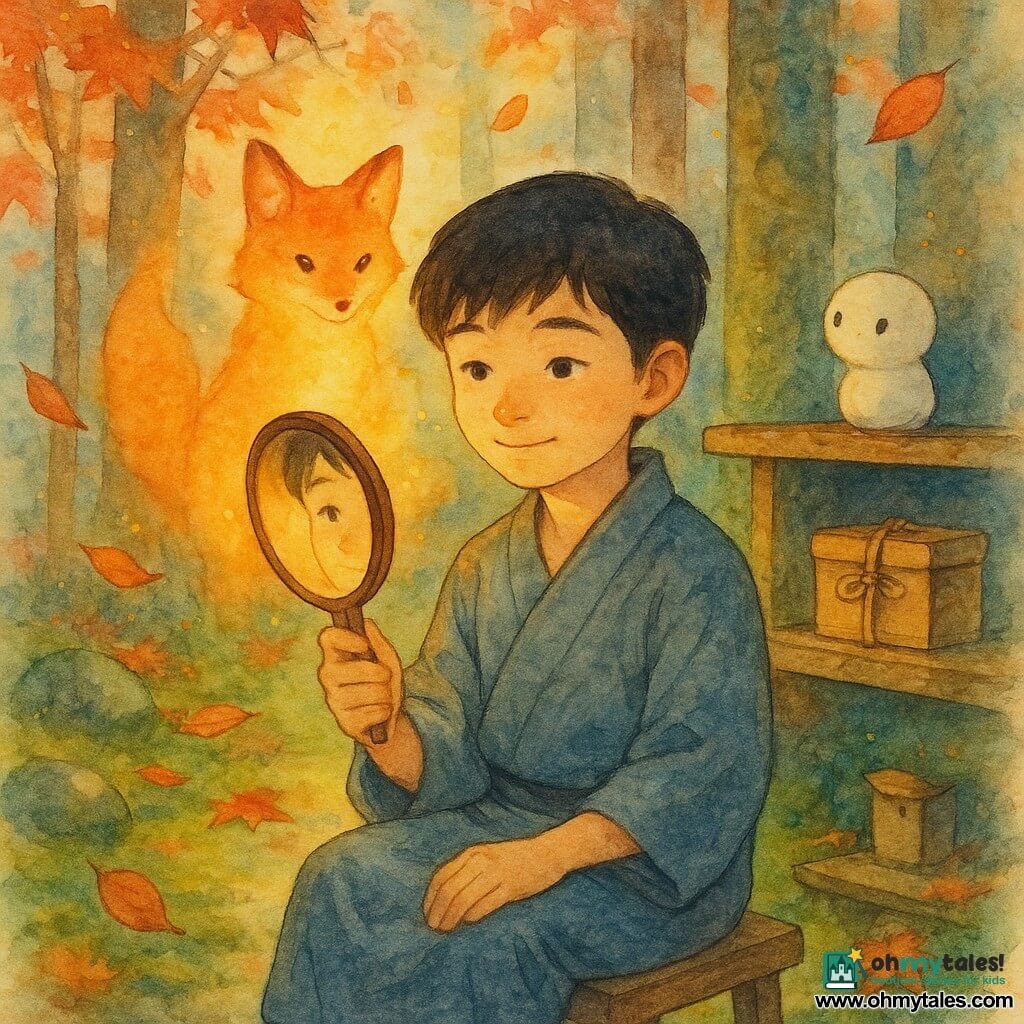
Chapter 1: The Garden of Quiet Leaves
In a village folded between the slow ribs of rice terraces and the bowed shoulders of cedar trees, there lived a young man named Haru. He moved like a soft wind, polite and steady, with hands that remembered the warm weight of teacups and the gentle curve of brush strokes. Every morning he wandered the garden behind his little house, where maples drew red lanterns in the autumn and moss kept the earth's secrets like a secret smile.
An old master had once tended the garden before Haru. The master spoke little, but he left behind a small wooden box fastened with a single knot and an old riddle carved on the lid: "What is the sound that is true when no one listens?" Haru's fingers liked the ridges of the riddle. He kept the box upon a shelf and polished its wood until it shone like a quiet lake.
Haru's neighbors called him shy, but in the hush of the garden his thoughts flew like paper cranes. He watered the moss, fed the sparrows, and listened to the rustle of bamboo as if it told tales. He wished, secretly and like a bright pebble in a pocket, to solve the riddle. He imagined answers: the falling of a single leaf, the heartbeat of a sleeping dog, the whisper of the wind through the eaves. None felt complete.
One evening, as the moon cupped the village in silver, a fox spirit with fur like brushed lantern light came to the gate. It bowed politely and left a single painted pebble on the step—white with a red dot—then vanished into the pines. Haru picked up the pebble and heard, very faintly, a voice like distant bells: "Look where you are honest." The pebble warmed in his hand. He slept with it beneath his pillow and dreamed of tea steam that rose into clouds and became a bridge.
Chapter 2: The Walk Among Spirits
In spring, when the river hummed with melted snow and the earth smelled of new things, Haru decided to ask the village spirits for help. He packed a threadbare cloak, the wooden box, and the painted pebble, and walked to the shrine beneath the oldest cedar. Lanterns swung like slow moons. Tiny paper wishes—white strips folded neatly—fluttered on a branch like cautious birds.
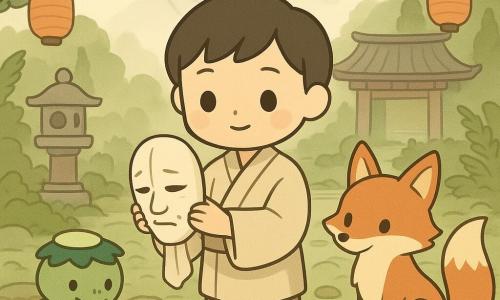
At the shrine, a small kami, a friendly house spirit with cheeks like rice dough, stirred the sand in a bowl and looked at Haru as if he had come to pour tea. "Why do you come?" the kami asked, voice as soft as incense.
Haru sat and told the spirit about the riddle, how the master's words had nested inside him and would not leave. "What is the sound that is true when no one listens?" he repeated. The kami tilted its head and traced patterns in the sand. "Many search for echoes," it said. "They collect feathers and leaves, hoping for an answer. But the truth sits close, like the shadow of a teacup."
A breeze slid through the cedar boughs and carried the faintest laughter—like tiny bells, like the clink of chopsticks. Haru felt the air grow thicker with stories. He visited the river to ask the water spirits, who answered by showing him a pebble turned smooth by years of small touches. He climbed the terraces and asked the earth, which hummed as if remembering every seed it had held. Everywhere he went, the spirits offered gentle riddles of their own: "Listen to what keeps," "Find the hand that cares," "See where the seams meet."
At dusk, under a sky the color of tea-stained silk, Haru understood that the village itself was full of small truths. He came home with pockets full of tiny gifts—an oak leaf with a silver vein, a ribbon of seaweed, a cracked bell—and a new quietness in his heart. The painted pebble felt heavier now, as if it had been drinking in sunlight.
Chapter 3: The Night of Falling Stars
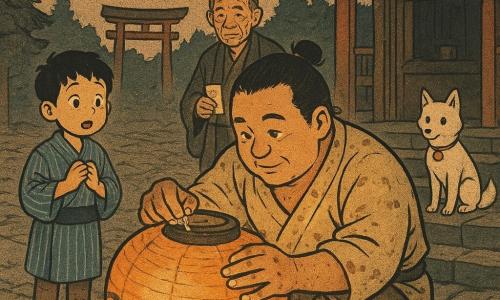
Summer brought a festival when paper lanterns turned the street into a stream of warm gold. Children ran with masked faces, drums beat like friendly thunder, and elders walked slowly under umbrellas patterned like old maps. Haru went to the festival carrying only the box and the pebble. The old master's riddle hummed in him like a tiny insect.
At the edge of the festival, where torii gates framed the sky like red commas, Haru met an old potter named Sora who shaped clay with hands that remembered river stones. Sora's eyes were clear as glass; he had once been a friend of the old master. Over rice crackers and green tea, Haru asked him about the riddle.
Sora smiled and rolled a small piece of clay between his fingers. "My teacher used to say," he murmured, "that some answers are not found down the road but in the way you sit upon it." He scratched a line into the clay—a simple curve that looked like a river bend. "Why not ask the things you quietly do? They keep the truth company."
That night, while the village watched fireworks bloom like flowers in the sky, Haru sat beneath the cedar and tried being honest in the smallest way. He practiced letting his small acts mean exactly what they were—a bowl washed not to be seen, but because he liked its warm shape; a path swept not to earn praise, but because swept paths feel smooth beneath bare feet. The pebble in his palm seemed to hum. Stars fell like silver rice grains and the old box on his shelf promised nothing and everything.
When a small boy tripped and fell near the lanterns, Haru helped him up without thinking of the riddle. He tied the boy's sandal and watched the child run back to his mother, breathless with joy. No one noticed, and no one watched. In the hush that followed, Haru felt a lightness—like a bell that had stopped holding a heavy chain.
Chapter 4: The Simple Truth
Autumn painted the maples with brave oranges, and the garden began its slow sleep. Haru sat by the shelf where the wooden box waited. His hands, steady and patient, untied the knot and lifted the lid. The box smelled of cedar and old tea. Inside, where he had always expected secrets, lay nothing but a small mirror, round and clear.
Haru blinked. He held the mirror up and saw his own face—tired, patient, kind. The painted pebble and the cracked bell and the leaf with silver veins seemed to lean toward the glass. The voice of the fox spirit returned like a wind through chimes: "Look where you are honest."
He remembered the river's smooth pebble, Sora's curve of clay, the boy whose sandal he'd tied. He saw, in the mirror, his hands as they tied, washed, and mended. The riddle's meaning opened like a paper flower: the sound that is true when no one listens is the small thing you do purely—an honest step, a quiet kindness, the breath you draw when no one is watching.
Haru laughed softly, a sound like warm rain on a paper roof. He had imagined riddles to be storms and thunder, when they were instead like tea leaves, releasing flavor slowly into still water. The answer was not a secret to be won, but a way to live: to be himself, without ornament, without performance, listening to the world and responding simply.
That evening, he set the mirror back in the box and tied the knot gently. He walked through the garden and, with hands that were sure and small, swept the fallen leaves into neat piles. He fed the sparrows and hummed a tune he had heard from a cedar one spring morning. The spirits watched—kind as old neighbours—and the moon lent its soft silver.
Haru understood then that authenticity was not a prize on a high shelf but the feeling of matching one's actions to one's heart. He kept the pebble by his pillow, not for answers but for remembrance: to wake and do small things honestly. The village noticed nothing remarkable, and that was the wonder.
In time, children came to the garden to balance on stones and listen to Haru tell simple stories about wind and tea and honest hands. He taught them to make little boats from leaves and to say thank you to the river. The old master's riddle traveled on their laughter, no longer a lock but a key.
When the first snow of winter dusted the garden in sugar white, Haru sat by the window and watched his breath fog the glass. He thought of the fox spirit, the kami, the potter Sora, and the small boy whose sandal he had tied by lantern light. He felt full, like a bowl that had held many kinds of soup.
He had been searching for an enigma that required unraveling, and instead he had found a simple truth: to be true is to do what you mean, even when no one listens. The village slept wrapped in soft, ordinary goodness, and Haru, in his quiet house, smiled because he finally understood the sound that is true.