Chapter 1: The Shoes That Squeaked
Max was nine, and his shoes squeaked like tiny mice on the school hallway tiles. Squeak-squeak, squeak-squeak—right past the trophy case, right past the posters for the spring fair.
He tried to walk softly, but the sound followed him anyway, like a little shadow.
At recess, Max sat on the low wall by the playground. He watched kids run, jump, and trade snacks. Some had bright trainers with shiny logos. Max's shoes were clean, but the toes were a bit scuffed, and the soles were thin.
His friend Leo plopped down beside him and pointed at a group of older kids.
“They said my backpack isn't cool,” Leo whispered.
Max looked at Leo's backpack. It was plain blue, with a small patch sewn on the side. Max liked the patch. It looked like a rocket.
Max shrugged, trying to sound calm. “We don't judge brands,” he said, the way his mom always did when they passed fancy store windows. “A bag carries books. That's its job.”
Leo smiled a little. “Yeah. Still… it stings.”
Max nodded. He understood that feeling—like a tiny pebble in your shoe that you can't ignore.
When the bell rang, Max walked back inside, his shoes singing their squeaky song. He told himself, I'm lucky to have shoes. I'm lucky to have school. And he tried to let gratitude fill the places where worry wanted to sit.
Chapter 2: A New Kid and a Quiet Lunch
On Monday, a new kid joined Max's class. Her name was Amina. She had neat braids and a careful smile, like she was holding it in her pocket until she knew it was safe to use.
At lunch, the cafeteria buzzed like a big beehive. Max carried his tray: a sandwich, an apple, and a carton of milk. He scanned the room and saw Amina at a corner table, peeling her orange slowly.
She didn't have a lunch tray. Just the orange, and a small bottle of water.
Max sat near her, not too close, not too far. “Hi,” he said.
“Hi,” Amina replied. She looked at his sandwich, then back at her orange. She wasn't staring in a rude way. It was more like her eyes were thinking.
Max remembered how it felt when he had eaten plain noodles for three nights in a row last winter, when Mom's work hours got cut. He remembered Mom saying, “We'll be okay. We're just stretching.” Max learned a new word then: stretching wasn't only for muscles.
Amina's orange smelled sweet. She separated the slices with careful fingers.
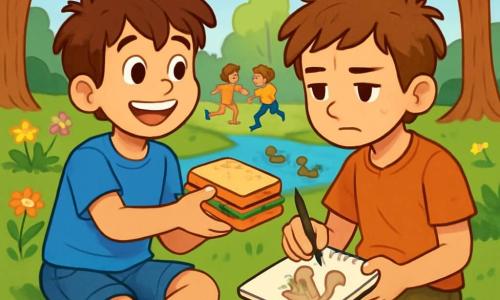
Max had a sudden idea. He unwrapped his sandwich, broke off a small piece, and held it out. “Do you want to try? It's peanut butter.”
Amina hesitated. Then she nodded and took it with a soft “Thanks.”
Max took one orange slice in return. They chewed quietly, trading tiny bites like it was the most normal thing in the world.
From the next table, a boy muttered, “Why's she always got… nothing?”
Max felt heat in his cheeks. He turned his head just enough to be heard. “We don't judge brands,” he said, steady. “And we don't judge lunches either.”
Amina looked at him, surprised. Then her careful smile came out, bigger this time.
After lunch, Max didn't feel like a hero. He just felt like someone who had shared. And somehow, that felt warm, like a mug in your hands on a cold day.
Chapter 3: The Class Project
That week, Mr. Harris announced a class project: “Community Helpers.” Each group had to create a poster and a small model of something that helped people—like a library, a clinic, or a food pantry.
Max ended up in a group with Leo, Amina, and a girl named Sofia who always had glitter in her hair even when no one knew where it came from.
They chose to make a model of a food pantry shelf, with pretend cans and boxes.
“Let's bring things from home,” Sofia said. “Cereal boxes, soup cans, stuff like that.”
Max's stomach tightened. At home, their cupboards were not empty, but they were careful. Mom made lists and checked prices. She laughed a lot, but Max had noticed how she sometimes stared at the bills like they were rude letters.
“I can bring a couple things,” Max said. He didn't want to promise more.
Amina was quiet. She traced a finger along the edge of the worksheet. “I can bring… a shoebox,” she offered. “For the model.”
Sofia opened her mouth like she might say something, but Leo spoke first. “Shoeboxes are perfect. We can turn them into shelves.”
Max looked at Leo, grateful.
Later, while they worked, Mr. Harris walked by and said, “Remember, projects are about ideas, not about who can buy the most supplies.”
Max noticed Amina's shoulders relax, just a little.
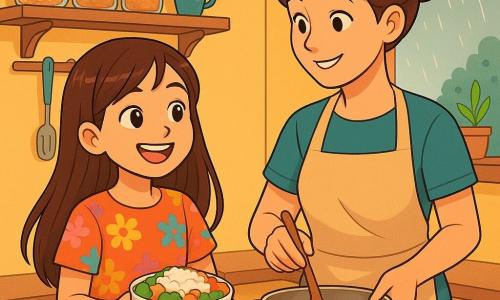
At home, Max told his mom about the project. Mom listened while stirring a pot of rice and beans.
“A food pantry shelf,” she repeated. “That's a kind choice.”
Max picked at a loose thread on his sleeve. “Mom… can we bring stuff? We don't have tons.”
Mom turned off the stove and crouched to his level. “We can bring something small,” she said gently. “And we can bring time and effort. Those count too.”
Max nodded. He felt a familiar mix of worry and pride, like two colors swirling in water.
That night, they found two cans in the cupboard to donate later—one of corn, one of soup. Max put them in a bag and tied the handles in a neat knot.
Before bed, he whispered, “Thank you,” even though he wasn't sure who he was saying it to. Maybe to life. Maybe to the quiet strength of his mom. Maybe to the fact that they had anything to share at all.
Chapter 4: The Spring Fair Plan
Posters for the spring fair appeared everywhere: on doors, on the bulletin board, even taped to the vending machine like it was a special guest.
There would be games, face painting, a bake sale, and a “Fun Run” around the school field. Everyone was excited.
At recess, Sofia announced, “My mom said I can buy a whole bracelet set at the fair!”
Leo said, “I'm saving for the dunk tank. I want to throw the ball!”
Max's fingers dug into his pockets. He had two dollars in his jar at home, saved from doing dishes and sorting socks. Two dollars felt like a lot when you earned it one coin at a time, but it didn't feel like a lot next to bracelet sets and dunk tanks.
Amina didn't say anything. She just listened.
That afternoon, Mr. Harris shared a note: “The fair will also have a donation table. If families can, they may bring items for the community pantry.”
Max glanced at Amina. Her face stayed calm, but her eyes flicked down, like she wished the floor could hide her.
Max raised his hand. “Could we also have a ‘free table'?” he asked. “Like, people can put things they don't need anymore—books, puzzles—and anyone can take them?”
Mr. Harris blinked, then smiled. “That's a thoughtful idea, Max. We'd need to organize it carefully.”
Sofia leaned toward Max. “That could be fun,” she whispered. “Like treasure hunting!”
Leo grinned. “I have comics I've already read five times.”
Amina's eyebrows lifted. “People would… just give them?”
Max nodded. “Yeah. Not because someone is ‘poor' or ‘not poor.' Just because sharing is smart. Stuff shouldn't sit lonely in a closet.”
That made Leo laugh. “Lonely socks, lonely toys, lonely board games.”
Mr. Harris wrote “Free Table” on the board. “Let's try it,” he said. “We'll call it the Swap and Share Corner.”
On the walk home, Max's shoes squeaked happily for once. Squeak-squeak, like they approved.
At dinner, Mom listened to the plan and smiled. “That's a good kind of helping,” she said. “Quiet. Respectful. Real.”
Max felt lighter. He could not buy a bracelet set. But he could build something.
Chapter 5: The Swap and Share Corner
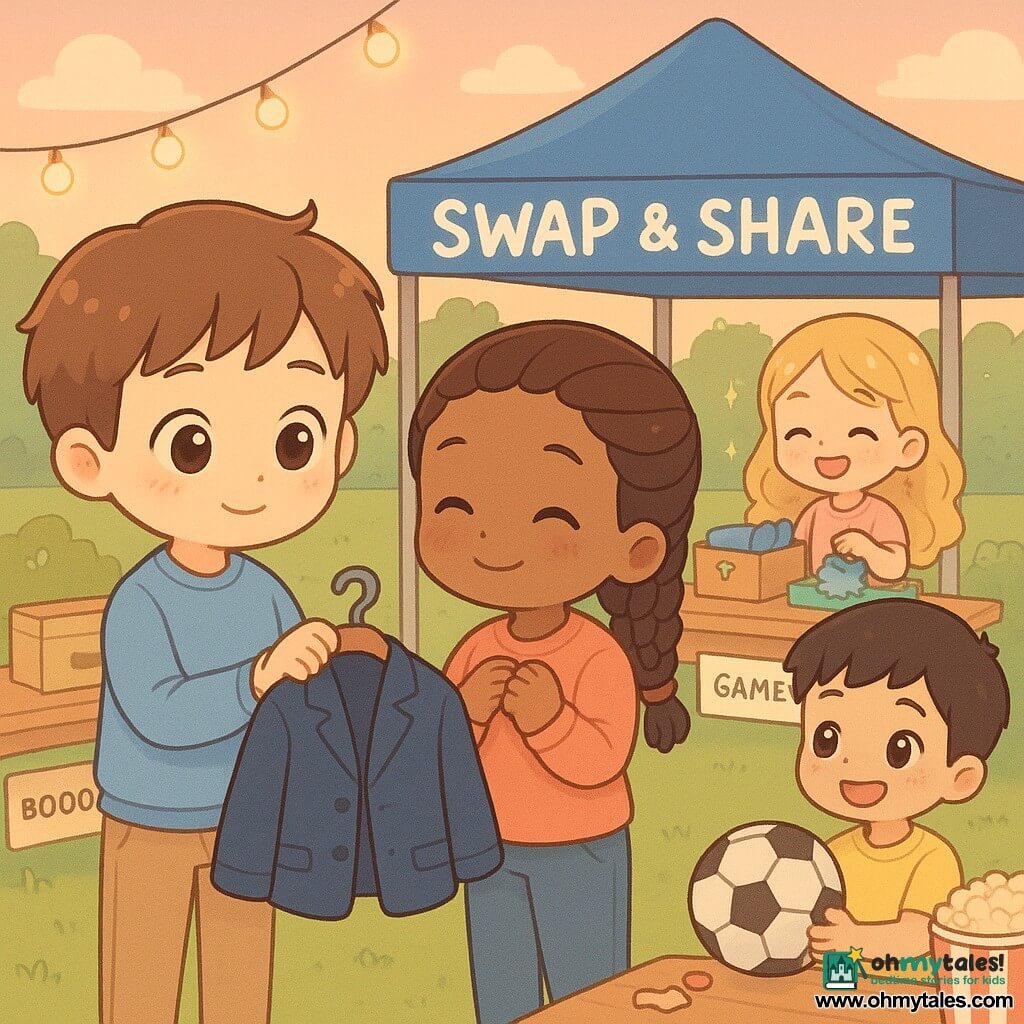
On fair day, the school yard smelled like popcorn, grass, and sweet cupcakes. String lights hung between the trees like tiny stars that had decided to visit early.
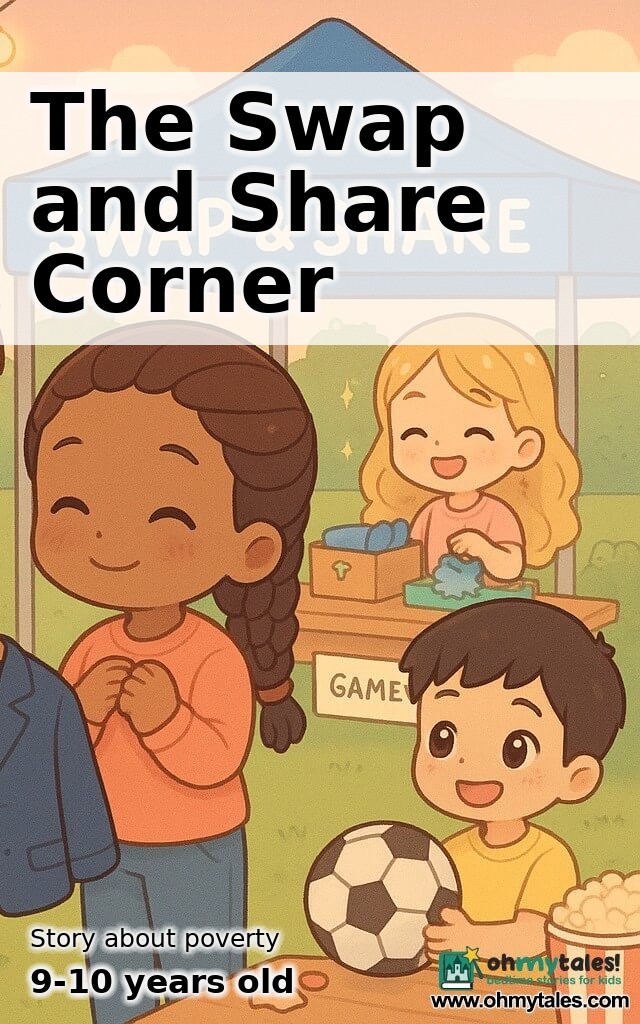
Max and his group set up the Swap and Share Corner under a blue canopy. They arranged tables with signs: “Books,” “Games,” “Clothes,” and “Random Treasures.” Mr. Harris reminded everyone, “No teasing. No comments about labels. We don't judge brands.”
Max repeated it softly to himself, like a helpful chant.
People arrived carrying boxes. Sofia brought puzzles with all the pieces in zip bags. Leo brought comics and a soccer ball that was still bouncy. Max brought two books and a hoodie that had gotten too short in the sleeves.
Amina arrived with a small bag. Inside were a few carefully folded shirts and a shiny hair clip shaped like a flower.
Sofia picked up the clip. “This is pretty!”
Amina's cheeks went pink. “It doesn't fit my hair anymore,” she said.
Max watched as families browsed. A little boy took Leo's soccer ball and hugged it like it was a puppy. An older girl found a mystery novel and squealed, “Yes!”
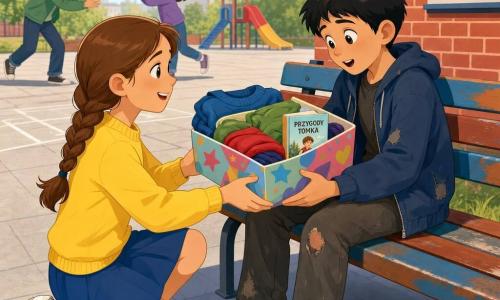
Then Max saw Amina staring at the “Clothes” table, where someone had placed a warm jacket—puffy, navy, and still in good shape.
She didn't reach for it. Her hands stayed at her sides.
Max walked over slowly. “It's cold in the mornings,” he said, keeping his voice gentle.
Amina swallowed. “I don't want people to think I'm taking because I…” She trailed off.
Max understood. Taking could feel like standing under a spotlight.
He pointed to the sign Mr. Harris had taped up: “Take what you need. Leave what you can. Everyone is welcome.”
“It's not about what people think,” Max said. “It's about being warm.”
Amina looked at the jacket again. Then she picked it up and held it to her chest. Her shoulders dropped like she had set down something heavy.
At the donation table, Max and Mom placed their two cans in the box. It didn't make a big clunk. It made a small sound.
Still, Max felt proud. Small sounds mattered.
Later, as the sun slid lower, Mr. Harris announced over the microphone, “Thanks to your kindness, we collected food, and our Swap and Share Corner helped many families. Helping can be simple.”
Max stood with Leo, Sofia, and Amina, watching kids run with painted cheeks and sticky fingers. Amina wore the navy jacket, and it fit her well.
Leo nudged Max. “Your idea was awesome.”
Max shook his head. “It was our idea. And it was everyone's stuff.”
Sofia laughed. “And everyone's closets.”
Amina looked at Max. “Thank you,” she said quietly.
Max thought of his squeaky shoes, his mom's careful grocery lists, the two cans, the jacket, the orange slices. He thought of all the ways people could be rich—rich in laughter, rich in kindness, rich in ideas.
He took a deep breath of popcorn air. “I'm grateful,” he said, mostly to himself. “For what I have. And for what we can do together.”
His shoes squeaked as he walked, but now the sound didn't bother him. It sounded like a reminder: step by step, small things could add up.