Chapter 1: The Little Kitchen
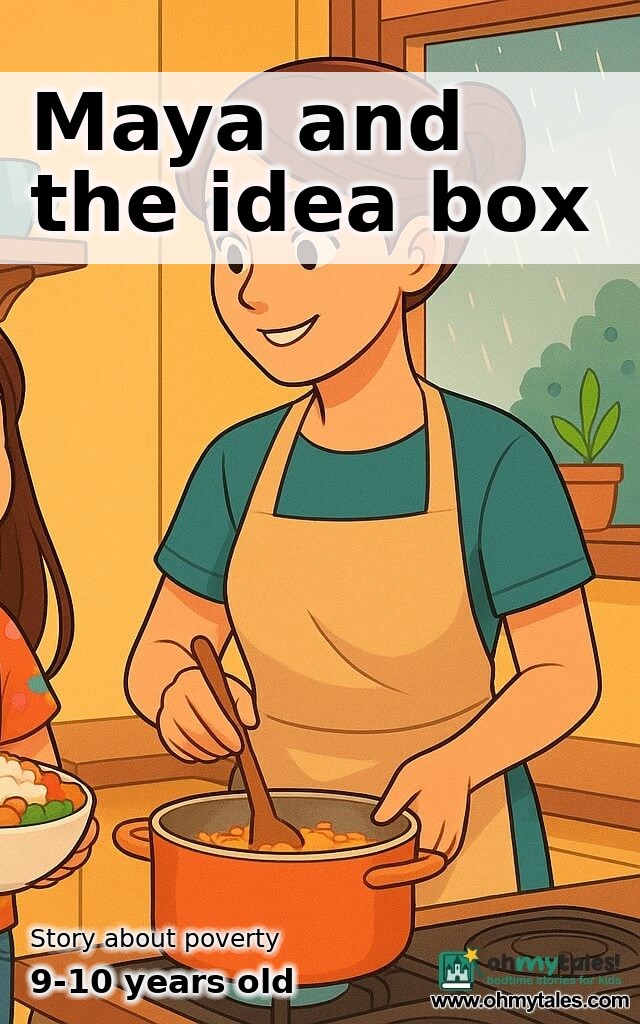
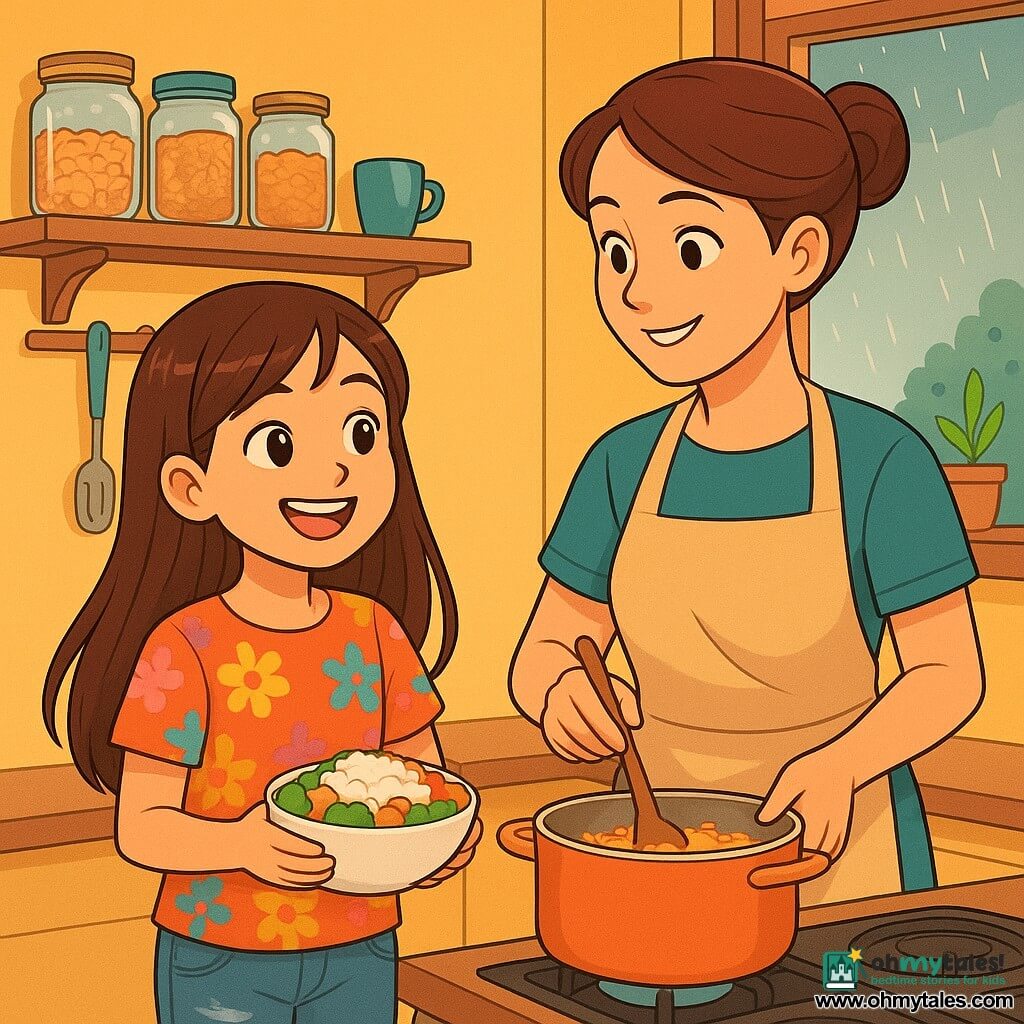
Maya woke up to the soft clink of rain on the window. She rubbed her eyes and padded into the kitchen where her mother, Ana, was already stirring a pot. The apartment smelled like garlic and onions, warm and familiar.
"Good morning," Maya said, climbing onto a stool.
"Good morning, clever one," Ana smiled. "We have a bit of soup left from last night. Want to help me make it stretch for dinner?"
Maya loved helping in the kitchen. She liked the sound of wooden spoons and the way a messy counter could turn into something that made everyone feel safe. Ana's hands moved carefully, like she was folding the weather itself into the pot.
They both knew their money was tight. The rent came first, and the rest was for food, bus passes, and small things. Maya never heard her mother complain, but she saw the lists and the envelopes. The newspapers on the table had stories about people losing jobs; sometimes Ana read those and then folded them very quietly.
"How can we stretch soup?" Maya asked.
Ana set the pot on low and pointed to a small pile of vegetables in the fridge: a carrot with a nicked top, half an onion, a bell pepper getting soft, and a bowl of last night's rice.
"Leftovers are like a mystery box," Ana said. "You look, you think, and you make something new. We call it rescue cooking."
Maya giggled. "Rescue cooking. Like being a hero for food."
"You are a food hero," Ana nodded. "And heroes think about what we have, not what we don't."
Maya felt calm and steady, as if she wore invisible boots for walking over small worries. She liked thinking. "Let's make a rice and vegetable bake," she suggested. "We can add an egg to bind it, and some cheese if we have any."
Ana opened the cupboard. "There's a tiny bit of cheddar—perfect."
They set to work. Maya chopped the softer pieces with care while Ana handled the stove. They mixed the rice and vegetables with a gently beaten egg and a pinch of salt. The oven hummed. The apartment filled with the sound of warming things and their low conversation.
As they worked, Ana told Maya stories about her own childhood—about how her grandmother would turn bread crusts into breadcrumbs and how neighbors in her old town shared tomatoes when the garden overflowed. Those stories were not sad. They were lessons wrapped in warmth.
"People help each other in quiet ways," Ana said. "A loaf of bread becomes two sandwiches. A recipe becomes two smiles."
Maya thought about her teacher, Mr. Patel, who sometimes left extra pencils in the classroom supply box so other students could borrow them. She thought of the lady in the building who always left a pot of soup on the shared table for anyone who needed a hot meal. "Kindness is like leftover soup," she said. "It keeps giving."
Ana laughed. "Exactly."
Chapter 2: The Idea Box
After the bake came out golden, they ate at the small kitchen table. The food was simple but comforting. Maya noticed how the apartment felt lighter than the stack of unpaid bills on the counter might suggest. She felt proud.
"Do you think people waste a lot of food?" Maya asked, pushing her fork through a warm, soft piece.
"Some do," Ana answered gently. "Sometimes families buy more than they can eat, or stores throw away food because the labels say it's past a date that means freshness, not safety. It happens a lot. It's one reason prices are high for some people who can't afford fresh food all the time."
Maya frowned. "That's not fair."
"No," Ana agreed. "But fairness can be worked on. We can ask questions and find ways to help. That's thinking with your heart and your head."
Maya liked that idea—using both heart and head. She wanted to do something small and useful, like Mr. Patel's pencils. After dessert—a spoonful of yogurt with honey—they cleared the dishes together.
"Why don't we make an Idea Box?" Maya suggested suddenly. "We could put ideas in it—ways to save food, share things, help neighbors."
Ana's eyes brightened. "I love that. We can make it a family project. Start tonight."
They found an empty shoe box and decorated it with markers. Maya drew little pictures of pans and loaves and smiling faces. Ana added a list nearby titled "Simple Actions" with ideas: share leftovers, check community boards, learn to preserve food, ask local shops about day-old bread. They folded the notes and put one into the box.
Maya felt like the box was a small bridge between them and the larger world. It would hold tiny plans that could steady bigger problems. She imagined other children with idea boxes in their houses, sharing notes like trading cards of helpfulness.
That night, when Maya brushed her teeth, she thought about hunger and waste differently. It wasn't a story for television with scary music. It was about choices. It was about noticing. She promised herself to ask questions, to listen, and to try small things that made a difference.
Chapter 3: The Neighborhood Table
The next week, their building announced a small community lunch. The building manager, Mr. Davies, had cleared the common room and put up a sign: "Neighborhood Table—Share Food, Share Stories."
Maya nudged her mother. "Let's go. Maybe we can bring part of our bake," she said. Her heart did a soft flip—part excitement and part nervousness.
At the common room, tables were already set. Some neighbors had brought bread, a salad, a pot of stew. A woman named Rosa held a bowl of roasted potatoes and smiled when she saw Maya.
"Your mother makes the warmest soup," Rosa said. Maya felt proud and shy at the same time.
They put their rice and vegetable bake on a table. People moved around, serving each other carefully, like a gentle tide. Maya listened to their stories: a boy singing the song his grandfather taught him, an elderly man offering tips on how to store apples, a teacher discussing a program that rescued unsold vegetables from markets.
"Would you like to take leftovers home?" Mr. Davies asked when he saw their nearly empty dish.
"We can share," Ana said. "But what if some people need food for the week? Maybe we can divide it into small containers."
Maya helped. She filled small boxes so each person could take something. One by one, neighbors thanked them. A young father with tired eyes said, "This helps. Really." Maya felt a warm hush inside her chest, like the feeling after finishing a good book.
After the meal, a woman named Leila, who ran a local food cupboard, stood up. "We're trying to reduce waste and help families. If anyone wants to volunteer a little time or share extra food, we can put it to use."
Maya raised her hand without thinking. "I can help. I can pack things and make signs." Her voice was bright.
Leila smiled. "We could use someone to make a 'no-waste' recipe sheet. Do you like drawing and writing?"
"I love it," Maya said.
That evening, back home, Maya and Ana added a note to the Idea Box: "Make no-waste recipe cards for the food cupboard." Maya drew a simple recipe called "Patchwork Rice Bake" with pictures so anyone could follow it. She used friendly words and little reminders: "Ask before taking," "Label what's inside," "Use clean containers."
Ana put the card into the box and kissed Maya's forehead. "Your careful thinking helps more than you know."
Maya felt alert and peaceful. She liked being needed in a quiet, steady way.
Chapter 4: Recipes and Respect
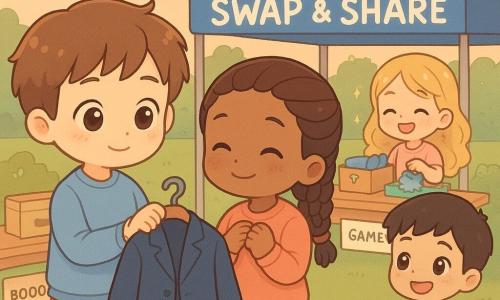
Weeks passed. The Idea Box filled with notes: share extra bread, host a swap day for clothes that still fit, teach a neighbor how to grow herbs in jars. Maya and Ana learned more about respecting people's dignity—how help should be offered without shame and how asking for help is a brave choice.
At the food cupboard, Maya handed out her recipe cards. People smiled at the simple drawings and took the cards home. A man named Jamal said, "My children liked the pictures. We tried the recipe, and we added some spices. It made dinner feel special."
Maya liked hearing those stories. She asked questions, too, like a little scientist. "Why do stores throw away food?" she would ask. "Is there a law that makes them do that?"
Leila explained in a straightforward way. "Some food is tossed because of labels. Sometimes it's about how things are packaged. But people are working on better systems, like donating food to charities and selling 'ugly' fruit at lower prices. Asking questions helps change things."
Maya nodded. She understood that change didn't always happen fast. It was like a garden: planting seeds, then waiting. But waiting didn't mean doing nothing. It meant acting in steady ways that added up.
One afternoon, a boy from Maya's class, Tommy, came over with his mother. They had brought a small bag of apples that were a bit bruised. "My mom says we shouldn't throw them out," Tommy said. He looked shy.
"Would you like to make applesauce?" Maya offered. "We can peel and cook them and add a little cinnamon."
Tommy brightened. "Can I stir?"
"Of course," Maya said. "Stir like you're mixing a secret."
They peeled and cooked the apples together, and the smell was like warm afternoons. When they finished, they put the applesauce into jars and labeled them: "For you—made with care." Maya and Tommy took the jars to the building table and gave them away. People laughed and clapped softly.
Ana watched Maya and felt proud. Not because they had solved everything, but because Maya treated each person with calm respect. She didn't pity anyone. She simply noticed needs and offered help. Her ideas were practical, and she asked questions that mattered.
One night, after a busy day at the food cupboard where they had organized a small workshop about saving leftovers, Maya lay in bed thinking about what she had learned. She thought of families who needed help and of stores that were changing how they did things. She thought of neighbors who shared bread, teachers who collected pencils, and her own small idea box.
Maya realized that being curious and kind could be a quiet kind of bravery. It wasn't about grand speeches. It was about noticing what was around you, asking how it could be better, and doing the small, steady things that help others keep their dignity.
She smiled in the dark and whispered, "Tomorrow I'll make another recipe card."
In the morning, the sun found the kitchen again. Maya and Ana made a simple breakfast from yesterday's porridge, adding a mashed banana and a sprinkle of nuts. They ate and planned: more recipe cards, a shared shelf in the hallway for spare items, and a tiny library of tips for saving food.
Maya felt calm and careful, like a lantern in a small, safe room. She knew there were big problems in the world. She also knew that one thoughtful action after another could make a neighborhood kinder and smarter. And she knew she could keep asking questions—because thinking with her heart and her head would help make change happen, step by careful step.