Chapter 1: The Big Meeting at Willow Woods Center
Wind rustled the green leaves above as Lenny the little wolf hurried along the winding path. His fluffy tail swished with excitement. Today was a special day at Willow Woods Center, the heart of their animal community. Lenny's paws barely touched the ground as he zigzagged past tall ferns and mossy logs. He didn't want to be late.
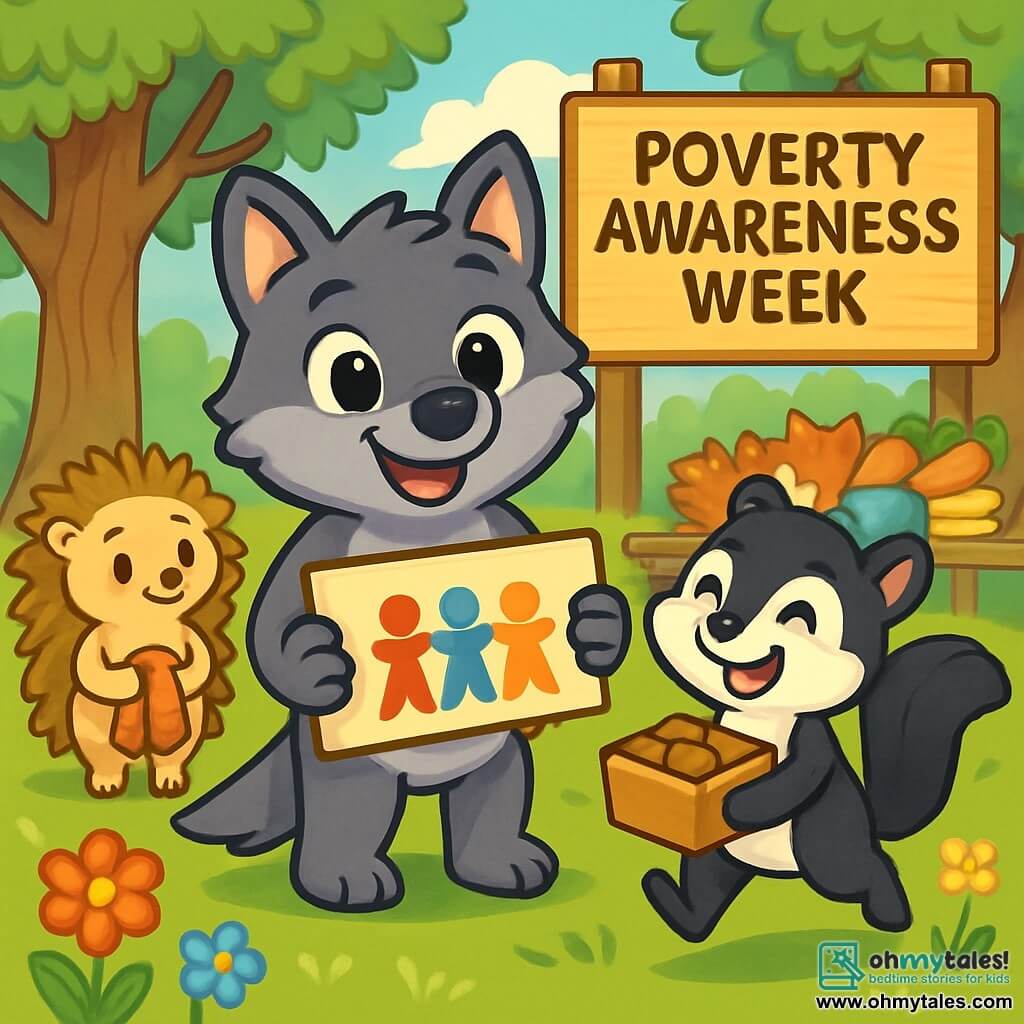
As Lenny reached the clearing, he saw a colorful banner stretched above the entrance: “Poverty Awareness Week – Let's Learn and Help Together!” Dozens of animals milled about. There were rabbits with clipboards, squirrels setting up tables, and even the wise old owl, Professor Hoot, arranging books in neat piles.
Lenny's best friend, Ruby the raccoon, waved at him from near the snack table. “Lenny! Over here!” she called.
Lenny darted over, his nose twitching at the smell of wildberry muffins.
“Did you see the flyer?” Ruby asked, her eyes shining. “We're going to learn about poverty and how we can help others!”
Lenny nodded eagerly. “I want to know what we can do. Sometimes I see animals who don't have enough food or a warm den. Maybe we can help them.”
Just then, Professor Hoot fluttered onto a branch above the crowd. He cleared his throat and the chatter quieted down.
“Welcome, everyone!” the owl began. “This week, we will learn about poverty—what it means, why it happens, and what we can do as a community to help. It's important to understand that some of our neighbors face hard times, but together, we can make a difference.”
Lenny listened carefully as Professor Hoot explained. Poverty, he said, means not having enough of what you need—like food, safe shelter, or warm clothes. Some animals lost their homes in storms, others couldn't find enough berries when the winter was long, and a few were too young or old to gather their own food.
“We don't want anyone to feel alone,” Professor Hoot said. “We can all help in our own ways.”
Lenny's ears perked up. He had never thought much about poverty before, but now he wanted to learn more.
Chapter 2: Meeting New Friends
After the big meeting, Lenny joined a group activity called “A Day in Someone Else's Paws.” Each animal got a card describing a different life. Lenny's card read: “You are Luna the fox. Your den was washed away by heavy rain. You must find a dry place to sleep tonight.”
Lenny imagined himself as Luna. Where would he go if his den was gone? Would someone help him?
Next, the group visited the Sharing Shed, a cozy hut where animals could donate food, blankets, or toys. There, Lenny met a shy hedgehog named Pip. Pip looked nervous, clutching a worn out scarf.
Lenny smiled gently. “Hi, I'm Lenny. Do you want to play?”
Pip nodded, her quills bristling. “I came to the center because my family has trouble finding enough to eat sometimes. But here, we can get help.”
Ruby joined them, carrying a box of nuts. “It's nice to share,” she said, offering the box to Pip.
Lenny watched as Pip's eyes widened. “Thank you! I'll take some for my brothers and sisters.”
Lenny was surprised. He always had enough to eat at home, but now he realized not everyone was so lucky.
Later, the animals gathered for story time. Professor Hoot read tales of animals who helped each other in hard times. Lenny liked the story of the beaver who built extra dens for friends who lost their homes.
As the sun set, Lenny walked home with Ruby. “I didn't know some animals had such a hard time,” he said quietly.
Ruby nodded. “Me neither. I think we should do something to help.”
Lenny agreed. He fell asleep that night, thinking about Pip and all the animals who needed a little extra care.
Chapter 3: Small Paws, Big Ideas
The next morning, Lenny woke up with a plan buzzing in his head. He raced to Willow Woods Center, bursting with energy.
He found Professor Hoot sorting books. “Excuse me, Professor? I want to help more. What can we do?”
Professor Hoot smiled, his feathers ruffling. “That's wonderful, Lenny! There are many ways to help. You can organize a food drive, collect warm blankets, or even teach others what you've learned.”
Lenny's tail wagged. “Can I tell my classmates at school?”
“Of course!” the owl replied. “The more animals understand, the more they can help.”
Lenny and Ruby teamed up to make colorful posters. They drew pictures of smiling animals sharing food and helping each other. They wrote, “Let's Help Our Friends!” and “Every Paw Counts!” in big, bold letters.
After school, they pinned the posters to trees and handed out flyers. Lenny's little brother, Milo, wanted to help too. “Can I give my old scarf to someone who needs it?” he asked.
Lenny ruffled Milo's ears. “That's a great idea!”
Soon, more animals joined. Squirrels donated extra acorns, rabbits brought patchwork quilts, and even the grumpy old badger contributed a pot of honey.
They organized a “Sharing Day.” Families came together, bringing what they could. Some brought a lot, some a little, but everyone brought something.
Pip arrived with her family, smiling shyly. “Thank you for helping us,” she whispered to Lenny.
Lenny felt warm inside. Helping others felt even better than he expected.
Chapter 4: Learning and Growing Together
The center became busier than ever. Lenny helped organize art activities where young animals painted pictures of hope and friendship. They made a mural on the big oak tree, showing animals working together, building dens, and sharing food.
Professor Hoot held workshops about empathy. The animals learned how to listen to others, understand their feelings, and offer help without making anyone feel embarrassed.
One afternoon, Lenny sat with Pip and asked gently, “What's the hardest part about not having enough?”
Pip thought for a moment. “Sometimes, it's feeling left out. When others have what they need and you don't, it can feel lonely.”
Lenny nodded. “I never thought about that. I want to make sure everyone feels welcome.”
Ruby piped up, “Maybe we can start a buddy system! If someone feels sad or left out, they can talk to a friend.”
The idea was a hit. Soon, every young animal had a “buddy.” They checked on each other, played together, and shared snacks.
Over time, Lenny noticed changes. More animals volunteered at the center. The Sharing Shed was always stocked, and no one went to bed hungry or cold. The animals learned to notice when someone was quiet or seemed down and offered a friendly paw.
One chilly evening, Lenny's family invited Pip and her siblings over for a warm supper. They laughed, played games, and told stories by the fire. Lenny realized that friendship could be just as important as food or shelter.
Chapter 5: Spreading the Message
When Poverty Awareness Week ended, Lenny didn't want the lessons to be forgotten. He asked Professor Hoot, “How can we make sure everyone remembers what we learned?”
Professor Hoot grinned. “By living it every day, Lenny. Kindness and sharing don't end with a special week. They're part of who we are.”
Lenny decided to write an article for the Willow Woods newsletter. With Ruby's help, he described everything they had learned and done—how helping others brought the community closer, and how even small actions made a big difference.
He ended the article with a message: “We can all help in our own ways. Look for someone who needs a friend, share what you have, and remember—we are stronger together.”
Word spread quickly. Soon, animals from nearby forests and meadows visited Willow Woods Center to learn and share. They brought new ideas and stories, and the community grew even more caring and creative.
Every month, Lenny and his friends organized activities—like blanket-making, food gathering, and storytelling nights. More and more animals joined, eager to help and learn.
One day, as Lenny sat beneath the big oak tree, surrounded by friends old and new, he felt proud. The community was full of laughter and kindness, and no one had to feel alone.
Chapter 6: The Heart of Willow Woods
As spring arrived, Willow Woods burst with color and life. Lenny looked around and saw what a difference everyone's efforts had made. The Sharing Shed was now painted bright yellow, and a garden grew beside it, full of vegetables for anyone who needed them.
Pip, who once had come to the center shy and unsure, had become a helper herself. She greeted new families and told them, “Don't worry—you're not alone here.”
One afternoon, Lenny met a young squirrel named Theo, who had just arrived in the woods. Theo's family had lost their home in a storm. Lenny remembered how Pip had felt and hurried over.
“Hi Theo, I'm Lenny,” he said warmly. “Can I show you around?”
Theo nodded, his eyes big with hope.
Lenny introduced Theo to Ruby, Pip, and all the others. Soon, Theo was playing games and sharing snacks, his worries melting away.
That night, as Lenny lay in his cozy den, he thought about everything he had learned. Poverty wasn't just about not having things—it was about feeling alone or left out. But empathy, kindness, and sharing could change everything.
He smiled as he drifted off to sleep, knowing that even a little wolf could make a big difference.
And in Willow Woods, every animal knew that together, they could face anything—because every paw, no matter how small, truly counted.