Chapter 1: The Map Where Two Rivers Meet
Marin Oakley always packed two things on top of her bag: a notebook and a snack. “Brains first, then biscuits,” she liked to say.
She was an explorer, but not the movie kind who jumps over traps and swings from ropes. Marin was careful and kind. She explored with her eyes, her ears, and her patience.
On this bright morning, she stood at the edge of a wide valley. Two rivers ran toward each other like shiny ribbons. One river was quick and clear, the other slow and greenish. Where they met, the water swirled in a beautiful circle.
A small group waited behind her: Ranger Suri, who knew every bird call in the area, and Leo, Marin's helper, who carried extra pencils and asked a million questions.
Leo pointed at the meeting rivers. “So that's the confluence?”
“That's the confluence,” Marin said. She spoke the word like it was a treasure. “And beyond it is the canyon we need to describe—without exposing ourselves.”
Ranger Suri nodded. “The canyon walls are steep. The rocks can be crumbly near the edge. We stay on safe ground.”
Marin smiled. “We will. Courage doesn't mean being careless.”
Leo looked at Marin's notebook. “What are you going to write?”
Marin opened it. The first page was clean, waiting. “I'll write what we see, what we hear, how the air feels, how the canyon was shaped by water. And I'll mark places that must be protected.”
“Protected from what?” Leo asked.
“From feet that wander where they shouldn't,” Ranger Suri said gently. “From people who take things that aren't theirs.”
Marin held up a folded map. It was old but neatly copied, with careful lines and tiny notes. “This map belonged to an early river guide. It says there are ‘stone stories' near the confluence.”
Leo blinked. “Stone stories?”
Marin's eyes sparkled. “Maybe carvings. Maybe paint on rocks. Maybe a clue from long ago. But we will not touch anything. We will look, learn, and respect.”
They started down a safe trail, away from the cliff edge. The path smelled like warm pine needles and dusty sun. Tiny lizards zipped across stones like living commas.
Soon they reached a flat lookout area with a wooden rail. Below, the two rivers hugged each other and turned into one stronger flow. Beyond that, the land dropped into a canyon—layered rock like a huge cake, brown and red and gold.
A breeze rose from the canyon and cooled Marin's cheeks. It carried the sound of water far below, a steady hush like someone whispering, “Keep going, keep going.”
Marin took out her pencil. “All right,” she said. “Let's explore wisely.”
Chapter 2: The Whispering Wind and the Stone Marker
Marin set up a small spotting scope on a sturdy tripod. She checked the legs twice, then three times.
Leo laughed softly. “You check everything like it's going to run away.”
Marin grinned. “If it runs away, we'll know it was never a tripod.”
Ranger Suri chuckled too. “We're safe here. The ground is firm.”
Marin peered through the scope. The canyon opened like a giant book, each rock layer a page. Some parts were smooth, shaped by water. Other parts were jagged, where stones had broken off long ago.
“I can see a narrow side canyon,” Marin said. “And… wait. There's something pale on the far wall.”
Leo hopped from foot to foot, but he stayed behind the rail. “Is it a cave?”
“Not a cave,” Marin said slowly, adjusting the focus. “It looks like a line of shapes… like symbols.”
Ranger Suri leaned in to look through the scope after Marin stepped aside. “It could be rock art,” Suri said. Her voice became extra careful, like she was holding a delicate cup. “If it is, we must treat it as a message from the past.”
Leo whispered, “Like a postcard from people who lived here a long time ago?”
“Exactly,” Marin said. “A postcard we don't scribble on.”
Marin wrote in her notebook: “Possible rock art visible on far wall. Colors pale. Location: east-facing slope above confluence.”
Then she drew a quick sketch, keeping it simple. She didn't want to copy every detail, just enough to remember what she saw.
They followed the trail along the rim, always on the safe side. Every so often, Ranger Suri tapped the ground with a walking stick. “Solid,” she would say. Or, “Soft soil—two steps back.”
Marin listened closely. The canyon wasn't silent. The wind slipped through cracks in the rocks and made a low, flute-like sound. It really did feel like whispering.
Leo tilted his head. “Do you think the canyon is talking?”
Marin pretended to listen deeply. “I think it says, ‘Please don't drop your sandwich down here.'”
Leo giggled. “I won't! I promise.”
They reached a place where the trail widened. On the right stood a tall stone, half-buried, like a small pillar. Someone had stacked flat rocks around its base in a careful circle.
Ranger Suri raised a hand. “Stop.”
Marin stopped at once. “Is it unsafe?”
“No,” Suri said. “It's important.”
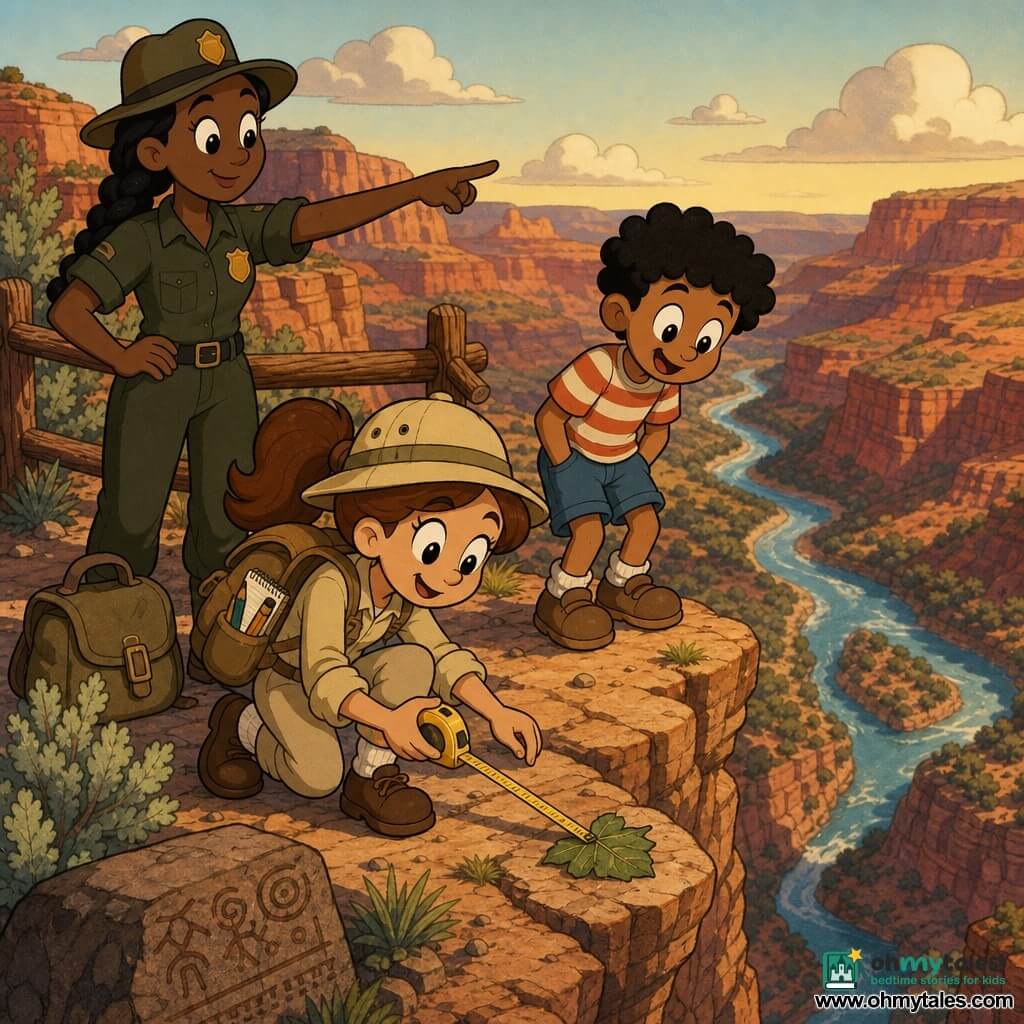
Marin leaned forward a little, not touching. The stone marker had faint lines carved into it—simple shapes: a river bend, a triangle like a mountain, and a dot.
Leo's eyes grew round. “A treasure map?”
Marin's voice turned warm and serious. “Not treasure. A guide. People used markers like this to help travelers find water or safe paths.”
“But who made it?” Leo asked.
Ranger Suri answered, “We don't always know. It may be very old. That's why we respect it. We leave it exactly as it is.”
Marin took out her camera and zoomed in from a distance. Click. Click. “Photos only,” she said. “No hands.”
Leo put both hands in his pockets as if they might misbehave. “My hands are staying in jail.”
Marin smiled. “Good. We can read with our eyes.”
She studied the symbols again. The river bend looked like the confluence. The triangle might mean a rock point. And the dot… the dot could mean “look here.”
Marin traced the air above the marker, not touching it. “I think it points to a lookout spot where we can see more of the canyon safely.”
Ranger Suri looked pleased. “A smart guess.”
Leo bounced. “So the marker is like, ‘Stand over there and use your eyeballs'!”
“Exactly,” Marin said. “The ancient version of ‘no climbing'.”
They followed the direction, moving slowly. Marin kept checking the map, then the land, matching shapes. She did not rush. She did not assume. She compared.
At last, they arrived at a natural platform of rock set back from the edge. It was wide, flat, and surrounded by sturdy shrubs.
Marin took a deep breath. The air smelled like sun-warmed stone and wild mint. Below, the canyon dropped away, but here they were safe—like standing on a balcony made by nature.
Marin opened her notebook again. “This,” she said, “is where we describe the canyon.”
Chapter 3: The Safe Balcony Above the Canyon
Marin set the tripod again, then placed a small wind cover over the scope so it wouldn't wobble. “We'll work as a team,” she said. “Suri, you watch for wildlife and trail safety. Leo, you help me record details.”
Leo saluted with a pencil. “Captain Notebook, ready!”
Marin laughed. “All right, Captain Pencil.”
She began with the basics. “The canyon is shaped by river erosion,” she explained. “That means water cut into the rock for a very long time.”
Leo wrote slowly, sounding out the words. “E…ro…sion.”
Marin nodded. “Good. And look at the layers. Each layer is like a chapter in the rock's life.”
Ranger Suri pointed to a darker stripe. “That layer holds more iron. It makes the rock look rusty.”
Marin added it. She tried to describe what they sensed, not just what they saw. “Wind cool on face. Sound of river is constant. Smell of mint and pine. Hawk circling above.”
Leo shaded in a hawk shape in the corner of the page. “This hawk is my assistant,” he said.
“Tell your assistant to stay on duty,” Marin replied, playful.
Suddenly, a stronger gust of wind pushed at Marin's pages. The notebook fluttered like a startled bird.
“Oh no—” Leo reached out, then froze. The notebook didn't fly away, but a loose paper inside slipped out and skated toward the edge of the platform.
Marin's heart jumped, but she kept her voice calm. “Nobody runs,” she said. “We think.”
The paper slid, then paused against a small pebble. It teetered.
Leo's face pinched with worry. “My drawing!”
Marin looked around quickly. Near her bag was a water bottle and a small roll of painter's tape. She also had a long measuring ribbon she used for mapping—bright yellow and light.
She spoke steadily. “Leo, take one step back. Suri, could you hold my bag so it doesn't shift?”
Ranger Suri nodded, holding it firm.
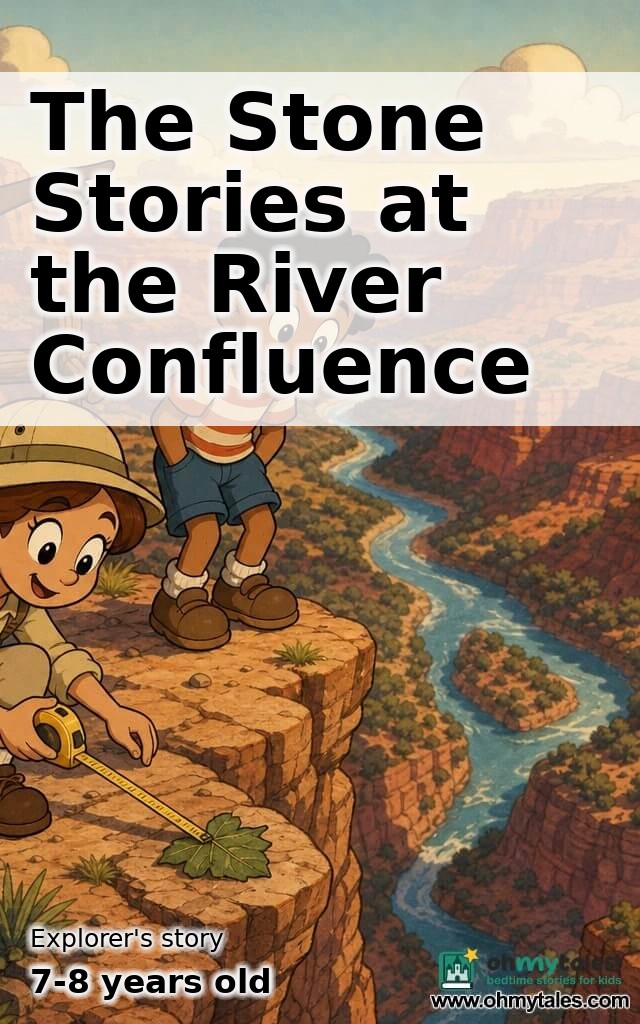
Marin stayed far from the edge, kneeling on safe rock. She unrolled the measuring ribbon and stretched it out like a long, gentle snake. Then, without crawling forward, she lowered the ribbon so its end touched the paper.
The wind tried to tug again. Marin waited for a softer moment, then carefully hooked the ribbon's metal end on the corner of the paper.
“Come on,” she whispered, not to the paper, but to herself. “Slow and steady.”
She pulled the ribbon back, inch by inch. The paper scraped along the stone and slid safely into reach.
Leo exhaled loudly. “You saved it!”
Marin handed it to him. “You saved it too,” she said. “You didn't rush. That took courage.”
Leo held the paper to his chest. “My hands stayed in jail.”
Ranger Suri smiled. “And your brain stayed awake.”
Marin taped the paper into the notebook so it couldn't escape again. “Resilience,” she said, “is not giving up when something goes wrong. It's fixing the problem in a safe way.”
They returned to their work, even more careful. Marin drew a simple map of the canyon from above, marking the confluence, the safe balcony, and the far wall with the pale symbols.
Then she paused and looked through the scope again.
“There,” she said softly. “Those shapes… I think they show animals. And maybe people with baskets.”
Leo leaned close, wide-eyed. “They look like they're walking.”
Ranger Suri's voice was gentle. “These are part of a community's heritage. They tell stories of life here—food, travel, seasons.”
Marin wrote, “Rock art likely depicts daily life. Must remain untouched. Recommend viewing from distance only.”
Leo asked, “Why would someone touch it?”
“Sometimes people think they're taking a souvenir,” Marin said. “But the art is not a souvenir. It belongs to the place, and to the history. If everyone took a piece, soon there would be nothing left to learn from.”
Leo frowned thoughtfully. “So we protect it by leaving it.”
“Yes,” Marin said. “And by telling others how to see it respectfully.”
As the sun moved, the canyon colors changed. Reds became deeper, golds became softer. Shadows slid into cracks like sleepy cats.
Leo yawned. “The canyon is huge. How will we describe all of it?”
Marin closed her notebook for a moment. “We don't have to describe every pebble,” she said. “We describe the important parts, clearly and kindly, so others can understand the canyon without getting too close.”
Ranger Suri nodded. “And we remind them: the canyon is not a playground. It's a living place with old stories.”
Marin stood and stretched. “One more thing,” she said. “The marker stone. The map said ‘stone stories'—and we found both the marker and the art. That means someone wanted future visitors to look, not disturb.”
Leo smiled. “Like a rule from long ago.”
“A good rule,” Marin said. “A respectful rule.”
Chapter 4: The Note for Future Explorers
On the way back, the light turned honey-colored. The confluence below glimmered as if someone had sprinkled it with tiny stars.
Leo skipped along the trail, but he stayed in the middle, away from loose edges. “Marin,” he said, “are we done exploring?”
Marin shook her head. “Exploring never really ends. But today's mission is almost complete.”
They stopped again at the stone marker. Marin crouched at a safe distance and read the shapes one last time.
Ranger Suri said, “Some visitors stack rocks without knowing it can harm the area. It can disturb habitats, or confuse hikers.”
Leo looked at the neat circle of stones around the marker. “Should we take the stacked rocks away?”
Ranger Suri considered. “If the stones were placed long ago as part of the marker, we leave them. If they were placed recently by visitors, we might remove them. But we must be sure.”
Marin studied them closely. Some rocks were covered with the same dusty lichen as the marker. They looked settled, not fresh.
“I think these belong,” Marin said. “They match the age of the marker's weathering. We'll document, not disturb.”
Leo nodded. “Document, not disturb. I like that.”
Back at the first lookout, Marin sat at a picnic table and wrote a final page in her notebook. She spoke aloud as she wrote, so Leo could learn how explorers turn thoughts into clear notes.
“‘Canyon Description Report,'” Marin read. “Location: river confluence. Access: safe overlook only. Hazards: unstable edges in places; recommend staying behind rails and on marked trails.”
Leo added, “And don't drop sandwiches.”
Marin smiled and kept reading. “Geology: layered rock shaped by water erosion; visible color bands. Wildlife: hawk overhead, lizards near trail. Heritage: stone marker and distant rock art visible from safe balcony; do not approach or touch; viewing only with binoculars or scope.”
Ranger Suri said, “Add that visitors should keep voices calm near heritage sites.”
Marin wrote it down. “Respect includes sound,” she agreed. “And we should remind people to pack out trash.”
Leo looked proud. “This report is like a guide for good explorers.”
“That's the idea,” Marin said. “A good explorer leaves a place as beautiful as they found it—maybe even safer, because they shared good information.”
The three of them began walking toward the ranger station where Marin could file her report. The river's whisper faded behind them, but Marin could still feel the canyon's wide presence, like a patient teacher.
Leo glanced up at her. “Marin, were you scared when my paper almost fell?”
Marin thought for a moment. “I felt a quick burst of worry,” she admitted. “But then I remembered our rules: stop, think, choose the safe way. Courage isn't a loud feeling. Sometimes it's a quiet decision.”
Leo nodded as if he would tuck those words into his pocket with his hands.
Ranger Suri pointed to the sky, where the first pale evening star appeared. “The canyon will still be here tomorrow,” she said. “And the next day.”
Marin looked back once more, toward the confluence shining like a silver knot tying two rivers together. “Yes,” she said softly. “And if we respect its stories, it will be here for a long, long time.”
Leo grinned. “So… biscuits now?”
Marin laughed, pulling out the snack bag. “Brains first, then biscuits,” she said. “But you've used your brain wonderfully, Captain Pencil. Biscuits are officially approved.”
They shared their snack, and the adventure ended the best way Marin knew: safely, kindly, and with the promise of more discoveries—made with careful steps and respectful eyes.