Chapter 1: The Hall of Echoing Strings
The chandeliers of Count Velasquez's palace glittered like frozen fireworks, throwing bright shards of light across powdered wigs and velvet sleeves. Outside, the city's canals breathed fog, but inside the music was warm and wild—violins racing, a harpsichord sparkling, drums tapping like impatient fingers.
Seraphina Lorne stood at the edge of the ballroom in a gown the color of midnight ink. She was not there to flirt behind fans or trade gossip like sugared almonds. She stood straight-backed, dignified, hands clasped as if holding something invisible together.
Her father's signet ring, heavy and plain, pressed into her palm.
Across the room, Count Velasquez raised a crystal glass. “To the glory of our age!” he declared.
Seraphina's mouth tightened. Glory was what people called it when they wanted to forget what had been stolen.
A boy in a servant's coat slid beside her, eyes bright as polished coal. Nico—quick as a sparrow, too curious for his own safety.
“You look like you're about to duel the chandelier,” he whispered.
“I'm about to steal a map,” Seraphina murmured, without turning her head.
Nico grinned. “Even better.”
On the far wall hung a tapestry: a stag crowned with stars, its hooves stepping through clouds. Beneath it, in a glass case, lay a folded parchment. The count had shown it off earlier, laughing about “old superstitions”—a relic from the past, a map to a forgotten monastery. He thought it was decoration. Seraphina knew better.
Her family had once guarded something older than the palace, older than the count's pride: a truth. And with it, a strength the world had tried to bury under new fashions and fresh paint.
The music swelled. Dancers spun. A masked lady stumbled—on purpose—spilling her drink near the guards. Nico was already moving, sliding between skirts and elbows.
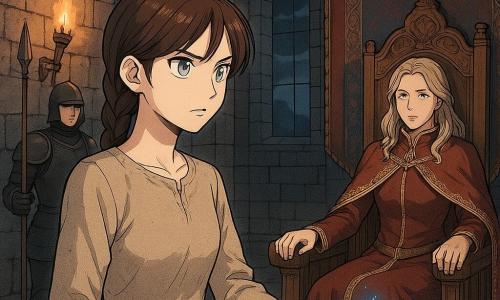
Seraphina crossed the room with the calm of someone merely seeking air. She paused at the glass case, lifted her hairpin, and listened. The lock clicked like a tiny tongue admitting a secret.
Inside, the parchment smelled of dust and rosemary.
A shadow loomed.
“Well,” said Count Velasquez, smooth as oil, “how charming. Lady Lorne, isn't it? I didn't expect you to admire my curiosities so closely.”
Seraphina did not flinch. “You display it badly,” she said. “It deserves better.”
The count's smile sharpened. “It deserves to stay where it is.”
A sudden tremble ran through the ballroom—not an earthquake, but a shiver in the air itself. The strings of the violins stretched into a strange, trembling note. Candles bent their flames toward Seraphina as if bowing.
From the tapestry, the stag's starry crown glimmered. One embroidered eye seemed to blink.
Nico grabbed Seraphina's sleeve. “Please tell me you planned for the tapestry to become… alive?”
“I planned for nothing to betray us,” she whispered. “But the past is impatient.”
The count stepped back, his confidence flickering. “Witchcraft.”
Seraphina slid the map into her bodice with steady hands. “No,” she said softly. “Memory.”
The tapestry's threads loosened, unraveling into a ribbon of silver light that curled around Seraphina's wrist like a bracelet. It was warm. It pulsed—like a heartbeat.
Then the music snapped back into place, the candles straightened, and the ballroom pretended nothing had happened.
Only Seraphina could feel the ribbon of light under her glove, humming with old power.
She gave the count a small bow. “Thank you for your hospitality.”
“And your theft?” he hissed.
“I borrowed what never belonged to you,” she replied.
Nico tugged her toward a side door. “Borrowed with style,” he said, and they vanished into the palace corridors as laughter and waltzing swallowed the count's anger.
Chapter 2: The Map That Hated Being Quiet
They ran through servants' passages that smelled of candle smoke and boiled cabbage, down stone stairs and out into a courtyard where rain stitched the night together.
Nico held a lantern low. “So,” he panted, “what did we just annoy? The count or the universe?”
Seraphina didn't answer at once. She pulled the map free. The parchment was stiff, inked with delicate lines—rivers, forests, a jagged ring of mountains—and a monastery drawn like a small, stubborn tooth on a cliff. At its edge, the map bore a seal: a stag crowned with stars.
Her father's signet ring matched it.
“Do you think it leads to treasure?” Nico asked, hopeful.
“It leads to the Wellspring Vault,” Seraphina said. The words tasted ancient. “A place my family once guarded. They said it held the strength of the past.”
Nico frowned. “Strength like… muscles?”
Seraphina almost smiled. “Strength like courage that doesn't crack. Like love that doesn't shrink when it's tested. Like truth that doesn't change because someone powerful doesn't like it.”
They crossed a narrow bridge over a canal. The city's baroque towers rose behind them, all curves and gilding, trying to look eternal. Seraphina knew better. Buildings could be renovated. Lies could be repainted. But the past—real past—had bones.
As they reached the street, the ribbon of silver light under her glove stirred. The map rustled on its own, as if clearing its throat.
Then, to Nico's horror, it spoke. Not with a mouth, but with a whispery scratch, like quills writing in the air.
“Left,” it seemed to say. “If you enjoy being alive.”
Nico froze. “The map talks.”
“It's more like…” Seraphina listened. “It remembers.”
The parchment's ink shimmered and rearranged. A new line appeared: a route through the city, avoiding certain streets. When Seraphina followed it with her finger, the silver ribbon tightened, pleased.
They moved quickly, guided by a map that disliked foolish choices. Twice, it warned them away from alleys where men loitered. Once, it urged them across a market square just before the night watch arrived, boots clapping like angry metronomes.
At last they slipped into Seraphina's family townhouse, quiet and dark, the air smelling of old books and cold fireplaces.
In the study, Seraphina lit a single candle and unrolled the map on her father's desk. There, beneath the monastery drawing, lay a faint inscription. She held the flame close.
IN THE VAULT, THE TRUE NAME IS KEPT.
Nico leaned in. “True name of what?”
Seraphina's throat tightened. “Of my mother.”
Nico's grin faded. He had never met Lady Elowen Lorne. Most people hadn't, not really. She had vanished years ago, and the city had filled the silence with gossip. Some said she ran away with a poet. Others said she drowned. Count Velasquez had once joked she was “too proud to be real.”
Seraphina had been ten, and she remembered only her mother's hands—warm, strong, smelling of ink and oranges—and a lullaby in a language that felt older than stone.
“My father told me the truth was hidden,” Seraphina said. “That someone rewrote the story of our family. If I find her true name… I can restore what was stolen. Not just from us, but from the city.”
Nico swallowed. “That sounds… gigantic.”
“It is,” Seraphina said, voice low. “And I'm tired of being small in other people's tales.”
The silver ribbon pulsed again, like a promise.
Outside, thunder rolled over the rooftops. Inside, Seraphina's candle burned steady, as if it refused to be frightened.
Chapter 3: The Coach of Midnight and Moths
They left before dawn, when the city was still yawning and the statues wore beads of mist. Nico had found an old coachman who owed him a favor—mostly because Nico had once returned his runaway goat.
The coach was battered but sturdy, painted black with curling gold designs that looked like sleepy dragons. As Seraphina climbed in, moths fluttered from the curtains, pale as tiny ghosts.
The coachman, a woman with a scar on her chin and a voice like gravel, flicked the reins. “Name's Bruna,” she said. “I don't ask questions, but I do charge extra for cursed objects.”
Nico pointed at Seraphina's glove. “Not cursed. Just… chatty.”
Bruna snorted. “That's worse.”
They rattled out of the city, past gardens trimmed into strict shapes, past fountains where marble nymphs held water eternally in their hands. Then the neatness faded. Fields stretched, muddy and honest. Forests rose like dark cathedrals.
On the second day, they reached a ruined tollgate. The stones were cracked, overgrown with ivy. A faded crest—Velasquez—hung crooked.
Bruna slowed. “This is his land. He'll have riders.”
As if summoned by the words, hoofbeats sounded behind them.
Nico peeked out. “Three,” he hissed. “And they look like they eat nails for breakfast.”
Seraphina's heart thudded, but her face stayed composed. Dignity, her father had taught her, was armor you could wear without anyone seeing.
The silver ribbon under her glove warmed, like a hand squeezing hers.
Seraphina lifted the map. “Help us,” she whispered, not sure to whom.
The parchment fluttered. Ink spilled across it like running water. New symbols appeared—curving, baroque letters that looked like music.
Then the moths in the coach stirred.
They poured from the curtains in a sudden storm, hundreds of pale wings. They streamed out the window and into the air behind them, swirling into a thick cloud.
The riders shouted. Their horses reared, panicking at the fluttering haze. One man swung his arm wildly, trying to clear his face. Another's hat flew off.
Nico laughed, breathless. “We're being saved by moths!”
Bruna didn't laugh. She cracked the reins hard. “Whatever you've got, keep it happy!”
The coach jolted forward. The moth-cloud drifted with them, obedient as a loyal flock, blurring the road behind into a soft, moving fog.
When they finally reached a narrow mountain pass, the hoofbeats had faded.
Bruna exhaled. “All right,” she said. “I'm asking a question. Who are you, really?”
Seraphina met her eyes. “Someone trying to bring back what was true,” she said. “And someone who can't do it alone.”
Bruna's gaze flicked to the glove, then to Seraphina's calm expression. “Love makes people brave,” Bruna said gruffly. “And it makes them stupid. But I've seen worse reasons to ride into trouble.”
She nodded toward the mountains. “The monastery's up there. After that, you walk. My wheels won't survive those stairs.”
Nico groaned. “Stairs. The ancient enemy.”
Seraphina allowed herself a small, real smile. “Then we'll defeat them,” she said, “step by step.”
Chapter 4: The Monastery of Listening Stone
The monastery clung to the cliff like a stubborn barnacle. Its walls were pale, carved with spirals and stars worn down by centuries of wind. Bells hung in an open archway, but they did not ring; they simply waited.
Bruna left them at the foot of a stone stairway that zigzagged upward.
“Three pieces of advice,” she called. “Don't trust anyone with clean boots, don't eat glowing mushrooms, and if you hear singing from a place with no people—run.”
Nico waved. “We'll try not to become a lesson.”
They climbed. The air thinned. The world below looked like a painted map, fields and rivers reduced to simple strokes. Seraphina's legs burned, but each step felt like a sentence in a long, necessary speech.
At last they reached the monastery gate. It was carved with the crowned stag. Seraphina pressed her father's ring to the stone.
The gate sighed. Not metaphorically—actually sighed, like a door relieved to be opened after a long loneliness.
Inside, the monastery was silent, but not empty. The silence felt aware. Listening.
A figure appeared in the courtyard, hooded in gray. The person's steps were slow, careful, as if walking on a thought that might break.
“Seraphina Lorne,” said a voice, old and young at the same time. “You have brought the map back.”
Nico whispered, “How do they know your name?”
Seraphina lifted her chin. “Who are you?”
The hood fell back, revealing a woman with hair the color of ash and eyes like winter sunlight. A thin chain of keys hung around her neck.
“I am Sister Mirelda,” she said. “Keeper of the Listening Stone. We remember what others try to erase.”
Seraphina's pulse jumped. “Then you know what happened to my mother.”
Mirelda's gaze softened. “I know what they said happened,” she replied. “And I know what was true.”
They led Seraphina and Nico through corridors scented with beeswax and old parchment. Statues lined the walls—saints and heroes, their faces worn smooth by time and touch. The further they walked, the warmer the air became, as if the mountain's heart beat nearby.
At a heavy door, Mirelda stopped. “The Vault does not open for ambition,” she warned. “It opens for devotion.”
Seraphina's voice was quiet but steady. “I'm not here for power to rule. I'm here to restore what was stolen—her name, our honor, the city's memory.”
Mirelda studied her. Then she nodded and turned a key. The lock clicked like a final decision.
The door swung open.
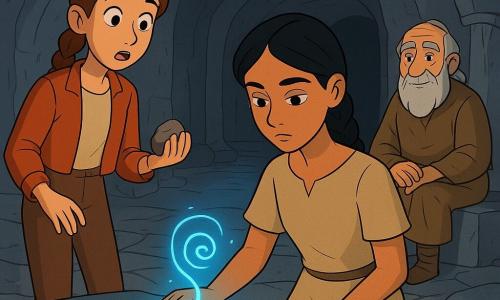
The room beyond was round, carved straight from the rock. In the center stood a basin of dark stone filled with water so still it looked like polished glass. Above it, a single beam of light fell from a hole in the ceiling, even though no sun could reach this deep.
“The Listening Stone,” Mirelda said. “Speak what you seek.”
Seraphina stepped forward. Her silver ribbon tingled, tightening around her wrist.
She knelt at the basin and whispered, “Elowen.”
The water did not ripple. It remained blank, as if unimpressed.
Mirelda shook her head. “That is the name they allowed you to keep,” she said. “Not the true one.”
Nico shifted. “So… what do we do? Ask nicely?”
Seraphina closed her eyes. She remembered her mother's lullaby, the melody that had held her like arms. She sang a few notes—soft, uncertain at first, then clearer. The sound floated up and around the chamber, gentle as falling feathers.
The silver ribbon warmed until it felt like sunlight through a window.
The water finally moved. Not with ripples, but with images, blooming like ink in clear glass.
Seraphina saw her mother—standing in this very chamber, younger, furious and bright. Count Velasquez stood beside her, smiling like a knife. He held a paper, a decree, and priests with clean boots watched in silence.
“You will sign,” Velasquez said in the vision, “and become a ghost. The city will forget your influence. Your family's guardianship ends tonight.”
Her mother's voice rang like a bell. “Truth is not yours to dismiss.”
Velasquez leaned close. “Then I will rename you. I will bind you with a false story so tight you cannot breathe.”
He spoke a name—one Seraphina had never heard—twisting it like rope.
Seraphina's mother gasped, as if struck. The air around her shivered, and the chamber dimmed. The vision showed her stumbling away, not dead, not drowned—hidden, silenced by a stolen name.
Seraphina's eyes snapped open. Tears burned, but her posture did not collapse.
Mirelda whispered, reverent, “Now you know. The true name was taken and locked. That theft was the count's greatest spell.”
Seraphina's voice trembled. “Can it be undone?”
Mirelda lifted her keys. “Yes,” she said. “But not with anger alone.”
Nico swallowed. “With what, then?”
Mirelda looked at Seraphina. “With love strong enough to call someone back,” she said. “And with courage to speak truth where lies have been crowned.”
Chapter 5: The Masque of Borrowed Faces
They returned to the city disguised for the Festival of Masks, when everyone hid behind painted smiles and pretended it was charming. Streets filled with lanterns, ribbons, and music that bounced off stone like bright marbles. The air smelled of sugar, smoke, and wet cobblestones.
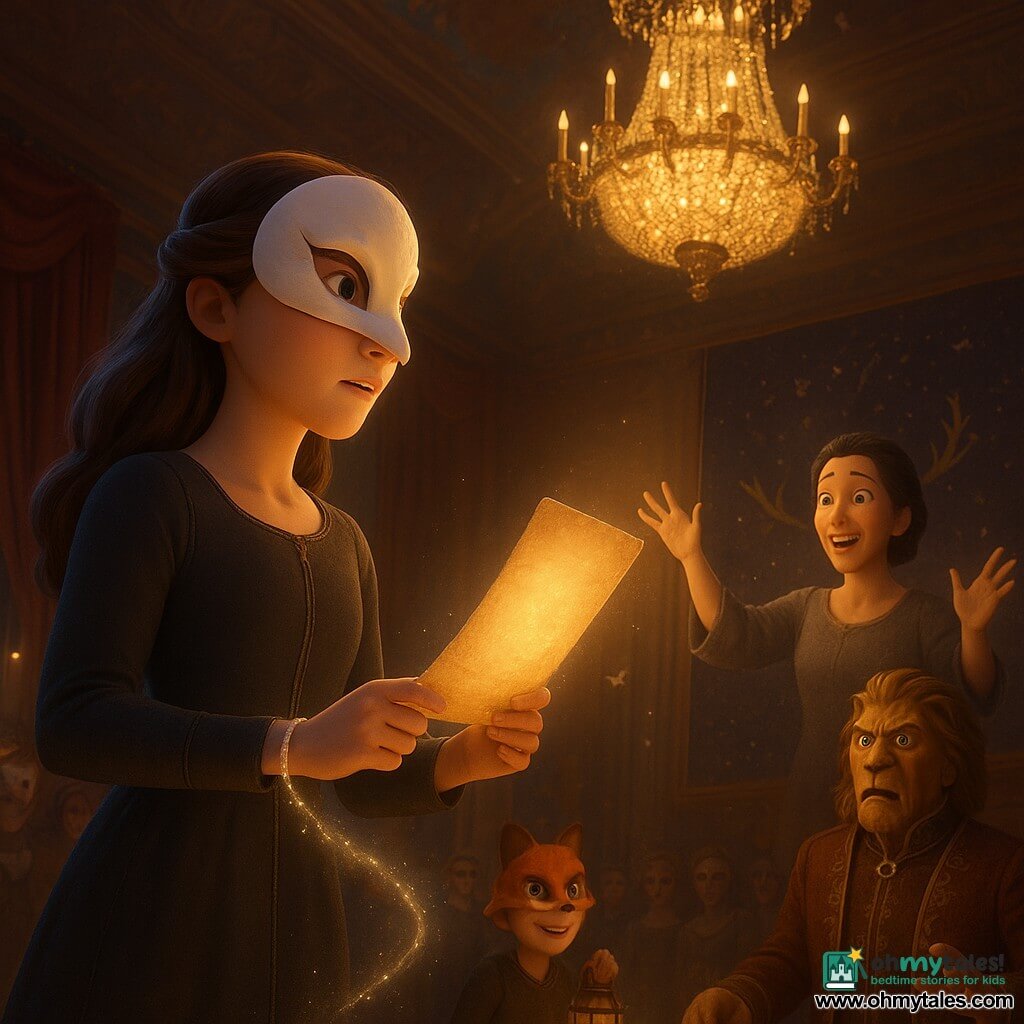
Seraphina wore a mask of a white swan. Nico wore one shaped like a fox, which suited him too well. Mirelda, surprisingly steady in a crowd, wore a plain black mask that made her look like a shadow with a spine.
Bruna had returned as promised, waiting with the moth-lined coach at an alley. “In and out,” she had said. “Like a good sneeze.”
The plan was simple, which meant it was dangerous: enter Count Velasquez's grand hall during the masquerade, reach the dais where he would announce his yearly “Blessing of the City,” and force the truth into the open—using the Vault's power to restore Elowen's true name.
Because names, Mirelda explained, were not just labels. In old magic, a true name was a key. Steal it, and you could lock a person away inside a story that wasn't theirs.
They slipped into the palace with the crowd, carried by laughter and swirling capes. The same chandeliers blazed overhead, smug and sparkling.
On the dais, Count Velasquez stood in a gold mask shaped like a lion. He raised his hands, and the music softened.
“People of our glorious city,” he announced, “another year of peace, prosperity, and—”
Seraphina stepped forward. Her swan mask felt too fragile for what she needed to do.
Mirelda touched Seraphina's wrist. “Remember,” she murmured. “Truth is not a sword. It is a lantern.”
Seraphina nodded.
She climbed the steps to the dais. Guards moved, but hesitated—because no one wants to be the villain during a festival. Nico darted in front of them, bumping one and apologizing loudly.
Seraphina faced the count.
He tilted his lion mask. “A swan approaches. Have you come to dance?”
“I've come to return something you stole,” Seraphina said, loud enough for the front rows to hear.
The count's laugh was practiced. “Stole? My dear—everyone borrows in politics.”
Seraphina removed her glove. The silver ribbon of light unfurled, visible now, curling in the air like a comet's tail. Gasps fluttered through the crowd.
Velasquez's laughter stopped.
“Ancient tricks,” he snarled, stepping back. “Guards—”
Mirelda appeared at the edge of the dais, keys glinting. “Guards,” she called calmly, “do you truly serve peace, or do you serve a man who chained your city with a lie?”
The guards hesitated again. Their boots were clean, but their eyes were not empty.
Seraphina lifted the map. The parchment shone, and moths—pale, drifting—rose from the folds of her cloak, circling above like soft snow.
“People of the city,” Seraphina said, voice ringing, “you were taught a story: that Lady Elowen Lorne vanished in shame, that her family lost its place because it deserved to. You were fed that tale until it tasted like truth.”
Velasquez's eyes flashed behind the lion mask. “Enough.”
Seraphina's chest tightened. Fear tried to climb her throat like a vine.
Then she remembered her mother's hands, her father's quiet grief, and Nico's stubborn loyalty. She remembered that love was not only gentle; it was also fierce.
“I will speak her true name,” Seraphina said.
The room seemed to lean closer.
Velasquez lunged, reaching for the map. “You don't even know what you're—”
The silver ribbon snapped forward, not striking him, but looping around his wrist like a restraint. He froze, shocked, as if caught by a rule he'd forgotten existed.
Seraphina took a breath and spoke the name she had heard in the Listening Stone—clear, steady, kind.
The chandeliers dimmed. The air changed. It felt as if the palace itself stopped pretending.
From the tapestry wall, the crowned stag shimmered. Threads loosened. Light poured out, weaving into the shape of a woman.
Elowen—real Elowen—stepped into the hall as if stepping out of deep water. She was pale, but upright. Her eyes met Seraphina's, and in them was a thousand unsaid mornings.
Seraphina's voice broke, small for the first time all night. “Mother?”
Elowen's hands lifted, trembling. “My Sera,” she whispered, and the sound carried like a melody returning to its chorus.
The crowd erupted—not in cheering, not yet, but in disbelief turning into understanding. People began to murmur: memories resurfacing, details that had never fit the official story.
Velasquez snarled, yanking against the ribbon. “This is illusion!”
Elowen turned to him, and her gaze was steady as stone. “No,” she said. “This is the truth you buried.”
Chapter 6: The Truth Restored
Velasquez tried one last trick. He lifted his free hand and spoke sharp words that tasted like metal. The nearest candles guttered, and shadows thickened around his feet, rising like dark water.
Nico, watching from below the dais, whispered, “Oh, that's cheating.”
Mirelda stepped forward, keys raised. “Old lies do not frighten old stone,” she said, and she dropped a key into the air as if into a lock no one could see.
A resonant hum filled the hall, deep and slow. The shadows around Velasquez thinned, as if embarrassed to be seen.
Elowen reached out and placed her palm over the ribbon binding the count. “You used a stolen name as a chain,” she said quietly. “So hear this: I forgive the city for believing you.”
Velasquez blinked, thrown off balance. “Forgive—?”
Elowen's voice did not soften, but it grew clearer. “Love is not weakness,” she said. “It is the reason we fight to keep truth alive.”
Seraphina stood beside her, feeling both younger and stronger at once. “Count Velasquez,” she said, “you told everyone my mother vanished in shame. But you were the one afraid—afraid of a past that held people accountable.”
The crowd pressed closer. A nobleman removed his mask, eyes wide. “I remember,” he said hoarsely. “Elowen Lorne spoke against the count's taxes. She protected the poor quarter during the winter fever.”
A baker's wife, still masked, cried, “He said she fled! But my grandmother swore she was taken!”
Like cracks spreading through ice, the truth broke across the room—voices overlapping, recollections snapping into place. The city's memory, dulled by years of repetition, woke up.
Velasquez's lion mask slipped as sweat gathered. “You cannot prove anything,” he hissed.
Mirelda lifted the map, and the parchment flared with light. On its surface, the basin's vision unfolded for all to see—Velasquez, decree in hand, the theft of a name, the twisting of history like wet cloth.
A collective breath rushed through the hall. Even the musicians had stopped; silence now played the loudest song.
Velasquez's shoulders sagged as if the room's gaze weighed more than armor. The guards stepped toward him, not with violence, but with firm hands and grim faces.
Seraphina watched him go, feeling no triumph, only a quiet settling—as if a crooked picture frame had finally been straightened.
Elowen turned to Seraphina and cupped her daughter's face. Her hands were warm. Real. “You brought me back,” she whispered.
Seraphina pressed her forehead to her mother's. “I couldn't love a lie,” she said. “I had to find you in the truth.”
Nico cleared his throat loudly, trying to pretend his eyes weren't shiny. “So,” he said, forcing cheer, “does this mean the city is going to stop pretending the count's wigs were a good idea?”
Bruna, somehow in the back of the hall with her scar and her stubborn grin, called, “Don't push your luck, boy!”
A shaky laugh moved through the crowd—relief making room for joy.
Mirelda approached Seraphina, her expression gentle. “The strength you sought,” she said, “was never only in the Vault. It was in your devotion. In the courage to love someone enough to restore them.”
Seraphina looked at the silver ribbon. It loosened, no longer needing to bind or guide. It settled around her wrist like a bracelet that had found its home.
Outside the palace, dawn began to rise over the baroque rooftops, painting gold across stone and water. The city looked the same, and yet it didn't. It felt like a song finally sung in the right key.
As Seraphina walked into the morning with her mother at her side and her friends close behind, the past did not feel like a chain.
It felt like a lantern—steady, warm, and true.