Chapter 1: The Word That Got Stuck
Milo liked rules when they made sense. Line up for lunch. Take turns on the computer. Don't run in the hallway unless you wanted to meet Mr. Doyle's whistle.
But that Tuesday, a rule didn't make sense at all.
It started small, like a pebble in a shoe.
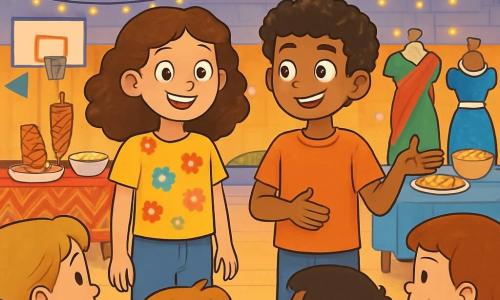
At recess, Milo and his friend Aisha were arguing—friendly arguing—about which song would be best for their class's “Music Around Us” morning share. Milo wanted to play a fast drumbeat he'd heard on a video his dad showed him. Aisha wanted to share a calm song her grandmother sang in Somali.
“Both,” Milo said. “We can do both. Two songs. Two minutes each.”
Aisha grinned. “That's actually a good idea. You're being reasonable. Are you sick?”
Milo pretended to gasp. “I am deeply offended.”
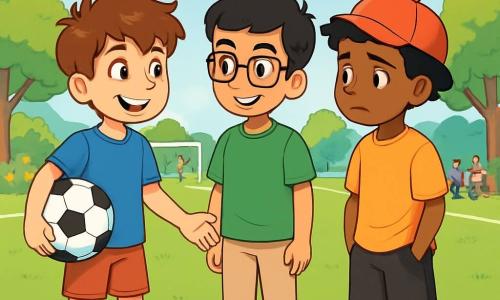
They were still laughing when Ben from their class wandered over, kicking a soccer ball lazily.
“What are you two whispering about?” Ben asked.
“Music share,” Milo said. “We're bringing songs from different places.”
Ben made a face like he'd bitten a lemon. “Why? We're in England. Just do normal music.”
Aisha's smile faded a little. “My grandma's song is normal.”
Ben shrugged. “It's… you know. Not our kind.”
Milo felt heat climb up his neck. The pebble in his shoe turned into a rock.
“That's not fair,” Milo said before he could stop himself.
Ben blinked, surprised. “What?”
Milo's voice got steadier. “It's not fair to decide what counts as normal based on who you think belongs.”
Ben rolled his eyes. “It's not a big deal.”
But it was a big deal. Milo could tell by the way Aisha's shoulders lifted, like she was bracing for something heavy.
The bell rang. Recess ended. The words “It's not fair” stayed stuck behind Milo's teeth, like he might need them again soon.
Chapter 2: The Playlist Plan
That afternoon, their teacher, Ms. Patel, clapped her hands. “Reminder! Tomorrow is our ‘Music Around Us' share. Bring something that matters to you. A song, a rhythm, even a story about music.”
Milo raised his hand. “Can we bring more than one?”
Ms. Patel smiled. “If it's short and you share the time fairly—yes.”
Milo glanced at Aisha. She nodded, but her eyes looked cautious, as if she wasn't sure the room would be safe.
After school, Milo walked home with his older sister, Leena, who was in Year 9. She always carried too many books and somehow still had a free hand for a snack.
Milo told her what happened with Ben, using his “trying to be calm” voice.
Leena stopped by the corner shop and leaned her bike against the wall. “That's a kind of racism,” she said, not loudly, but clearly. “Not the loud movie kind. The everyday kind where people act like some cultures are ‘extra' instead of equal.”
Milo stared at the pavement. “But Ben isn't… mean, exactly.”
Leena bought a packet of crisps and handed them over like a peace offering. “Racism isn't always shouting. Sometimes it's deciding someone doesn't belong. Sometimes it's jokes. Sometimes it's silence.”
Milo chewed thoughtfully. “So what do I do? I already said ‘that's not fair.'”
Leena raised an eyebrow. “Good start. Now think. Ask questions. Make space. Don't just win an argument—change the room.”
At home, Milo opened his tablet and made a playlist called: “Different Doesn't Mean Wrong.”
He added:
1) Aisha's Somali lullaby (she had sent it to him once),
2) A short clip of West African djembe drumming,
3) A Bollywood dance beat because it made him want to jump around,
4) A Scottish fiddle tune his grandad loved,
5) And, because Milo couldn't resist, a silly yodeling song that made Leena laugh so hard she snorted.
“Is yodeling a culture?” Leena asked, wiping her eyes.
“It's definitely a lifestyle,” Milo said, serious as a judge.
They laughed, and the rock in Milo's shoe felt a tiny bit smaller.
Chapter 3: The Morning Share
The next day, the classroom smelled like pencil shavings and the lemony cleaner the caretaker used. Ms. Patel arranged the chairs in a loose circle.
“Remember,” she said, “listening is part of sharing.”
A kid played a pop song. Someone else shared a theme tune from a video game. Milo even learned that quiet Sofia had an aunt who performed opera and could hold a note so long it sounded like a train passing.
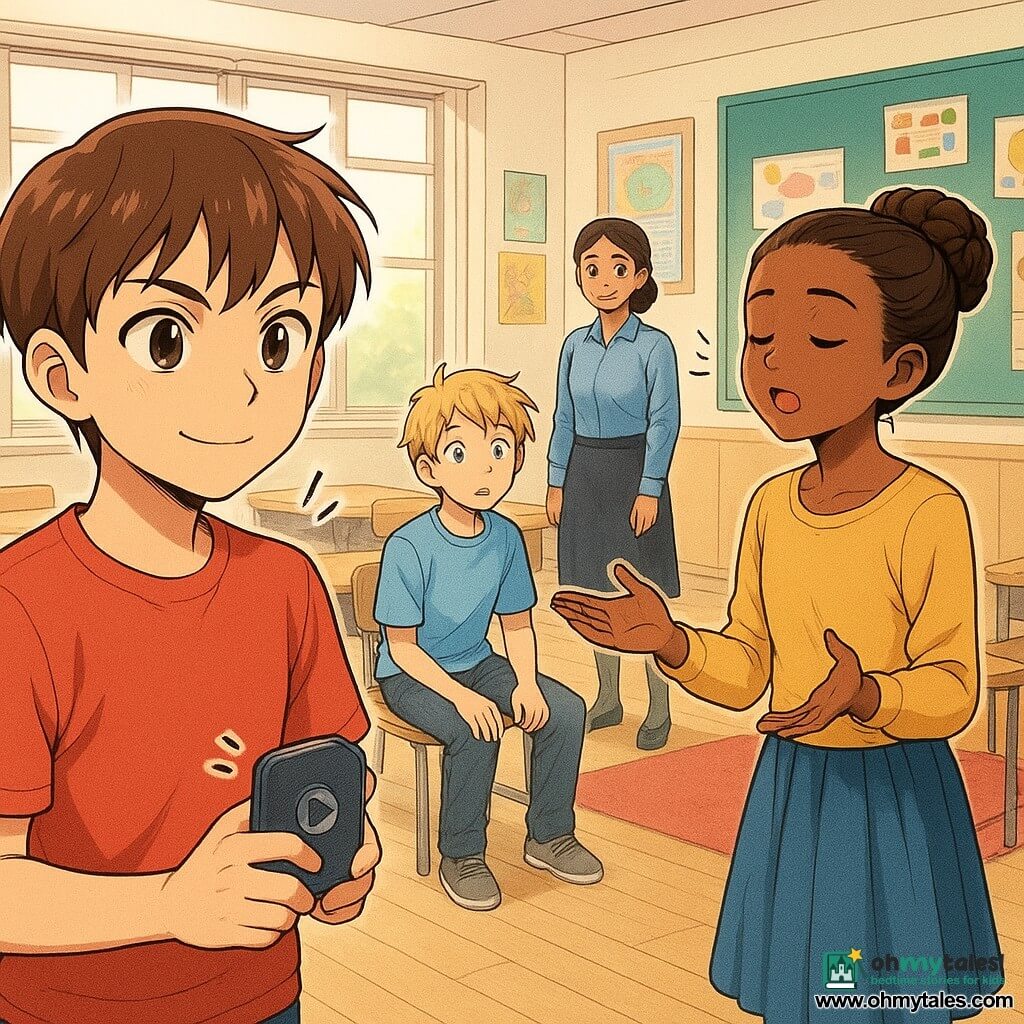
Then Aisha stood up with her phone in both hands. Milo noticed she took one slow breath before speaking.
“This is a song my grandmother sings to little kids,” she said. “She sang it to me when I was scared of thunderstorms.”
The song began soft and steady, like a hand smoothing a blanket. Even the noisy kids went still.
When it ended, there was a short silence. Not an awkward silence—more like everyone had moved to a calmer place together.
Ms. Patel smiled warmly. “Thank you, Aisha. That was beautiful.”
Ben shifted in his chair. He didn't clap right away, but his face wasn't sour either. It was… confused, like his brain was trying on a new thought.
Milo stood next. “I made a tiny playlist,” he said, trying to sound casual even though his heart was beating hard. “It's music from different places. Also one thing that might not be from any place except… the mountains, maybe.”
A few kids laughed.
He played the djembe clip first. The rhythm was bright and bold, like feet running on sun-warmed ground. Then the Bollywood beat—several kids bounced in their seats without meaning to. The Scottish fiddle tune made Ms. Patel tap her pen on her knee. Finally, Milo played ten seconds of yodeling.
Aisha giggled. Ben laughed too, a quick surprised laugh that popped out of him.
Milo paused the sound. “Music doesn't belong to one group,” he said. “It belongs to people. And people are… mixed. Like a good playlist.”
Ms. Patel nodded slowly, like she was storing that sentence somewhere important.
After the share, Ben approached Milo by the coat hooks.
“That drum one was kind of cool,” Ben said, scratching his head. “I didn't know it could sound like that.”
Milo watched him carefully. “Yeah. It's cool because someone made it cool. Not because of where they're from. It's just… theirs.”
Ben's ears turned pink. “I guess.”
Milo didn't push. He remembered what Leena said: change the room, not just win.
Chapter 4: The Upstairs Classroom
Just before lunch, Ms. Patel announced, “Year 9 is presenting their project today. We're going upstairs. Please walk like you have bones.”
“Do some people walk like jelly?” Milo whispered to Aisha.
“Ben does when he's trying to look relaxed,” Aisha whispered back.
Ben, walking ahead, did a strange slow-motion swagger that made Milo bite his lip to stop laughing.
Upstairs, the older students had turned their classroom into a mini exhibition. There were posters, photos, and question cards on tables. One poster said: “Racism Can Be Loud. It Can Also Be Quiet.” Another said: “Curiosity Is Better Than Assumptions.”
Leena stood near a display with three other students. She looked serious in a way Milo wasn't used to, like she was wearing a different kind of confidence.
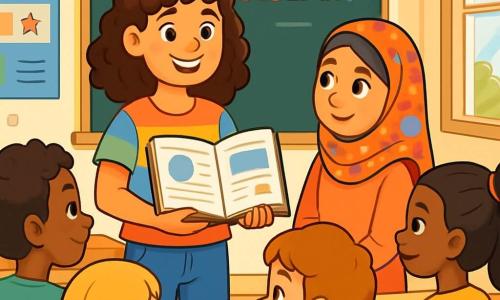
Their group was called to her station. Leena pointed to a big paper tree with sticky notes like leaves.
“This is our ‘Impact Tree,'” she explained. “In the roots, we wrote common stereotypes—things people assume about others. In the trunk, we wrote what those assumptions lead to. In the leaves, we wrote how it feels.”
A Year 6 boy raised his hand. “What's a stereotype?”
Leena answered gently. “It's like a shortcut your brain tries to take. But it's a shortcut that can be wrong and unfair. It can treat someone like a category instead of a person.”
Milo stepped closer and read a sticky note in the leaves: “Small,” “Invisible,” “Tired,” “Angry,” “Lonely.”
He felt his stomach tighten. He thought of Aisha's shoulders at recess. He thought of Ben saying “not our kind,” like some people were guests in their own school.
Another Year 9 student, Jayden, held up a question card. “Let's do a quick scenario. Someone says, ‘Your name is weird.' What could you do?”
A girl in Milo's class said, “Say, ‘It's not weird, it's just different.'”
Jayden nodded. “Good. Or you can ask, ‘What makes you say that?' and actually listen. Sometimes people repeat stuff without thinking.”
Milo's mind clicked. Ask questions. Make space.
Ben stared at the Impact Tree. His mouth pressed into a line, not stubborn—more like he was trying to swallow something hard.
Leena's eyes met Milo's for a second. She didn't smile. She looked proud and worried at the same time, like she knew change could happen, but only if people worked at it.
On the way out, Ms. Patel thanked the Year 9s. “This was thoughtful and brave,” she said. “Thank you for helping our younger students think critically.”
Milo followed Aisha down the stairs. “How do you feel?” he asked quietly.
Aisha shrugged. “Better than yesterday. Still… careful.”
Milo nodded. “Me too.”
Chapter 5: Questions That Open Doors
After lunch, they had group work in class. Ms. Patel paired them for a short writing task: “Describe a time you felt left out, and what would have helped.”
Milo ended up in a group with Ben and Aisha.
Ben groaned softly. “Of course.”
Aisha raised an eyebrow. “Are we that annoying?”
Ben looked panicked. “No! I mean—group work. I just… never know what to say.”
Milo remembered the question cards upstairs. He tried a new approach.
“Ben,” he said, keeping his voice calm, “when you said Aisha's song wasn't ‘normal'… what did you mean?”
Ben stared at his worksheet like it might answer for him. “I don't know. I just… I'm used to stuff that sounds like what my family plays.”
“That makes sense,” Milo said. “But ‘I'm not used to it' isn't the same as ‘it doesn't belong.'”
Aisha's voice was steady, but not sharp. “When you said ‘not our kind,' it sounded like you were saying I'm not part of ‘our.'”
Ben's face went red. “I wasn't trying to say that.”
Milo leaned forward a little. “But it landed that way. That's the part we have to take seriously.”
Ben rubbed his forehead. “My uncle says things like that. Like, if someone speaks another language, he makes jokes. I guess I… copied it.”
Aisha blinked, surprised. “You can choose not to.”
Ben looked at her, then at Milo. “Yeah. I can.”
They worked quietly for a minute. Then Ben said, “Aisha… what does your name mean?”
Aisha's shoulders lowered, just a little. “It means ‘alive.' My mum picked it because she said I kicked a lot before I was born.”
Milo smiled. “That tracks.”
Ben gave a small smile too. “It's a cool name.”
Aisha nodded once, accepting the compliment like it mattered—because it did.
When Ms. Patel walked by, she paused. “I like the way you're talking,” she said. “Keep going.”
Milo wrote on his worksheet: “Critical thinking is checking your first thought before it becomes your final action.”
He wasn't sure if that sentence sounded too grown-up, but it felt true.
Chapter 6: The Handshake
At the end of the day, the sky outside the windows was turning the colour of a dull coin. Chairs scraped. Bags zipped. Everyone became a moving crowd.
Milo packed slowly, watching Ben fidget by his desk. Ben looked like he wanted to say something but didn't know how to start.
Aisha was folding her headphones carefully. Milo noticed she was still careful, but not closed.
Ben finally stepped closer. “Aisha,” he said. “About yesterday… I'm sorry.”
Aisha's eyes stayed on him. “For what part?”
Ben swallowed. “For acting like your music was less. For saying it wasn't ‘our kind.' That was… wrong.”
Milo held his breath. Sorry could be easy to say. But Ben's voice sounded heavy, like he meant it.
Aisha nodded slowly. “Thank you for saying that. It did hurt.”
Ben looked down. “I didn't want to hurt you.”
Milo spoke up, because the stuck words were back, but now they felt useful. “Then don't. Not just with Aisha. With anyone.”
Ben looked at Milo. “Yeah. I'll try. And if I mess up… tell me.”
Aisha shifted her bag onto her shoulder. “I can tell you. But you also have to listen.”
Ben met her eyes. “I will.”
He held out his hand, awkward and serious at the same time. “Friends?”
Aisha hesitated for one heartbeat. Then she reached out and shook his hand.
Milo felt something unclench in his chest, like a knot finally giving up. It wasn't magic. It didn't erase yesterday. But it was a start—a small, solid gesture you could build on.
As they walked toward the door, Ben cleared his throat. “So… that drum music. Where can I find more?”
Aisha smiled, a real one. “I can send you a link. But only if you promise not to call it ‘normal' or ‘not normal.'”
Ben chuckled. “Deal.”
Milo pushed open the door and let the cool air touch his face. He thought of the Impact Tree upstairs, with all those leaves that said how it feels.
Maybe, he thought, you could grow different leaves too. Leaves that said: “Seen.” “Respected.” “Included.”
He looked at his friends—because that's what they were becoming—and decided that when he felt the words “It's not fair” rise up again, he wouldn't swallow them.
He'd use them. Then he'd ask a question. Then he'd listen.
And, when it mattered, he'd reach out a hand.