Chapter 1: The New Girl in Class
The bell rang, echoing through the hallway as Maya hurried to her sixth-grade classroom, her backpack bouncing with each step. She slid into her seat just as Ms. Carter, their teacher, greeted the class with her usual warm smile. Maya glanced around, noticing an unfamiliar girl standing by the door, shifting nervously from foot to foot.
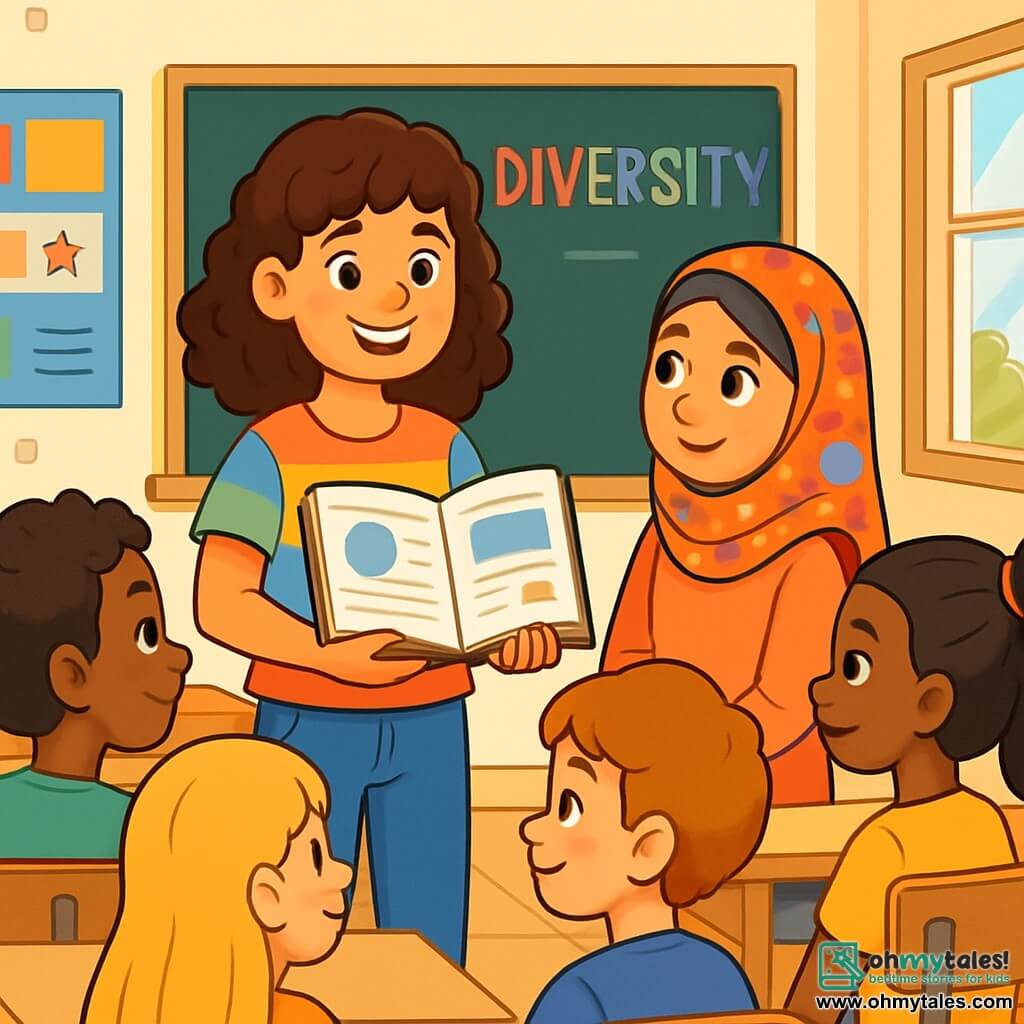
“Class, before we get started, I'd like you to meet someone very special,” Ms. Carter announced. “This is Amira. She's just moved here from Morocco. Please make her feel welcome.”
Maya watched as Amira smiled shyly, her dark curls framing her face. She wore a colorful scarf, and her eyes seemed to dart around the room, searching for a friendly face. Ms. Carter assigned Amira the empty seat next to Maya.
“Hi, I'm Maya,” Maya whispered as Amira settled in. “If you need help with anything, just ask.”
Amira's smile grew a little. “Thank you.”
The lesson began, but Maya couldn't help glancing at Amira from time to time. When the bell rang for recess, Maya gathered her courage. “Do you want to come outside with me?” she asked.
Amira hesitated, then nodded. “Okay.”
Outside, the playground buzzed with energy. Maya introduced Amira to her friends, but some kids stared at Amira's scarf and whispered. Maya felt a knot tighten in her stomach. She wanted everyone to like Amira as much as she already did.
Chapter 2: Whispers and Shadows
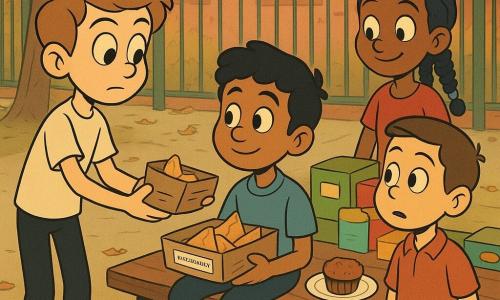
During lunch, Maya and Amira sat together. Amira opened her lunchbox, revealing food that looked different from what the others had. Maya was curious. “What's that?” she asked.
Amira smiled. “It's couscous. My mom made it.”
“Can I try some?” Maya asked.
Amira nodded, and Maya took a small bite. The flavors were new and delicious.
But as they ate, Maya noticed a group of kids at another table pointing and giggling. She heard someone mutter, “Why does she wear that thing on her head?” Another voice said, “She talks funny.”
Maya's cheeks burned. She wanted to say something, but the words stuck in her throat. Amira pretended not to notice, but Maya saw her shoulders tense.
After school, Maya walked with Amira. “I'm sorry about what they said,” Maya said softly.
Amira shrugged. “It happens a lot. In Morocco, everyone wore scarves. Here, people stare.”
Maya felt a wave of anger and sadness. “That's not fair. You should be able to be yourself.”
Amira smiled, but her eyes were clouded. “It's okay. I'm used to it.”
But Maya knew it wasn't okay, and she wasn't used to it. She wanted to help.
Chapter 3: Learning and Listening
That evening, Maya talked to her mother about what happened. Her mother listened carefully.
“It's hard to be different,” her mom said. “But it's important to stand up for what's right. If you see someone being treated unfairly, you can speak up, even if it's scary. And you can learn about their culture, too.”
Maya nodded. She remembered seeing a poster in the school library: “United Against Racism – Learn, Listen, Act.” She decided to visit the library the next day.
At lunch, Maya invited Amira to the library. “There's something I want to show you,” she said.
Inside, they found books about Morocco, different cultures, and stories about kids facing racism. Maya and Amira read together, sharing stories and laughing at funny pictures.
As they read, Ms. Carter passed by. “It's wonderful to see you both learning together,” she said. “If you ever want to talk about anything, my door is always open.”
Maya felt a spark of confidence. Maybe she could make a difference after all.
Chapter 4: The Class Project
The next week, Ms. Carter announced a new project. “We're going to have a ‘Culture Day'! Each of you will share something special about your family's background.”
Maya's mind raced with ideas. She turned to Amira. “Will you share something from Morocco?”
Amira hesitated. “I don't know. What if people laugh?”
Maya shook her head. “I think it would be amazing. I'll help you.”
They spent afternoons at Maya's house, researching Moroccan traditions and choosing what to share. Amira decided to bring couscous and show how to write her name in Arabic. Maya planned to talk about her grandmother's stories from Jamaica.
The day of the project arrived, and the classroom filled with smells, sounds, and colors from around the world. When it was Amira's turn, she stood in front of the class, hands trembling. Maya gave her a reassuring nod.
Amira spoke softly at first, then more confidently. She showed her scarf, explained its meaning, and shared couscous with everyone. She wrote her name on the board in beautiful, swirling Arabic letters.
When she finished, the room was silent—and then erupted in applause. Even the kids who had whispered before clapped and asked questions.
Maya felt a surge of pride. Amira beamed.
Chapter 5: Standing Up
As days passed, Maya noticed a change. More students greeted Amira, asking about her food and scarf. But not everyone was kind. One afternoon, Maya saw a boy, Tyler, block Amira's path.
“Why don't you talk normal?” he sneered.
Amira froze. Maya's heart pounded. She remembered her mother's words: Stand up for what's right.
“Leave her alone, Tyler,” Maya said, her voice steady. “She's learning English, just like you learned to ride your bike. Would you like it if people made fun of you?”
Tyler scowled, but some other kids stepped closer to Maya and Amira. “Yeah, that's not cool,” said Lily.
Tyler muttered something and walked away. Amira looked at Maya with gratitude.
“Thank you,” she whispered.
Maya smiled. “You don't have to thank me. We should all look out for each other.”
Chapter 6: The Assembly
Ms. Carter announced a special school assembly about equality and respect. The principal, Mrs. Bennett, spoke about racism and how it hurt people.
“We all have a role to play,” she said. “If you see someone being treated unfairly, speak up. Learn about each other's cultures. Celebrate your differences.”
After the assembly, Maya and Amira joined a workshop led by a counselor named Mr. Ruiz. He asked the students to share their feelings about being different.
Amira raised her hand. “Sometimes I feel invisible. But when people ask about my culture, I feel proud.”
Maya added, “I learned that being friends with someone from a different place makes my world bigger. We should all try to understand each other.”
Mr. Ruiz nodded. “That's how we make our school a better place.”
Chapter 7: Friendship Grows
As the months passed, Maya and Amira's friendship deepened. They discovered shared interests—both loved soccer and reading mysteries. They taught each other words in Arabic and Jamaican Patois, giggling at their funny accents.
Maya's friends grew more curious, asking Amira about her traditions. Amira shared stories about Moroccan festivals, music, and family recipes. Maya's mother invited Amira's family for dinner, and the two families laughed and shared food late into the night.
Despite the good times, challenges remained. Sometimes, Maya still heard whispers or saw unfriendly glances. But each time, she felt braver. She learned to speak up, to ask questions, and to support her friend.
Chapter 8: New Understanding
One afternoon, Maya and Amira stayed after school to help Ms. Carter organize books for the library. As they worked, Ms. Carter asked, “What have you learned from each other this year?”
Maya thought for a moment. “I learned that everyone has a story. And that it's okay to ask questions and make mistakes, as long as we try to understand.”
Amira nodded. “I learned that even when people are mean, there are others who care. And it's important to be proud of who you are.”
Ms. Carter smiled. “You two have taught our class a lot. It takes courage to be yourself and to stand up for others.”
Maya glanced at Amira. She realized she was no longer just the new girl—she was her friend, her teammate, and an important part of their class.
Chapter 9: Taking Action
Inspired by their experiences, Maya and Amira started a lunchtime club called “World Friends.” They invited classmates to share stories, food, and games from their cultures. At first, only a few students came, but soon the room was filled with laughter and curiosity.
They made posters about respect and inclusion, hanging them in the hallways. They worked with Ms. Carter and Mr. Ruiz to create a “Kindness Wall,” where students could write messages of support for anyone feeling left out.
One day, a younger student, Aaliyah, approached Maya. “I'm the only one in my class who wears a headscarf. People stare at me. How do you make them stop?”
Maya knelt beside her. “You can't always stop them from staring. But you can show them who you are. And if it gets hard, come find us. You're not alone.”
Aaliyah smiled, her eyes shining with hope.
Chapter 10: The Festival of Cultures
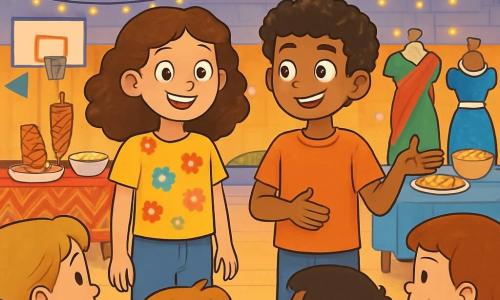
At the end of the year, the school held its first “Festival of Cultures.” Families decorated booths with flags, music, and food from their countries. Maya helped Amira's family set up their Moroccan booth, arranging plates of sweet pastries and mint tea.
Maya's grandmother brought Jamaican jerk chicken and told stories to groups of fascinated children. The gym buzzed with excitement as students danced, tasted new foods, and learned words in different languages.
When it was time for performances, Maya and Amira stood together on stage. Amira sang a Moroccan song, her voice clear and strong. Maya recited a poem about friendship and courage.
The applause was thunderous. Maya looked out at the sea of faces—different, yet united—and felt a surge of pride.
Chapter 11: Looking Forward
As summer approached, Maya and Amira sat beneath a tree, sharing dreams for the future.
“I want to be a teacher someday,” Maya said. “So I can help kids understand each other.”
Amira grinned. “I want to be a writer. I want to tell stories about people from everywhere.”
Maya squeezed her friend's hand. “We can change the world, you know. One story, one friend at a time.”
Amira laughed. “Let's do it.”
They watched the clouds drift by, feeling stronger together. The journey hadn't been easy, but they had learned that kindness, curiosity, and courage could break down walls.
Each day, they promised, they would keep learning, listening, and standing up—for each other, and for everyone who needed a friend.
Chapter 12: The Moral
In the end, Maya learned that fighting racism wasn't just about big speeches or grand gestures. It was about the small things: sharing a meal, asking a question, standing up when someone was hurt. It was about making space for everyone's story, and never letting fear or ignorance keep you apart.
She knew she'd face new challenges. But Maya also knew she wasn't alone. With friends like Amira, and a community willing to learn and grow, she believed a better world was possible.
And so, whenever Maya saw someone being left out or treated unfairly, she remembered her promise—to speak up, to reach out, and to always choose kindness.
Because together, they could make the world a place where everyone belonged.