1. The Courtyards Between Buildings
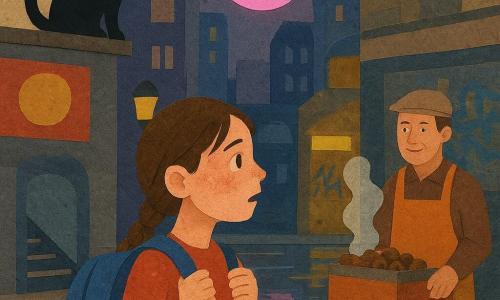
The city breathed in slow, careful ways, like someone learning to walk again. New scaffolding leaned against old stone. Bright flags hung from balconies. Between the blocks, narrow courtyards turned into tiny worlds—twisting, secret lanes where doors opened on stories and rain puddles kept memories.
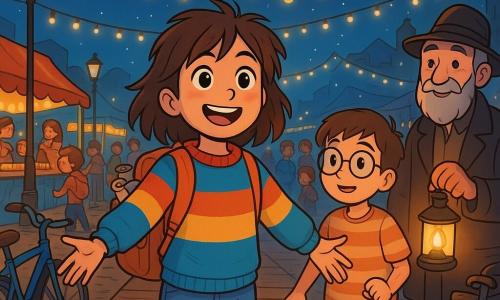
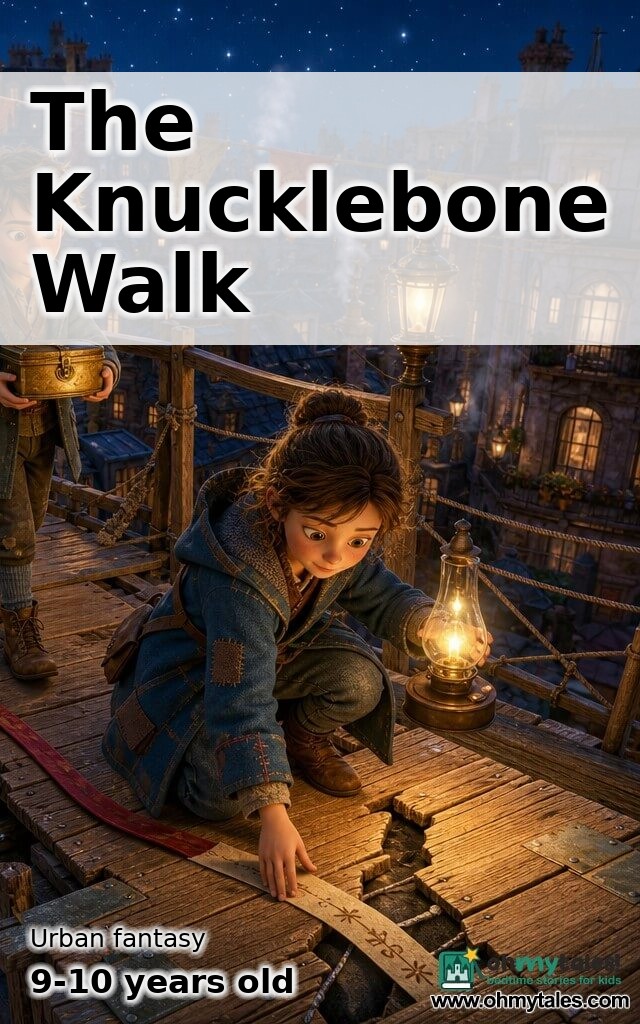
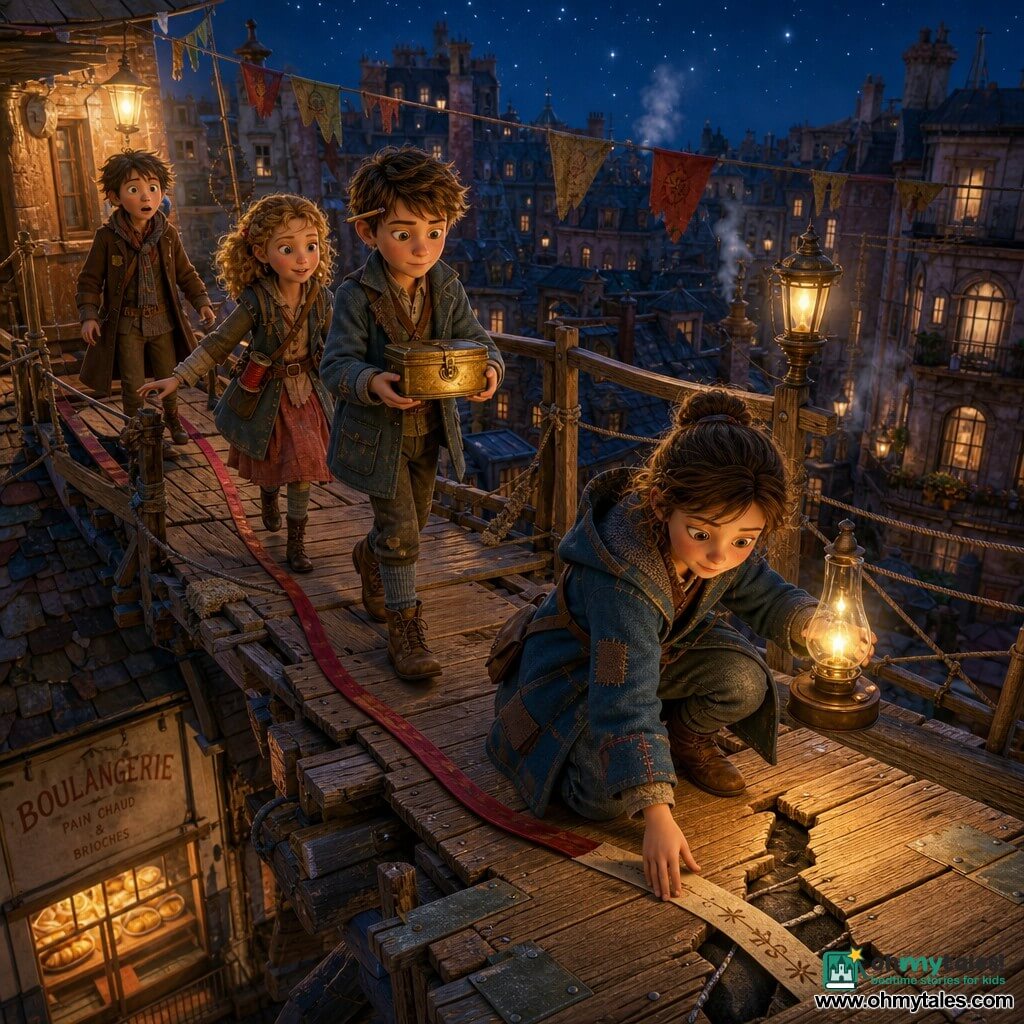
Mara led the way with a lamp that was only half-electric. It hummed like a friendly beetle and spread light that smelled faintly of lemon cake. She wore a patched blue coat, pockets full of string and small, flattened buttons. At ten, she knew the courtyards better than any map; they answered her footsteps.
Beside her walked Theo, who always carried a little notebook and a pencil chewed at the end. He made maps of things that were not on maps—birdsong patterns, which drain covers clanked when tram wheels passed, where shadows liked to sleep. He smiled at every puddle as if it might tell him a secret.
Trailing them was Lila, whose laugh could steady a rattling window. She had hair like curlers of sunlight and hands that knew how to smooth paper, or a scraped knee, or an angry cat's fur until the cat purred like a tiny engine. She kept a small, folded map in her pocket that had more scribbles than streets.
It was not their street they walked for this evening but a thin lane that looked like an afterthought between two warehouses. The lane smelled of hot bread and the faint, sharp scent you get when pages of a book are opened wide. Tonight it had a visitor waiting—someone from another neighborhood.
He arrived by the alley that smelled of rain on hot stone. He wore a coat that kept losing and finding buttons like a hide-and-seek trick. He blinked as if the city spoke too fast for him at first. His name was Ivo, and he came from the Quarter Beyond the River—one of those secret neighborhoods that held its own rules, where streetlights hummed different tunes and cats walked with official badges.
Mara stepped forward. Ivo looked small in the lamplight, with big curious eyes. "You found us," he said, surprised and happy. "They told me there were guides."
"We're guides," Mara said, voice even and steady. "We show paths that need steadying."
"There's a path," Ivo said quickly. "A path everyone says is daring. They call it the Knucklebone Walk. It runs across the top of an old bridge of houses. People used to jump it when they were young. Now it's loose and sharp." He swallowed, and his thumbs worried at his coat. "They want the path smoothed."
Mara's lamp hummed louder, as if listening. Outside, a clock in one of the courtyards struck seven, its sound feather-light. The children looked at each other. A job. A promise. An adventure to stitch up the city with joy.
"Good," Mara said. "We smooth it together."
2. The Bridge of Houses
The Knucklebone Walk lay above a street that still smelled of coal in colder seasons and of fresh paint during reconstruction. The bridge was not made of stone but of rooms—little houses patched to each other like teeth in a grin. Their roofs were paths, and if a roof tile shifted, so too might the whole walk.
They climbed stairs that were crooked with their own opinions, passing windows alive with night lamps and curtains that wanted to be curtains. From below, the market murmured—a river of voices and footsteps. Above them, the night opened like a book.
At the start of the Walk, a plank had cracked and left a gap like a missing tooth. The crack rattled when the wind passed and sang a thin note. Older people peered from balconies and crossed themselves when they saw children walk there now. Ivo shivered. "When I was small, they said the Walk remembered what you were brave enough to do," he whispered. "But now it remembers only loose nails and wind."
Mara knelt and placed a finger against the wood. It felt tired and threaded with stories. "Paths remember how they're treated," she said. "If we speak to them kindly, they listen."
She asked for three things: string, a coin, and a scrap of good paper. Theo handed over his clearest pencil, which acted like a measuring wand. Lila unrolled a spool of bright red string. They worked like a small machine—wrapping, tying, smoothing, whispering to the wood.
Magic in this city did not flash or thunder. It was patient and polite. It smelled of lemon and soot and warmed bread and the words people left on benches. Mara sang as she worked a tune taught to her by an old carpenter: a slow, round song that matched heartbeat. The tune had no words, only patterns of steps.
As they repaired, a voice from below called up, thin and sharp. "Be careful! That bridge'll remember you if you hurt it!" A woman in a patched coat leaned out and tapped a spoon on her pot.
"Will it remember us?" Ivo asked, trembling.
"It remembers feelings," Mara said. "Not faces. If we leave it kinder, it stays kinder."
Piece by piece they laid new boards, sanded edges with an old stone, and used Theo's pencil to mark where hands made the best place to hold. Lila tied the red string along the edge, making a guide that winked in lamplight. Little nails sang as they settled, steadying like tiny soldiers.
But at the largest gap, the wood sagged. Mara looked at the space and felt something inside her steady like a keel. She climbed atop a low roof and spread her arms. "We will make it a way people can sing across," she said. "Not a dare, but a road for joyful feet."
She stitched a long ribbon of paper across the crack, pressing it into the wood. Her words were small and careful: Thank you. Be safe. Please stay strong. The ribbon held as if the wood took the words like water and drank them.
When they stepped back, the Walk creaked a soft agreement. The city around them sighed, and a star blinked like someone approving.
3. The Visitor's Test
News travels like sparrows in this neighborhood. A cat with silver whiskers told a baker, who told his apprentice, who told a boy who liked to whistle at pigeons. By morning, people gathered at the ends of the Bridge of Houses. Some carried lanterns, others shields of empty pie tins—small hopes.
The test of the Walk was not daring leaps but carrying something across that had been hard to carry before. Ivo had brought a small brass box, round and scarred. It had a key that turned too easily and a lock that remembered old promises. "It holds a piece of the Quarter Beyond the River," he explained. "They are afraid to take it over the Walk. They say the Walk will decide whether the thing can cross."
Mara examined the box. It hummed faintly, like a heart under a coat. "What does it feel like?" Lila asked.
"Hope, I think," Ivo said. "And a little worry."
Together they agreed the box must not be hurried. They would carry it in turns, with the ribbon tied around it, and sing the carpenters' chant as they walked. People watched. The city held its breath politely.
Theo took the first steps, pencil tucked behind his ear. He walked slowly, feeling the grain under his shoes. The box trembled but did not bolt. The Walk hummed back, tasting the song. When Theo reached the middle, a loose tile shifted. There was a sharp, worrying sound like a small throat clearing.
Mara stayed close and whispered to the board beneath Theo's foot. Her voice was the same as when she had pressed her words into the ribbon—soft and full of thanks. The wood answered by steadying. Theo's pulse smoothed. He passed the box to Lila.
Lila walked like someone weaving; her feet stepped in the spaces between breaths. The ribbon she had tied fluttered and reminded the Walk where to be kind. About two steps from the far end, a gust of wind tried to slap the box from her hands. Someone in the crowd laughed—not cruelly, but with the bright, mischievous sound of a child playing.
"Sing!" Ivo shouted, suddenly brave. His voice bent around the city like a ribbon. "Sing it with us!"
So they did. It was a strange song, with parts of the carpenter's tune and a few new lines about bridges and courage and bread. As the chorus rose, the Walk came alive in a different way. It did not harden or judge; it wrapped. Tiles knitted like fingers closing. The box grew warmer under Lila's hands, as if it understood.
When they set the brass box down at the far end, the lock popped open on its own. Inside was a scrap of folded cloth and a tiny painted stone shaped like a heart. The cloth smelled faintly of river reed and spice. The painted stone had a smile painted crooked, like a secret told at bedtime.
Ivo's eyes filled. "They said we couldn't bring it," he said, voice small. "But we did."
The crowd clapped in a way that felt like rain tinkling on a roof—gentle and full of surprise. The Walk hummed underfoot, pleased to have been trusted.
4. The Smoothing of a Way
After the test, people started to use the Walk again. Not to prove anything to themselves, but to get from the bakery to the lampmaker more easily, to take a shortcut to the place where pigeons liked to pose. The ribbon Lila had tied stayed, braided into the rails and decorated with small knots. Children added bright badges and borrowed stories, and the Walk learned those stories, too.
The city was still in repair. Cranes swung like patient birds, and builders sang to keep the weight of the work light. In one courtyard, a woman painted a mural of a giant fox with tiny city lights in its tail. In another, an old clock that had stopped was wound by a boy with two different shoelaces.
Mara, Theo, and Lila became known not as dare-devils but as patchers of ways. They mended more than wood: they smoothed small panics, tied together arguments about whose turn it was to feed a stray cat, and left notes of thankfulness in the hollow of mailboxes. The brass box's stone sat on Mara's windowsill, catching light and making the room feel like dawn.
Ivo visited every week. He brought stories from the Quarter Beyond the River about lamplighters who sang backwards and bakeries that made bread shaped like moons. He traded them for the city's stories—how clock hands could be coaxed back into joy if spoken to properly, or how pigeons preferred certain poems. Each trade was a small miracle, a way of laying new stones.
One afternoon, as scaffolds groaned like big animals returning to sleep, Mara walked the Walk with a group of younger children. A boy slipped, but the ribbon and a dozen small hands steadied him. They reached the middle together and stopped to look at the city.
"The city feels less scared now," the boy said, amazed, as if the city might change its mood like the weather.
"It was scared because its ways were broken," Mara explained. "We only reminded it how to be soft."
Around them, the courtyards hummed with ordinary magic. A laundress found a lost button and returned it; a baker discovered a new flour that made everyone grin more when they ate it; a lamp that had always flickered learned to shine steady after someone sang it a lullaby.
Joy, Mara thought, is not only laughter. It is a light put where there was shadow, a song learned and taught again, a path fixed so feet could travel without stomachs turning. It was the brass heart on her sill and the children skipping stones across the puddles that always replied in clean, clear notes.
When evening fell, the three children climbed to the topmost roof and watched lights appear like small, obedient stars being placed by invisible hands. Ivo leaned against the low wall, smiling like someone who had once been afraid of bridges and had discovered they could be friendly.
"You smoothed it," he said, softly. "You made it a way."
Mara's lamp hummed, pleased. Theo drew a tiny map of the Walk and marked it with a small sun. Lila set her hand on the ribbon at the edge of the roof, feeling the city breathe around them.
"We smoothed it together," Mara corrected. "That's what makes it stay."
They stayed there until the moon bent low and the city sang them a bedtime. The lamp on Mara's window glowed like a promise. The Walk under the houses kept its new calm. And all the courtyards, stitched back into the city's skin, felt lighter—like a pocket that had been mended so treasure would not fall out.
Somewhere in the Quarter Beyond the River, someone set a small plate of bread outside a door. The scent carried on the night air, threading through alleys and under windows, giving the city an easy, honest warmth.
In the days that followed, more people crossed the Knucklebone Walk, but not for shows of courage. They crossed because it led somewhere they loved, and the path had been made soft enough for laughter to bounce across it. The city kept its secrets, but it shared its joy.
When the children lay in their beds that night, the city whispered like a lullaby, and the lamp beetle hummed them to sleep. Joy, they had learned, was a kind of gentle magic that built bridges and gathered friends. It was, perhaps, the best kind of spell to keep a city walking again.