Whispers in the Canopy
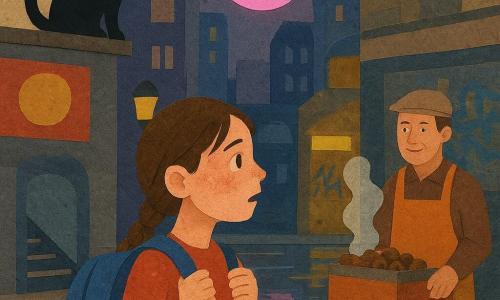
Nine-year-old Mira lived in a patch of the city that wore trees like crowns. Ancient maples and elder oaks leaned over solar roofs and bicycle lanes, their roots braided with vegetable boxes and the occasional stray cat. The district smelled of lemon mint, wet pavement, and the safe hum of bicycles. Spring had decided, long ago, not to leave. It made the air persistent with blossom and the kind of light that kept secrets but spoke to children.
Mira was small and unshowy, with a hairpin that glinted like a comet. She had a way of noticing things others thought ordinary: a cobblestone that hummed when you stepped on it, a lamppost whose light flicked like a shy eye, and most especially the Lunatic Stair, a narrow spiral staircase that curled behind the community theatre and led to a rooftop where music and laughter sometimes spilled into the night.
The Lunatic Stair was older than the theatre, older than the rails of the tram. At noon it was a safe stone ribbon, but at certain hours—when the moon lingered like a visitor in a sunlit sky—the stairs woke. They nudged and rearranged themselves, changing their steps like a living puzzle. People loved the rooftop parties that followed, where the city's music found the stars, but sometimes the stair forgot who it was meant for. That was what worried Mira. The stair had a slyness that left the elderly out, confused little ones, and made the path difficult for the slow-legged. Mira wanted to keep the party open to everyone. She wanted the staircase to be kind.
She kept a small notebook in her pocket with labels—observations, small plans, names of friends. At the top of the first page she had written: "Make sure everyone can climb." It was not a big thing, she thought, but then, neither were seeds at first.
The Council of Root and Brick
Mira's first ally was the oak that guarded the neighbourhood square. The tree's bark had the map of decades scored into it. People leaned against it, gossiping. Once, Mira tapped the bark and whispered, "Please, help me with the stair." The oak chuckled: leaves that sounded like coin in a pocket.
"Stairs answer to certain moons and certain music," the tree said in a voice like wind in a washing line. "They are playful but forgetful. They keep the secret of their pattern in the moss beneath. Ask the moss."
Mira knelt and spoke to the moss like one speaks to an honest friend. The moss, damp and frilly, hummed a note. It said the stair loved percussive rhythms, footsteps in certain counts, and that at moments when laughter rose pure and plain, the stair would remember to steady itself. It also whispered a secret Mira wrote down: the stair disliked a lone sound; it loved shared rhythm.
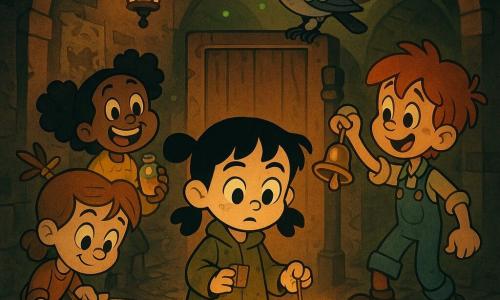
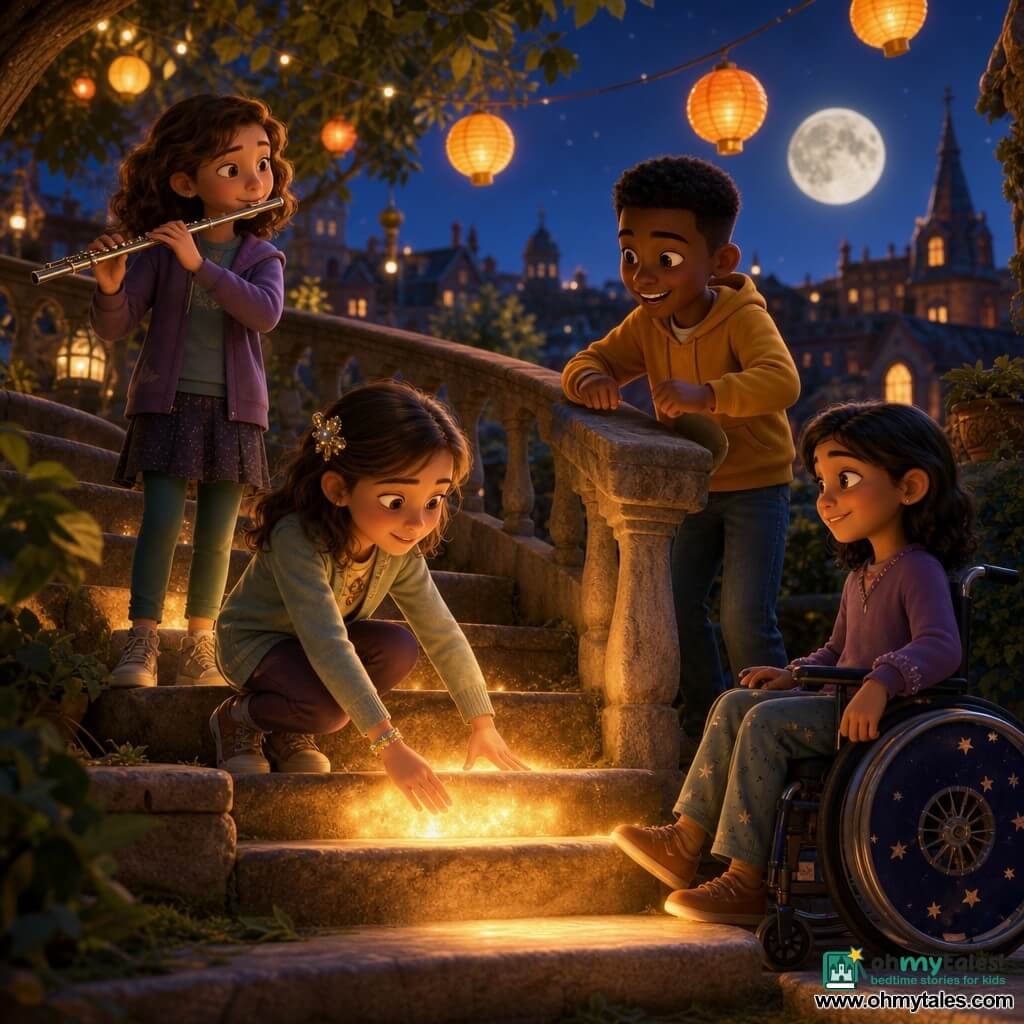
She gathered her friends: Jamal, who could beat a rhythm on any surface with his knuckles; Lila, who tuned pianos and knew how to make a note feel like a warm hand; and Nisha, whose wheelchair had been painted with stars and could roll with a soft, steady beat. They met under the oak at dusk, shoulders touching the rough bark, and Mira told them her plan in a voice that sounded smaller than she felt.
"We'll teach the stair to be patient and polite," she said. "We'll make its memory kinder."
They agreed to test and practice. They tapped spoons on railing, stomped in patterns on pavement, and sang nonsense words until passersby smiled. The city listened. Lights above the tram tracks twinkled in time. A magpie, sitting on a power line, picked out the rhythm and cackled approval.
When Stairs Skimmed the Moon
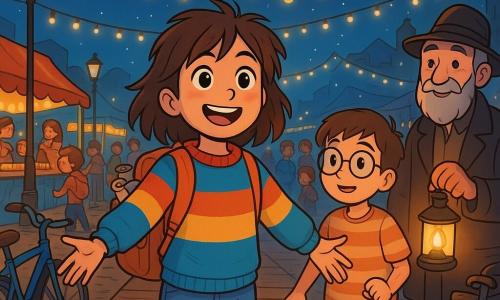
The night the stair decided to be particularly mischievous was the night of the All-Park Lantern Walk, when the neighbourhood threw its biggest, kindest party. Lanterns bobbed like a slow constellation. Food stalls smelled of cardamom and roasted chestnut. Children wove like finches between tables. The rooftop called with a music that could make old bones hum.
Mira and her friends waited by the theatre while drums rolled in the distance. The stair uncoiled, stone shifting with a dry, amused sigh. At first it was cheeky—one step skipped, another turned its face like a cat. Some people laughed. Others hesitated.
Mira stepped forward. She could have stormed like a small magistrate, but she chose to be subtle. She tapped the first step with her toe, then the second, in a rhythm that Jamal had taught her: two short, one long. She clapped once, then twice, and held her breath. Nisha rolled her wheelchair up to the base and kicked her heel gently, matching the beat. Lila played a single clear note on a small tin whistle—perfect and bright, like a promise. Jamal's knuckles drummed the rhythm on the railing—pat, pat, pause—steady and warm.
The stair listened. Stone that had been misbehaving tightened its line. It remembered the pattern it loved: shared sound, steady feet. The stones softened, as if remembering the right way to hold hands. People found each step again with less fear. A few old ladies clutched their pals, trusting the path. Children skipped like sparrows. Even the moon, half asleep in a daytime sky, paused to see.
But the stair had one more trick. At the rooftop entrance, a step rose a little higher than before—too high for some. A gasp rippled through the crowd. Mira didn't think of courage or fear; she thought of the party she wanted everyone to attend. She climbed closer, feeling the city's breathing in her chest. She touched the flaring step with both palms, and spoke to it as she had to the oak and the moss.
"You're splendid," she told the stone, "but parties should have room for slow feet and quick feet alike."
The staircase hummed, surprised by her kindness. It had expected scolding or orders. Instead it felt calm, a soft hand. It shifted, easing the high step into a smoother rise. The rooftop gates opened wide. The party welcomed everyone.
The Last Dance and the Promise
Up on the roof, the city spread like a quilt of warm light. Lanterns made islands of golden air. Musicians tuned their strange instruments that were half-metal, half-wind. Mira slipped between friends, feeling the stair beneath her like a friend who had learned manners.
The night unfolded like a story: Jamal drummed a rhythm so steady it sounded like a heartbeat; Lila coaxed a tune from a battered piano that made even the lamppost sway; Nisha rolled in slow circles, leaving little trails of light painted by her starry chair. People who usually stayed on the fringes found themselves laughing with strangers. The stair had become a bridge, not a test.
At the party's end, when the lanterns dipped low and the city breathed out the music, Mira climbed to the very top of the stair and looked down. The moon had tucked a silver scarf around the oak's branches, and the buildings held their windows like open hands. She touched the handrail, worn by thousands of fingers, and felt the echo of so many small steps—first paces of toddlers, careful ones of old men, daring leaps of teenagers.
She took out her notebook and wrote a single line, which she then tucked beneath the moss at the base of the oak like a secret seed: "Keep the stair patient. Keep the party for everyone." She pressed the paper into the soil and felt, as if by magic, the roots hold it like a promise.
Friends gathered close, and Mira realized she had done more than fix a stone. She had taught her city to remember how to be gentle. The stair would still rearrange itself, and the moon would still play with shadows, but people now had a pattern to call when the steps grew fanciful—a shared rhythm, a kind touch, voices that invited rather than hurried.
Before they left, the oak rustled, and the leaves made a sound that might have been laughter. "You are small," the tree said kindly, "but you hold a large heart."
Mira smiled. The city, the stair, her friends—everything shimmered with the soft hug of spring that never left. She had wanted to secure a staircase; she had secured something kinder: a way to make sure everyone could stand together, share the music, and step into the light.
They walked home beneath the trees that kept spring like an old friend, their feet tapping the rhythm they had taught the stair. The city around them hummed, a giant lullaby in which every doorway was open, and friendship—like a lantern—burned steady and bright.