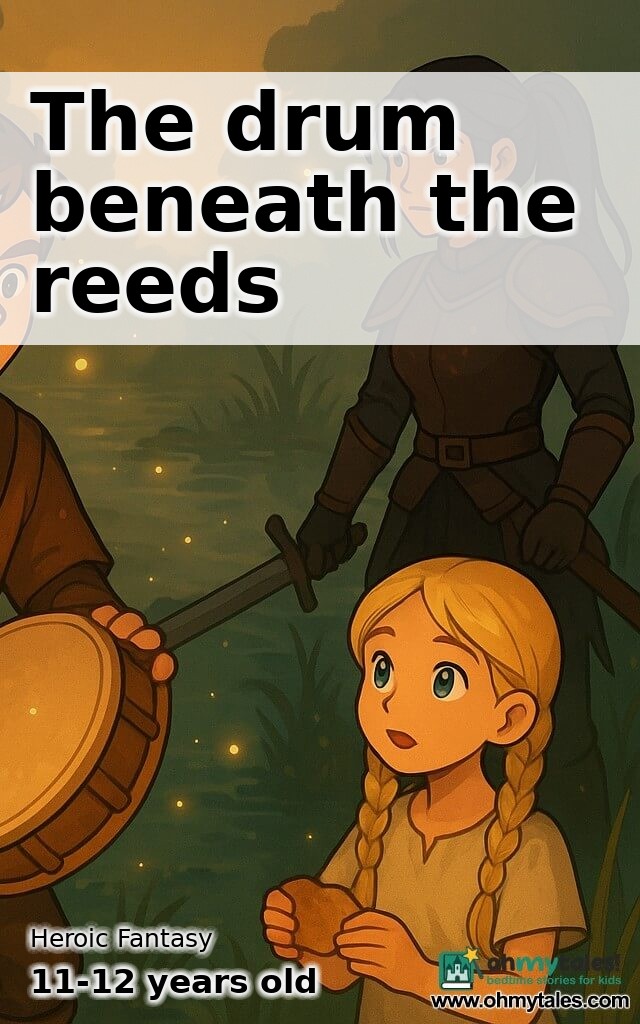
1. The Marsh and the Smile
Rowan woke to the glow of a dozen pale fires dancing on the reed-tips outside his hut. The marsh breathed around him—soft sighs of peat and rotted willow, the distant croak of a marsh-frog like a drum measured in sleep. Rowan sat on a stool carved with knotwork and reached for the leather satchel that never left his side. Inside lay a coil of rope, a brass compass that always pointed where Rowan needed to go (not always north), and a tiny ledger filled with sketches of broken crowns, bent swords, and things that hummed when the moon was full.
He smiled. It was the sort of smile that did not belong to a man who feared the dark; it belonged to a man who had learned to befriend it. People said the marsh kept secrets, and Rowan had made it his life to coax them into light. He was a hunter of relics—things left behind by kings and storms and older, stranger peoples. He wore boots boiled in tar and a cloak that smelled of rain and reed smoke. He kept his hair short and his hands steady.
The desire that had sat in his chest like a small, steady drumbeat for years rose louder today. An old drum—small, weathered, its skin like the belly of a sleeping fox—had been whispered of in the market at Gull's Eye. They called it the Thrum-Old, a drum that once kept a village safe from storm spirits because the sound made them remember their own names. Rowan wanted it not for fortune but for a reason he did not yet give voice to: his father had been a drummer who died when Rowan was a boy; sometimes, when the marsh grew too loud with the voices of will-o'-wisps, he thought he could hear his father's rhythm under the reed-song. The drum, he believed, might let him speak back.
He strapped his satchel, tucked the compass into his palm, and stepped out. The marsh greeted him with its deceptive lights—little orbs that shifted like fish scales. He kept his smile, his small shield against worry. When real fear came, he would meet it with laughter; for now he had hope and a map in his head and a promise he had made aloud to no one.
"Take care, Rowan," called Old Mairn, the willow-keeper, from his leaning hut. "The fires will try to fool you."
"I know," Rowan answered, and his voice was steady as the rope at his belt. "They will try, and I'll keep their secrets for them."
Mairn nodded, as if that were the best kind of answer.
Rowan's path wound over black peat and wooden planks broken and sunk by time. Every step brought a new shimmer of will-o'-wisps that bobbed in his periphery and vanished when he looked. He walked lighter than a cartwheeler and quieter than a heron. The marsh was a living map; each reed and hagstone told a story if you had the patience. Rowan had patience. He had smiles for bad weather and songs for slow rain. Today the wind smelled of iron and sea-tang, and that was the sort of scent that meant old things lay near.
2. The Call of the Drum
The first real clue came by way of a child who escaped a band of petty thieves beneath the causeway. She ran into Rowan's path, breath ragged, eyes bright as a newly polished coin.
"They chased me for a charm," she gasped, hand pressed to her chest. "But it wasn't worth their trouble. I saw something—an old man living in a hollow stone. He beat a drum and it made the rocks shiver."
Rowan's face lit up. "Where?"
"Beyond the King's Bones," she whispered, pointing down where the marsh narrowed to a stony causeway. "There's a hollow old as the moon. He told a story of a drum lost under peat and root. He said it answered only to one who smiles when danger comes."
Rowan's smile tightened into a kind of determination. The King's Bones were a string of limestone ridges like vertebrae cutting through the swamp, bones of a giant that once dreamed and left footfalls turned rock. To cross them was to leave the marsh proper and to meet watchers who did not appreciate relic-hunters. But the drum called to him in a way that made his shoulders unbend.
He found the hollow sooner than he expected. It was a bowl of stone ringed by lichen and smoke-black trees whose branches arched like hands. In the center sat an old man with a cloak sewn from moss and moth wings; his beard was a tumble of white reeds. He beat a tiny drum with a stick that might have been a bone.
"So you've come," the old man said without looking up. His voice was the creak of old wood. "Hunters always come, but few come because they need, and fewer still because they promise to keep a song."
Rowan knelt, hatless now, hands flat on his knees. "I come because I need it. And I promise to keep its song safe."
The old man tapped the drum twice and the stone under Rowan's feet thrummed like a beetle trapped in a jar. "This drum," he said, "is more than skin and wood. It remembers storms and lullabies. It will not leave the place where it sleeps unless the one who seeks it can make the will-o'-wisps stop laughing long enough to tell the truth."
"How do I make them listen?" Rowan asked.
"By being small enough to admit you are afraid, and brave enough to do it anyway." The old man smiled, and it was the strange smile of someone who had watched many tides. "And by carrying a light that is not fire."
Rowan thought of his grin, his steady breath, and the compass that often pointed where he needed to go. "Then I will go. The wisp-lights will not outfox me."
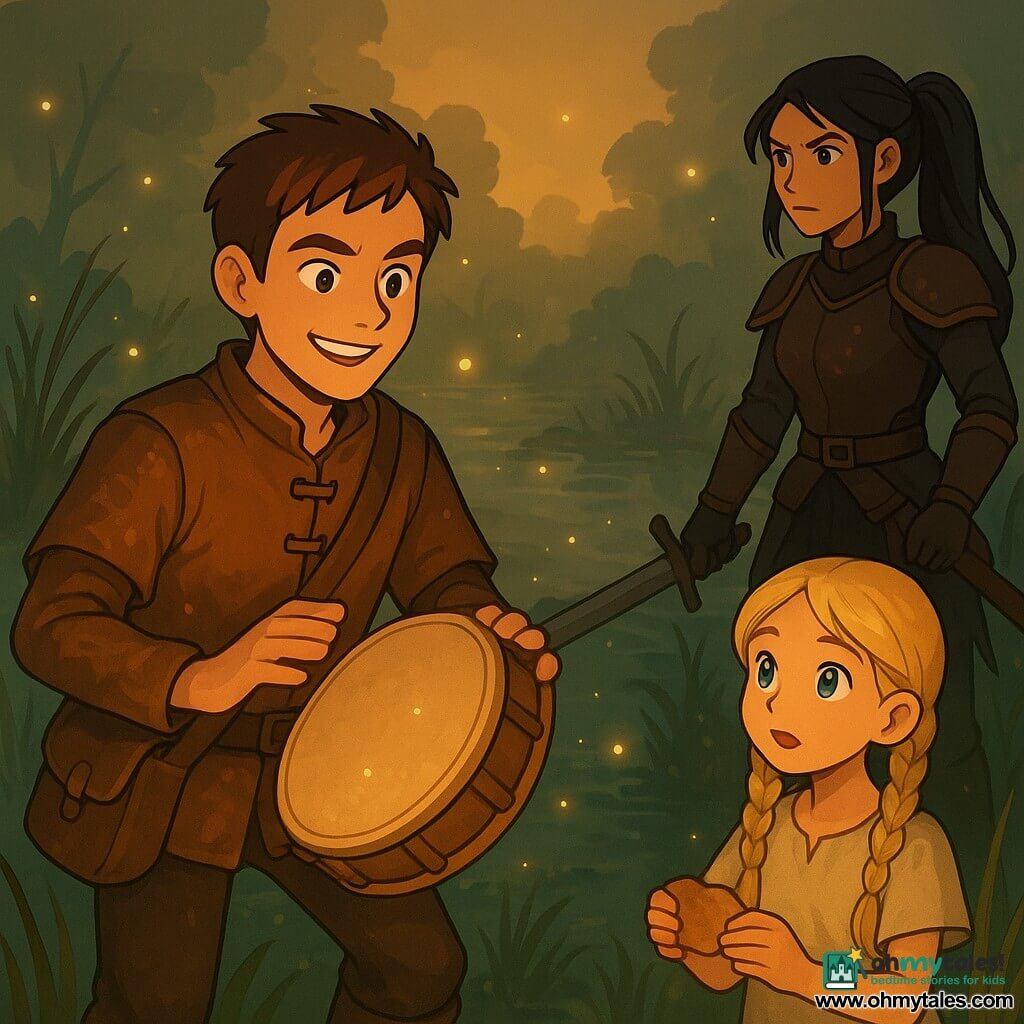
"Then name yourself, child of peat and wind," the old man said. "And take with you a shard of this hollow's bone for luck." He thrust a pebble the color of old ivory into Rowan's palm.
Rowan took it, feeling a pulse like a heartbeat against his skin. He bowed, and the old man resumed his beating, a slow, knowing pulse that set the bones of the earth to listening.
3. Among the Will-o'-Wisps
Crossing the King's Bones was like walking between the ribs of some fallen god. The whorl of winds there carried voices that were not voices, and the will-o'-wisps clustered like stolen stars. They flitted ahead in tempting knots, leading many a lost soul into peat bogs or to ridges where the water ran cold and deep.
They tried on Rowan first the way a child tries on a hat—playful and curious. "This way," they hummed, weaving a thread of light between two stones. Rowan followed, at first, because the path seemed easier. Then the ground gave way into a black mouth. He leapt back, rolling onto flaxy reeds, and the will-o'-wisps tittered like wind through a comb.
"You were quick," said a voice at his shoulder. It belonged to a woman in leather and chain, a traveler with a cloak like thundercloud and a sword strapped across her back. She had seen many roads and many mischiefs. "Not many make that leap and laugh about it."
Rowan grinned, blinking water from his lashes. "I like to say thank you to the marsh for testing me."
"Why do you smile at danger?" she asked, curious rather than unkind.
"Because it makes the danger keep surprising me," Rowan said. "If I am afraid all the time then my fear becomes heavy. If I smile, it feels lighter. And the world will let me through."
She studied him, then offered a nod. "I'm Sylke. I keep the narrow passes. If you seek a drum, you will want the will-o'-wisps on your side—or, at least, not laughing at your heels." She tied a strip of her cloak to his satchel. "This will dampen their light."
They walked together for a while, exchanging small confidences. Sylke was blunt as a hammer but had a laugh that cracked like a ship's plank in a storm. Rowan told her of his father, of drum-songs by the peat-fire, of the way the air remembers old rhythms. She told him of distant passes where travelers left offerings for the road: pebbled wishes, half-eaten bread, and one carved whistle that sounded a tune only on moonless nights.
When they reached the Pool of Mirrors, where the will-o'-wisps danced most greedily, the marsh itself rose in song. The lights swarmed and made shapes—faces of sailors, of mothers, of children long drowned. Some grew loud with mockery. Rowan swallowed and reminded himself of the old man's words: be honest about fear.
"You are afraid of losing what you love," Sylke said softly, as if reading his unspoken confession. "Is it the drum you seek to bring back your father's song?"
Rowan's smile faltered, then returned in a gentler form. "Yes. I want to hear his rhythm again. But I also want to know if the music belongs to me."
"Then don't sell it to the first light that offers you a brighter road," Sylke warned.
At the pool, Rowan unwrapped a strip of bread and tossed it into the water. The lights blinked, curious, then settled like moths on a lantern. He hummed a small tune his father used to tap when the storm-rope tightened and the smoke needed coaxing. His voice was plain, not made to awe. The will-o'-wisps hovered, then the sweetest of them—small as a coin and pale as a moonbeam—dipped lower and allowed his hand to brush it. It did not sting or steal; it listened.
"You say you're afraid," it said, which startled Rowan for a moment because it spoke in a voice like rust on bronze. "But you also promise to keep what you find."
"I promise," Rowan said. There was truth in it, and the will-o'-wisp gave a laugh like water breaking around a stone. It drew a pale line on the air and pointed toward the Hollow of Thrum, where peat rose like a throat, and the earth seemed to hold its breath.
4. The Forgotten Causeway
The causeway to the Hollow of Thrum was older than the King's Bones. It lay under a bridge of lichen and across a field where stones grew like teeth. Rowan and Sylke moved quietly because the place was watchful. Jutting crags wore runes that only showed themselves when dawn halted, and shadows here were not always empty.
They met resistance in the form of three marsh-wardens—knights turned half to herons by a curse, their armor grown with feathers, their faces long and beaked. They stood on the causeway like toll-takers of the old world.
"Halt," croaked the first, voice like dry reeds. "No relic may pass without song and bond."
Rowan stepped forward, smiling. "I bring no gold to pay a toll. I bring a promise and a drum's hunger."
"Song," the second heron-knight rasped. "Sing then."
So Rowan sang, and it was not a full song but a simple rhythm he had learned by the fire, the one his father had beat when the family patched nets and mended boats. He tapped a stone and clapped a beat on his knees and let his voice follow the pattern. The heron-knights listened, their feathered heads cocking as if hearing the scratch of a remembered wind. Sylke kept watch, blade ready if the birds decided they preferred plunder to mercy.
When the beat ended, the leader bowed. "You have the right heart," he said. "Pass. But remember—the drum remembers every hand that beats it. You may carry it, but it carries you too."
Rowan bowed back, gratitude a warmth through him. The causeway opened like a mouth to let them through. Beyond it lay a hollow ringed with black-rooted trees, and in the center, half-buried beneath peat and reeds, a shape like a curled beast: the drum lay where stories said it would, small as a child's back and scarred with a thousand lines.
5. The Hollow at the King's Bones
The drum's skin was a patchwork of old and newer scars. When Rowan knelt beside it, the air seemed to fold, listening. He hesitated, as if touching a sleeping animal. His hands trembled, not from fear but from the weight of wanting. He had imagined this moment in a thousand different lights—triumphant, sorrowful, empty-handed. Reality was finer. The drum smelled of willow smoke and sea-salt.
"One last test," said a voice behind him. It was the hollow itself speaking, or perhaps the old man from the bowl, or perhaps the marsh. "Tell me now, what will you do when the drum answers?"
Rowan's fingers found the skin and paused. He had kept his promise to himself, but had he kept the right sort of vow? He thought of his father's hands, large and honest, tap-tapping the small hours away. He thought of Old Mairn and Sylke and the child who had pointed the way. He thought of the will-o'-wisps and their fragile, ridiculous lights.
"I will listen," he said simply. "If it sings of storm and hurt, I will learn to hear how to mend it. If it calls me to a fight, I will fight. If it asks me to remember things I cannot, I will try. But I will not sell its song for comfort."
The hollow was silent for a breath so long Rowan could hear his own heartbeat. Then the drum answered, not with music but with a low, welcoming thrum that rose like fog. Rowan beat once, then twice, then followed with a rhythm his father had given him when he was small: a heartbeat, a pause, a skipping step.
The sound rippled outward. The trees leaned in. The pebbled ring around the hollow vibrated. From the marsh's edge came the first of those things Rowan had hoped he would not face: peat-glowers, creatures that looked like men woven from moss, their eyes coals dull as kindling. They came in silence, but their charge was clear.
Sylke drew her sword and sprinted forward. Rowan did not stop her; instead he struck the drum, louder and truer than he had ever managed. The sound cut through the fog and wrapped around the peat-glowers like a warm cloak. They paused, heads cocked as if listening for a name. Rowan remembered the old man's words that the drum made spirits remember their names. He beat again and called softly, "Remember who you were."
One by one, the peat-glowers softened. Moss fell from their shoulders, revealing the bones of men who had once been fishermen or watchmen. Not all were fully restored, but many blinked, confused, and sank to the ground in sleep as if waking from a bad dream. A few stirred and looked at Rowan with gratitude like a sunrise.
The hollow exhaled. The drum's skin shivered in his hands like a living thing. Rowan had not only found the drum; he had given it a reason to sing.
6. The Drum and the Homeward Beat
They did not return to the marsh with trumpets. Rowan carried the drum in a satchel, careful as if it were a sleeping child. The journey back was quieter, the will-o'-wisps no longer mocking; sometimes they followed at a respectful distance, like companions who had been shown kindness.
Old Mairn met him at the reed-bridge. "You did well," he said simply, eyes misted like distant weather.
Rowan set the drum on his knee and tapped it lightly. The sound was small at first, then grew, like a tide, until the marsh itself seemed to answer in reed-song. People gathered—neighbors from huts with smoke-stained roofs, children with curious hands, Sylke who had become something like a friend. Rowan stood and played a rhythm, not meant to command but to call. He remembered times when his father's beat had stitched neighbors together—when drums had called the weary home from the road.
As he played, bits of the past woke and moved. A woman who had lost a son hummed as if remembering his face. A boy who had been mute for a year cleared his throat and spoke one bright word: "Home." The drum did not perform miracles; it only opened a door that truth or love could pass through. Rowan felt a warm, steady thrum through him like a hand on his shoulder.
That evening, by the peat-fire, Rowan told tales. He told of will-o'-wisps that learned to laugh in good humor, of heron-knights who policed the causeways, and of the hollow that asked for promise. Sylke sat beside him and told of paths she had walked and how sometimes all one needed was a friend to watch the back. Old Mairn listened with a smile that made his eyes twiglike.
"Will you keep it?" asked the child who had first pointed Rowan toward the King's Bones.
Rowan looked at the drum, its scarred skin, its voice like a low river. "For now," he said. "A drum must be played, and it must be heard. If it ever asks to go where I cannot follow, I will set it free."
That night, Rowan walked to the marsh edge with the drum slung under his arm. He beat a small pattern his father had taught him: a steady heartbeat and then a roll, slow and sure. The will-o'-wisps answered with a ripple of pale light, and the marsh answered with a chorus of frogs and reed-birds. Rowan felt the rhythm settle into his bones. The drum did not return him what was lost, but it let him carry forward the cadence of those he loved.
He smiled, because in the marsh a smile was a brave thing and a true one. It had helped him through deceitful lights and sleeping fears, and now it sat there like a small lamp. He did not know all the places the drum would lead him, or what storms it would call out of hiding. He only knew that when the next road wound dark and strange, he would set his chin to the wind, tie his rope tight, and follow the beat.
"Come," he said to the marsh, to the will-o'-wisps, to the friends who had stood by him. "Keep the rhythm with me."
And the marsh kept it, for in the end, it had always been a place that remembered songs. Rowan's drumbeat joined the great murmur of peat and reed, and the world listened, steady and patient, like a giant holding its breath to hear a child's heartbeat in the dark.