Chapter 1: The Warm Window
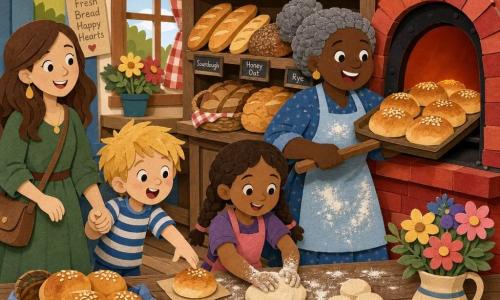
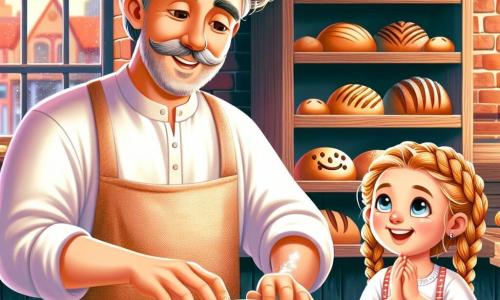
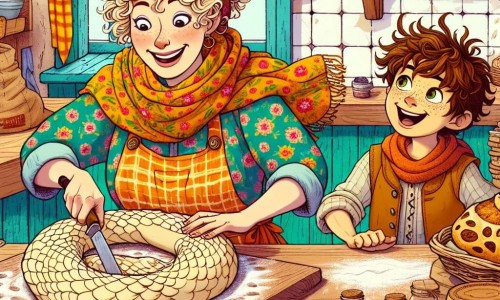
There was a small bakery on a corner where the street smelled of cinnamon and fresh bread. Morning light slipped through the shop window like honey. The baker, Mr. Thom, woke before the sun. He tied his apron, his hands already remembering the dough by touch. Flour dust floated in the air, silver and soft. The oven hummed a steady hello.
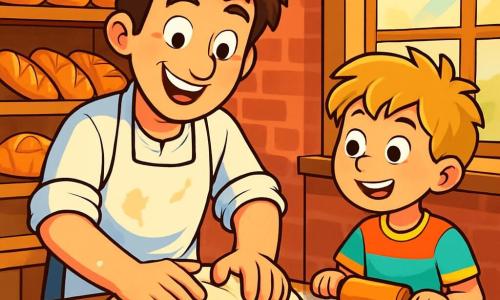
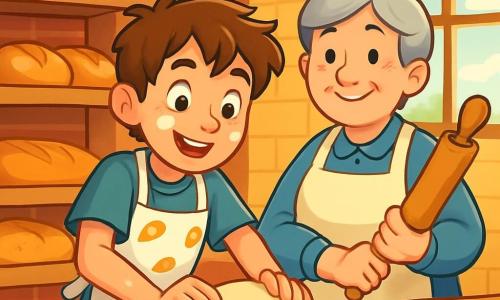
Mr. Thom always hummed too. It was a gentle tune that matched the beat of kneading. He loved the sigh of the dough, the way it warmed under his palms. He loved the sound of crust popping when a loaf came out. He used simple words with the children who came by: warm, soft, sweet. He showed them how yeast woke like a small sleeping thing when water touched it.
Every morning he whispered the same line to himself, a little refrain that steadied him: Fold the dough, fold the day. He folded the dough, and the day folded into shape. It felt like making a tiny world.
Chapter 2: The Tear in the Night
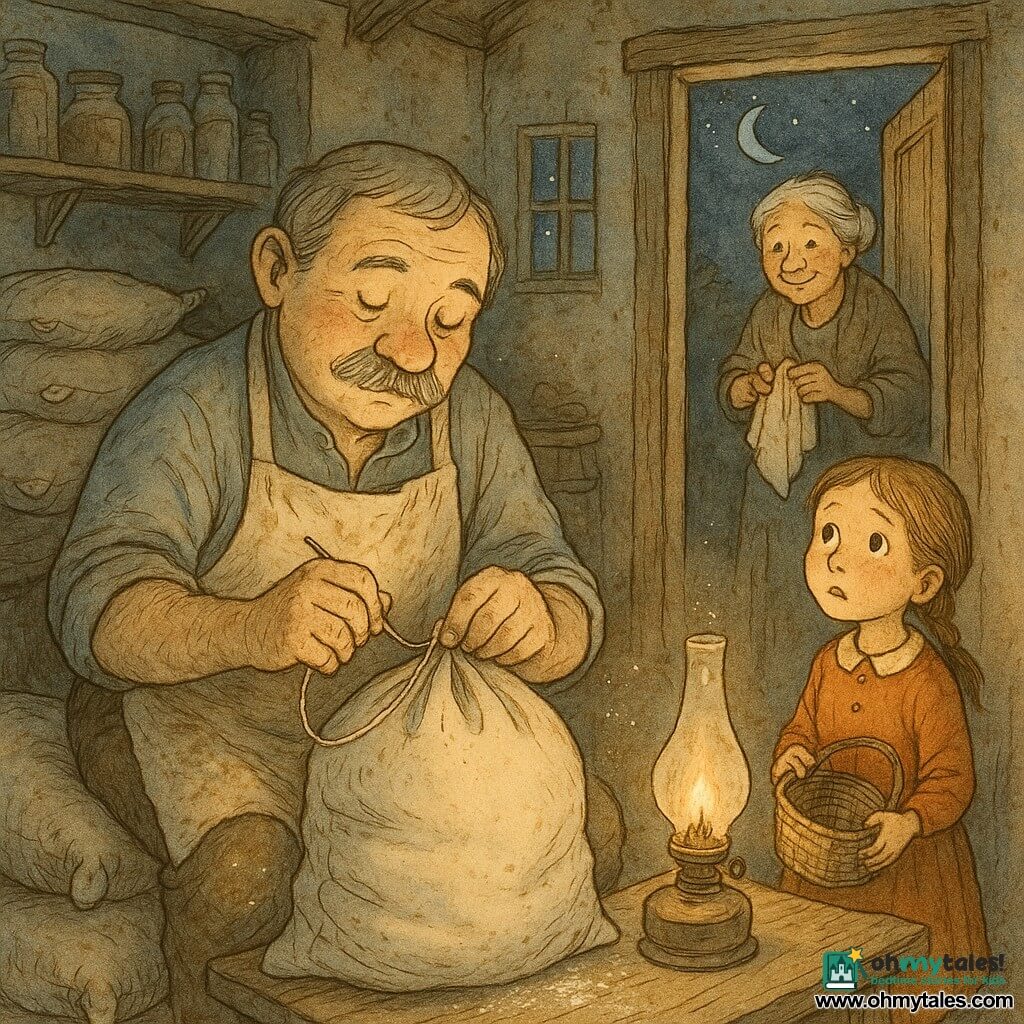
One night, a wind came that tasted of rain. Mr. Thom had stacked sacks of flour high, white hills waiting to be turned into bread. A small sound woke him. It was barely a whisper, a soft sigh of fabric. He went to the storage room. Moonlight painted the sacks blue and silver.
There it was: a tear at the seam of the largest sack. Fine powder slipped through like powdered snow. A trickle of flour spread across the floor. Mr. Thom pressed his palm to the rip and felt something inside—worry. If the flour spilled, the morning would be a scramble. The village children might not get their favorite sesame rolls.
He did not run. He breathed in the cool, yeasty air. He remembered his refrain: Fold the dough, fold the day. He gathered a needle and strong thread, a piece of canvas, and a strip of old cloth. He folded the torn edges gently, like tucking a blanket around a sleeping child. His fingers worked slowly. The moon watched. He stitched inch by inch.
Outside, rain began to tap a soft rhythm on the roof. He tied the final knot and pressed a patch of canvas over the seam. His hands were steady. He felt the courage kindling, a quiet heat like bread set to rise.
Chapter 3: The Early Run
At dawn, a bell rang. The village stirred. Mr. Thom lifted the patched sack and felt the repaired seam hold firm. He smiled to himself. The patch had been rough and kindly, like an honest bandage. He loaded crates and baskets, the bakery humming with warm smell. The first loaves steamed like clouds.
A little girl came in, rubbing her sleepy eyes. Her name was Elsie. She loved the honey rolls that had sticky sugar on top. She asked, "Are there any left?" Mr. Thom winked. "One for you," he said. He reached for a basket on the shelf and found it empty. The handle was loose. The wood had split.
Another worry. Another small test. Mr. Thom could have called his apprentice. He could have closed the shop to fix things properly. But the village waited. He pressed his lips together and remembered the moonlit stitch. Courage felt like a warmth right behind his ribs.
He fetched glue, a thin strip of leather, and small nails. He sanded the handle smooth, wrapped the leather around it, and nailed it tight. He hummed the refrain under his breath as he worked: Fold the dough, fold the day. The handle was mended. It felt good against his palm, like a handclasp.
Chapter 4: The Gift Basket
Mr. Thom filled the basket with golden rolls, jam jars like tiny suns, and a small loaf wrapped in plain paper. He carried the basket outside to the little girl. The morning air smelled of rain and toasted bread. Birds argued softly in the eaves.
Elsie's eyes widened. She smelled the warm bread, the sweet jam, the comfort inside. "For me?" she breathed. Mr. Thom placed the basket in her small hands. He felt the weight of his work—stitch, sand, bake—settle into something gentle.
"Share it," he said softly. "Share and keep some for yourself." She nodded and promised to bring crumbs to the old man on the hill and a roll to her teacher. Mr. Thom watched her skip down the lane, carrying the basket like a treasure chest.
Back inside, he looked at the patched sack and the mended handle and felt proud. He had been brave, not by shouting or rushing, but by staying steady and small-handed. Courage, he thought, was doing what needed doing even when you were tired.
He hummed the refrain once more as he kneaded the remaining dough. The shop felt warm and safe.
Chapter 5: The Evening Light
That evening, the bakery glowed. Lanterns made pockets of amber on the shelves. Mr. Thom wiped his hands on his apron and set a small basket by the counter. The basket was filled with bread shaped like little moons and stars. He left a note: For anyone who needs a warm hand.
People came by slowly, voices soft as the night. The old woman from next door found a roll and a slice of kindness. A tired postman took a bun and smiled. The children shared crumbs and stories. Mr. Thom listened, his heart warm as freshly baked bread.
He thought of the tear in the night and the split handle, and he felt a gentle pride. He knew how to patch what broke. He also knew how to give, even when the day had been long.
As the lanterns dimmed, Mr. Thom closed the shop. He wiped the counter, folded the cloth, and swept a soft trail of flour into a neat pile. He hummed the refrain, three slow notes that drifted out into the dark: Fold the dough, fold the day.
He walked home with his hands smelling faintly of yeast and honey. The village was quiet. He felt the courage like a warm loaf at his chest—steady, nourishing, simple.
The next morning, the sky was clear. On the bakery door hung a small drawing from Elsie: a sun, a basket, and a smiling man. He pinned it to the board, next to the bread schedule. He smiled, closed his eyes for a moment, and promised himself to keep helping, stitch by stitch, loaf by loaf.