Chapter One: The Project Announcement
The bell rang, shrill and sharp, signaling the end of math class. Olivia gathered her books, her thoughts still swirling around fractions and word problems, when Mrs. Carter called for attention.
“Before you go, I have something important to share,” Mrs. Carter said, her voice echoing across the bustling classroom. “For our next social studies project, I want you to explore the topic of poverty—what causes it, how it affects people, and what can be done to help.”
Olivia's curiosity sparked. She glanced at her best friends, Ben and Amina, who sat in the next row. Ben, tall and quiet, always listened more than he spoke, while Amina, small but fierce, had a way of making every subject sound like an adventure.
Mrs. Carter continued, “You'll work in groups of three. I want you to learn from your community, talk to people, and come up with ideas to make a difference. We'll present our findings in three weeks.”
The bell rang again, and the class exploded into chatter. Olivia, Ben, and Amina gathered their things and stepped into the hallway together.
“Did you hear that?” Amina said, her eyes shining. “We can actually help people!”
Ben gave a small smile. “It sounds hard, though. Where do we start?”
Olivia thought about the row of boarded-up shops on Main Street, the soup kitchen near her apartment, and the kids at school who sometimes skipped lunch. “We start right here,” she said, determination settling over her. “We start by paying attention.”
Chapter Two: Looking Closer
That afternoon, the trio met at Olivia's apartment. The living room window looked out over Parkside, their neighborhood—a patchwork of old brick buildings, playgrounds with peeling paint, and corner stores with faded signs.
Olivia's mom, who worked two jobs, brought in a plate of cookies as the kids spread out their notebooks.
“So, what do we already know about poverty?” Olivia began.
Amina raised her hand, as if she were in class. “It means not having enough money for basic things, like food, clothes, or a place to live.”
Ben nodded. “And sometimes it means parents can't find good jobs, or they lose their jobs.”
Olivia scribbled notes. “But why does it happen? And how does it feel?”
Amina's voice softened. “I think it feels lonely. My cousin moved in with us last year after her mom lost her job. She was really sad at first.”
Ben looked out the window, thoughtful. “There's a boy in my building who wears the same shirt every day. Everyone notices, but no one says anything.”
The room fell quiet. Olivia broke the silence. “Let's go out and talk to people. We need to understand this for real, not just from books.”
Chapter Three: Meeting Mr. Torres
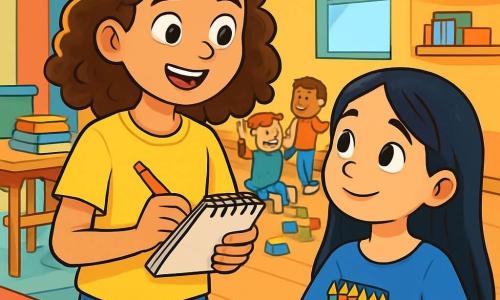
The next day, the three friends set out for the community center. They had heard that Mr. Torres, who ran the afterschool program, knew everyone in the neighborhood.
The center bustled with kids playing games and parents chatting. Mr. Torres, a broad man with a booming laugh, greeted them at the door. “What brings you three to my office?” he asked.
Olivia explained their project and their desire to learn about poverty in their community.
Mr. Torres leaned back in his chair, his face growing serious. “That's a big subject. Poverty is more than just not having money. It's about not having choices. Sometimes, parents work two or three jobs and still can't pay the bills. Sometimes, kids go hungry because there isn't enough food at home. But you know what? This neighborhood is full of people who help each other. We look out for one another.”
Amina asked, “How do you help?”
Mr. Torres smiled. “We run a food pantry here. Some people volunteer their time. Others donate what they can. Every little bit helps.”
Ben scribbled notes. Olivia felt a new warmth in her chest. “Can we help, too?” she asked.
Mr. Torres grinned. “Of course. We always need extra hands.”
Chapter Four: The Food Pantry
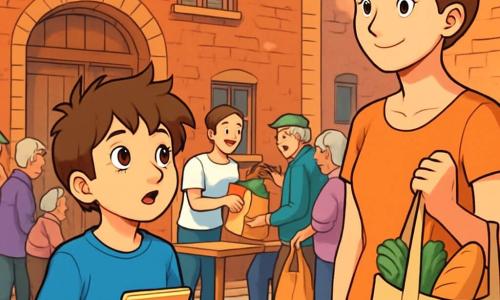
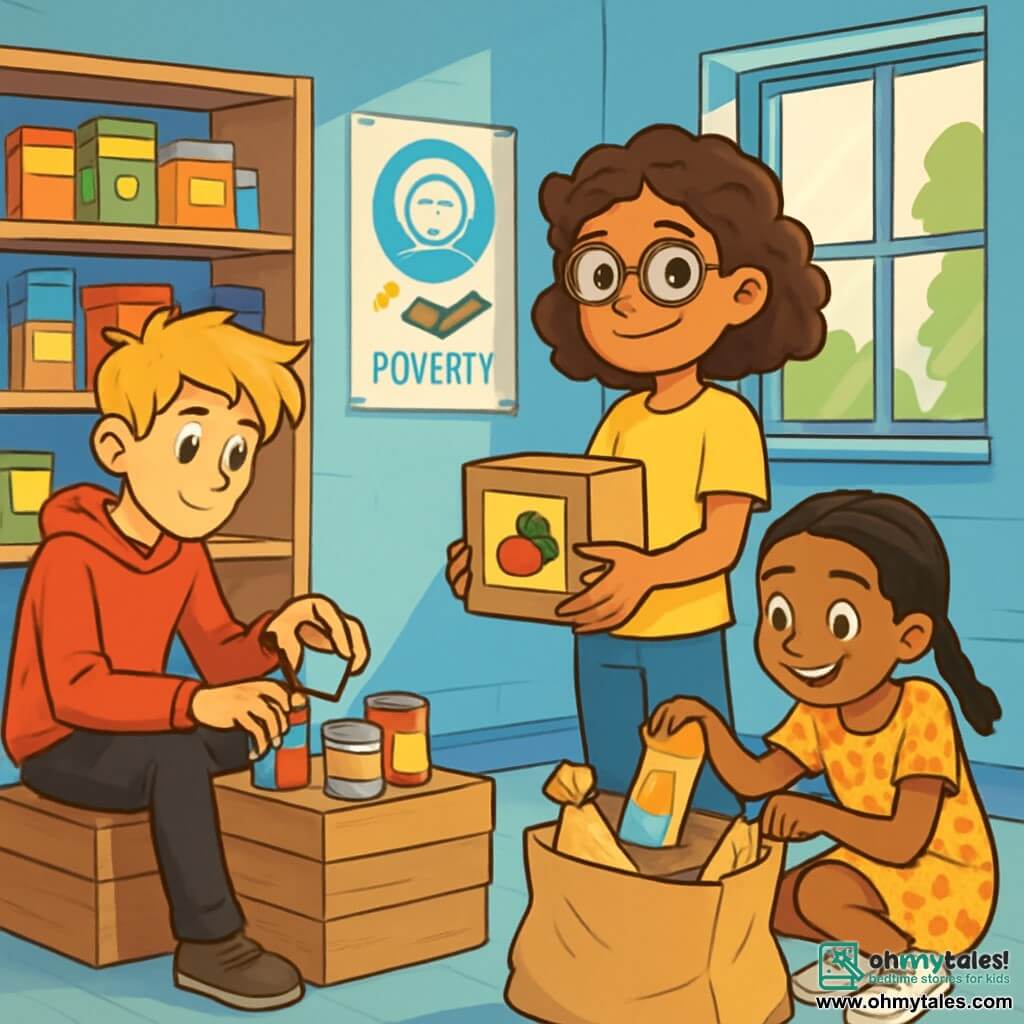
The following Saturday, Olivia, Ben, and Amina arrived early at the community center. The food pantry was a small room lined with shelves of canned goods, pasta, rice, and boxes of cereal. Volunteers bustled around, unpacking donations and arranging them neatly.
Mrs. Jenkins, a retired teacher, handed out plastic gloves. “Today we're making care packages for families. Some people are coming to pick up groceries; others will get deliveries.”
Olivia and Amina started packing bags with canned beans, rice, and instant soup. Ben sorted cartons of milk and boxes of cereal. As they worked, Olivia noticed a girl from school, Mia, coming in with her mother. Mia's cheeks were red, and her eyes stayed fixed on the floor.
Olivia wanted to say hello but hesitated, unsure if Mia would be embarrassed. Instead, she smiled gently and packed an extra box of cookies in Mia's bag.
Later, as they took a break, Ben said, “I didn't know Mia's family needed help.”
Amina nodded. “A lot of people don't talk about it. They're afraid of what others will think.”
Olivia realized that poverty wasn't always obvious. Sometimes, it hid behind closed doors, or in quiet, worried faces at school.
Chapter Five: Listening and Learning
After their shift, the friends sat with Mrs. Jenkins, who shared stories from her years as a teacher.
“I taught kids who came to school hungry,” she said, her voice soft. “It's hard to learn when your stomach hurts. Some kids wore coats in class because the heat was out at home. But they still came, every day.”
Amina's eyes widened. “Did you help them?”
Mrs. Jenkins smiled. “We had a breakfast club, and teachers brought in extra gloves and hats. Sometimes, all it takes is someone noticing, and caring.”
Ben was quiet. “I want to do something. But what can kids like us really do?”
Mrs. Jenkins looked at each of them. “Never think you're too small to make a difference. Sometimes, just being a friend is enough. And when you work together, you can change a lot.”
Chapter Six: The Idea
On the walk home, the friends brainstormed ideas for their project.
“We could collect food and clothes at school,” Olivia suggested.
Amina's eyes lit up. “And make posters to teach other kids about poverty. Maybe people would donate if they understood.”
Ben added, “We could set up a buddy system, so kids who need help aren't alone. Like, if someone forgets lunch, the rest of us can share.”
Olivia grinned. “Let's do all three!”
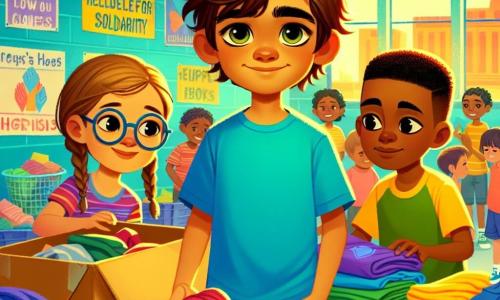
They spent the evening designing posters with bright colors and bold letters: “Help Your Neighbors—Donate Food and Clothes!” “Everyone Deserves a Friend!” “Let's Fight Poverty Together!”
They presented their ideas to Mrs. Carter, who clapped her hands in delight. “You're taking real action! I'll help you organize a school-wide drive.”
Chapter Seven: Taking Action
The next week was a whirlwind. The trio hung posters in hallways and spoke at morning assembly. At first, some classmates rolled their eyes or ignored them, but gradually, things began to change.
Boxes for food and clothing filled up outside the gym. Kids dropped in apples, soup cans, hats, and mittens. Olivia watched as her classmates, even the shy ones, contributed what they could.
Amina stood by the boxes during lunch, explaining their project to anyone who asked. Ben quietly checked in with classmates who sometimes skipped meals, offering snacks from his lunchbox.
One day, Mia approached Olivia in the hallway. “Thank you,” she whispered, eyes shining. “For the cookies. And for not making a big deal.”
Olivia smiled. “Anytime. If you ever need anything, just ask.”
Mia nodded, and for the first time, Olivia saw hope in her friend's face.
Chapter Eight: The Presentation
Three weeks flew by. On the day of the presentations, the classroom buzzed with energy. Olivia, Ben, and Amina took the front of the room, their poster boards covered in photos, drawings, and stories.
Olivia began, “We learned that poverty isn't just about money. It's about not having choices, or enough food, or a safe place to sleep. But we also learned that one person—one group—can help.”
Amina shared their food and clothing drive results. “Our school collected over two hundred cans of food and fifty coats. The community center says it will help dozens of families.”
Ben read a letter from Mrs. Jenkins, thanking the kids for their compassion and action.
“We can't fix everything,” Ben finished, “but we can make things better, a little at a time. By helping each other, we make our whole community stronger.”
The class erupted in applause. Even Mrs. Carter dabbed her eyes.
Chapter Nine: Reflections
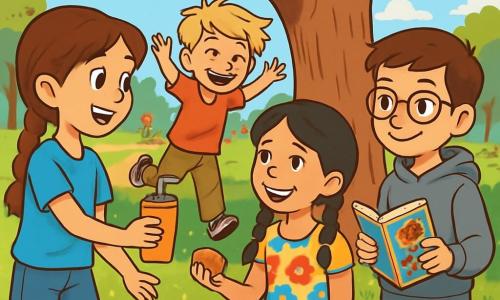
That afternoon, the friends sat together under a tree in the park, the sun setting behind the buildings.
“I used to think poverty was something that happened far away,” Amina said quietly. “But it's here, too. It could happen to anyone.”
Ben picked at the grass. “I always thought I couldn't help, because I'm just a kid. But we did help.”
Olivia looked at her friends, pride swelling in her chest. “What if we keep doing this? Not just for the project, but for real?”
Amina grinned. “We could start a club. ‘The Helping Hands' or something.”
Ben smiled. “I like that.”
The three friends made a pact, right there under the tree, to continue their work—helping, listening, and never turning away from someone in need.
Chapter Ten: The Ripple Effect
In the weeks that followed, their small club grew. Other kids joined in, bringing new ideas and energy. Some helped with tutoring younger students; others organized fundraisers for the community center.
The neighborhood began to change, little by little. The food pantry never ran empty. No one at school went hungry. Kids greeted each other in the halls with smiles, and families felt less alone.
One afternoon, Olivia spotted Mia laughing with new friends in the playground. Ben and Amina were leading a group of volunteers, painting the old park benches.
As she watched, Olivia felt a quiet joy. She understood now that poverty wasn't just a problem for adults to solve. It was something everyone could fight, together.
She picked up a paintbrush and joined her friends, the air filled with laughter and hope. And as the sun set over Parkside, the neighborhood felt a little brighter—a place where no one was invisible, and everyone belonged.
Because sometimes, the smallest hands can make the biggest difference. And sometimes, changing the world starts right on your own street.