Chapter 1: The Assignment
Ava pressed her forehead against the cool window, watching the rain trace twisting paths down the glass. The world outside her apartment block seemed quiet and tired, as if the clouds themselves were sighing. She pulled her knees to her chest, balancing her notebook on her lap.
Her teacher, Mrs. Emerson, had given the class a new social studies project: “Explore a social issue in your community. Interview people, do research, and think about how you could help.” The words echoed in Ava's mind, mixing with the steady drum of rain.
Ava's family didn't have much, but her parents always said they had enough. She'd never really thought about what “enough” meant, or what it was like not to have it. Now, as she looked around their small living room, she wondered about the other families in her neighborhood. What was it like for them?
Her little brother, Leo, ran in, waving a crumpled drawing. “Look, Ava! I drew a robot with a cape!”
Ava smiled, ruffling his hair. “That's awesome, Leo. Want to help me with my project later?”
Leo grinned and nodded, then dashed away, his socks sliding on the floor. Ava returned to her notebook and wrote in her neatest handwriting: “What does poverty mean in our neighborhood?” It was a big question, but she was determined to find answers.
Chapter 2: The First Step
At school the next morning, Ava slid into her seat beside her best friend, Maya. The classroom buzzed with chatter about the project. Maya leaned over. “What topic are you doing?”
Ava hesitated. “I think… poverty. You know, how some people in our neighborhood have a hard time getting what they need.”
Maya's eyes widened. “That's a tough one.”
“I know. But I want to understand it. Maybe we can do it together?”
Maya nodded, and together they brainstormed questions, giggling when their teacher, Mrs. Emerson, called them “the dynamic duo.” By the end of the day, they had a list: What causes poverty? How does it affect people? How can we help?
“Let's start at the community center,” Maya suggested as they packed up. “My mom volunteers there sometimes. She says they help families with food and after-school stuff.”
Ava agreed, excitement and nerves twisting in her stomach. This was more than an assignment—it felt like an adventure.
Chapter 3: The Community Center
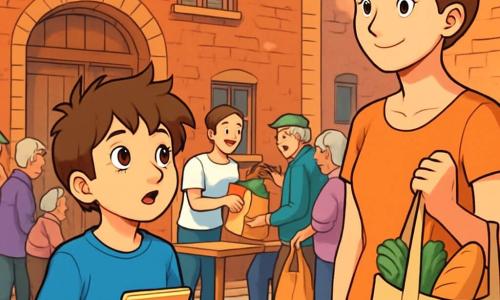
The next afternoon, Ava and Maya walked through puddles to the old brick building where the community center stood. Inside, the air was warm and filled with the scent of baked bread. Kids played in a corner, and a few adults chatted over mugs of tea.
Ava approached the front desk, where a woman with bright eyes smiled. “Hi, I'm Ms. Lopez. How can I help you girls?”
“We're doing a school project,” Maya explained. “We want to learn about poverty and how the center helps people.”
Ms. Lopez nodded, her face turning serious. “That's a big topic. Would you like to talk to some of our volunteers?”
They agreed eagerly, and Ms. Lopez introduced them to Mr. Carter, who wore a faded green apron and had flour on his nose. He led them to a quiet corner and sat with them.
“Poverty isn't just about not having money,” Mr. Carter began. “Sometimes, it's about not having enough food, clothes, or a safe place to live. Sometimes, it's about feeling left out.”
Ava scribbled notes. “Why do people end up in poverty?”
Mr. Carter thought for a moment. “Lots of reasons. Maybe someone lost their job, or got sick, or their family moved here and had to start over. It's not always their fault.”
Ava felt a lump in her throat. She'd never thought about how quickly things could change for someone.
“Is there anything we can do to help?” Maya asked.
“Every little bit helps,” Mr. Carter replied. “Donating food, volunteering, or even just listening to people's stories.”
Ava looked around the busy room and realized there was more to her neighborhood than she'd ever known.
Chapter 4: New Perspectives
Over the next week, Ava and Maya interviewed more people at the community center. They talked to Mrs. Patel, who ran the food pantry, and Jamal, a high school student who tutored younger kids after school.
Jamal told them, “When my family first moved here, we had almost nothing. The center helped us with food and clothes. I wanted to give back, so I help kids with their homework now.”
Ava admired Jamal's kindness. She wondered if she could do something like that, too.
At home, Ava asked her parents about their own experiences. Her dad shared stories of growing up in a small apartment, working odd jobs to help his family. Her mom told her about saving every penny and how grateful she was for neighbors who shared what they had.
“Sometimes being rich isn't about money,” her mom said softly. “It's about having people who care.”
Ava wrote those words in her notebook, underlining them twice.
Chapter 5: Faces and Stories
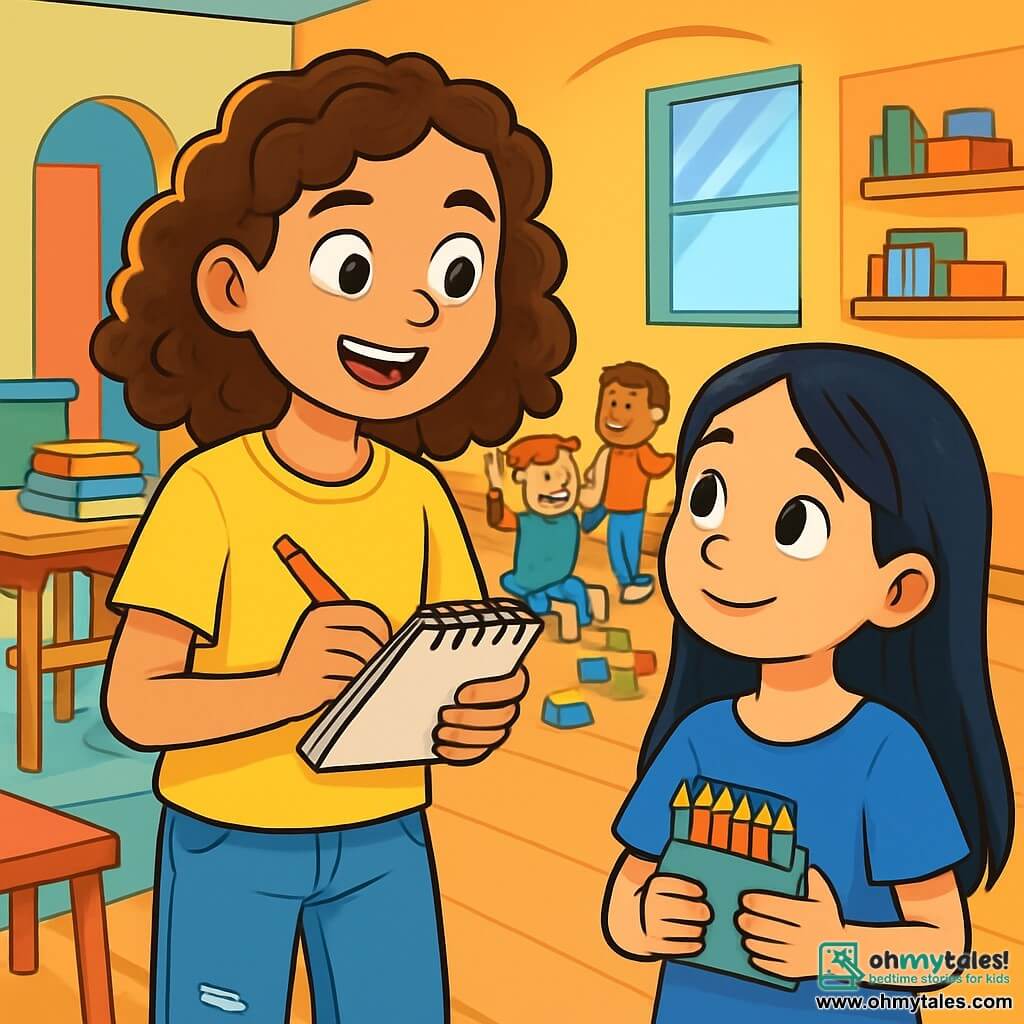
One afternoon, Ava and Maya helped serve snacks at the community center. Ava noticed a girl her age, sitting alone and tracing circles on the table. Her name was Layla, and she'd just moved to the city with her dad and little sister.
Ava offered her a cookie. “Hey, I'm Ava. Do you want to play a game with us?”
Layla hesitated, then nodded. As they played Uno, Layla began to smile. She told Ava about her old home, her favorite books, and how she missed her friends.
Afterward, Ava asked gently, “Is it hard, moving to a new place?”
Layla nodded, her eyes shining. “My dad lost his job. We had to leave everything. Sometimes I wish things could go back to how they were.”
Ava squeezed her hand. “You're not alone. There are people here who care.”
That night, Ava wrote about Layla in her project journal. She realized poverty wasn't just a number or a statistic. It was about real people, with hopes and dreams.
Chapter 6: The Invisible Struggle
As the project continued, Ava became more observant. She noticed things she hadn't before: the boy in her class who always wore the same sweater, the neighbor who sometimes asked for help with groceries, the quiet girl who never brought lunch.
She talked with Mrs. Emerson, who listened carefully. “Ava, you're learning something important. Poverty can be invisible. Sometimes people are embarrassed or afraid to ask for help. That's why kindness matters.”
Ava nodded. She thought about how easy it was to judge others without knowing their story. She wanted to do more than just write about poverty—she wanted to make a difference.
Chapter 7: An Idea Takes Shape
One evening, as Ava sat with her family, she shared what she'd learned. Leo listened wide-eyed.
“Can we help too?” he asked.
Ava grinned. “Actually, I have an idea. What if we organized a ‘Sharing Day' at school? Everyone could bring something—food, clothes, books—to donate to the community center.”
Her parents loved the idea. The next day, Ava and Maya presented it to Mrs. Emerson, who agreed to help. They made posters, told their classmates, and even asked the principal for permission to use the gym.
Excitement grew as students and teachers got involved. Some kids offered to bake treats, others collected gently used toys. Ava felt a spark of hope—maybe they really could make a difference.
Chapter 8: Sharing Day
The big day arrived, and the gym buzzed with energy. Tables overflowed with donations. Some kids shared stories about why they wanted to help. Even students who didn't have much brought what they could—a favorite book, a scarf, a pack of crayons.
Ava and Maya helped sort items with Ms. Lopez and Mr. Carter, who came to collect the donations. As Ava watched everyone working together, she felt proud. The community was stronger when everyone helped, no matter how small their gift.
During a quiet moment, Layla approached Ava. “Thank you,” she whispered. “For being my friend.”
Ava hugged her. “That's what friends do.”
Chapter 9: Reflections
After Sharing Day, Ava's class gathered to discuss what they'd learned. Maya spoke first. “I used to think poverty was just about money. Now I know it's about having what you need to feel safe and happy.”
Another student added, “Helping doesn't have to be big. Even a smile or a kind word can make a difference.”
Ava shared her thoughts, her voice steady. “We all have something to give. When we work together and care about each other, we can help make our community better for everyone.”
Mrs. Emerson smiled, her eyes bright. “You've all shown such empathy and creativity. Remember, the lessons you've learned don't end here.”
Ava knew she'd never look at her neighborhood the same way again.
Chapter 10: A New Beginning
Spring brought new sunlight and blooming flowers to Ava's street. The community center invited her and Maya to help with a new tutoring program. Jamal welcomed them, and soon Ava was reading stories to younger kids, helping with homework, and organizing games.
Layla joined too, her laughter ringing through the halls. Leo came sometimes, proudly handing out snacks.
Ava's family continued to help however they could, and the Sharing Day became a yearly tradition at school. More students got involved, bringing their ideas and energy.
Ava realized she hadn't solved every problem—poverty was still a challenge in her community. But she'd learned the power of empathy, and how even small actions could build hope.
As she wrote the final words of her project, Ava smiled. She knew one person couldn't change everything, but together, they could make a world of difference.
And that was enough to begin.