Chapter 1: The Invitation
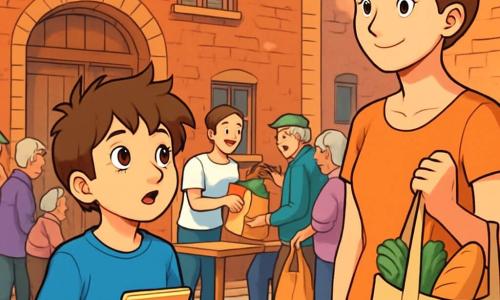
Tessa was twelve years old and she had always loved Wednesdays. On Wednesdays, after school, her mother would pick her up and drive her to the Oakwood Community Center—her favorite place in town. There, volunteers and people from all walks of life gathered to cook, play, and laugh together. The colorful posters that filled the notice board at the entrance always welcomed her with bright promises: “Art Club! Homework Help! Soccer Games! Everyone Welcome!”
As Tessa swung her backpack over her shoulder and skipped into the center's main hall, she inhaled the scent of fresh bread and tomato sauce. Volunteers bustled around setting tables and preparing meals. She waved to Mrs. Patel, the volunteer coordinator, who smiled back warmly.
“Tessa, you're just in time!” Mrs. Patel called from the kitchen doorway. “Can you help me bring out the fruit baskets?”
“Of course!” Tessa replied, heading into the kitchen. She loved helping out—it made her feel important, like she really belonged.
While she arranged apples and bananas on the serving table, Tessa noticed a new face in the hall. A girl about her age stood awkwardly by the door, her thin shoulders hunched and her brown hair pulled into a messy ponytail. She clutched a faded backpack, her eyes wide as she watched the activity around her.
Tessa hesitated for a moment, then smiled and waved. “Hi! I'm Tessa,” she called. “Do you want to help me with these?”
The girl stiffened, her eyes darting to the ground, but after a moment she nodded and shuffled over. Tessa handed her an apple.
“I'm Mia,” the girl said in a quiet voice.
“Nice to meet you!” said Tessa, grinning. “Do you come here often?”
Mia shook her head. “It's my first time,” she replied, her voice barely above a whisper.
Tessa's curiosity was piqued, but she sensed Mia's nerves and decided not to press. Instead, she chattered about the center, the different activities, and the delicious dinners they had on Wednesdays. As they worked, Tessa noticed a tiny smile flicker on Mia's lips.
When the bell rang for dinner, they joined the crowd and loaded their plates. Tessa noticed Mia only took a small serving, barely enough for a full meal.
“Are you sure you don't want any more?” Tessa asked, quietly concerned.
“I'm not very hungry,” Mia replied quickly. But Tessa saw her eyes linger longingly on the bread rolls.
“Take as much as you want,” Tessa whispered. “There's always plenty here.” Mia hesitated, then shyly reached for another roll.
That night, as Tessa rode home with her mother, she thought about Mia. She sensed there was something different about her new friend—something hidden under her quiet words and shy smiles. Tessa was determined to find out more.
Chapter 2: The Hidden Stories
The next Wednesday, Tessa scanned the hall for Mia as soon as she arrived. Relief flooded her when she spotted the girl sitting alone at a table, doodling on a scrap of paper.
“Hey, Mia!” Tessa called. “Want to help set up for Art Club?”
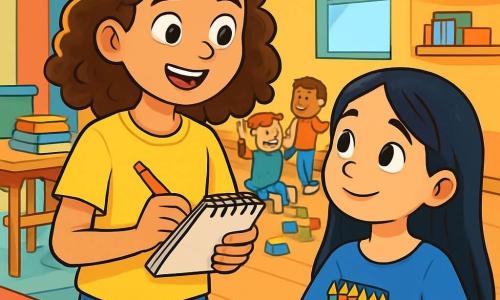
Mia's face lit up, and she nodded. Together, they arranged jars of paintbrushes, stacks of paper, and colored pencils. As they worked, Tessa chatted about her school and how much she loved drawing cartoons.
“What do you like to draw?” she asked.
Mia hesitated, then turned her scrap of paper around. On it was a sketch of a tiny house under a sky full of stars. It was simple, but beautiful and full of feeling.
“I love it,” Tessa whispered, genuinely impressed.
Mia smiled, her eyes shining. “Drawing makes me feel… safe,” she admitted quietly.
Tessa wanted to ask more, but Mrs. Patel called them over for a group activity. As they joined the others, Tessa couldn't help but notice Mia's shoes. The soles were worn thin, and there were tiny holes in the sides. Tessa's own sneakers were bright and new, and for the first time, she realized how much she had taken them for granted.
After Art Club, Mia lingered, waiting for her ride. Tessa sat with her, both girls swinging their feet under the table.
“Do you live nearby?” Tessa asked.
Mia shrugged. “Sort of. We just moved here. My mom says it's temporary. We have to share a small place with my aunt and cousins.”
Tessa tried to imagine sharing her bedroom, her closet, her books. “That must be hard,” she said softly.
Mia nodded. “Sometimes. But we're together, so that's good.”
Tessa felt a warmth in her heart for her new friend's quiet resilience. She promised herself she'd help Mia feel less alone.
Chapter 3: The Soccer Game
A week later, the center was alive with excitement: it was the night of the big soccer match. Everyone was invited to play, no matter their age or skill. Tessa, who played on her school team, bounced on her toes, eager to get on the field.
Mia looked nervous. “I've never played soccer before,” she admitted.
“That's okay! I'll teach you,” Tessa said, grabbing two neon vests. “Come on!”
As they jogged outside, Tessa showed Mia how to kick and pass. At first, Mia's kicks barely sent the ball rolling, but she listened carefully and practiced each move.
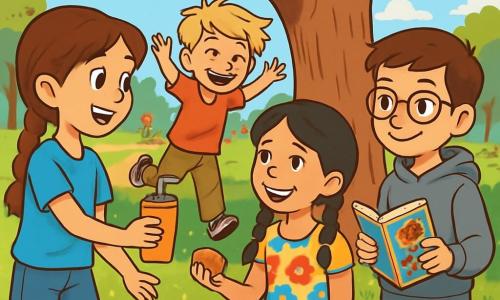
When the game started, Tessa and Mia found themselves on the same team. At first, Mia hung back, afraid of making a mistake. But Tessa cheered her on, and soon Mia was chasing after the ball, her laughter ringing out.
The game was a blur of running feet, shouts, and cheers. Mia stumbled a few times, but always got up—her determination shining through. When she finally scored her first goal, the team erupted in applause. Mia's face glowed with pride.
After the game, everyone gathered for lemonade and cookies. Mia's aunt arrived, her face tired but kind. She thanked the volunteers softly, taking a plate of cookies for Mia and her cousins.
As Tessa watched Mia leave, she realized that the soccer game had been more than just a match. For Mia, it was a night of laughter and belonging—a break from worries and a moment to shine.
Chapter 4: The Big Project
The next month, Mrs. Patel announced an exciting new project: “We're starting a community garden! We want everyone to help plant, water, and take care of it. The food we grow will go to families who need it most.”
Tessa's eyes sparkled. She loved being outdoors. “Can Mia and I help?” she asked.
“Absolutely!” Mrs. Patel replied.
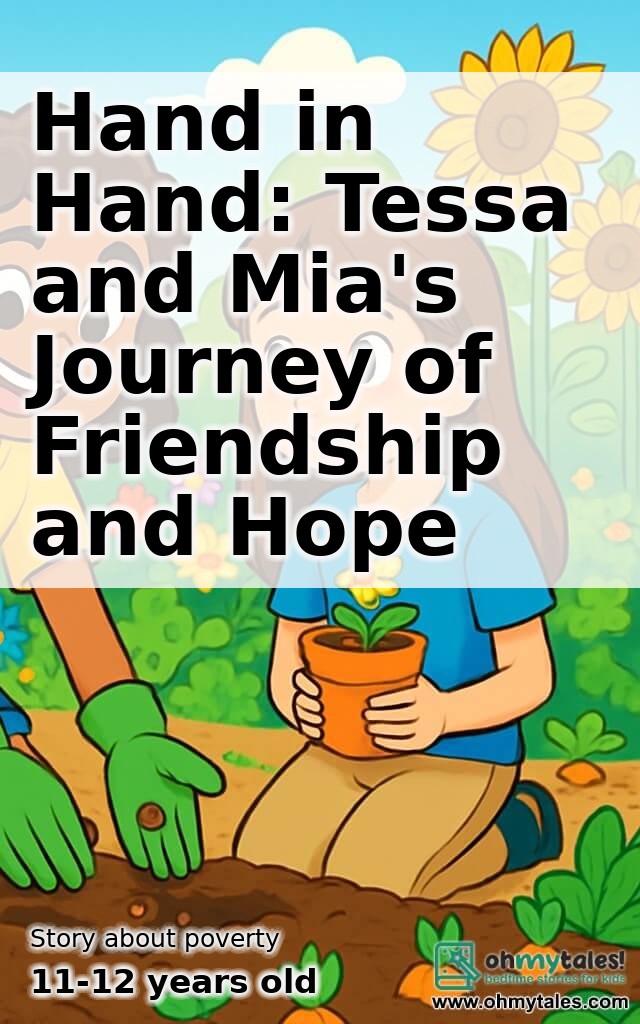
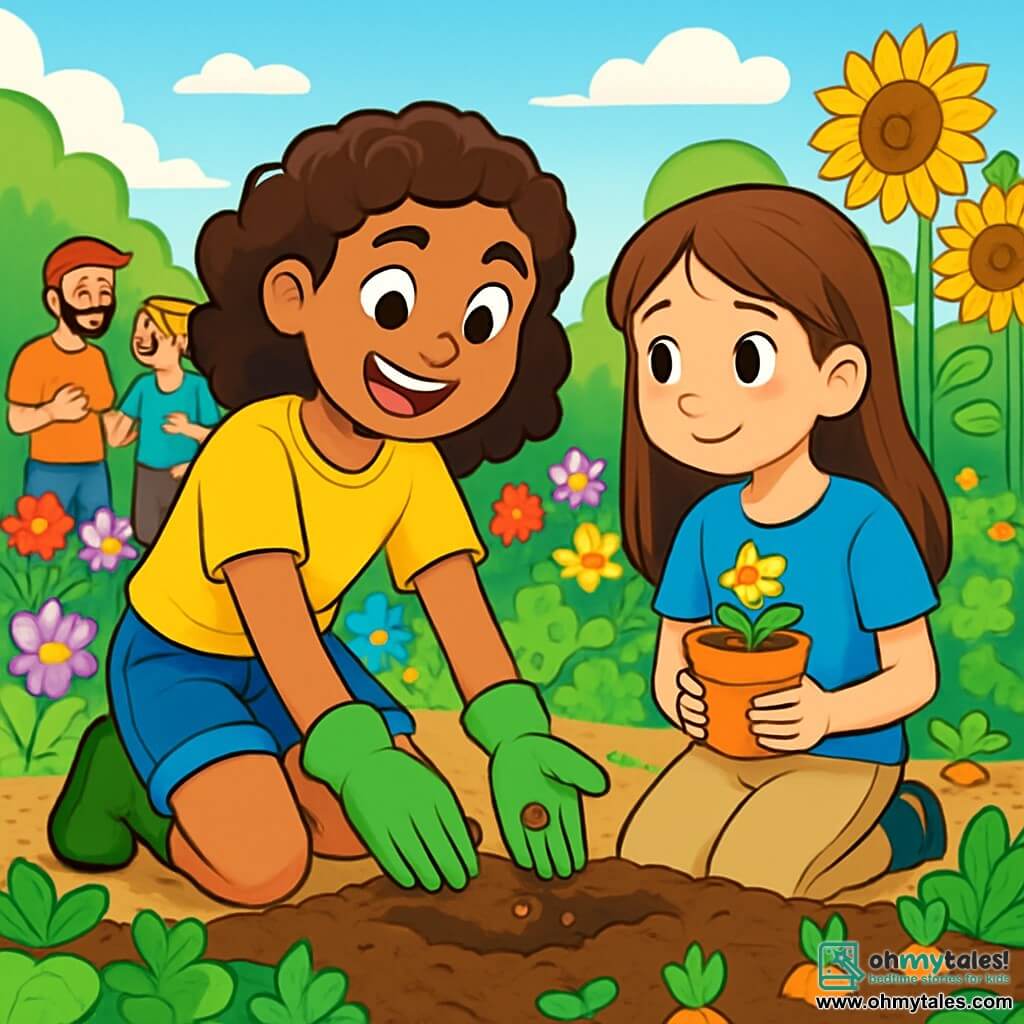
On Saturday morning, Tessa, Mia, and a group of volunteers gathered on a patch of land behind the center. The soil was hard and dry, but spirits were high. Mrs. Patel handed out gloves, shovels, and packets of seeds.
“Let's plant hope!” she said, smiling.
Tessa and Mia dug side by side, their hands growing dirty but their laughter bright. As they planted beans, carrots, and tomatoes, Mia told Tessa about her old garden in the town they'd left behind—a place where she and her mother grew sunflowers as tall as the fence.
“I miss it sometimes,” Mia confessed, patting the soil around a tomato plant, “but maybe this garden will be just as nice.”
As spring turned into summer, the garden flourished. Mia visited often, watering the plants and checking on their progress. She seemed lighter now, her shyness fading as she made new friends and found small ways to help.
Tessa found herself thinking more about the families who would benefit from the food they grew. She realized that hunger and hardship were often invisible, hidden behind quiet smiles and brave faces—like Mia's.
Chapter 5: The Difficult Day
One rainy afternoon, Tessa arrived at the center to find Mia sitting alone in a corner, her arms wrapped tightly around herself. Her eyes were red.
“Mia, what's wrong?” Tessa asked, sitting next to her.
Mia wiped her nose. “We have to move again,” she whispered. “My aunt's house is too crowded. Mom says we might have to stay in a shelter for a while.”
Tessa's heart twisted. She didn't know what to say. She'd never had to think about where she would sleep, or if she'd have dinner. The idea of Mia being without a home filled her with sadness and worry.
“Is there anything I can do?” Tessa asked, her voice trembling.
Mia shook her head. “Just… don't tell anyone, okay?” She looked down, ashamed.
Tessa nodded, but inside, she felt a storm of emotions—anger, confusion, and helplessness. She wished she could fix things for her friend, but she didn't know how.
That night, Tessa couldn't sleep. She thought of Mia's worn shoes and small helpings at dinner, of her shy smiles and hopeful drawings. Tessa realized that poverty was more than just not having money—it was a heavy weight that pressed on every part of a person's life.
But she also remembered Mia's strength and kindness. Even when things were tough, Mia still laughed, played soccer, and helped in the garden. Tessa promised herself she'd find a way to help—not just Mia, but others like her, too.
Chapter 6: The Fundraiser
A few days later, Tessa went to Mrs. Patel. “Is there something we can do to help families like Mia's?” she asked.
Mrs. Patel smiled gently. “There's always something we can do, Tessa. What do you have in mind?”
Tessa thought for a moment, then her eyes lit up. “What if we hold a fundraiser? We could have a talent show and a bake sale! Everyone could join in, and we could raise money for families who need help.”
Mrs. Patel clapped her hands. “That's a fantastic idea! You're a real leader, Tessa.”
Word spread quickly throughout the center. Kids and adults signed up to perform—singing, dancing, playing instruments, telling jokes. Tessa and Mia teamed up to bake cookies and design posters.
On the night of the fundraiser, the center buzzed with excitement. Decorations hung from the ceiling, music played, and the smell of fresh brownies filled the air. Everyone came together—no matter who they were or where they came from.
Tessa sang a song she had written about friendship and hope. Mia showed her drawings, which people admired and even bought to take home. Families donated what they could, and at the end of the night, Mrs. Patel announced they had raised enough money to help several families with food and temporary housing.
Tessa saw Mia's mother smile for the first time in weeks. Mia hugged her tightly, tears of relief and happiness in her eyes.
“Thank you, Tessa,” Mia whispered. “You really made a difference.”
Tessa hugged her friend back. “We did it together,” she replied.
Chapter 7: Lessons Learned
The following weeks brought changes. With the help of the community center, Mia's family found a small apartment. It wasn't fancy, but it was theirs. Mia's mother started a new job at a bakery, and Mia began to come to the center more often, her confidence growing each day.
Tessa discovered something, too. The more she learned about poverty, the more she realized how many people faced challenges just like Mia's. She read articles, asked questions, and helped organize food drives and clothing donations. She spoke to her classmates about what she'd learned, inviting them to volunteer at the center.
One afternoon, as the garden bloomed bright with summer tomatoes and sunflowers, Tessa and Mia sat together under the shade of a tree.
“Do you ever wish things were different?” Tessa asked softly.
Mia considered this, looking around at the laughing children, the busy volunteers, and the thriving garden.
“Sometimes,” she said honestly. “But I'm glad I met you. And I'm glad I learned that even when things are hard, people can still be kind. We can still help each other.”
Tessa nodded, her heart full. She knew she couldn't solve every problem, but she could stand beside her friends and do her best.
As the sun dipped low, the girls ran back to the garden, their laughter echoing in the warm evening air.
Chapter 8: The New Beginning
The next school year brought new faces to the center. Tessa and Mia became leaders, teaching younger kids how to plant seeds and organize games. They used their story as inspiration, reminding others that small actions—an extra bread roll, a friendly smile, a homemade poster—could make a big difference.
Tessa wrote an essay about her experiences for a school competition. She shared how meeting Mia had opened her eyes to the challenges people faced, but also to the hope and courage they carried.
“I learned that poverty is not just about what you don't have,” she wrote. “It's also about what you can give, even if it's just kindness or time. Everyone can make a difference, no matter how small.”
Her essay won first place. She read it aloud at an assembly, her voice strong and clear. Mia sat in the front row, grinning with pride.
Afterward, a teacher approached Tessa. “You've inspired me,” she said. “Maybe we can start a community project here at school, too.”
Tessa grinned. “I'd love that!”
Chapter 9: The Power of One
As months passed, the Oakwood Community Center continued to grow. The garden flourished, the soccer games grew bigger, and the Wednesday dinners became even more lively. Tessa and Mia remained close friends, their bond strengthened by everything they had shared.
They had learned that real change didn't always come from grand gestures—it started with a single act of kindness, a willingness to listen, and the courage to care.
One afternoon, as Tessa and Mia stood in the shade of the tallest sunflower, Tessa smiled.
“We did a lot, didn't we?” she said.
Mia nodded. “And there's still more to do.”
Hand in hand, they gazed out across the busy center, their hearts full of hope. They knew that life could be hard, but together, they could help make it a little brighter—for themselves, for their families, and for every child who walked through those doors, looking for a friend, a warm meal, or just a place to belong.
And so, the story of Tessa and Mia—of kindness, courage, and community—continued, growing stronger with every new friend, every shared meal, and every seed planted for a better tomorrow.