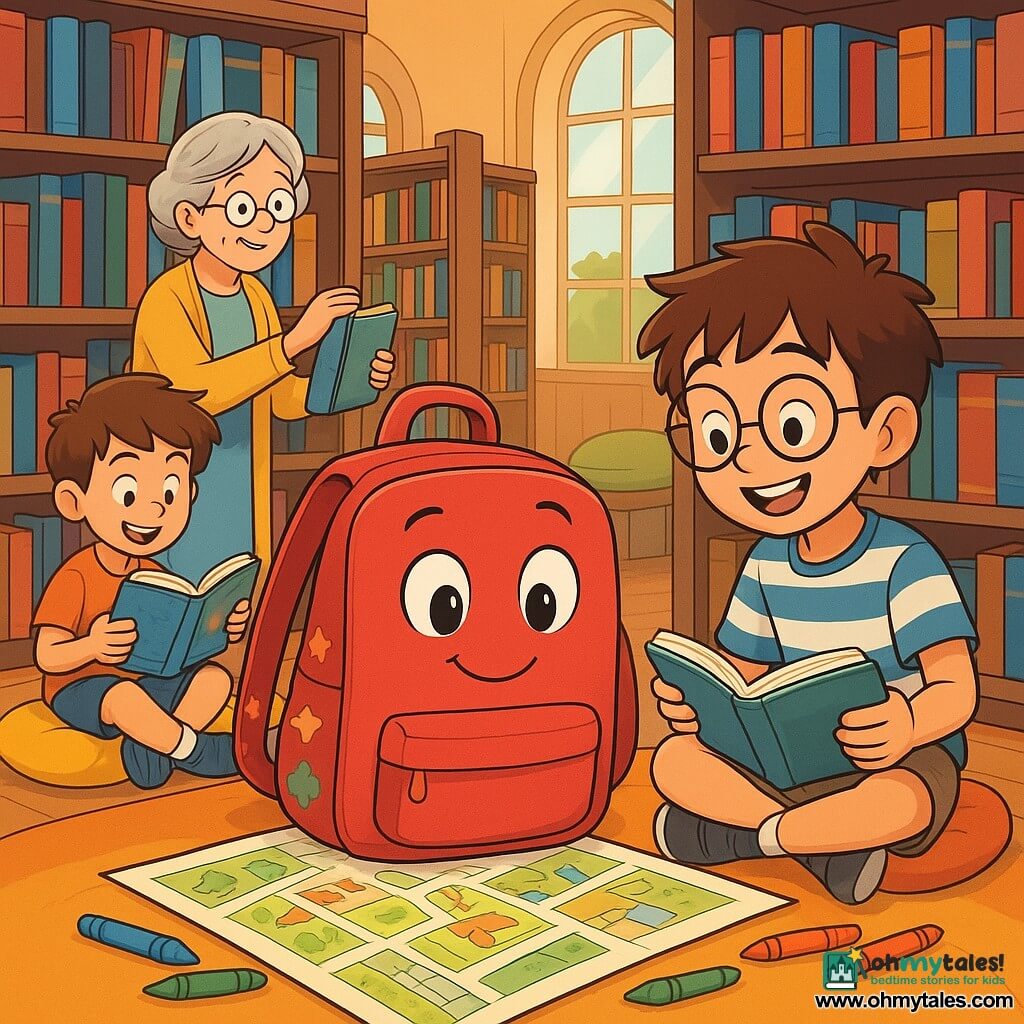
Chapter 1 — Morning Pockets
Poppy woke to the hush of dawn, zipper yawning softly. The strap that looped over the hook hummed with yesterday's footsteps: a school run, a trip to the corner shop, two small hands clutching a crumpled note. Poppy loved being full of little lives—pencils, a battered sandwich box, a folded comic, a leaf pressed thin as paper. But this morning Poppy felt something else, a gentle tug like curiosity.
— Today we'll do something useful, — whispered the coin pouch, jiggling with a single coin that had new scratches. Poppy wanted to map the neighborhood, to know where kindness waited for anyone who needed it. Not a map for treasure, but a map for help: places that offered warmth, food, books, or a friendly hand without asking much in return.
Poppy slid off the hook and hopped onto the wooden table. The spiral notebook inside was empty but eager. Poppy tucked a pen into the side pocket, smoothed the front pocket like a person straightening a coat, and set out to learn the names of the places that felt like belonging.
Chapter 2 — The Reading Room
The library smelled of dust and lemon polish. Mrs. Hargreaves, who had wrinkled eyes like folded paper, unlocked the door and beamed at Poppy.
— Come in, little traveller, — she said, waving a hand full of overdue stamps. Poppy peeked inside. There were shelves taller than trees in a park, chairs that hugged you, and a carpet marked with a faded compass. Children made forts of cushions and teenagers murmured over homework. On the notice board, bright paper read: "Free story time today — all welcome."
Poppy learned that the library offered more than books. Once a week they held a breakfast table where people could take leftover pastries or pour tea without paying. There was also a corner where anyone could leave a book for someone else. Poppy scribbled the address with careful letters and a small star: "Stories and breakfast. Warm hands. No questions."
A boy named Mateo, watching Poppy mark the page, asked, — Are you making a map? — Poppy nodded, zipper soft with pride. — Maybe we can add the chess club, — Mateo added. — It's free after school. People come with sandwiches and talk. — Poppy drew a tiny chess pawn.
Chapter 3 — Garden Between Walls
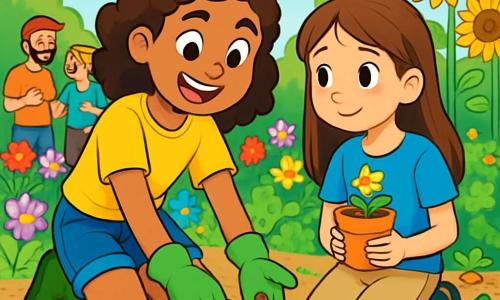
Behind a row of grey buildings, a strip of green surprised the city. It was a garden that smelled of tomatoes and sunshine, tucked between a bakery and a laundromat. Old Mr. Béla knelt by a patch of basil, his hands stained with soil like medals.
— We plant what we can share, — he said, as if sharing were the simplest fact in the world. Children dropped by to pull weeds and learn to plant seeds. Sometimes there were extra zucchinis to take home; sometimes there was just company and a bench for those who needed to sit slow and breathe.
Poppy felt the soil under a tiny fabric flap and remembered carrying a soggy sandwich once. The garden had a little board: "Take what you need. Leave what you can." That line fit perfectly in Poppy's map. Poppy drew a small tomato and wrote, "Garden: food, hands, rest."
A volunteer named Leila knelt to tie a ribbon on Poppy's strap— a small act of kindness that made the backpack's buckles tick with warmth. — People trust us here, — she said. — They come with stories. We share tools, seeds, sometimes a pot of soup. — Poppy drew a spoon.
Chapter 4 — The Pantry That Carries on Wheels
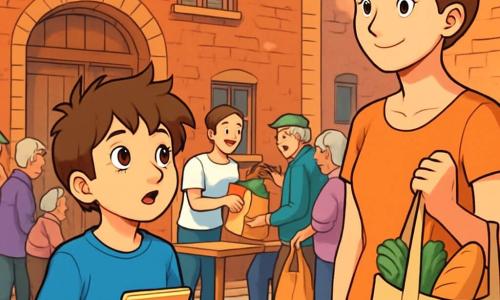
On Thursdays, the pantry rolled like a patient turtle through the neighborhood. It was a van wrapped in bright paint and stickers that read "No one alone" and "Take what you need." Poppy watched it park next to the bus stop, where a line unfolded like a quiet river.
Volunteers unloaded boxes of rice, cans, and fresh bread. They didn't ask for explanations. They handed out baskets with a steady kindness that felt like a warm blanket.
— We've got whole grain and cups for soup, — said Jun, who balanced a crate on his knees. — You can ask for a recipe card too. Many people like to cook together. — Poppy learned that some of the food came from markets that donated what wasn't sold, and some came from neighbors who cooked extra and left it on a table by the van.
A woman with a tired smile accepted a bag and whispered, — Thank you. My little one likes these crackers. — The words made Poppy's straps hum like a heartbeat.
Poppy added the van to the map with a scribble of wheels and a smile. Underneath, Poppy wrote: "Thursday—food, recipes, shared meals."
Chapter 5 — Swap Sundays and Warm Benches
Sundays in the park smelled of coffee and old newspapers. A group of people set up tables under the plane trees where clothes were folded like paper boats. A banner read, "Swap Sunday — Bring, Take, Respect." Children sorted colorful sweaters; someone repaired a torn sleeve with neat, quick stitches; a teenager traded a jacket for a warm scarf.
— We don't throw away, — said Asha, threading a needle with calm fingers. — We give items a second life and a second owner. It helps people and the planet. — People left a note to say thanks; others left nothing, and that was okay too.
Near the playground, a bench became a soup stop during winter. A radio hummed soft music, and someone ladled out bowls from a big pot. Nobody rushed. People shared spoons, stories, and sometimes a little extra bread.
Poppy watched a boy share his comic with a girl who had come without money for snacks. They both smiled, pockets suddenly fuller. Poppy wrote: "Swap Sunday—clothes, mending, dignity. Bench—soup, stories, company."
Chapter 6 — The Map That Gave Back
Poppy's notebook filled with addresses, little drawings, and notes in different handwriting. The map looked like a scrappy constellation. Mateo drew a scooter near the chess pawn; Leila added a sketch of a watering can; Mrs. Hargreaves pressed a stamp on the corner.
When Poppy showed the map at school, the teacher pinned it on the wall. — This is more than directions, — she said. — It's a guide to being a good neighbor. — The class planned a day to help: a park clean-up followed by baking bread for the pantry. They learned how to listen without prying and how to offer help that kept a person's head held high.
Poppy watched the neighborhood change in small ways. A sweater found a new owner. A little boy learned to plant seeds. A woman found recipes to stretch a meal into two. People began to leave notes on the map, tiny stories: "Borrowed a winter coat," "Sat on the bench when my father was sick," "Found a job lead at the library."
One evening, Poppy rested on the hook again, notebook warm against the table. The coin in the pouch had new scratches—evidence of subway rides and cups of tea shared with someone who needed a chat. Poppy felt full not with things but with purpose.
— You did well, — the pen said, proud and ink-smudged. — You helped people find help. — Poppy thought of all the hands that had touched the map, all the faces that had been gentled by a bowl of soup or a borrowed book.
The last page of the notebook stayed blank for a while. Poppy left it that way on purpose. It was an invitation.
Neighbors began to add their own little marks. Someone sketched a tiny bus, another wrote, "Free tutoring Thursdays." The map kept growing like a community that learned to feed itself with more than food— with attention, respect, and small acts of care.
At night, when the streetlights turned the pavement into coins of light, Poppy whispered into the silence, — We are not alone. — The zipper hummed, the pen slept, and the notebook dreamed of the next person who would need a warm place and the courage to ask.
And the neighborhood, stitched together by benches, gardens, libraries, and a van that rolled like a promise, kept being a place where people returned what they could: time, food, smiles. Poppy's map did its quiet work, not solving everything but guiding hands toward one another.
The moral was simple: when people share what they have and guard the dignity of those who come, neighborhoods become maps of possibility—small, steady routes to a kinder day.