Chapter 1: The School Project
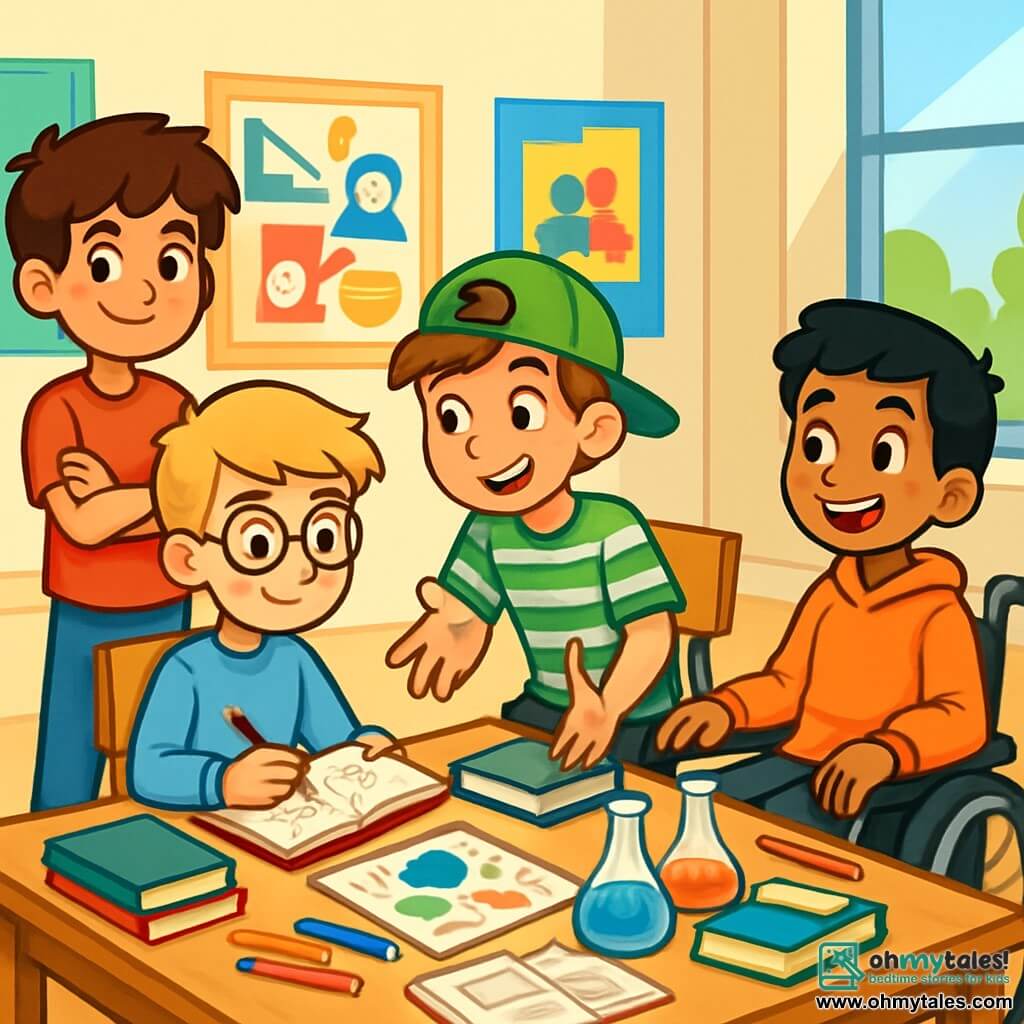
In the bustling town of Maplewood, where the streets were lined with vibrant autumn leaves, stood Maplewood Middle School, a place where young minds were shaped and great friendships were forged. Among the students was a group of boys, all nearly twelve years old, who shared an unbreakable bond. They were Liam, the curious and adventurous leader; Noah, the thoughtful and artistic soul; Ethan, who had a knack for science and was always inventing something new; and Alex, whose wheelchair never seemed to slow him down and whose laughter was infectious.
One crisp October morning, their homeroom teacher, Mrs. Thompson, announced a new project to the class. "This year, we're going to do something special," she said, her eyes twinkling with excitement. "We're going to explore a topic that's important to our community and the world at large—poverty. You'll work in groups to learn about its causes and effects, and more importantly, you'll think of ways to help."
Liam exchanged a glance with his friends, his mind already buzzing with ideas. "We should team up," he whispered to them, and they nodded in agreement. The project seemed daunting, but also filled with possibilities.
As the bell rang, signalling the end of class, the boys gathered in their usual spot under the sprawling oak tree in the schoolyard. "What do you guys think?" Liam asked, his voice eager.
"I think it's a great opportunity to learn something real," Noah said thoughtfully. "Poverty is a big issue, but maybe we can make a difference, even if it's just a small one."
Ethan nodded, his fingers absently tapping out a rhythm on the wheels of Alex's chair. "We could come up with an invention or something to help people," he suggested, his eyes lighting up at the thought.
Alex smiled, wheeling himself into the circle. "Count me in," he said. "I think we can do something really meaningful."
And so, with a shared sense of purpose, the boys set out to uncover the layers of poverty, determined to make their project not just a school assignment, but a catalyst for change.
Chapter 2: Discovering the Layers
The following week, the boys met at the town library, a large, welcoming building with rows of books that seemed to stretch endlessly. Mrs. Thompson had given each group a list of resources to help guide their research, and the boys were eager to dive in.
"Let's start with the basics," Liam suggested as they settled down at a wooden table piled high with books. "What exactly is poverty?"
Noah opened a book titled Understanding Poverty. "It says here that poverty is a condition where people lack the financial resources to meet basic needs, like food, shelter, and clothing."
"But it's not just about money," Ethan added, looking up from his own reading. "It's also about access to education, healthcare, and opportunities."
Alex nodded thoughtfully. "I read that poverty can happen for lots of reasons, like losing a job, natural disasters, or even health problems."
As they continued to read, their understanding deepened. They learned about different types of poverty—absolute and relative—and how it affects people in various ways. They discovered that poverty was not just a distant issue but something that touched their own community.
"Did you know that some kids in our school might not have enough to eat at home?" Noah said quietly, his voice tinged with sadness.
Liam nodded. "It makes you think about how lucky we are," he said. "But it also makes me want to do something to help."
The boys left the library that day with their minds full of newfound knowledge and their hearts set on finding a way to make a difference.
Chapter 3: Meeting Mr. Harrison
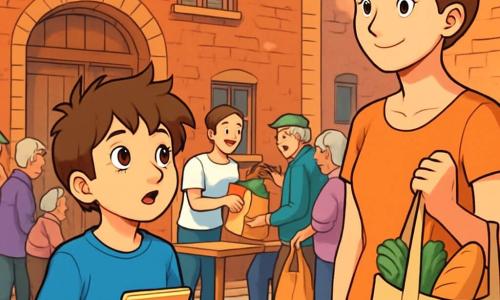
Determined to learn more, the boys decided to visit the Maplewood Community Center, where they heard that a food drive was taking place. The center was a bustling hub of activity, with volunteers sorting donations and families collecting food parcels.
At the entrance, they met Mr. Harrison, the community center director. He was a kind, elderly man with a gentle smile and a wealth of stories to share.
"Welcome, boys!" he greeted them warmly. "What brings you to our little corner of the world?"
Liam stepped forward, his voice steady. "We're working on a school project about poverty and wanted to see how we could help."
Mr. Harrison's eyes twinkled with approval. "That's wonderful to hear. There's always something to be done here. Why don't I show you around?"
As they walked through the center, Mr. Harrison explained the various services offered, from meal programs to job training workshops. The boys listened intently, their eyes wide with interest.
"Many families rely on places like this," Mr. Harrison said. "It's not just about providing food, but also hope and a sense of community."
Ethan glanced at his friends, a new idea forming in his mind. "Do you think we could help with one of the projects here?" he asked.
Mr. Harrison nodded. "Absolutely. We could use some help organizing the food drive, and maybe you could come up with some creative ways to get more people involved."
The boys left the community center that day with a renewed sense of purpose. They realized that poverty was not just a topic to study, but a reality that people around them faced every day. And they were more determined than ever to make a difference.
Chapter 4: Brainstorming Solutions
Back at school, the boys gathered in the art room, where Noah had spread out large sheets of paper for brainstorming. The room was filled with the scent of paint and the quiet hum of creativity.
"Okay, let's think of ways we can help," Liam said, grabbing a marker and writing "Solutions" at the top of the paper.
"We could organize a food drive at school," Noah suggested, sketching a can of soup on the paper.
Ethan nodded, his mind racing with possibilities. "And maybe we could make posters to raise awareness. If people know more about poverty, they might want to help too."
Alex tapped his chin thoughtfully. "What about a fundraiser? We could do a charity run or a bake sale to raise money for the community center."
The boys discussed each idea, their excitement growing as they realized the potential impact they could have. They decided to combine their ideas into one big event—a "Day of Giving," where students and teachers could donate food, participate in activities, and learn more about poverty.
As they planned, they thought about how to engage their classmates and make the event both educational and fun. They wanted everyone to understand that poverty was not just a statistic but a challenge that real people faced.
With their plan in place, the boys felt a sense of accomplishment. They knew there was still much to do, but they were ready for the challenge.
Chapter 5: Spreading the Word
The boys spent the next few weeks spreading the word about their "Day of Giving." They made colorful posters that they hung around the school, each one featuring facts about poverty and how students could help.
Liam, with his natural charisma, spoke at the school assembly, sharing their project and inviting everyone to get involved. "We've learned a lot about poverty," he said, his voice clear and confident. "But we've also learned that we can make a difference, even if it's just a small one. Together, we can help our community."
The response was overwhelming. Students and teachers alike were eager to participate, and the boys found themselves at the center of a school-wide effort to make the event a success.
On the day of the event, the school gymnasium was transformed into a bustling hub of activity. Tables were piled high with donated food, and stations were set up for various activities. There was a bake sale, a charity run, and even a booth where students could learn more about poverty and how to help.
As the day unfolded, the boys watched with pride as their classmates came together to support the cause. They saw the impact of their efforts and felt the warmth of the community's shared purpose.
Chapter 6: A New Perspective
As the sun began to set on the "Day of Giving," the boys gathered outside, tired but happy. They had worked hard, but the smiles and gratitude they received made it all worthwhile.
Mrs. Thompson joined them, her eyes filled with pride. "You boys have done something truly amazing," she said. "You've shown that even young people can make a big difference."
Liam smiled, looking at his friends. "We couldn't have done it without each other," he said. "And without everyone at school."
Noah nodded, his heart full of gratitude. "I think we've all learned something important," he said. "That poverty is a challenge we can face together."
Ethan grinned, his mind already buzzing with ideas for future projects. "And that we can always find creative ways to help."
Alex wheeled himself closer, his eyes shining with determination. "This is just the beginning," he said. "There's so much more we can do."
As they stood there, watching the last rays of sunlight dip below the horizon, the boys felt a deep sense of fulfillment. They had not only completed their school project, but they had also discovered the power of empathy and action.
Together, they had learned that no matter how small their efforts might seem, they could create ripples of change that spread far and wide. And they knew that with a little creativity and a lot of heart, they could continue to make a difference in the world around them.
Chapter 7: Continuing the Journey
In the days that followed, the boys continued to reflect on their project and the impact it had on their school and community. They received letters of thanks from families who benefited from the food drive, and Mr. Harrison invited them to visit the community center again to see the ongoing work.
Their success inspired them to keep going. They formed a club at school dedicated to helping those in need, and they encouraged their classmates to join. Together, they brainstormed new projects and ideas, always looking for ways to make a positive impact.
As they worked, they realized that the lessons they had learned extended beyond poverty. They had discovered the importance of kindness, empathy, and community. They understood that everyone had the power to make a difference, no matter their age or circumstances.
And so, with their hearts full of hope and their minds brimming with ideas, the boys continued their journey of learning and helping, knowing that they were part of something much bigger than themselves.
In the end, they had not only completed a school project but had also embarked on a lifelong mission to make the world a better place, one small step at a time.