Chapter 1: The City That Whispers
Maya walked to school along streets she knew by heart. Some windows were boarded. Some trees had new scars from hard weather. Yet small balconies had bright plants. A radio in a shop hummed a song she liked. People moved carefully. Voices were softer now, like they were learning to protect words.
At school, her teacher, Mr. Karim, announced a project. "We will study conflict," he said. "Not to frighten you, but to learn how people live through hard times. You will talk to others and bring back what you hear."
Maya's chest felt tight and light at the same time. She had seen soldiers on patrol and heard noise in the night. She also had friends who shared bread and jokes. She was nine, and she wanted to understand.
That evening, Maya sat at the kitchen table with her notebook. Her mother arranged lentils in a pot while humming. "Who will you talk to?" her mother asked.
"Mrs. Laila, Mr. Omar, and maybe the boy next door," Maya said. "I want to know how they felt, how they kept safe."
Her mother smiled. "Listen more than you speak. People will tell you things that help you learn."
Maya wrote the first line in her notebook: Words are bridges.
Chapter 2: Listening to Mrs. Laila
Mrs. Laila lived on the third floor. Her hair was grey like a soft cloud. Her apartment smelled of lemon and clean cotton. Maya knocked and entered with Mr. Karim's permission. She sat on a chair that creaked.
Mrs. Laila made tea and set two small biscuits on a plate. "What would you like to know, little one?" she asked.
Maya opened her notebook. "How did you keep going when things were loud?"
Mrs. Laila put her hands around the cup. "I wrote names," she said simply. "Names of people I missed. Names of food I needed to buy. Names of songs. Writing them made my thoughts tidy. It gave me a small plan."
"Did you feel scared?" Maya asked.
"Sometimes," Mrs. Laila admitted. "But fear is like a shadow. If you name it, it becomes smaller. I also had neighbors who knocked at my door. We shared sugar. We shared stories. That helped a lot."
Maya wrote: Naming things helps. Sharing helps.
Before Maya left, Mrs. Laila pressed a small cloth into her hand. "Tie this in your hair when you feel nervous," she said. "Colors can remind you of good things."
Maya thanked her and walked home with a bright cloth in her pocket and the idea that simple habits could make a hard day softer.
Chapter 3: Mr. Omar's Workshop
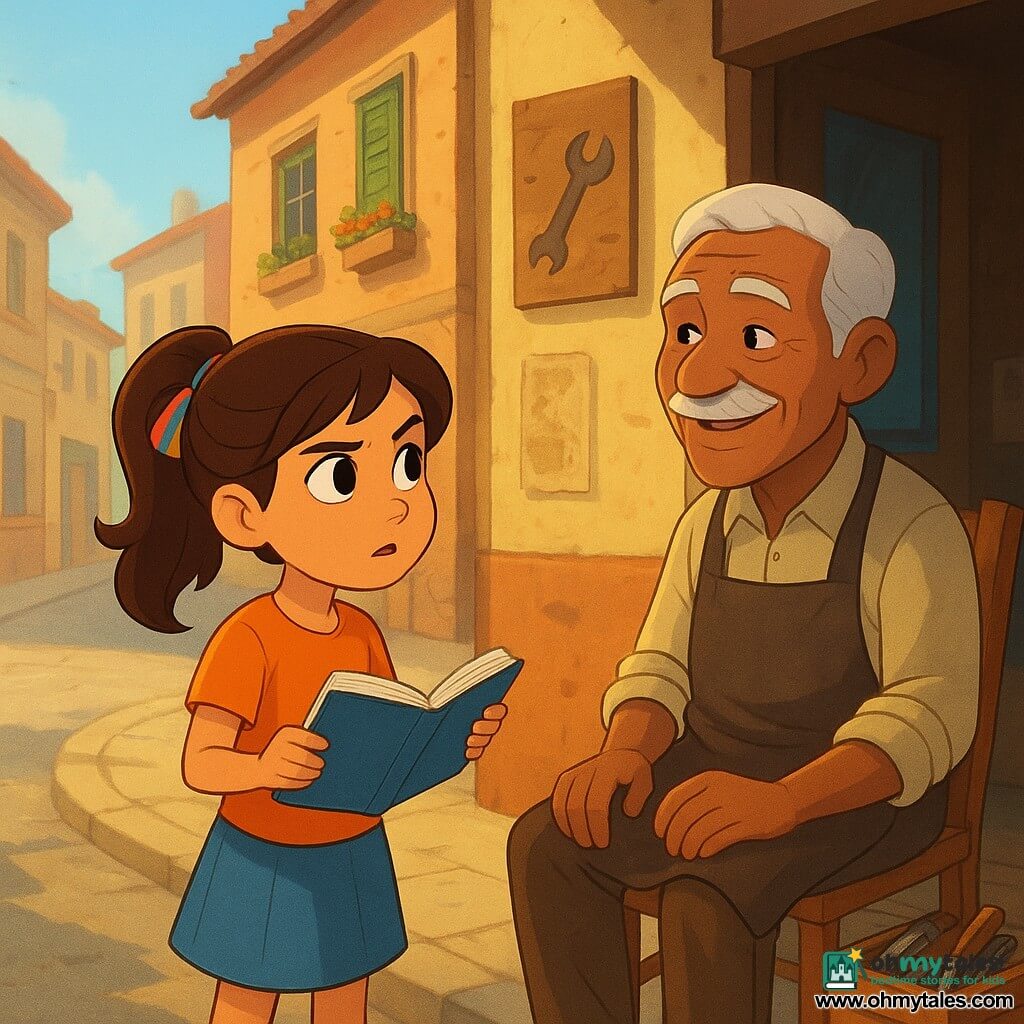
Mr. Omar ran a small repair shop near the market. He fixed radios and chairs and, sometimes, hearts with his patient talk. Maya found him under the awning, hands stained with oil.
"Hello, Maya," he said, wiping his hands on a rag. "What brings you here?"
"I'm working on a school project about how people live through conflict," Maya explained.
Mr. Omar leaned back. "I learned to make small plans," he said. "Every morning, I choose one repair to finish. When the world is loud, finishing one thing feels like victory."
He showed Maya a broken clock he was mending. "This clock lost its face in a storm," he said. "Now I replace the glass and set the hands. It ticks again. People come in and smile because time still moves."
"How do you help neighbors?" Maya asked.
"I trade services," Mr. Omar answered. "I fix a chair for someone and they cook a meal for my family. We keep a list of who can do what. That way we all survive and feel useful."
Maya wrote: One small finished job can help many.
As she left, Mr. Omar handed her a tiny screw in a piece of paper. "Keep it as a reminder," he said. "Even small things are worth fixing."
Chapter 4: The Boy Next Door
Next door lived Kamal, a boy in Maya's class. He had lost a shoe once and still liked to make paper boats. He met Maya in the courtyard carrying a notebook.
"You look serious," he said.
"I'm collecting stories," Maya replied. "Can I ask you a question?"
"Sure. Ask fast. I have homework."
"How do you make friends when people are tired or angry?"
Kamal thought for a moment. "My dad says to share one small thing every day. Today I gave my last orange to my sister. Yesterday I shared my pencil. When someone shares, it tells them they are not alone. It can start a smile."
"Do you talk about the hard things at home?" Maya asked.
"Sometimes," Kamal said. "We don't use big words. We say, 'I miss playing in the park.' Or 'I'm hungry for a joke.' Our words are little steps."
They sat on a low wall and folded paper boats. "Want to race them?" Kamal asked. Maya nodded. They made a tiny stream with their hands and set boats to travel. The boats bumped and turned, but they floated.
Maya wrote: Small shares make big changes.
Chapter 5: A School Fair and New Bridges
Mr. Karim organized a small fair. Each class put up a board with drawings, lists, and interviews. Maya's board was simple. It had names, small plans, and paper boats taped to the corners. She also tied Mrs. Laila's cloth on the corner as a colorful bookmark.
Parents walked slowly past each board. Some smiled, some wiped their eyes. Maya stood by her work and felt her nerves like butterflies. A woman stopped and read her notes. "Your words are quiet and wise," she said.
During the fair, a small argument started over who would use the community hall for a meeting. Voices rose, then slowed. Maya remembered what she had learned. She walked over, still small but steady.
"Can we share the hall?" she asked, looking at everyone. "Maybe one group meets in the morning and the other in the afternoon. We can write a list of who uses it and when."
An older man furrowed his brow. "And what if one group is late?"
"Then the other group leaves a note," Maya said. "A short note. Like the ones people said helped them feel safe."
The room fell quiet. Mr. Karim clapped softly. "Good idea," he said. People nodded. A plan was made. It was simple and fair. It was a bridge.
After the fair, Maya walked home under a sky that smelled faintly of rain. Her notebook felt thick with small, powerful ideas. She had learned about naming fear, finishing one small task, trading skills, and sharing daily kindnesses. She had tried listening and offering a quiet solution.
At home, her mother leaned on the doorframe. "What did you learn?" she asked.
"That words can build small bridges," Maya said. "And small bridges can help people meet in the middle."
Her mother hugged her. "You build bridges with your kindness," she said.
Maya tied Mrs. Laila's cloth in her hair and sat by the window. She watched neighbors sharing a bench. Two children passed a loaf of bread between them. A man set a chair out to dry in the sun. A woman read a poem aloud and others listened, heads tilted like flowers.
Maya opened her notebook one last time. She wrote a final line: When people listen, small actions make places feel like home.
She turned off the lamp and slept with the soft sound of the city around her. The sounds were not all gone. But they had changed. They felt more like people talking and less like fear. In the morning, Maya would go back to school to tell others what she had found. She would bring her notebook, her cloth, and her boats. She would keep listening.
The next day, a neighbor knocked on her door and asked if she could teach a few children how to make paper boats. Maya smiled and spread out paper on the table. She spoke slowly and kindly. "Fold here," she said, "then here. Make sure the corners meet."
The children followed her hands. When the boats floated, they clapped. A small bridge had been made: a folded paper, a shared smile, and words that kept people together.