Morning Mist
Tom woke before the roosters. A cool fog wrapped the little village like a soft blanket. He lived in a small station by the green fields, where cows nodded sleepily and the road curled like a ribbon. Tom was a country firefighter—young, steady, and careful. He loved tractors, muddy boots, and the quiet hum of the village waking up.
This morning, the bell in the station chimed once, twice—just a practice ring. Tom smiled, because even practice had a place in his heart. He stretched and checked his kit: helmet shining, gloves folded, boots lined neatly on the shelf. The sun pushed a thin gold finger through the mist. Tom hummed a tune and thought of small brave things—helping a kitten down from a tree or guiding a lost walker back to the lane.
He practiced breathing slowly, the way his captain had taught him. Deep in, slow out. It made his chest feel calm and his hands steady. Confidence grew like a quiet plant, watering itself with small, steady acts. Tom believed that being calm helped others feel calm too.
The Call
The bell sounded for real—a clear, urgent clang that bounced across the fields. Tom's heart did a quick, friendly flip. He grabbed the radio; the voice on the other end was quick but kind. There was smoke near Old Maple Road, behind the bakery. A hay bale had caught in a hidden ember. No one was hurt, but the smoke could scare animals and people.
Tom put on his jacket and helmet, then paused. He remembered the fastest way to suit up from training: the ZIP-STEP method, a small rhythm the team used to be quick and safe. Zip up the jacket, tuck the strap, step into the boots—fast but careful. He had practiced it so much that his fingers moved like birds. In the kitchen of the station he slid his feet into heavy boots, one then the other, and felt the snug fit around his ankles. He stepped into his trousers, tugged the straps tight, reached for the jacket, and zipped it up in a single smooth pull.
His gloves came on like two warm mittens, helmet locked with a soft click, and the visor came down with a gentle whisper. In less than thirty seconds Tom was ready. The radio crackled. "Good speed, Tom," said the captain. Tom grinned under his visor. His calm, practiced movements had turned into a small proud moment. Confidence, he thought, was partly practice and partly a steady heart.
Old Maple Road
The engine rumbled across the sleepy lane, tires singing on wet stones. At the turn, Mrs. Finch stood with her hands folded, a patchwork scarf around her neck. Her eyes were worried, but when she saw Tom wave she felt less frightened. The smell of smoke curled like a question in the air.
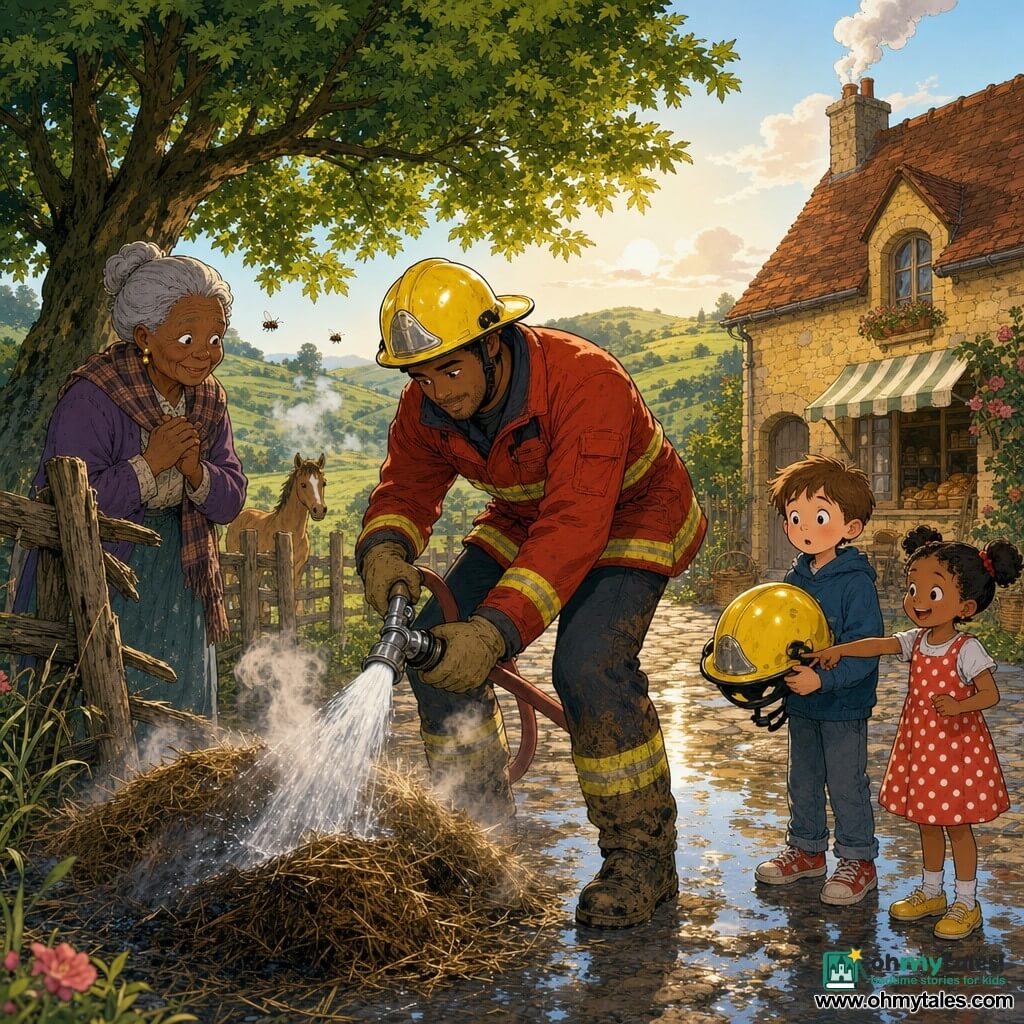
They found the hay bale smoldering near a broken fence, not far from the bakery's warm ovens. Tom saw the thin blue smoke licking the sky. Around it, bees buzzed slowly and a young foal nosed the air, puzzled. Tom took a breath and moved carefully. He kept his steps slow to not panic the animals.
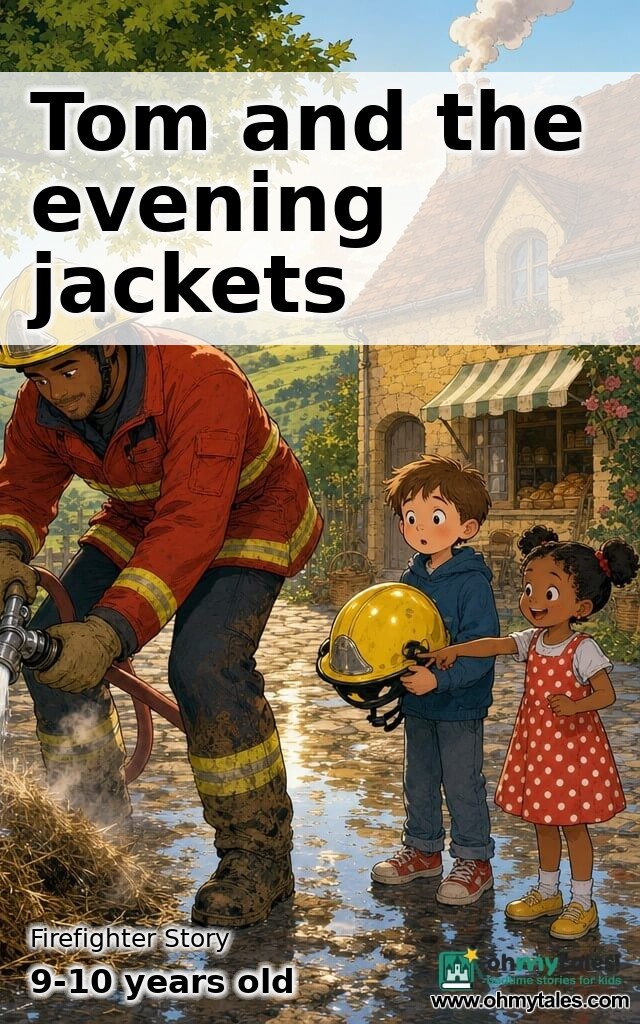
Tom worked with soft, firm motions. He used a long rake to spread the hay, making sure tiny embers couldn't hide. Water hissed in a gentle stream from the hose, like a small river singing down stones. The hay steamed instead of roaring; smoke turned to wisps and then thinned and left.
While they worked, Tom explained to a few nearby children what he was doing in a voice like warm cocoa. "We make sure every spark is out," he said. "We cover it so it can't jump to other grasses, and we always keep people and animals away from the hot bits." The children watched his hands, which moved like someone telling a story in action. Learning, they found, could be kind and a little exciting.
The Lesson in the Jacket
After the hay was safe, Tom sat on the fence for a moment and took off his gloves. He showed the children the darkened leather tips where soot had softened the shine. "This jacket keeps me safe," he said. "It's made of layers that stop heat. It's heavy when it's wet, light when it's dry, and it always reminds me to be careful."
One curious child asked how he could get ready so quickly. Tom laughed, the sound like leaves in a gentle wind, and told them the ZIP-STEP rhyme. He said it like a small song:
Zip it quick, steady and sure,
Step in boots that grip the floor,
Tuck the strap, check the clip,
Gloves on fast, do not slip.
He demonstrated slowly at first, then faster, and the kids clapped at his speedy, careful dance. "It's not about being fastest," Tom explained softly. "It's about being ready and safe. Being quick comes from practice and calm hands." He showed how the jacket's zipper felt strong and how the straps held in place. He let them try on a bright, spare helmet that came down over their ears like a friendly hug. Their giggles were like little bells.
Tom also taught them to call for help if they saw smoke, to stay back and tell an adult, and never to hide a problem. He spoke gently about courage—not just rushing in, but thinking, acting, and asking for help. The children listened with wide eyes, learning that bravery could be warm and gentle.
Evening Jackets
With the sun lowering, the team finished tidying the equipment. They rinsed the hoses and hung them beside the station like sleeping ropes. Tom carried his jacket inside and shook off a few crumbs of hay. He hung it on the peg, next to the others, shoulder to shoulder like old friends taking a rest.
The jackets looked soft in the fading light, colors darkened by the day but proud. The children waved goodbye, walking home with pockets full of small lessons. Mrs. Finch offered Tom a warm bun from the bakery, and he accepted with a grateful smile.
In the quiet of the station, Tom looked at the row of jackets hanging quietly. They seemed to take a rest—no sirens, no rushing, just a gentle pause. Their sleeves hung like arms folded for a nap. Tom felt proud and calm; the practice of the day had helped others and kept the animals safe. He knew each quick movement and each careful check mattered. Confidence wasn't loud, he realized—it was steady, like the hum of the village when night fell.
As stars blinked awake over the fields, the jackets seemed to breathe with the soft, contented sigh of a day well done. Tom placed his helmet on its shelf, turned the light low, and listened to the quiet. He thought of small brave things again—how a steady hand could make a difference, how practice could turn into peace.
Outside, crickets began their gentle orchestra. The jackets stayed on their pegs, taking a deserved pause, and Tom stepped outside for one last look at the sleeping village. He felt ready for whatever might come tomorrow, because he trusted his hands and his heart. Then he went in, tucked himself into a simple bed, and drifted off, knowing that for now, everything was safe and calm.