The Quiet Siren
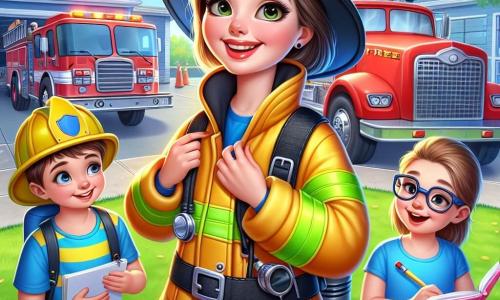
Emma liked the sound of the fire station before she even knew why. It was a soft, distant hum—like a giant sleeping animal breathing through a red throat. She was a volunteer firefighter, and during the day she wore plain clothes, carried a thermos of tea, and fixed a wobbly fence for Mrs. Patel. At night, she slipped back into the station, where the big truck slept under bright lights and the gear waited like patient guardians.
One evening, as the sun folded its orange blanket behind the rooftops, a small voice tugged at the station door. Tom, a neighbor's nine-year-old, had a question written all over his face. He had bushy hair, knees full of scrapes, and that important look children have when they are about to discover something the grown-ups know.
"Are you a real firefighter?" he asked, eyes wide.
Emma smiled and nodded. "A volunteer one," she said. "That means I help when I'm needed and live nearby. I get called to the station, put on my suit, and join the team. Want to know more?"
Tom nodded so hard his hair nearly did a little dance.
Emma pulled a wooden stool close to the truck and sat so he could see her face. She spoke quietly, like a story before sleep, so he would feel safe and interested at the same time. "A firefighter's job is many things," she began. "We keep people safe, help animals, teach about fire rules, and sometimes climb ladders to reach a stranded cat. Mostly, we work together."
Tom's first question was simple. "Do you wear a cape?"
Emma laughed softly. "No capes. That would be very dangerous. We wear a helmet and strong clothes that hatch like armor. They protect us from heat and falling things. We call it turnout gear."
Tom's face lit up. "Turnout gear! Like a knight!"
"Exactly," Emma said, tapping the helmet. "But we also have important rules. We never go into a burning building alone. We use breathing masks, and we check doors for heat before we open them. Safety rules keep us and the people we help alive."
The Call and the Calm
The station bell gave a polite ding in the distance. It was not the loud wail of an emergency—just the call that a small job needed attention. Emma stood, brushing a thread of imaginary dust from her trousers. "Want to see how we get ready?" she asked.
Tom's feet left the floor like two small rockets. They padded through the station, past bicycles with helmets hanging, past a table with a puzzle partly finished, and finally to the truck. It was enormous and clean, shining like a scarlet ship. Tools lived in neat drawers like sleeping mice.
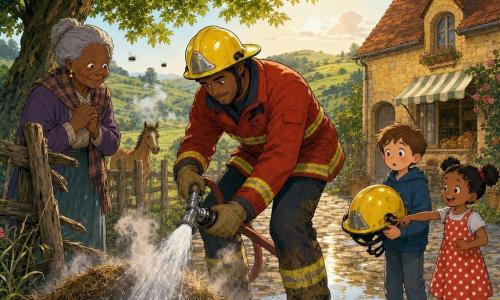
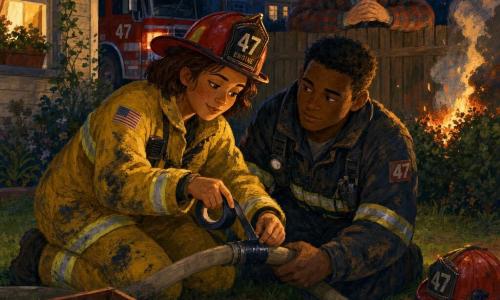
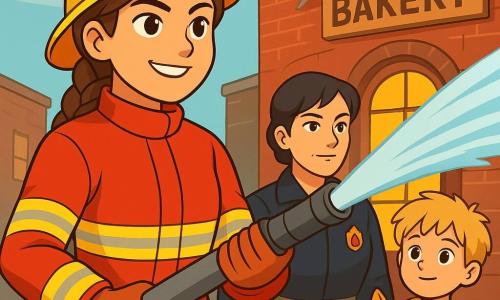
"First," Emma said, "we check our equipment. Each hose, each tool, each mask." She opened a panel and pulled out a hose, rolling it with care. "Hoses carry water to put out fires. We test them to make sure there aren't sneaky holes."
Tom rolled a hose with her and said, "It's like rolling a sleeping snake."
"And then we check the pump," Emma added. "It makes water strong enough to splash up high windows. We also test radios so we can talk to the team. Clear talk helps everyone stay safe."
Tom held one radio gingerly. "Can I say 'over'?" he whispered.
"Over," Emma echoed, smiling. "In real calls, we keep our words short and clear. 'Are you okay?' 'Where is the fire?' 'I need help.' That way, nothing gets lost in the hurry."
When the station received the small call—someone had left a cooking pan on the stove and smoke filled the kitchen—Emma and Tom rode along. Tom sat carefully, hands tucked, and watched as the city slipped by. He felt important, as if he wore invisible turnout gear himself.
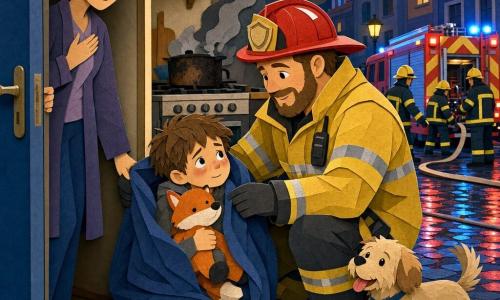
At the house, Emma explained each step. "We put a mask on the person who is coughing so they can breathe clean air," she said. "We open windows after the smoke clears but only when it's safe. If a fire is bigger, we call for more help." She pointed to the family dog, who trembled but wagged. "We always check if pets are safe too."
Tom's questions came faster now. "How do you know where to go? How do you stop the fire from growing?"
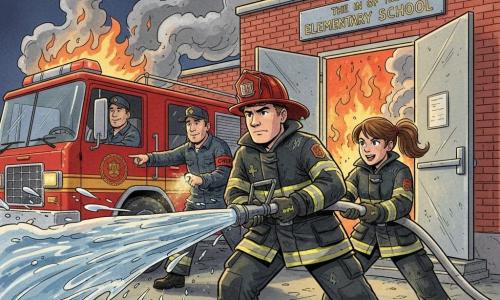
"We learn the streets and the buildings," Emma answered. "We practice, practice, practice. To stop a fire, we remove what it needs—fuel, heat, or air. If we cover a small flame or put water on hot spots, it can go out. But if a fire is big, we use ladders, big water jets, and teamwork. Teamwork is the strongest thing we have."
Lessons in the Soft Night
That night, on the drive back, the siren was soft, like a bird in the breeze. Tom felt a tiny ache of admiration for Emma. She did not roar like a movie hero; she was quiet and steady, and her calm made the world calmer too.
At the station, Emma showed Tom the helmets again, then the breathing masks. "These are heavy," she warned, "but they let us breathe in smoky places. Some people are scared of the masks at first because they hide faces, but we always say our name and who we are so people know we're friends. If you ever see a firefighter in a mask, it's okay—go with a grown-up and let us help."
Tom asked about alarms. "What if the alarms sound at night? Won't people be scared?"
"They might be," Emma said. "Alarms are loud by design. They wake us up and remind everyone to act quickly. But alarms also save lives. If a smoke alarm ever goes off in your home, take it seriously. Get outside fast and call for help. Don't hide; don't try to fight big fires. Leave that to the team."
She told him a short story about a smoke alarm that had once woken a sleeping family and how everyone got out because the sound was loud enough to break a dream. Tom imagined sound as a magic bell that could push through sleep and danger.
Before bedtime, they walked around the truck. Emma explained about the hoses stored on reels like belts, the ladder that folded like a giant tongue, and the little compartments with shiny tools. "Always respect this equipment," she said. "They work because people took care of them."
Tom listened, then added seriously, "And never play with matches."
Emma's nod was gentle but firm. "Never. Matches and lighters are not toys. If you find them, tell an adult. If children play with them, they can start fires that grow very fast. We teach that with stories and practice, so everyone remembers."
The Little Rescue and the Big Heart
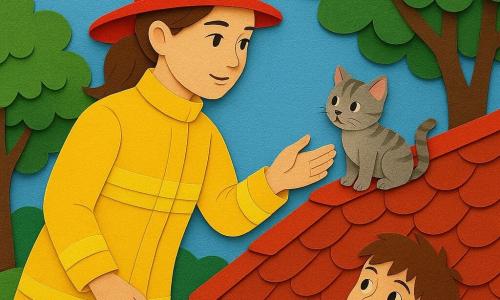
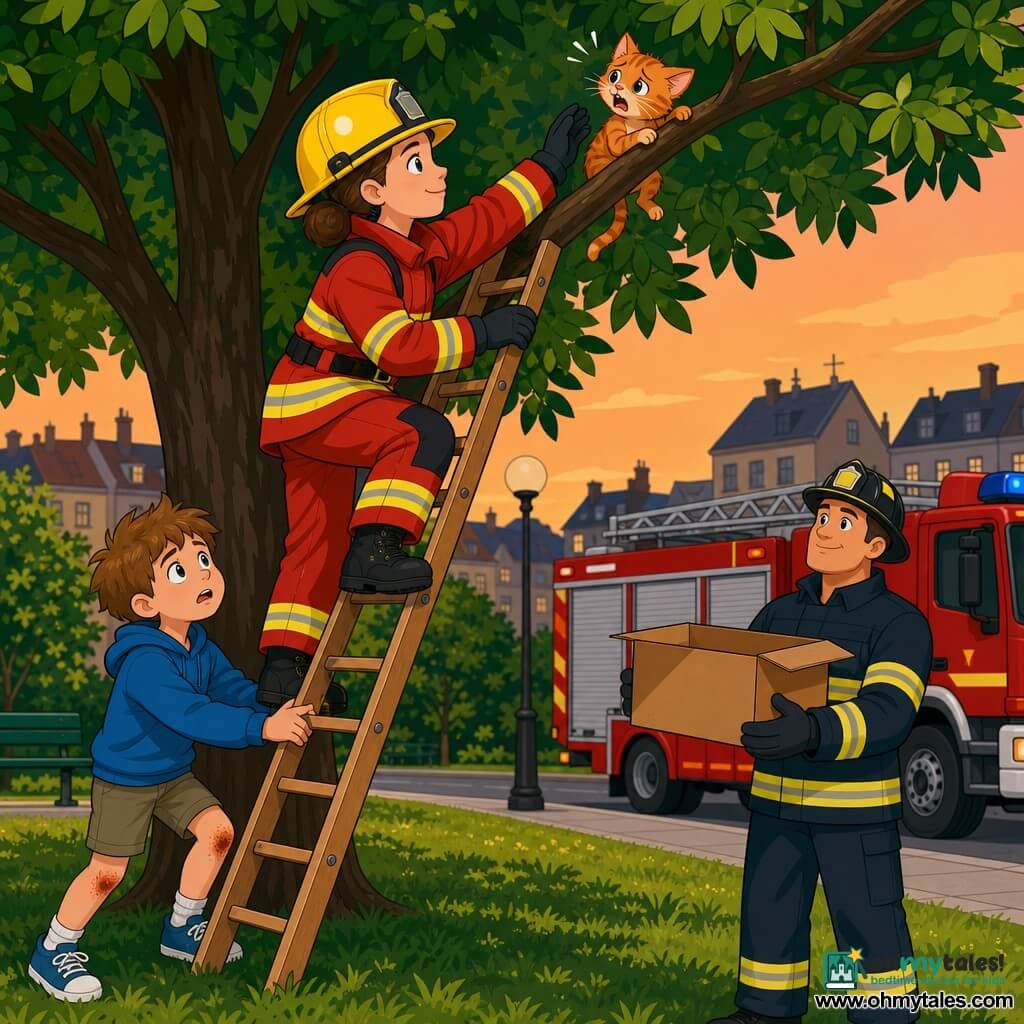
A few nights later, a real call woke Emma. A kitten was stuck on a high branch in the park. The team laughed softly but moved quickly—kindness sometimes sounds like a hurry too. Emma and Tom took a small ladder and a box to carry the kitten gently.
At the park, the kitten mewed like a tin whistle. Tom worried it would fall. Emma put one hand on the ladder and one on Tom's shoulder. "We make a plan," she said. "Who will hold the ladder? Where will the kitten go once it's safe? Which way will the wind blow?" They rehearsed the steps quietly, like actors in a play, and then Emma climbed up, careful and calm. The kitten, trusting a gentle voice, hopped into the box and into safety.
Tom felt warm inside, like he'd had hot chocolate in his bones. "That's why you do it," he said. "Because you care."
Emma smiled as she reached the ground. "We do it because it matters. Sometimes it's people, sometimes pets, sometimes trees with nests. The job is not only about big flames. It's about helping, and sometimes the smallest help is the bravest."
Goodnight, Big Red Friend
Back at the station, the lamps were dim, and the truck glowed like a friendly moon. Emma and Tom made a small cup of cocoa—Tom with marshmallows pretending they were puffy clouds—then sat near the truck. Tom's eyes were heavy with sleep now, full of new stories.
"Do you ever get scared?" he asked, the question that lived in the hush between heartbeats.
"Sometimes," Emma admitted. "Being a firefighter can make your heart pound. But courage isn't the absence of fear—it's doing what's right even when you're scared. And we never do it alone. We have our team, our training, and rules that keep us steady."
Tom yawned, a big, honest yawn. He snuggled deeper into his blanket of thoughts about helmets and hoses and kitten rescues. Emma tidied the gear and checked the truck's lights one more time. She patted the truck's side like a sleeping horse. "Goodnight," she whispered to the engine, like a promise. "See you tomorrow."
Tom mumbled back through the edge of sleep, "See you tomorrow," and the truck seemed to hum in answer—quiet, proud, and ready for the next day.
Emma turned off the last lamp and walked out to the small yard. She looked at the sky, at the tiny lights like distant campfires, and felt the soft comfort of being part of something that kept others safe. Then she looked at the truck again and whispered, so only the night and the truck could hear, "See you tomorrow."
Tom dreamed of helmets that were also crowns, hoses that became rivers for tiny paper boats, and a gentle firefighter who taught him how to be brave and careful. The station's bell slept, the tools breathed in their neat places, and the city slept a little safer knowing a volunteer with a warm smile watched over it, always ready, always kind.