Chapter 1: A Sunlit Alarm
The red doors of Station 7 shone in the morning light like two giant berries on the sidewalk. Firefighter Elena laced her boots with careful fingers, the way a baker ties an apron: steady, neat, ready. She checked the truck's hoses and the helmets hanging like small moons on the wall. Her crew moved with quiet purpose — one checked the radio, another polished the brass bell that still rang on special days.
Elena loved the simple routines. They taught her patience and the kind of calm that helps when sirens wail. She showed the children who sometimes visited how the turnout gear folded just so; she let them hold a miniature hose to feel its surprising weight. "Water can be gentle and powerful," she told them, smiling. It was a small lesson about using strength kindly.
Today, the crew was ready for anything, but Station 7 had time to brew strong coffee and trade small jokes. Elena packed a lunch and a checklist into her bag. She taught her team to check everything twice — fuel, lights, first-aid supplies — because heroes are careful people. When the radio crackled awake, everyone moved as one, not in a rush but with purpose: a kitten stuck on a tall roof, mews that reached the clouds.
Chapter 2: The Roof and the Kitten
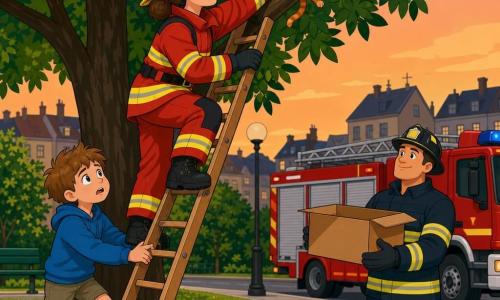
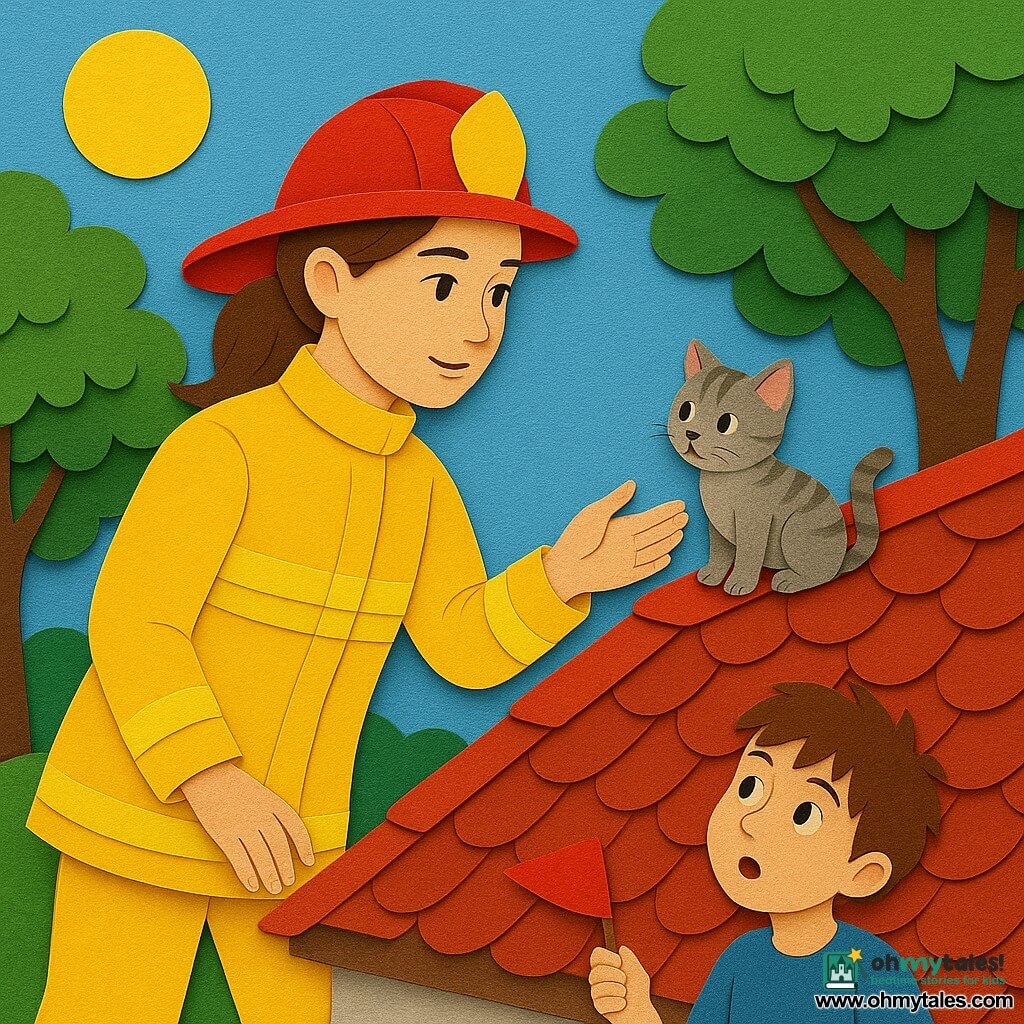
The crew arrived at Mrs. Park's house, where the roof looked like a tiny island in a sea of trees. A small crowd watched as Elena climbed the ladder. Her helmet was steady, her hands soft and sure on the rungs. The kitten, a puffball with one white paw, blinked like a surprised star.
Elena spoke in a voice low and gentle, the sort of voice that says everything will be all right. "Hello, little one," she said. The kitten didn't move at first. Firefighters learn to be patient with frightened things — people and animals alike. Slowly, Elena extended her glove and scooped the kitten into a crook of warmth. The rescue was small, but it taught a big idea: firefighters help because they care.
Back on the ground, a little boy looked up with wide eyes. "Are all firefighters strong?" he asked. Elena laughed softly. "We train our muscles, but we use our kindness even more," she replied. The crew handed the kitten to Mrs. Park, who thanked them with a teary smile. As they packed up, Elena reminded the crowd about safety — never climb an unsafe ladder alone, always tell an adult — and the neighbors walked away with a story to share and a lesson remembered.
Chapter 3: A Visit to Pine Street School
In the afternoon, Elena led a visit to Pine Street School. The classrooms smelled like crayons and quiet busy hands. Children sat on the floor, eyes bright like flashlights. Elena showed them the breathing masks, the yellow suits, and explained why each tool mattered. She taught them what a smoke alarm sounds like and what the escape plan looks like — two ways out, a meeting place, calm steps. "Practice makes it easier when you're brave," she said.
A small skit helped the lesson stick. A volunteer pretended to crawl low beneath imaginary smoke while others followed a drawn map to the front playground. Laughter mixed with focused silence as the class practiced. Elena answered questions, some practical — "How heavy is the hose?" — and some curious — "Are firefighters ever scared?" She nodded honestly. "Yes," she said. "Being brave doesn't mean not feeling fear. It means moving forward even with it."
The children left with stickers and a sense of confidence. Parents later told Elena that their sons and daughters had made fun escape plans at home that evening. Teaching safety had a ripple effect; small acts of learning in a schoolroom could protect a family later on.
Chapter 4: The Kitchen Fire and the Red Doors
Night came and the red doors of Station 7 glowed like lanterns. Elena read the last lines of a book and tucked it away because the radio cracked again — a kitchen fire at a small apartment building. This call felt different; the building had many rooms and many people to help. The crew moved quickly, packed with training and a quiet courage that had been practiced like a song.
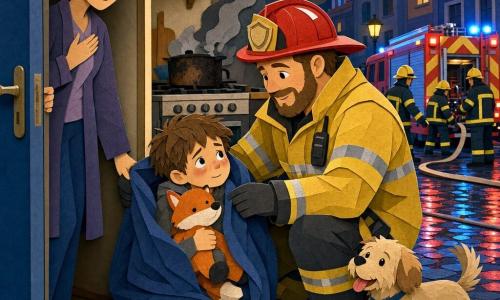
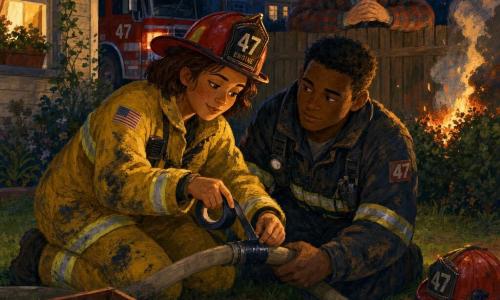
They arrived to find smoke curling from a third-floor window. Neighbors stood wrapped in blankets, faces pale but steady. Elena led the team, her voice clear with direction. "Evacuate to the left; stay low where the air is clearer," she called. Firefighters set up hoses and a ladder, and a pair worked to find the source of the fire while others checked for trapped residents.
In one room, an elderly man had confused his stove timer. Elena knelt beside him, putting a blanket of calm over his worried words. "You did the right thing calling us," she said. The team used water carefully, and the smoke alarm's earlier warning helped everyone move quickly. By working together — one person checking rooms, another guiding people outside, someone else managing the hoses — they controlled the blaze before it could travel.
When the flames were out, Elena smelled the night-smoke and the warm settling of relief. No one was seriously hurt. The red doors of Station 7 had opened and closed on a busy night, and each movement had been careful and practiced. The community gathered to thank the crew, offering hot chocolate and blankets, small tokens of big gratitude.
Elena reminded everyone about stove safety and why smoke alarms are simple lifesavers. She smiled at the children who peered with sleepy eyes from their parents' arms. "We all learn together," she said. The town slept a little easier that night because people remembered the drills and the kind, steady presence of the firefighters.
Epilogue: A Quiet Return
Back at the station, the crew cleaned equipment and wrote notes about what had happened — small details that make work better next time. Elena sat by the red doors, looking at the town lights like a string of tiny promises. She thought of the kitten's soft purr, the children's practiced escape, the calm of neighbors guided to safety. The day had been full of different kinds of bravery: patience, teaching, careful action.
Before bed, Elena tucked a small sticker of a red door into her pocket, a reminder that being ready matters. She knew she could be both strong and gentle, both brave and careful. That thought felt like a warm blanket, and as the station settled, the red doors waited quietly for tomorrow's small alarms and big chances to help. The town slept, comforted by the knowledge that heroes are people who prepare, who listen, and who show up when they're needed — sometimes wearing helmets, always carrying kindness.