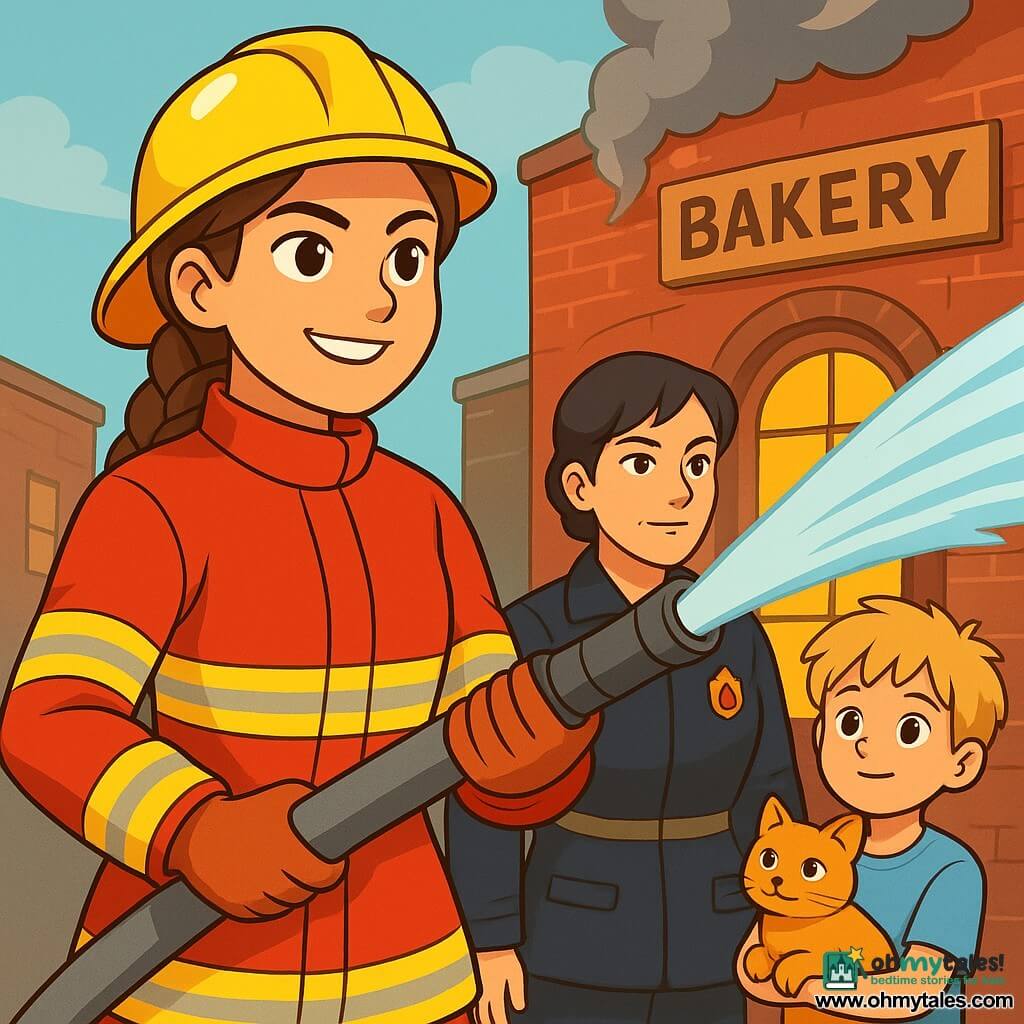
Morning Bells at the Firehouse
Maya woke to a soft bell and the smell of coffee. The firehouse clock blinked six. Outside, the street was silver with early light. Inside, the station hummed like a big, careful machine. Boots lined the wall like waiting clouds. Yellow helmets hung like bright moons.
Maya swung her legs out of bed. She was a young firefighter. Her hair was tied back in a braid, and her uniform was folded neatly on a chair. She loved the sound of the bell in the morning. It meant another day to care for the town.
"Morning, Maya," said Rosa, the captain. Her voice was calm as a warm blanket. Rosa was steady and smiled with her eyes. "Coffee?"
"Please," said Maya. She wrapped her hands around the cup. Steam rose like a tiny cloud that smelled like safety.
The team moved like a small orchestra. There was Jules, who drove the engine, and Amir, who checked the hoses. Lena, the medic, packed a small bag with neat little boxes that held bandages and gentle cures. Maya loved how each person had a job. It made them strong.
"Today is drill day," Rosa said. "We practice so we can be ready."
Maya nodded. She liked drills. They were like stories that ended with everyone safe. They put on their gear: heavy boots, shiny jackets, helmets that clicked. The jacket felt like a hug that kept heat out. The helmet rested on her head like a brave shell.
Jules ran his fingers along the fire truck. It was bright red and long like a friendly dragon. The siren and bell were quiet now, but everyone knew how loud they could be. Maya touched the big hose. It was thick and cool. Water rushed through it during calls, like a river that followed orders.
"Remember the basics," Rosa said. "Check your mask. Count your team. Keep your radio close."
Maya fastened her mask. She breathed in and out. The mask smelled clean. It made her feel ready, like putting on armor that kept her lungs safe from smoke.
They practiced a simple drill in the yard. One person pretended to be trapped. Another pretended there was smoke. Maya crawled, low to the ground, because smoke rises. The ground smelled of wet earth and metal and coffee. She kept her hand on the hose, following rules they'd learned: stay low, find the door, call for help if you need it.
After the drill, the team sat on the steps and ate toast with jam. "What about the old bakery on Maple Street?" Maya asked. "Their oven has been acting up."
Rosa tapped the map. "We'll check in with Mr. Hobb this afternoon. We'll teach him about the little things that stop big fires. Prevention matters as much as rescue."
Maya chewed slowly. She liked that word: prevention. It sounded like planting seeds before a storm. She imagined a town of small seeds that grew into safe, warm homes.
The bell rang once—a soft ring. It could mean a drill, a visitor, or nothing at all. But both the bell and the team listened. The day opened like a book, and Maya felt ready to write her pages with kind, steady hands.
The Bakery Blaze
The siren whooped like a friendly whale. The bell jumped off its rope. "Engine Five to dispatch," Jules called, already steady at the wheel. Maya buckled her seat belt. The truck rolled out with a little rumble, like a giant cat purring with purpose.
They arrived at the bakery on Maple Street. Smoke curled out of the chimney in gray ribbons, carrying the sharp smell of burnt sugar. A small crowd watched. Mr. Hobb, the baker, stood on the sidewalk with flour on his apron and worry in his eyes.
"Is everyone out?" Maestro? No—Rosa asked gently. "Did anyone go back inside?"
"No, I made sure," Mr. Hobb said. He pointed to the door. "Lucy and Ben were playing in the yard. I yelled, and they came out."
Maya felt relief bloom inside her chest. Rescue came easier when people were safe outside. She knew smoke detectors were tiny alarms with big jobs. A working detector could wake a family and turn a danger into a small story.
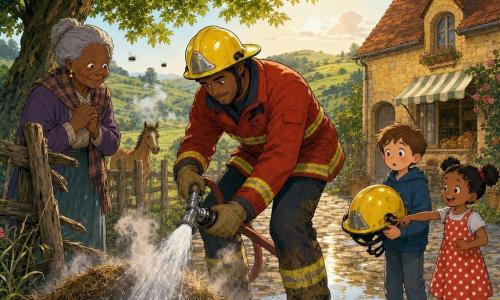
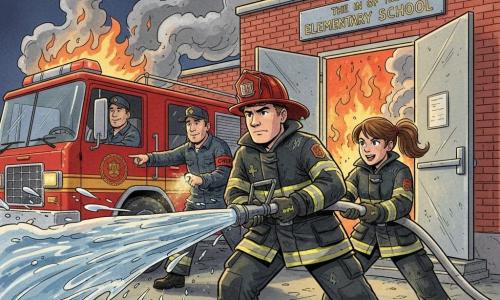
Rosa and Jules split the tasks. Jules opened the truck with a practiced tug. Doors on the truck made small clunks like sleepy seals waking up. Hoses unrolled with a long, musical hiss. Maya helped clip the nozzle into place. The hose felt heavier when it had pressure. When they tested it, water pulsed through like a beating heart.
"Careful," Rosa said. "There might be grease in the ovens. Grease fires can be tricky. They get angry with water."
"Use a fire extinguisher for grease," Lena added. "If you're near a pan, don't pour water."
Maya remembered a poster she had seen: "If a pan catches fire, turn off the heat and slide a lid over it." It was simple, like a small blanket for the pan.
They went in two teams. The front door was hot to the touch. Maya kept low and listened. The bakery was cozy but full of smoke that tasted like toasted bread gone wrong. Bright orange peeked from behind the oven. It licked the air and wanted to grow.
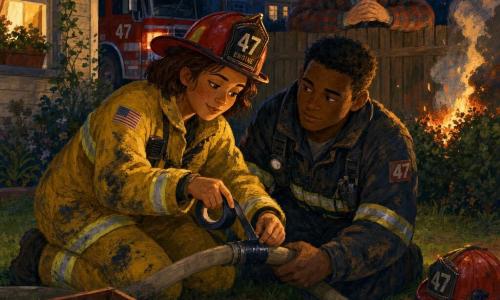
Maya and Amir moved the hose like a calm river. Water sprayed in short bursts, controlled and kind. The steam rose, soft as a waterfall. Rosa used a thermal camera that showed hot spots like glowing coals. The camera helped them see what the eyes could not.
"Found the flare," Amir said. He pointed. Together, they cooled the oven and the surrounding shelves. The fire shrank like a tide going out. Smoke filled the room, but masks kept them breathing easy. The hose breathed out heat like a cooling wind.
Outside, a small girl hugged Mr. Hobb's leg. "Is my cookie okay?" she asked.
"Your cookie will be fine," Mr. Hobb said with a shaky smile. "Maybe a little toasted."
They used a fan to push the smoke out. Fans are gentle pushers; they move the air so it can leave. Maya rolled up the hose and listened to the soft hiss of draining water. The town's tiny problems were softer with a team to handle them.
After they checked every corner with the thermal camera, Rosa nodded. "We'll leave a note with some tips," she told Mr. Hobb. "And a friendly check on the detector." Maya added a reminder like a small, bright sticker: "Test your smoke alarm monthly."
Mr. Hobb bowed his head. "Thank you. I was so scared."
"You did the right thing," Maya said. "You got outside and you called us. That helps more than you know."
The bakery smelled like warm bread and a hint of newness. The crowd clapped softly when the team walked out. Maya smiled at the little girl and handed her a safety sticker shaped like a star. The girl's eyes went wide like someone who had found a secret treasure.
On the way back to the truck, Maya noticed a tiny cat darting from under a bench. She waved. The cat blinked at her with green moons for eyes and then melted away. Maya thought of small lives in the town and how each one mattered.
The Chimney Kitten
While they were drying their boots at the station, the radio crackled. "Report of an animal stuck in a chimney on Birch Lane," said dispatch. The voice was calm and steady. "Kitten suspected."
A kitten sounded small and urgent. Maya felt her heart hop. "We can help," she said.
The truck rolled out again, quieter this time. Birch Lane was lined with oaks. Leaves brushed their faces like curious fingers. The house had a narrow chimney and a worried little boy on the porch.
"Her name is Poppy," the boy said, pointing up. "She went up there chasing a sparrow and then got stuck. She won't come down."
Poppy's mews drifted from the top of the chimney, thin and scared. Maya could hear it like a tiny bell. "We'll be careful," Rosa said. "This is a gentle rescue. No water. No rushing."
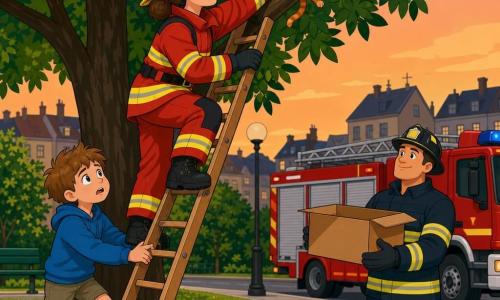
Lena brought a soft bag, like a cozy pocket, to carry the kitten in. Maya climbed the ladder with Jules steady at the bottom. The ladder felt alive under her hands—safe rungs linking earth and sky. She climbed slowly, humming a little tune. Hums are good for calm; they keep the body steady.
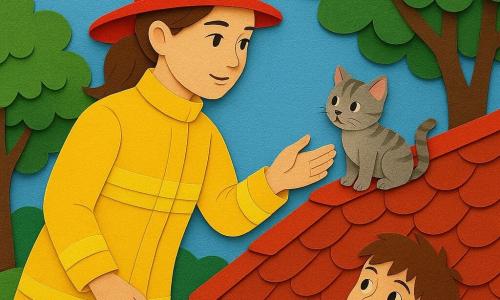
At the top, the chimney was narrower than she expected. Dust floated like old snow. Maya shone a small light and saw a tuft of orange fur trembling. "Hi, Poppy," Maya whispered. "We're friends. I'm Maya."
Conversation helps. The kitten peered down with big, round eyes. Maya sang a soft note. The cat's whiskers twitched. Maya reached in with gloved hands and used a long brush to coax Poppy toward the opening. The kitten wriggled like a sleepy noodle.
"Take it slow," Rosa said below. "Comfort the child, Jules."
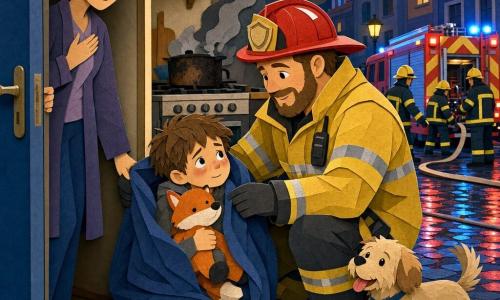
Maya cradled Poppy close. The kitten's purr was like a tiny motorboat. It felt warm and trusting. Maya wrapped Poppy in Lena's soft bag and carefully climbed down. The boy's face exploded into a grin.
"Thank you," he breathed. He hugged Poppy like the kitten was a light bulb he had been afraid to touch before. "We named her after a flower. I thought I lost her."
"No," Maya said. "You didn't lose her. You learned something. Keep small animals inside near trouble and watch where they climb."
Later, they put a small chimney guard on the top. It looked like a hat for the house. It would stop curious paws from taking wrong turns. Maya taught the boy and his mother how to make a plan if a pet went missing: call first, then wait in a safe spot, and never climb alone.
As they left, Poppy purred and rubbed against Maya's boot. "Be gentle," Maya said. "You have a brave cat."
The sun began to tilt. The day felt a little gentler. Maya liked that rescues came in many sizes. Some were loud and dramatic. Some were small and warm and smelled like fur.
Evening Lessons
That night, the firehouse opened its doors for the town. They called it "Safety Under the Stars." Families came with pajamas and curious faces. Children sat cross-legged on the floor, their eyes round as pennies.
Maya stood by a big board with simple pictures. "We'll practice Stop, Drop, and Roll," she said. A boy pretended to be a superhero and did it with an exaggerated flop that made everyone laugh.
"Stop," said Maya. "If your clothing catches fire, the first thing is to stop moving. Running fans the flames. Stay still."
"Drop," the kids said together, dropping gently down.
"Roll," Maya guided them. "Cover your face and roll until the fire is out."
She also showed how to check a door with the back of a hand first. If the door is hot, don't open it. She told them to stay low in smoke and to find the nearest exit.
"Smoke alarms are tiny heroes," Lena said, lifting a little plastic device. "They wake you up when you sleep. Test them each month and change the battery once a year. If you're unsure, ask an adult."
"Never play with matches or lighters," Rosa added. "Keep them high and out of reach."
Maya liked these moments. Teaching felt like passing a lantern to someone who might walk through fog later. It was quiet work, but it shone.
A mother raised her hand. "What if someone is trapped and I can't get them out?"
"Call us," Maya said gently. "Tell the dispatcher where you are and what is happening. They will help you step by step. Every second matters, and we're trained to help. Stay safe and wait for our arrival."
They showed the children how the fire truck ladder worked with a model. "This ladder reaches like a giraffe," Jules joked, and the kids giggled. Maya demonstrated a breathing mask, and a child got to try on a small helmet. Faces lit up with the thrill of feeling protected.
Before everyone left, Maya told a short, calm story. It was about a little house that learned to care for its family. "The house put up smoke alarms and kept hot pans with boys and girls far away. The house had tidy cords and closed doors. When trouble came, the family left quickly and waited outside. That made the house proud."
Someone asked about injuries. Lena explained bandages and how to clean a scratch. She spoke slowly, like a nurse making a blanket out of words. "If someone feels dizzy or can't breathe, call for help. Don't move them unless they are in danger."
At the end, the children made safety plans with a grown-up. They picked meeting spots outside the house and practiced walking there. Many of them left with safety stickers and sleepy smiles.
Maya watched the crowd fade into the night. She felt warm and light. Teaching made the town safer, one small seed at a time. The firehouse doors closed and the stars peeked at the building like kind eyes.
A Quiet Return
The shift wound down like a gentle clock. The team ate soup and bread, soft and steaming. They shared small jokes and quiet pride. "You saved a cat and a cookie shop today," Jules said, nudging Maya.
Maya laughed. "And I got a purr as a bonus."
They wrote the day into the logbook, records that were simple and important. The pump had used water. The ladder had done its job. The team had taught the town and set a chimney guard on a roof. Small tasks, many of them, stitched together into safety.
Rosa put a hand on Maya's shoulder. "You did well," she said. "Remember, it's not just the big flames we chase. It's the small things too. A detector, a practiced plan, a reminder to check the stove."
Maya watched the moon climb above the roof. It was a thin silver coin. The town below glowed in little squares of light. Homes hummed gently. People slept or read or whispered goodnights.
At the end of her shift, Maya packed her bag and walked home under the sleepy sky. She passed the bakery. The lights were warm and steady. Mr. Hobb stood behind the window, stirring a new batch of dough. His apron looked clean. He waved. Maya waved back.
In bed, Maya thought about the day. Fires crackled in stories, but real fires often began with a small spark and needed small actions to stop them. She thought of the kitten, small and brave. She thought of the children who learned to roll like little dough balls. She thought of Mr. Hobb's grateful smile.
Her eyelids grew heavy. The town had a soft rhythm. The firehouse breathed in quiet. Her mask and boots rested on a chair, waiting for the next morning's bell. Maya smiled, feeling the steady comfort of being part of a team that listened and helped.
If you ever hear a siren at night, remember this: the people behind it are like gardeners. They water the fires that grow wild. They pick up small broken things and mend them. They teach door-knocks and smoke alarms and the gentle song of safety.
Outside, the stars embroidered the sky. Maya closed her eyes and imagined the town as an old quilt, stitched tight with care. Each patch was watched over by someone who loved the sound of a bell and the soft hum of people safe at home. She breathed deep, like a tide that knows its shore, and slept.