Chapter 1: The Kind Basket and the Quiet Feeling
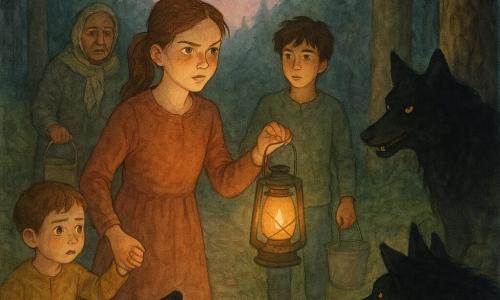
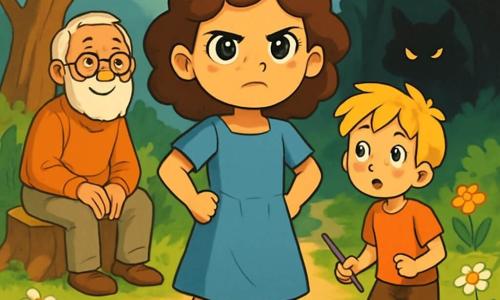
Mara and Jonas were both eleven, and they walked side by side where the village path frayed into forest. The late sun lay on the ground like spilled honey, but under the pines the light turned thin and green, as if the trees were whispering secrets over it.
Mara carried a wicker basket lined with a warm cloth. Inside were three small loaves, a jar of blackberry jam, and a piece of cheese wrapped in paper. “For Mrs. Alder,” she said, as if saying it again would make the gift steadier in her hands.
Jonas adjusted the strap of his satchel. “She'll smile so hard her cheeks will squeak,” he said. “She always does.”
Mara smiled, but it was a careful smile, like a candle protected from wind. She was known for being helpful—she fetched water for old Mr. Pike, she mended torn kite strings, she shared apples at school. Yet she carried a secret wish the way you might carry a small stone in your pocket: she wanted to learn to listen to a reasonable intuition.
Not fear that jumped like a rabbit. Not worry that buzzed like a fly. But that quiet feeling that tapped once on the inside of your ribs and said, Pay attention.
The forest had its own voice, too. Leaves shushed. Branches creaked. Somewhere a crow chuckled, as if at a joke only crows understood.
Jonas kicked a pinecone. “It's just Mrs. Alder's cottage. Two turns and a bridge.”
“I know,” Mara said. Then she paused, because something in her chest tapped—soft, firm. The path ahead looked ordinary, but the air felt…thicker, as if it held its breath.
Jonas noticed her stop. “What is it?”
Mara opened her mouth, then closed it again. She had practiced being brave in loud ways—climbing high, speaking up, giving away her lunch. But listening to a quiet warning felt like learning a new language.
“I'm not sure,” she admitted. “Maybe we should stay together. No running ahead. No shortcuts.”
Jonas raised an eyebrow. “Since when do you sound like my grandma?”
“Since now,” Mara said, and her voice tried on steadiness like a new coat.
They walked on, side by side, the basket between them like a promise.
Chapter 2: The Wolf Who Smiled Too Wide
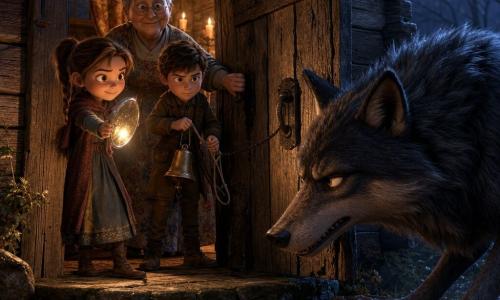
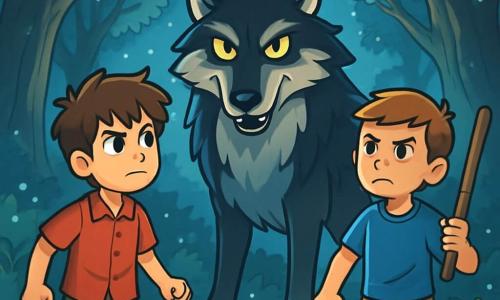
They reached the place where the old oak leaned over the path like a crooked gate. There, in a patch of shadow, something moved.
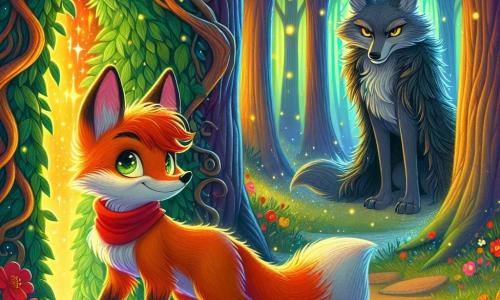
At first it was only a shape—gray, low, smooth as smoke. Then it rose, and two yellow eyes caught the last sunlight and held it.
The wolf stepped out as if he owned the forest and the forest agreed.
He was large, larger than stories, with fur like storm clouds and a tail that swished like a broom sweeping trouble under a rug. His mouth curled into a smile, but it was the kind of smile that forgot how to be kind.
“Good evening,” he said, and his voice was velvet stretched over teeth. “Where are you two little walkers going with that lovely basket?”
Jonas's fingers tightened on his satchel strap. Mara felt her heart thump once, hard. The quiet feeling in her ribs tapped again: Do not hurry. Do not lie. Do not tell too much.
“We're visiting Mrs. Alder,” Mara said carefully. “She lives by the brook.”
The wolf's ears flicked. “Mrs. Alder,” he repeated, as if tasting the name. “And why, my dears, are you bringing her food?”
“Because she helped me when I was sick,” Mara said. “And because she's alone.”
The wolf's smile widened, and for a moment it looked like a crack in a door.
Jonas spoke quickly, a brave sound that tried to cover the tremble underneath. “We won't be long.”
“Oh, I would never wish to delay such generous children,” the wolf purred. Then he tilted his head, too polite, too curious. “But tell me—how far is her cottage from here? How many steps? How many windows? Is the door bolted, or does it swing freely?”
Mara's intuition pressed like a fingertip against her thoughts. Questions. Too many questions. Questions that were not friendly.
She answered with another question, just as her teacher had once taught them when someone made them uncomfortable.
“Why do you need to know?” Mara asked.
The wolf blinked. One blink became two. His smile twitched, as if it had been pinned on and was slipping.
“I… I only admire cottages,” he said. “I admire windows. I admire doors. I admire—”
“Steps?” Jonas offered, trying to sound casual, but his eyes were sharp.
“Yes! Steps!” The wolf barked the word too loudly. Then he coughed, smoothing his voice again. “A forest walker must know such things, mustn't he?”
Mara held the wolf's gaze. The yellow eyes were bright, but behind them she sensed a muddle, like tangled string. The wolf wanted a clear map, and questions knotted his thoughts.
She gave a small shrug. “We haven't counted.”
“Not counted?” The wolf's ears flattened for a heartbeat. “You haven't—”
“No,” Mara said. “We just follow the brook when we hear it.”
The wolf's nose twitched. He looked past them, as if he might sniff out the brook through their words. His tail swished faster.
“Well,” he said, forcing his smile back into place, “enjoy your visit. Be careful. The forest is full of… surprises.”
“And you?” Mara asked softly.
The wolf's smile froze.
“What about me?” he snapped.
“Are you careful when you wander?” Mara asked, and her voice was gentle, like laying a blanket over a startled animal.
For a second, the wolf looked almost offended—confused at being spoken to kindly. Then he turned his head sharply.
“I am always careful,” he said, and padded away into the ferns, leaving behind the faint smell of wet stone.
When the shadows swallowed him, Jonas let out a breath. “That was the biggest wolf I've ever seen.”
Mara nodded, but her eyes stayed on the place where he vanished. “He asked too much.”
Jonas gave a shaky laugh. “Maybe he's just… nosy.”
“Maybe,” Mara said. “Or maybe questions are a lantern. If you hold them up, you can see what someone's really looking for.”
Chapter 3: The Brook's Whisper and the Clever Plan
They walked faster, but not running. The forest seemed to lean closer. Even the wind quieted, like it didn't want to interrupt.
Soon they heard it: the brook, a silver ribbon talking to stones. Mara's shoulders loosened a little. Water always sounded honest.
Mrs. Alder's cottage sat near the bend, small and crooked, with smoke curling from the chimney like a sleepy sigh. The garden was a tangle of herbs and late flowers, and a wooden birdhouse hung from the porch beam like a tiny chapel.
As they approached, Mara's intuition tapped again—this time not a warning, but an instruction: Check first.
Jonas reached for the door latch.
“Wait,” Mara whispered. “Listen.”
They stood still. The cottage made its own noises: the tick of a clock, the crackle of firewood. But then—another sound. A scrape, as if something heavy shifted its weight inside.
Jonas swallowed. “Mrs. Alder's old. She might be dragging a chair.”
Mara nodded, but she didn't move. “Maybe.”
She stepped to the window. The curtain was half-drawn. Mara lowered her face until her breath fogged the glass. Inside she saw the table, a kettle, a rocking chair. And then, in the corner, a pile of dark fur—too big for a rug.
The fur moved.
Mara's stomach tightened. “Jonas,” she breathed, “back.”
Jonas backed away so quickly he nearly tripped over the porch step. “Is it—”
Mara nodded once.
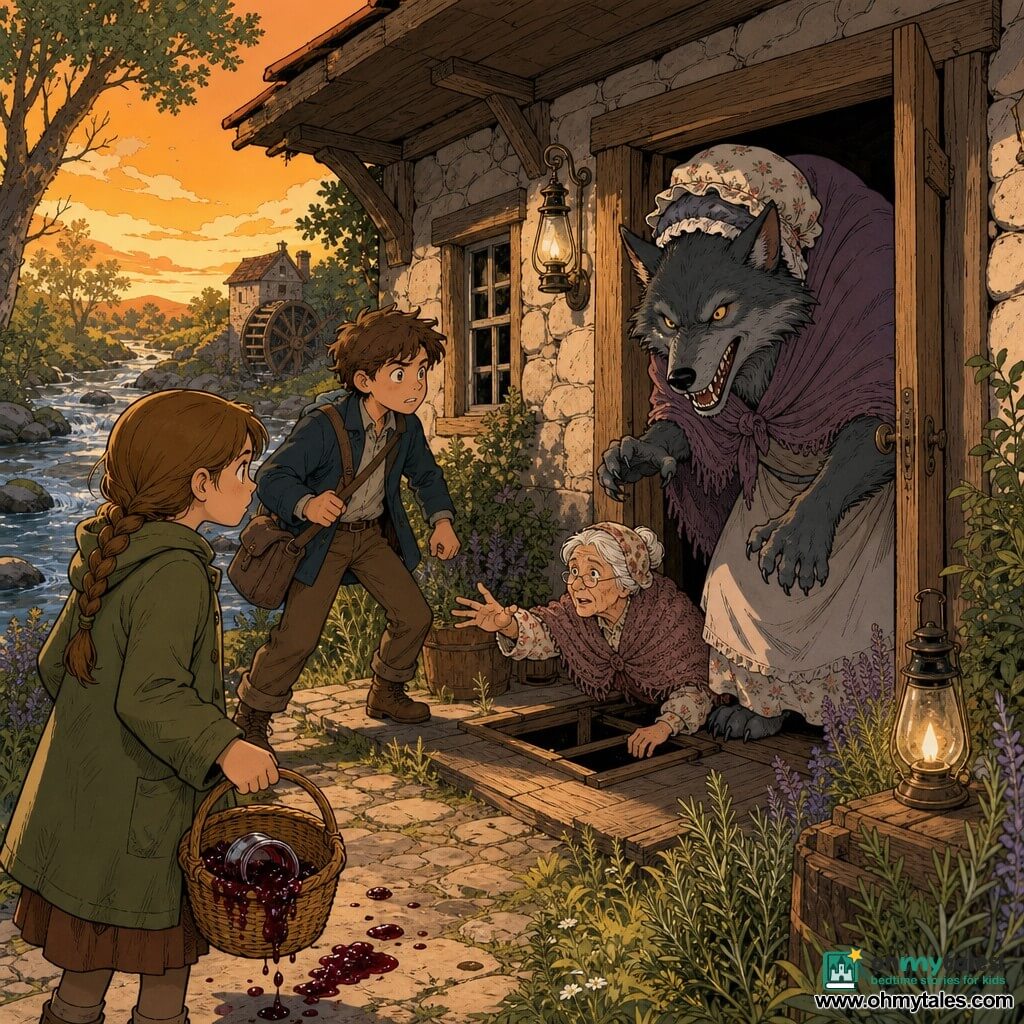
The door creaked open before they could decide anything else. A figure stood in the doorway—wearing Mrs. Alder's bonnet, wearing her shawl, and holding her cane.
But the face beneath the bonnet was wrong. The nose was too long. The teeth were too white. The eyes were two yellow coins.
“Well,” said the wolf, making the word sweet as syrup. “You found the cottage.”
Jonas's mouth went dry. Mara felt fear rise, but she held it like you hold a barking dog's collar—firmly, so it could not drag you.
“Where is Mrs. Alder?” Mara asked.
The wolf blinked, and his smile twitched again. “Where is she? Why, she is… she is…”
Mara asked another question, calm as a bell. “Did you hurt her?”
The wolf flinched, as if the question had pricked him. “Hurt? Me? I— I am a guest!”
“A guest doesn't wear someone else's bonnet,” Jonas blurted.
The wolf's lips curled back. “Mind your manners, boy.”
Mara's eyes darted. The cottage door was between them and the wolf, but the porch rail was low, the garden thick. The brook was close. And questions—questions muddled him.
Her teacher had once told them, “When a storm comes, you cannot push it away, but you can find shelter and think.”
Mara lifted the basket, as if offering it. “We brought food,” she said.
The wolf's nostrils widened. His gaze dropped to the basket, greedy as a shadow stretching at sunset.
“Ah,” he murmured. “How thoughtful.”
Mara took one small step forward, then stopped. “But first,” she said, “we should thank Mrs. Alder properly. She deserves gratitude.”
The wolf's ears twitched. “She does.”
“Yes,” Mara agreed. “So tell me—what is her favorite hymn? What does she always say before she eats? How many spoons does she set on the table?”
The wolf stared. His mouth opened, then closed. His eyes flickered left and right, as if answers might be hiding in the air like moths.
“I—she—hymn—spoons—” he stammered.
Jonas caught on, his fear turning into focus. “And what's the name of her cat?” he added, loud and quick.
“She has no—” The wolf snarled, then stopped, uncertain. His confusion thickened, and it was almost visible, like fog around his head.
Mara stepped back, slowly, never turning her back. “We can't come in until we know,” she said softly. “It's only polite.”
The wolf's tail lashed. “Polite!” he spat. “You think you can trick me with… with table talk?”
“We're not tricking,” Mara said. “We're checking.”
The wolf growled, low as thunder under ground. But he did not leap. Questions held him like nettles.
Mara tipped the basket slightly. The smell of jam and warm bread drifted out, a delicious rope.
The wolf's eyes followed it.
“Maybe,” Mara said, “we should ask someone who knows her better.”
Jonas pointed toward the path. “The village warden. He visits her.”
The wolf's confusion sharpened into anger. “No one needs—”
Mara cut in gently, “If you're truly a guest, you won't mind.”
For a heartbeat, the wolf looked as if he might explode into teeth and fury. Then the hunger in his eyes won the argument. He lunged—toward the basket.
Mara tossed it, not at him, but sideways into the garden. The basket rolled under the rosemary bush.
The wolf leaped after it like a child chasing a thrown ball.
“Now!” Mara hissed.
Mara and Jonas ran—not into the forest, but along the brook, where the ground was damp and the stones made stepping loud. Their feet slapped and splashed, a drumbeat that said, We are alive, we are moving, we are not yours.
Behind them, the wolf snarled, and the cottage door banged.
Chapter 4: The Miller's Lantern and the Door of Questions
They ran until their lungs burned and the brook widened near the old mill. The mill stood like a tired giant with a wooden jaw, chewing grain slowly, endlessly. Light spilled from its window, warm and steady.
Mara pounded on the door with both fists. “Mr. Brann! Please!”
The door swung open, and the miller's face appeared—round, flour-dusted, startled.
“What in heaven's name—”
“Wolf,” Jonas gasped. “At Mrs. Alder's.”
Mara forced herself to speak clearly, as her mother had taught her in emergencies. “He's wearing her bonnet. He asked strange questions. He's inside her cottage.”
Mr. Brann's eyes hardened. “Inside? Then she—”
Mara nodded, unable to say the words.
The miller grabbed a lantern and a long hooked pole used for pulling sacks. “Stay behind me,” he ordered, voice like a struck anvil.
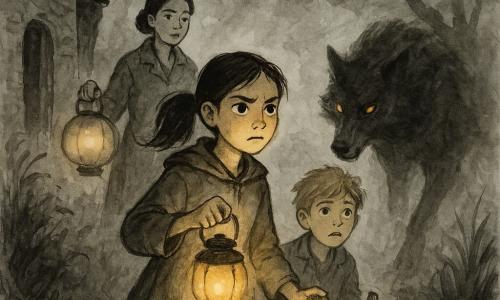
They hurried back along the brook, the lantern bobbing, casting halos on stones. Shadows jumped away from the light like guilty thoughts.
As they neared the cottage, the air smelled of crushed herbs and something sour. The door stood open. The curtain fluttered like a white flag that no one held.
Mr. Brann lifted the lantern. “Wolf!” he called. “Come out.”
From inside came a slow, scratching sound. Then the wolf's voice—deeper now, less careful.
“Who calls?” it growled.
“The miller,” Mr. Brann said. “And two children you frightened.”
A pause. Then the wolf stepped into the doorway. Mrs. Alder's shawl hung crooked on his shoulders, and her cane looked ridiculous in his paw. His eyes gleamed at the lantern light, and his smile returned—sharp as a sickle.
“You bring a weapon?” the wolf asked.
Mr. Brann lifted the hooked pole. “I bring a tool. Tools can build. Tools can defend.”
Mara's intuition tapped: Do not shout. Do not dare. Ask.
So Mara stepped forward, just enough that the lantern lit her face. “Where is Mrs. Alder?” she asked.
The wolf's ears flattened. “Safe,” he said too quickly.
“Safe where?” Jonas asked.
The wolf's eyes flicked, confused again. “Where? In… in the—”
“In the what?” Mara pressed, gentle but steady.
Mr. Brann's lantern didn't move. His voice stayed calm. “Answer.”
The wolf's tail swished faster. He licked his lips. “Why do you keep asking?” he snapped, and the words cracked like ice.
Mara's voice lowered. “Because truth can walk through questions, but lies trip over them.”
The wolf stared at her as if she had thrown a stone into his mind. His snarl faltered.
Mr. Brann stepped forward and shoved the door wider with the pole. “I'm coming in.”
The wolf bared his teeth. “No.”
Mr. Brann lifted the lantern higher, and the light fell inside the cottage. There, behind the rocking chair, was a trapdoor with scratches around it. The floorboards near it were scuffed, as if something had been dragged.
Jonas pointed. “There!”
The wolf lunged—not at them, but toward the trapdoor, like a guard rushing to cover a secret.
Mr. Brann swung the hooked pole and caught the wolf's shawl, yanking him backward. The wolf stumbled, snarling, confused by the sudden pull.
Mara darted to the trapdoor and grabbed the ring. It was heavy. Jonas helped, and together they heaved it up.
A gust of cellar air rose—cold and damp. From below came a thin voice, trembling but alive.
“Help?”
“Mrs. Alder!” Mara called. Relief washed over her like warm tea.
Mr. Brann kept the wolf at bay with the pole. “Jonas, hold the lantern. Mara, take my hand—careful.”
Mara leaned down, reached into the dark, and felt a wrinkled hand grip her wrist with surprising strength. She pulled, Jonas braced, and Mrs. Alder climbed up, coughing, her hair mussed, her cheeks pale.
The wolf's eyes widened. For a moment, he looked less like a monster and more like a problem with teeth—a hungry, angry problem.
“You ruined it,” he hissed, and his voice shook, not only with rage, but with something like panic. “All these questions—always questions—”
Mrs. Alder straightened, her trembling turning into steel. “A question is a door,” she said. “And you cannot slip through a locked door.”
The wolf glared at her, at the lantern, at the three humans standing together like a wall.
He backed away, one step, two. His fur seemed to drink the shadows. Then he turned and fled into the forest, his paws thudding like a dark drum fading into distance.
The cottage fell quiet except for the brook's patient whisper.
Chapter 5: Jam, Thanks, and the Quiet Promise
Inside, the fire still burned, as if it had been trying to keep courage warm. Mrs. Alder sank into her chair. Her hands shook as she smoothed her skirt.
Mara knelt beside her. “Are you hurt?”
Mrs. Alder shook her head slowly. “Shaken. Like a jar of jam dropped on a stone. But not broken.”
Jonas let out a breath that sounded like a laugh and a sob trying to share the same mouth. “We thought—”
“I know,” Mrs. Alder said, and her eyes softened. “Come here.”
Mara and Jonas leaned closer. Mrs. Alder put a hand on each of their shoulders, her touch light but steady.
“Thank you,” she said, and the words were simple, but they filled the room like sunlight. “Thank you for bringing kindness. Thank you for bringing sense. And thank you for asking.”
Mr. Brann set the lantern on the table. “I'll tell the warden,” he said. “The wolf won't be welcome near the village again.”
When he left, the cottage felt smaller, safer. Mara remembered the basket she had thrown. Jonas fetched it from the garden. It was a little dirty, but mostly intact—like bravery.
Mrs. Alder chuckled weakly. “Your gift survived its adventure.”
Mara opened the cloth. The loaves were squashed at one corner, and the jam jar was smeared, but it hadn't cracked.
Jonas sniffed the air. “Still smells amazing.”
Mrs. Alder's eyes glistened. “You didn't have to bring anything,” she said. “But you did. And that matters.”
Mara spread the cloth on the table like a small tablecloth and set out bread and cheese. Jonas found three cups and poured water from the kettle. The simple meal looked like a little island of normal in a sea of fear.
As they ate, the night leaned against the windows. The forest outside was a black coat studded with stars. The brook kept talking, soft and endless, as if telling the same comforting story again and again.
Mrs. Alder took a bite of bread and sighed. “Gratitude,” she said, “is not only for easy days. It is also for days when you are pulled from a cellar.”
Jonas swallowed. “I'm grateful you're okay.”
Mara nodded. “And I'm grateful… my feeling told me to slow down.”
Mrs. Alder watched her closely. “That quiet feeling is a candle,” she said. “Not a bonfire. It won't shout. It will only glow. But if you protect it, it can show you where to place your next step.”
Mara stared at her hands, remembering the wolf's questions, the way he tangled when she asked back. “He got confused,” Mara murmured. “Like he couldn't hold his story together.”
Mrs. Alder's mouth tightened. “A wolf with a plan likes silence from others. Questions are stones in his mouth. He cannot swallow them easily.”
Jonas grinned a little. “So… asking ‘why' is kind of like carrying garlic for vampires?”
Mrs. Alder blinked, then laughed—an unexpected sound, bright as a spoon tapping a cup. “Something like that,” she said. “Only kinder.”
Mara's fear began to loosen its grip, replaced by something quieter: a warm, steady pride that didn't need to brag.
Outside, a branch scratched the window. Mara tensed.
Mrs. Alder reached out and squeezed her hand. “Only the tree,” she murmured. “Even trees ask questions. They tap and tap: Is anyone listening?”
Mara listened. The forest was still mysterious, still grave, but now it felt less like an enemy and more like a vast room where you needed to walk wisely.
When it was time to leave, Mrs. Alder wrapped the remaining bread and pressed the jam jar into Mara's hands.
“But it's for you,” Mara protested.
Mrs. Alder shook her head. “Gratitude is a circle. It goes around and comes back. Take it. And remember tonight.”
Jonas opened the door. The moonlight lay on the path like pale milk. The brook sang its same soft song.
Mara and Jonas stepped out together, and Mrs. Alder stood in the doorway, small but unbroken, her silhouette framed by firelight.
“Good night,” she called. “And thank you.”
Mara lifted the jam jar like a lantern of her own. “Good night,” she answered. Then, quietly, to herself, she added, “Thank you.”
They walked home with steady steps, keeping close, asking the forest with their silence, Is it safe? and hearing, in the calm between rustles, the answer that mattered most:
Not always. But you can be wise. You can be kind. And you can be brave enough to listen.