Chapter One: The Quiet Missing Thing
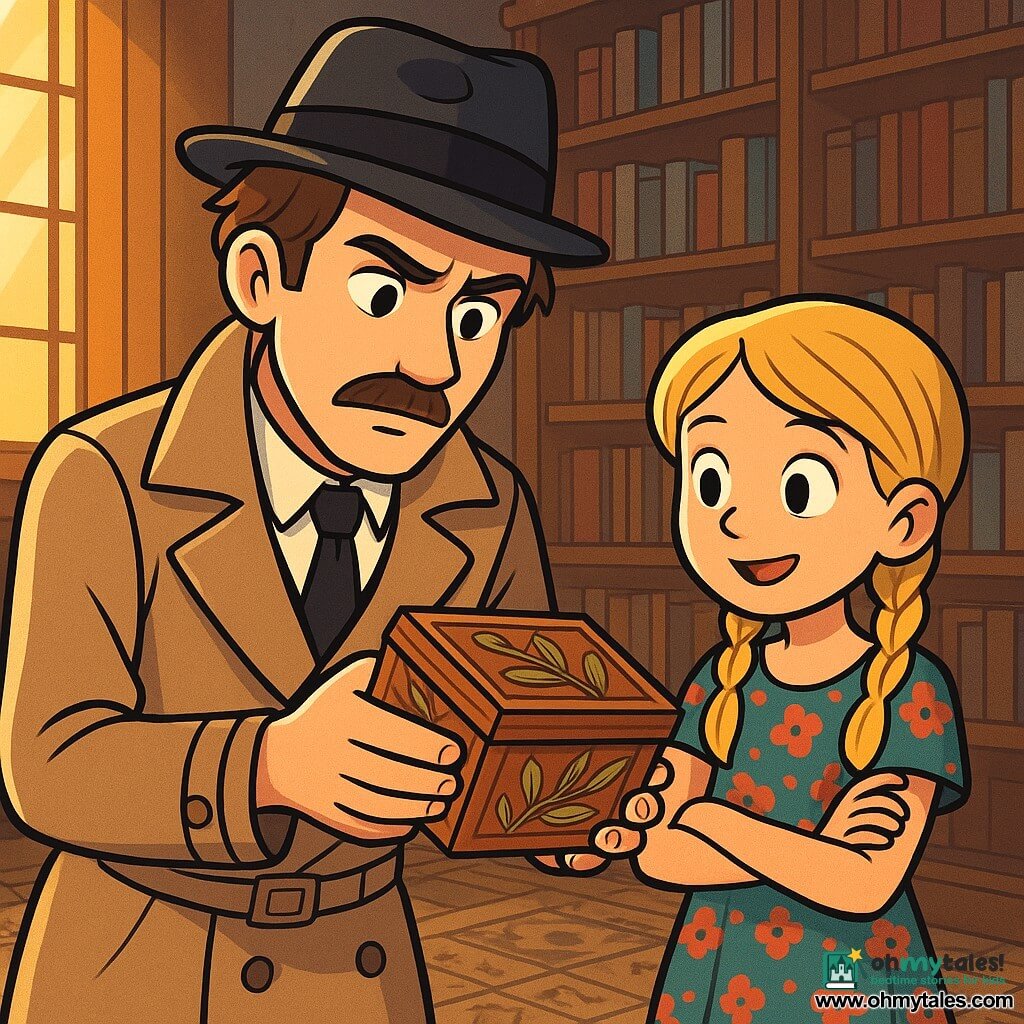
Detective John Hale arrived on a Tuesday when the rain had left the cobblestones shiny and the town felt as if it were holding its breath. The library smelled of old paper and lemon polish. Sunlight fell through the tall windows in narrow bands, laying out patches of dust like footprints from another time. Mrs. Webb, the librarian, met him in the small entryway, wringing a handkerchief around her fingers.
“My music box,” she said before she could sit down properly. Her voice was small. “The Willow Box. It's gone.”
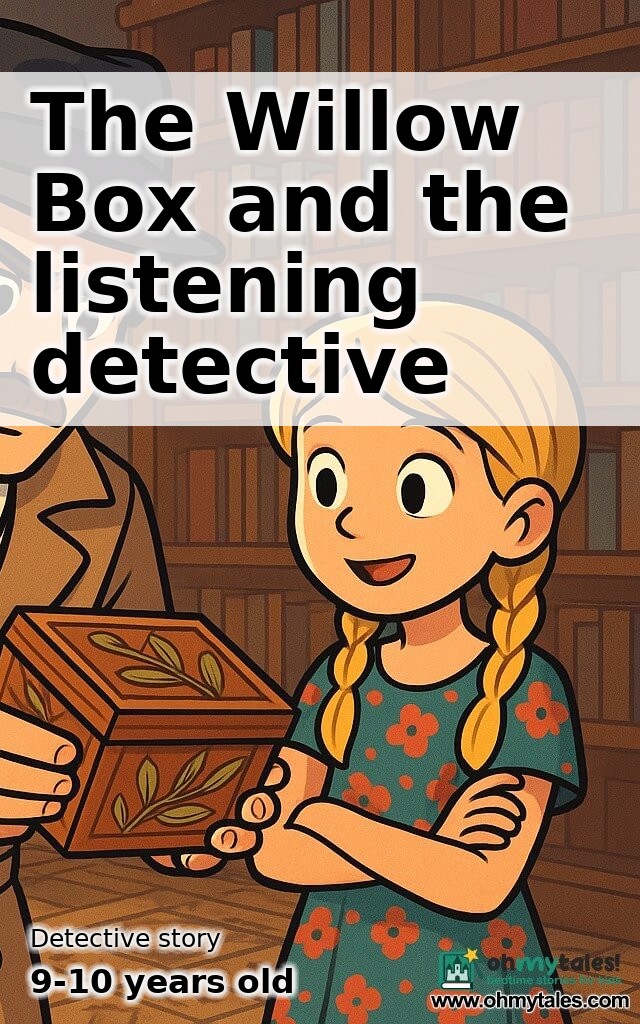
John knew the box. It was a little wooden thing, carved with tiny willow leaves, that sat behind glass on a low shelf in the local history corner. It had no great market value, but everyone loved it. It had played the same careful melody for forty years, and every child in town had wound it at least once.
“What happened?” John asked. He did not ask loudly; he knew how sound traveled in places where people were trying not to cry.
Mrs. Webb told him what she already knew a thousand townspeople likely knew: that she had left the library for an afternoon to fetch a parcel, that Sam—the assistant—had been arranging a display, and that when she came back the music box was gone. She worried aloud that Sam might be blamed. Sam was sixteen, quick with a smile and clumsy with his elbows. He had been the last to see the case unlocked.
John listened. He always started with listening. It gave him a map of what people remembered and of what they did not. He did not shout questions or jostle memories. He asked one or two exact things and then waited.
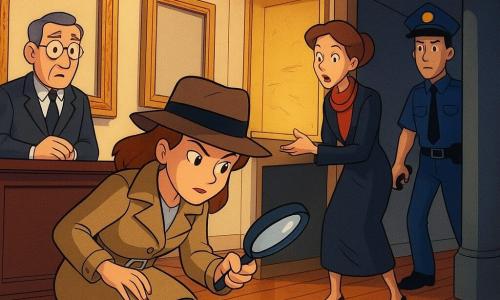
The display case glass had a hairline smudge as if someone had pressed a finger there after winding a toy. The tiny velvet pad under the box was undisturbed except for a faint crescent of dust where an object had sat. On the floor near the case were three thin marks—scuffs as if from the toe of a shoe. On the case rim someone had left a fine smudge of blue paint.
Sam was there, hands shoved in his pockets. He looked at his sneakers and then at John. “I was setting the children's chess pieces,” he said. “I put the box back where it belongs.” His voice jumped when he said it. John could hear the worry that Sam would be suspected because Sam was quick to do things that needed doing and sometimes rushed.
John wanted, from the start, to protect Sam from being blamed without cause. That did not mean he ignored facts. It meant he listened to everyone and kept an eye on what the evidence said.
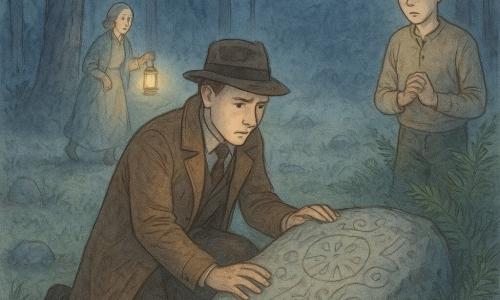
Before he left, John knelt and looked at the scuffs. He noticed the pattern: two short, light marks and one longer one. Someone who often carried things—someone used to lifting and angling their feet—had been there. He picked up a strand of thread caught on the case rim. It was green.
“Who else had keys?” he asked quietly.
Mrs. Webb supplied a list—herself, Sam, the town caretaker Mr. Cross, and the man who delivered parcels on Tuesdays. John's eyes paused at the last name. The parcel man was too predictable by time and steps to be interesting alone. But patterns were clues a detective could follow.
He left the library with the sound of Mrs. Webb's worry following him like a small bird in his ear. He had to know the timeline and he wanted to keep Sam safe until that timeline became clear.
Chapter Two: The Memory That Skipped
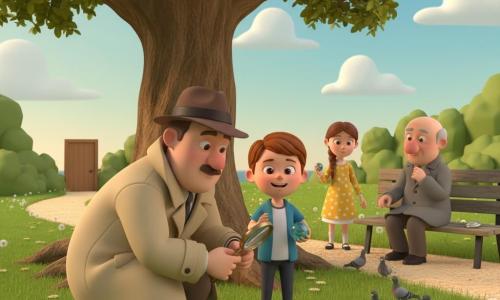
The first person John spoke to after leaving the library was Mr. Finch, who kept pigeons and had a way of remembering songs and smells but not faces. People called it his selective memory. He could recite a nursery rhyme from the 1930s but could not name the person who had once fixed his fence. He remembered some days with the detail of a stamp and other hours as if they were blank pages.
“Morning, John,” Mr. Finch said, hands stained with grain and sunlight. He leaned on his broom. “Wind's been at the east house. Smells like roasted chestnuts today.” He smiled as if that were the whole of what they needed to know.
John asked, “Where were you at midday yesterday?”
Mr. Finch's brows tugged together. “Now, that's the funny thing.” He scratched a pigeon feather stuck in his shirt. “I remember hearing a small tune. It was a song like the river. But I don't remember who was playing it.” He spoke as though a tone or a scent might be clearer than a face. “I remember two people walking by the library. Their hats knocked together like they were in a hurry. One had blue on his sleeve.”
Blue paint, John thought. The smudge at the case rim. A shoe with a longer scuff. Blue thread on the case. The details clustered like stones in the mouth of a river: if he ran his hand along them, the path might open.
“Did either of them stop?” John asked.
Mr. Finch shook his head. “Not that I remember. But when I came back to feed the pigeons, one of them left a little box on the bench outside. I took it in to keep it safe because it looked like something the children would like. Then my memory skipped. I can remember carrying it and the smell of lemon oil, but I can't remember who handed it to me. It's like someone ripped a page out of a book.”
“That box—what did it look like?” John pressed.
“Wooden. Willow leaves carved on top,” Mr. Finch said slowly. “A small key in the side.”
A small key. The Willow Box. Mr. Finch's strange, skipping memory became not a hindrance but a clue. His forgetfulness had a pattern. He remembered songs and scents—he had the tune, he had the lemon oil—but he did not remember faces. That meant someone with a blue sleeve had been near. Someone had given the box to Mr. Finch.
John thanked him and watched him go, humming a half-remembered tune. He thought of the green thread and the blue paint. He thought of Mr. Finch's pigeons, the parcel man, and Sam with his quick hands. The case for an ordinary theft began to falter: the object had been moved from the shelf to the bench, then into Mr. Finch's care. Why would anyone do that? To hide it? To protect it? To pass it on?
John returned to the spot of the bench where children sometimes left toys. There was no heavy footprint; just a smudge like someone had set something down with care. He found a small scrap of paper tucked under the bench with a pencil's point at the corner—a chess piece had made a faint mark. On the paper someone had left three letters: “L.D.B.” No other mark.
John folded the scrap into his palm. Letters could be initials. They could be code. They could be something written by a child. He listened to the silence and, when he could, he listened to whose hands had moved.
Chapter Three: The Object That Changed the Story
Two days passed with the town watching like an audience. Rumors formed and then dissolved like soap bubbles. John followed the path of small things that people usually ignored—the blue smear on a market stall, a strand of green thread in the tail of a dog, a packet of lemon oil behind a shelf in an antique shop. Each found object felt like a sentence in a story he had not yet read.
On the third day the story changed in a way that made it simpler and stranger. Mrs. Webb called him in a voice that was half relief and half apology.
“John, come quick,” she said. “I found it. The box. But it wasn't where I left it.”
When he arrived, the box sat on the counter, safe and wound tight, the tiny key still in the side. Around it were the chess pieces that Sam had been arranging—the white knight had a small blue paint speck on its base. The music inside the box had a note that cut as if someone's fingernail had touched the gears.
“How did it get here?” Mrs. Webb asked.
John looked at her eyes. They worried for Sam. He wanted to protect her. He wanted to protect Sam.
“You told me someone left a box on the bench,” he said.
Mrs. Webb nodded. “Yes, Mr. Finch brought it in. He said he found it and he couldn't remember who left it. He said he put it on the bench to keep it safe and then took it home because he was worried it might get wet in the rain. He must have brought it back when he realized it belonged here.”
Mr. Finch arrived that afternoon, pigeon feathers in his cap, and he seemed to carry a bright stiffness in his shoulders, like a man who had remembered a thing he wanted to forget. He told a story consistent with what John had begun to assemble: that he had found the box, had carried it home, had forgotten who gave it to him, and then, possibly, had left it on his own bench for a day before bringing it back.
“But I still can't remember faces,” he added. “I remember the song though. The song is like the river and it kept me awake last night.”
John sat quietly. He had one more place to look. He asked gently, “Mr. Finch, did you notice anything on the person's sleeve? Or the shoes? Anything else?”
Mr. Finch rubbed his chin. “Blue paint,” he said. “A little like the sea. And their hat had a chip on the edge.”
Blue paint again. The green thread. The short scuffs. The longer scuff. John walked back to the area behind the library where the delivery trucks usually stopped. There was a thin smell of lemon oil, like the one he had found at the antique shop. He found a box dented on one side and inside it a small compass, tarnished and with a willow leaf carved on its back—the same pattern as the Willow Box. It was not the box itself, but it fit with the idea that someone had been moving small, personal things.
“Who would want to move it?” John murmured to himself.
The answer arrived in the shape of a visit from the town's antique dealer, Mr. Cross. He brought with him a catalogue and a careful, economical smile. When John asked where he had been on Tuesday between noon and two, Mr. Cross told the truth. He had been unloading a delivery and had a streak of blue paint on his sleeve from a crate he had helped move earlier. He wore heavy boots that left the longer scuff. He had keys. He had a reason to be near the library.
His motive was as small as the objects he liked: he collected misplaced things with the hope of restoring them to their owners or, sometimes, to protect them from being sold. He had seen the Willow Box on a market flyer some months before and had been worried someone might take it. When he saw it on the bench he had bent to pick it up and carry it with the intention of keeping it safe. He had meant to bring it back to the library but had stopped to help unload a crate and the box had been set aside. Later, when asked, he could not remember precisely because everyone had been moving quickly that day.
At this, John felt the case fold neatly. Someone with blue paint had been there. He had moved the box to protect it. Mr. Finch had found it and, because his memory skipped faces, could not say who passed it to him. Sam had been clumsy near the case and had left smudges, but Sam had not taken the box to sell. He had only been arranging things and had been afraid.
John sat with that thought for a while: that moving an object could change the shape of an accusation. The box had not been stolen with bad intent. It had been moved by hands that believed they were keeping it safe.
He also thought about how easily a person can be blamed by a few marks on a floor and by the quickness of a boy's hands. He felt the need to protect Sam not because Sam was naïve but because Sam was young and because towns people liked to pin blame like a ribbon on a hat.
Chapter Four: The Visit That Said Thank You
After the box was returned and the facts laid out quietly, people came and went with their explanations and their relief. Mr. Cross apologized in his careful way. Mr. Finch admitted his confused memory and thanked the library for trusting him with a thing he could not place down. Sam stooped to wind the Willow Box and let the tune play. Everyone listened.
John made notes. He always made notes. Listening does not end when the story seems over. It continues as people mend the places where worry had made cracks.
A week later, someone came to John's door carrying a small parcel wrapped in brown paper. It was Mrs. Webb. Her hair was softer at the edges now that she had slept. She held the parcel with two hands, as if the wrapping might crack.
“Mr. Hale,” she said, “I wanted you to have this.”
Inside was a small wooden key on a ribbon. The key matched the tiny one the Willow Box used. There was a note tucked into the ribbon in handwriting that trembled but was steady. It read: Thank you for listening. For keeping us safe when fingers point too quickly. For understanding how memories can be sharp and blank at once.
Mrs. Webb spoke softly. “The town wanted to write a note too, but I thought you would like this first. You kept Sam safe without making him feel like he had done wrong. You listened to Mr. Finch and that helped him remember the small things he could remember. You did not assume.”
John folded the note and put the key into his pocket. He thought of the boy winding the box and of the way the music sat between people, making them quiet. He thought of Mr. Finch humming the river song and of Mr. Cross wiping paint from his sleeve.
“You could have told everyone at once,” Mrs. Webb said. “You could have shouted that it was all a simple mistake. But you listened. You let them speak. That mattered.”
John had not thought of the measure of thanks in such public terms. For him, the case had been a set of small tasks: gather facts, protect the innocent from blame, make the story fit the truth. But he understood what Mrs. Webb meant. Listening gives people room to be honest.
After she left, John walked back to the library. Sam was there, arranging a new display with the very chess pieces that had been scattered. The white knight had its blue fleck polished away. Sam looked up when John came in. “Thank you for believing me,” he said without much flourish.
John nodded. “You did the sensible thing,” he said. “You told the truth. That matters.”
Outside, Mr. Finch fed his pigeons and sang a line of the river song to himself. Mr. Cross baked pastries and left one on the library step with a small note: For the man who listens. The town, in little ways, stitched itself back together.
That night the Willow Box sat in its case, quietly playing its tune when a child pressed the key. The melody sounded softer than before, as if the gears had been oiled by careful hands and the recognition that it mattered more for what it made people do than for what it was worth. John thought of the green thread and the blue paint. He thought of the scrap of paper with the three letters—L.D.B.—which he had filed away, for now he suspected they were the initials of a child who wanted to leave a mark and not a message meant for grown-up worry.
When the thank-you visitors stopped coming, John kept the small key Mrs. Webb had given him in his coat pocket. It was not a tool; it was a reminder. A reminder that a detective's work was as much about protecting people as it was about finding objects. It was about listening to what people could tell and treating the things they could not tell with care.
On quiet evenings he sometimes walked past the library and listened at its door. The town was ordinary in its small troubles and its kindnesses. When a child wound the Willow Box and the melody floated out into the street, John would close his eyes for a moment and listen. He would let the tune show him the small facts he had learned: that listening can make a mistake right, that a moved object can change a story, and that a person with a memory that skips still held important things in what they did remember.
The last person to visit him about the case was a small boy who looked at him as if he were noticing something he had never noticed before. He had been there the day the box was found, and he had left his initials on a scrap to mark that he had been part of the town.
“Mr. Hale,” the boy said, “my letters are there so people know I was paying attention.”
John smiled and handed him back his scrap, now carefully flattened and kept in the library's safe place. “Keep paying attention,” John told him. “Listen more than you speak. Look for the small things. They will teach you how to put the bigger things back where they belong.”
The boy looked at the key in John's pocket, then at the Willow Box through the window, and walked home humming the river song. John stood on the step and listened to the houses breathe. He had protected someone that week and in doing so had protected what mattered to the town: its stories, its small treasures, and its people who sometimes forgot faces but never the tunes that made them whole.