Chapter 1: The Dream under the Baobab
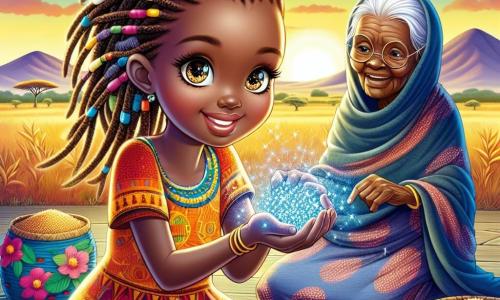
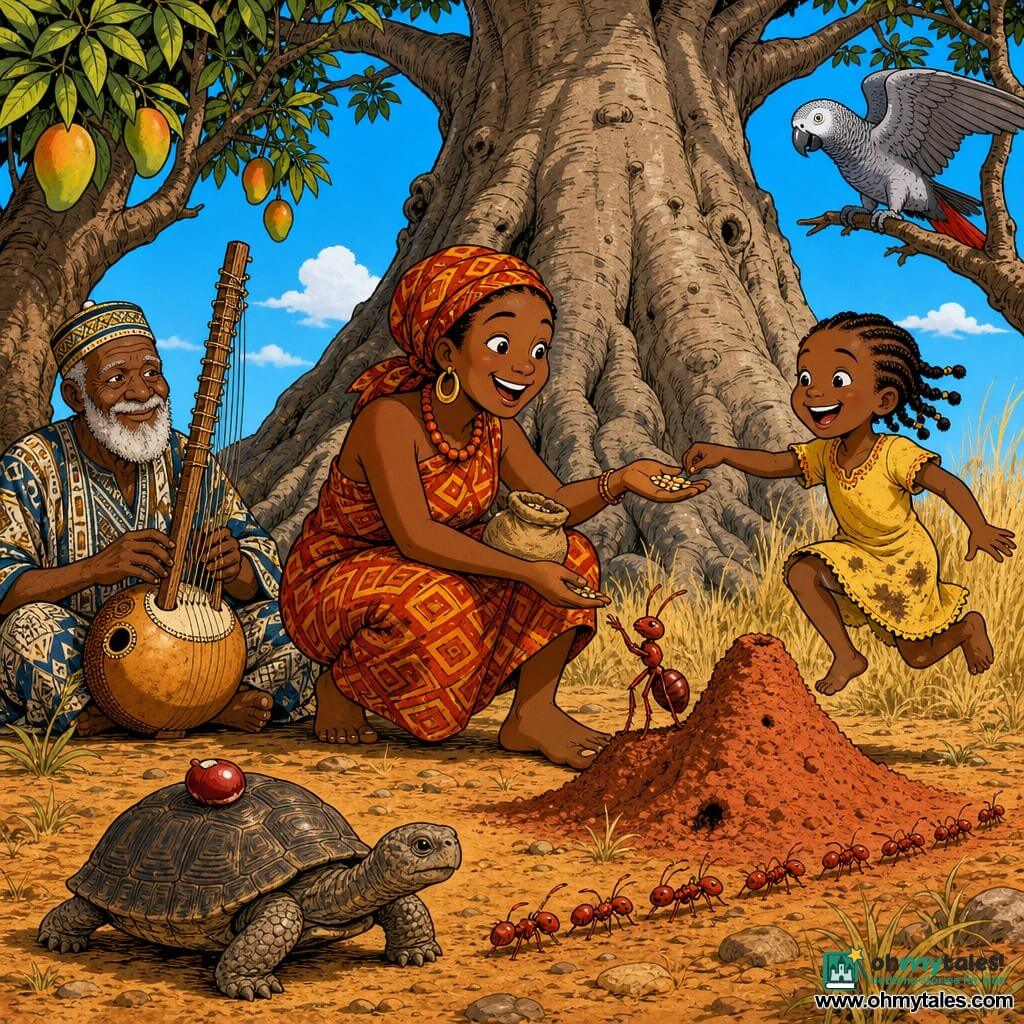
Long ago, when the sky still borrowed its blue from the river, there lived a woman named Mamadou beneath the shadow of a great baobab tree. Mamadou was known throughout her village as the woman with laughter in her eyes and dreams in her heart. Her hair was wrapped in a bright cloth that danced like fire, and her feet kissed the warm dust with every step. But Mamadou had a wish that filled her chest like the drumbeat in the night—she wanted to gather the most wonderful seeds in all of Africa.
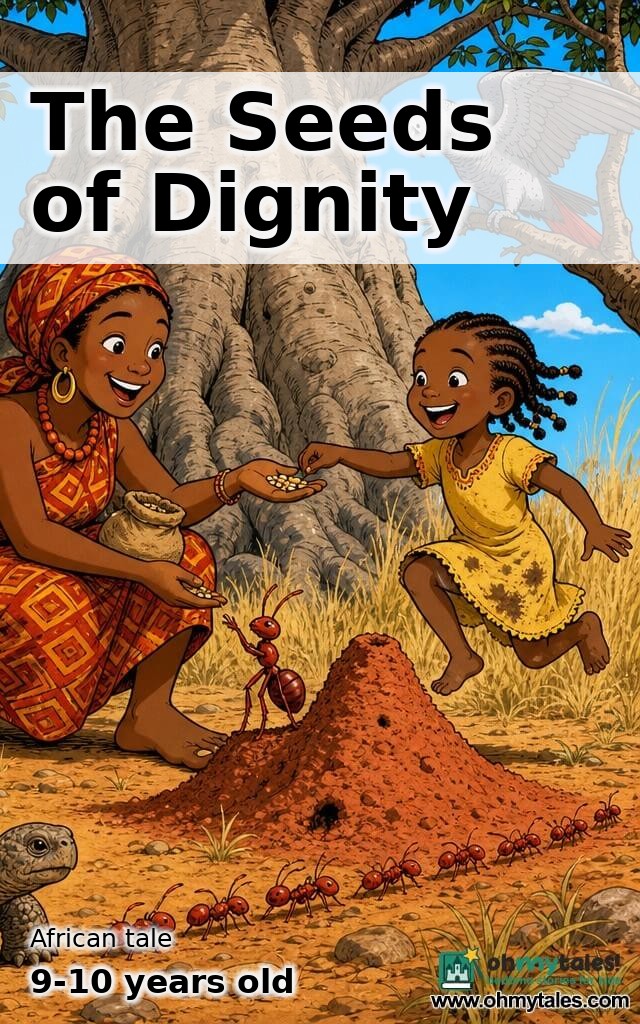
Each evening, as the sun dipped down like a golden fruit, Mamadou would sit at the foot of a red anthill—tall and proud, as if built by wise little kings—and tell her dream to the moon.
“Oh, kind moon,” she'd whisper, “I wish to gather seeds, not just to plant, but to share with the world. Seeds of wisdom, seeds of kindness, seeds of hope.”
The old women of the village would laugh softly and say, “Mamadou, you chase the wind! Only the birds and the ants know the secrets of seeds.” But Mamadou's spirit was gentle and stubborn, like water wearing away stone. She waited, and dreamed, and hoped.
Chapter 2: The Red Anthill's Secret
One early morning, while the dew still clung to the elephant grass, Mamadou walked to the great red anthill. The anthill rose from the earth like a sleeping lion, painted with the color of sunset. She squatted and traced its rough sides with her fingers, hoping for a sign.
Suddenly, a line of tiny red ants marched out, each balancing a crumb or a leaf or a sleepy beetle. The Ant Queen, tall for her kind and shiny as a ripe bean, climbed onto Mamadou's toe and spoke in a voice like rain on drums.
“Why do you always visit our home, woman of dreams?” asked the Queen.
Mamadou smiled, “Your anthill is strong, your children are many, and your tunnels are deep. Tell me your secret, wise Queen. How is it that you always find the best seeds?”
The Queen brushed her antennae. “We are small, but our hearts are steady. We carry what others leave behind. We share, and we work, and we never forget where the good things are hidden. Do as we do, and you too will gather seeds.”
Mamadou thanked the Queen and promised to remember. The ants disappeared, leaving Mamadou with a mind buzzing like a beehive.
Chapter 3: The Wise Old Griot
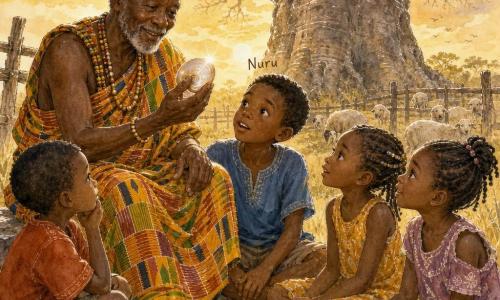
As Mamadou walked back to her village, she met the old griot, Baba Kouyaté. His beard was white as clouds, and his voice wrapped stories around children's hearts like a mother's arms. Baba sat beneath a mango tree, strumming his kora, the music weaving through the air like smoke from a cooking fire.
“Mamadou,” he called, “why does the river flow backward in your eyes today?”
She told him of the ants and her dream to gather seeds.
Baba laughed, deep and slow. “Ah, little sister, seeds hide in many places. Some are hidden in earth, some in words, some in the hearts of friends.”
He plucked a fat mango from above. “Seeds grow best when given with open hands. Tomorrow, at sunrise, follow the gray parrot. He knows the places where hope is buried.”
Mamadou bowed, her heart humming, and promised to listen as carefully as an owl in the dark.
Chapter 4: The Journey of the Seeds
The next morning, Mamadou woke while the stars were still yawning. She followed the gray parrot as it flew from tree to tree, cackling secrets only the wind understood. The path twisted like a lazy river through tall grass and acacia thorns.
Along the way, she met a tired goat herder. His goats were hungry, for the grass was thin. Mamadou gave him half of her millet and, in return, he gave her a small bag of wild seeds—tiny, striped, and strong.
Further along, she met a lonely child. The child had lost her laughter. Mamadou kneeled and sang a song of morning light, and the child's giggle bloomed. The child's mother, grateful, handed Mamadou a calabash filled with seeds from their best harvest.
Still further, Mamadou found a wise old tortoise inching across the path. The tortoise spoke slowly, like the river in dry season. “Mamadou, true seeds are not just for planting, but for giving. Take this,” said the tortoise, offering a shiny red seed carved like a heart. “Share it with someone in need.”
Mamadou thanked each friend, her basket filling with seeds and her spirit with joy. The parrot watched and nodded, then flew toward home.
Chapter 5: The Gift of Dignity
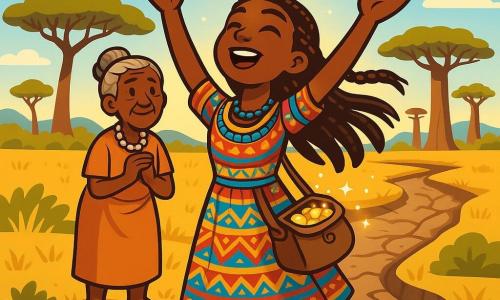
When Mamadou returned to the village, the people gathered by the great baobab, curious about the treasures she carried. The children's eyes shone with excitement; the elders watched with careful hope.
Mamadou spoke, her voice steady as the earth. “Friends, I have gathered seeds from the kindness of many. Some are for the soil, to fill our bellies. Some are for the heart, to fill our days with laughter. The best seeds are those we give to one another—seeds of dignity, respect, and hope.”
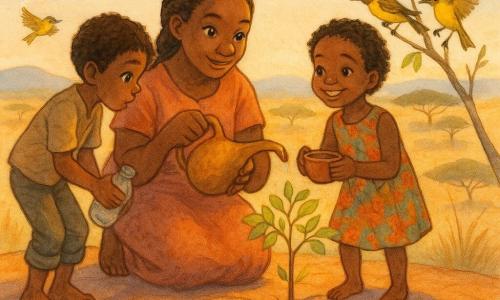
She shared her seeds: some with the hungry, some with the tired, some with the lonely. The villagers planted them together, and soon the earth was covered in tiny green shoots, waving like hands in the breeze.
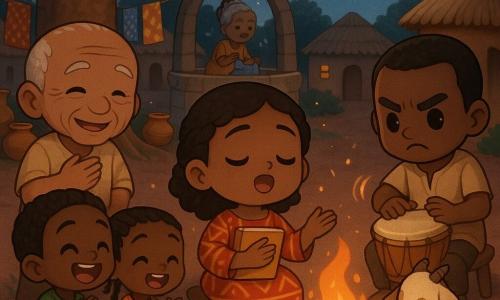
The red anthill, proud and silent, watched. The parrot sang, and Baba Kouyaté played his kora, the song rising like smoke to the sky.
Chapter 6: The Blessing of the Seeds
Time spun its gentle web. The seeds grew tall, the village grew strong, and Mamadou's dream bloomed brighter than the morning sun. People from far and wide came to see the village where kindness grew side by side with millet and maize.
One evening, as Mamadou sat once more at the foot of the red anthill, the Ant Queen appeared. She bowed her tiny head.
“You have honored us, woman of dreams. You have watered the earth with dignity. May your days be long, your laughter loud, and your basket always full.”
The baobab tree rustled its leaves like a mother's lullaby, and the moon blessed Mamadou with silvery peace.
From that day, the villagers remembered: seeds of goodness, once scattered, always return. And so, by the red anthill under the African sky, Mamadou's story grew—rooted in dignity, crowned with blessing, told in every smiling mouth for generations to come.