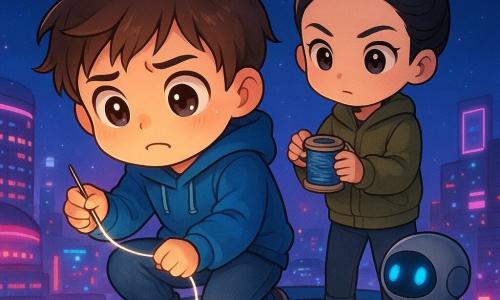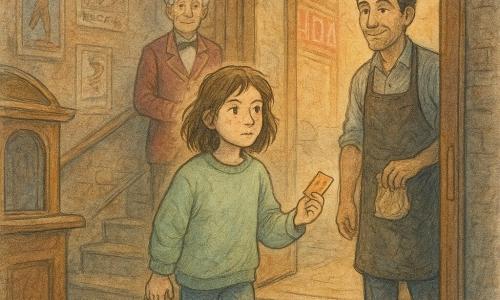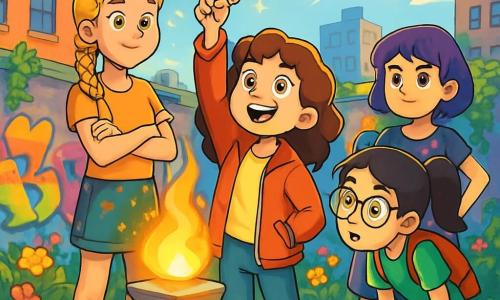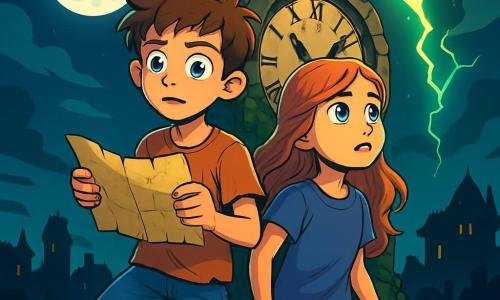
Chapter 1: The Map That Wouldn't Sit Still
In Willowgrate District, the air always smelled like rain that had decided to be polite and wait its turn.
Solar trees lined the pavements—thin metal trunks with leaf-shaped panels that drank sunlight all day and breathed soft light at night. Vines crawled up apartment walls like curious green handwriting. Between the buildings were old garden squares, each one guarded by ancient iron gates, black as cooled lava, with curling patterns that looked like thorns and feathers at the same time. They had been there longer than the newest eco-towers and longer than most of the stories people told.
Mara Reed had grown up counting those gate patterns the way other kids counted stars.
“Three swans, two spirals, one… is that a cat?” she muttered, nose almost pressed to the bars of Gorse Square's gate.
A voice behind her said, “It's a griffin. Obviously.”
Mara turned. Ash Patel stood with his hands in his pockets and his eyebrows raised, like he was always in the middle of a dare. He was almost twelve, and he took “almost” seriously.
“It looks like a cat with anger issues,” Mara said.
“It's a griffin with standards,” Ash replied. “And it's judging you.”
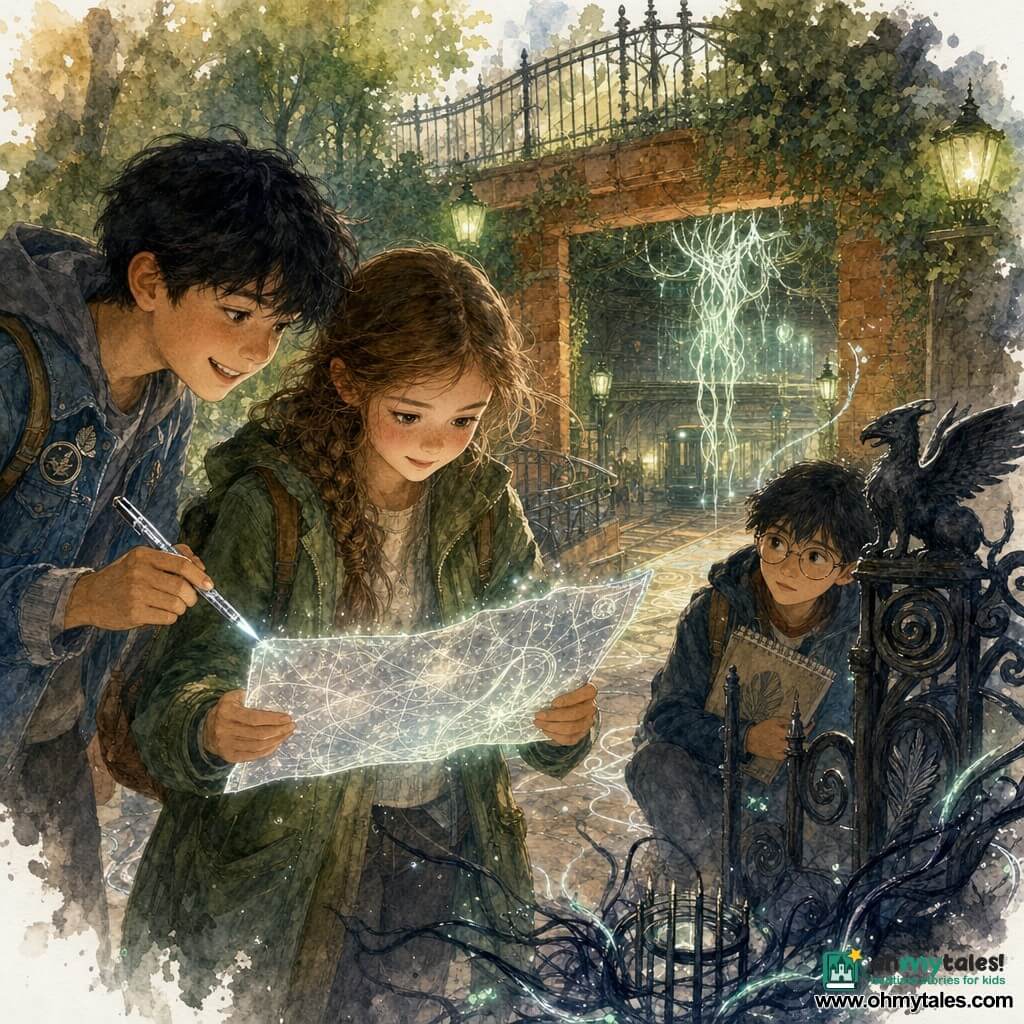
Jun Park arrived at a jog, backpack bouncing, cheeks pink from the cold. Jun was twelve and carried a small notebook everywhere, filled with tidy handwriting and strange doodles that looked like equations learning to dance.
“Sorry,” Jun said. “My mum made me take the compost down. It tried to escape again.”
Ash grinned. “Your compost is more rebellious than you are.”
Jun made a face. “Compost has goals.”
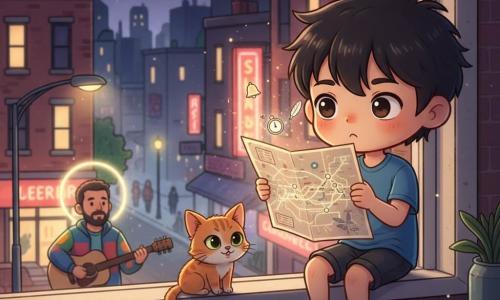
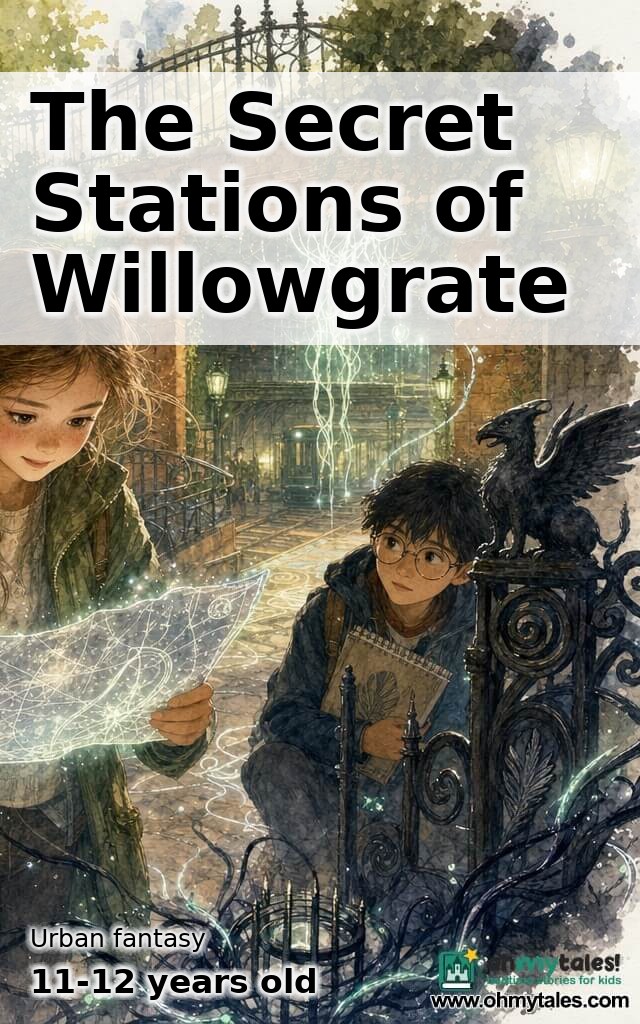
Mara held up what she'd been waiting to show them: a folded metro map she'd found wedged behind the noticeboard at the stop. It looked normal from far away—bright lines, station dots, neat letters. But when she unfolded it, the paper shimmered like a puddle under streetlights. The lines did not stay still. They slid, gently and stubbornly, as if the city beneath were breathing.
Ash leaned in. “Is it… moving?”
“It's pretending not to,” Mara said. “Which is worse.”
Jun's eyes widened. “That's not a regular print. The ink… it's layered. Like—like there's another map under the map.”
Mara nodded. “I saw it when the wind flipped it open. There were stations I've never heard of. And then they vanished.”
Ash tugged the map closer. “Secret stations,” he said, reverently, like he'd just said “secret dragons.”
Mara's stomach tightened with a mix of excitement and a warning she couldn't explain. The city was full of small magic if you looked: street lamps that flickered in Morse code, pigeons that brought lost keys back to their owners, the way certain alleyways smelled like cinnamon on Tuesdays. But secret stations were different. Secret stations meant someone had decided to hide a piece of the city.
And if someone hid it, someone else might want it.
Jun tapped the corner. “Look. Here. The ink is darker.”
Under his finger, a thin silver line emerged, threading between the green and blue routes. It wasn't printed like the others. It looked drawn by moonlight.
The line stopped at a station dot that wasn't on the regular network.
The dot bloomed, slowly, like a tiny flower opening.
A name wrote itself beside it.
GATEHOUSE.
Ash's grin faltered. “That's… not subtle.”
Mara stared past the map to the iron gates of Gorse Square. The curls and thorns. The feathered shapes.
The griffin-cat watched them, frozen in metal.
Mara's mouth went dry. “The squares,” she whispered. “They're protected. Everyone says it's for safety—old rules, old permits. But what if—what if the gates are doing more than keeping dogs out of flowerbeds?”
Jun's voice was careful. “Like keeping something in?”
“Or keeping something out,” Ash said, and for once he sounded less like a dare and more like a question.
The map gave a small, papery shiver. A second name appeared, faint as breath on glass, under the silver line:
HOSTILE WEAVE.
Mara didn't blink. “That,” she said quietly, “sounds like a problem.”
Ash swallowed. “Or a band.”
Jun scribbled in his notebook, fast. “Words on enchanted paper usually mean instructions. Or warnings. Or both.”
Mara folded the map again, but it didn't want to fold. It resisted like a stubborn thought.
“Okay,” she said. “We decode it. We find the stations. We figure out what ‘Hostile Weave' is. And then we… un-weave it.”
Ash's eyebrows rose. “You just invented a verb.”
“That's creativity,” Jun said, pleased. “It counts.”
From the street, the regular metro train rumbled underground, a distant thunder. Mara could almost hear it speaking through the pavement: hurry, hurry, hurry.
She tucked the map into her jacket like it was a secret ember.
“Meet after school,” she said. “At the old gates. Bring snacks. And—Jun—bring that brain of yours.”
Jun saluted with his pencil. “Brain packed.”
Ash tilted his head toward the griffin-cat. “And I'll bring my charm. The city will be dazzled.”
The iron gate's shadow stretched a little longer across the path, as if leaning closer to listen.
Chapter 2: A Station Between Heartbeats
After school, the city felt like it was holding its breath.
Not in a scary way. More like the moment right before a song begins, when the silence is part of the music.
They met at Gorse Square. The iron gates were closed, as always, with a sign that read: PRIVATE GREEN. RESIDENTS ONLY. KEEP THE CITY WILD.
“I live here,” Mara said, and she always said it with a tiny spark of pride. Her building faced the square. Her key opened the pedestrian gate.
Ash leaned in. “Your square is judging us again.”
Jun stepped closer, studying the metalwork. “These patterns… they repeat. But not exactly. Like a code with variations.”
Mara ran her fingers along the cold iron. The metal hummed faintly under her skin, like a fridge door or a power line.
She took the metro map out. The silver line glowed brighter near the word GATEHOUSE.
“Okay,” she said. “How do we get from ‘paper that wiggles' to ‘secret station'?”
Jun flipped to a page in his notebook where he'd drawn the metro map, but cleaner, with little notes. “Enchanted maps usually require a key. Not a metal key. A—concept key. Like a word, or a feeling.”
Ash rummaged in his pocket and produced a regular key. “I have this. It opens my bike lock.”
Mara stared. “Ash.”
He shrugged. “Worth offering.”
Jun pointed at the iron gate. “Maybe the key is… the gate.”
Mara swallowed. She slid her own square key into the gate's lock. It clicked open with a sound like a polite cough.
The moment the gate swung inward, the air inside the square shifted. It smelled greener, deeper, like crushed mint and wet soil. The city noise softened. Even the light seemed to change, filtered through leaves like stained glass.
They stepped in.
The path curved between flowerbeds and small trees. In the center stood an old brick gatehouse, half covered in ivy. No one used it. Kids dared each other to knock on its door and run away. People said it had been a caretaker's shed, a relic from when the squares were tended by people instead of quiet sensors and self-watering roots.
Mara had never dared to go close. Not because she was afraid.
Because it felt like knocking on someone's dream.
But today the map in her pocket warmed, as if approving.
They approached. The door was painted green so dark it was almost black. A brass knob sat in the middle like an unblinking eye.
Ash whispered, “If something eats us, I'd like it known I object.”
Jun whispered back, “If something eats us, it will probably do it politely.”
Mara lifted the metro map and held it against the door.
The paper went flat and still.
The silver line brightened.
The words GATEHOUSE and HOSTILE WEAVE pulsed like a heartbeat.
Then, without any dramatic flash, the door simply became… not a door.
It became a metro entrance.
A sign slid into place above it, white letters on black:
GATEHOUSE STATION.
Below the sign, a ticket barrier appeared, made of iron like the square's gates, with curling patterns that looked like thorns and feathers.
Ash let out a low whistle. “Okay. That's definitely not legal.”
Jun's eyes shone. “It's folded space. The gatehouse is acting like an anchor point.”
Mara stepped forward. The barrier had no place for a card or ticket. Instead, in the center was a small round plate of metal, the size of her palm. Etched into it was a symbol like an eye inside a leaf.
Mara placed her hand on it.
The metal was cold at first, then warmed. A soft click, like a camera shutter.
The barrier opened.
“Residents only,” Ash read the old sign behind them, and laughed nervously. “Well. Technically… you are.”
They descended a short flight of stairs that definitely had not been there yesterday. The air grew cooler. The sound of the city above faded to a distant ocean of engines and voices.
At the bottom was a platform.
It was small, clean, and oddly cozy, like a secret room in a library. The tiles were dark green. Lamps hung overhead, but their light was not electric; it was the color of fireflies.
On the wall was a metro map—an older style, with the same lines as the modern one, but with extra silver routes curling like hidden rivers.
Jun walked along it, scanning names. “Gatehouse… there… and look. There are others. Brambleturn. Candle Dock. Echo Court.”
Ash pointed. “And that one: Loomline.”
Mara's stomach dipped. Loomline.
The word felt like fingers tugging a thread in the back of her mind.
On the far end of the platform, a bench sat beneath a poster. The poster showed a smiling cartoon fox in a conductor's hat. It read:
BE CREATIVE. KEEP THE CITY KIND. REPORT WEAVING.
Under that, in smaller letters:
HOSTILE WEAVE IS A CRIME.
Ash scratched his head. “Hostile weave. Like… knitting with bad intentions.”
Jun frowned. “Weaving can mean making connections. Routes. Stories. If someone is weaving something hostile, maybe they're twisting the city's pathways. Changing where people end up.”
Mara thought of the secret stations, hidden under the regular ones, like thoughts under words. “If they can change the map,” she said, “they can change the city.”
A wind moved through the station, though there was no tunnel in sight. It brushed their faces like a hand turning a page.
Then the train arrived.
It didn't roar. It sighed.
A short metro train slid into view, its windows dark as ink. Silver patterns ran along its sides, shifting like the map's lines. The doors opened with a quiet chime.
No passengers stepped out.
On the front, where a normal train would show the route name, glowing letters formed:
LOOMLINE.
Ash took a step back. “I don't like it. It has the vibe of a dentist with secrets.”
Jun looked at Mara. “The map led us here for a reason.”
Mara's heart thudded. Determination, she reminded herself, wasn't the loud kind of bravery. It was the kind that moved your feet even when your brain tried to glue them to the ground.
She tightened her grip on the map.
“We get on,” she said. “We find out what's being woven. And we stop it.”
Ash exhaled. “Okay. But if we meet a villain who monologues, I'm interrupting.”
Jun nodded. “Please do.”
They stepped into the train.
The doors closed behind them with a sound like a book shutting.
Chapter 3: The Loom Under the City
Inside, the train was brighter than it looked from the outside. The seats were covered in fabric with subtle patterns—leaves, feathers, tiny eyes—woven so neatly Mara wondered if the cloth had been made by someone patient enough to befriend spiders.
There was no driver's cabin. At the front, a metal plaque read:
THIS TRAIN RUNS ON ROUTES AND REASONS.
Ash ran a finger over it. “That's… unsettlingly poetic.”
Jun sat, already scribbling. “Magic systems often use metaphors as mechanisms.”
Mara pressed her forehead lightly against the window. Outside was a tunnel, but not the usual concrete. The walls looked like packed earth mixed with bits of old brick, threaded through with roots that glowed faintly, as if the trees above were dreaming in green light.
The train moved without jolting. It felt like being pulled along a ribbon.
Stations flashed by—Candle Dock, where lanterns hung from the ceiling like upside-down jellyfish; Echo Court, where the walls were tiled with mirrors that reflected not faces but snippets of places—an empty playground swing, a rooftop garden, a cat watching rain.
At each station, the doors opened. No one got on. No one got off.
“Is it… waiting for someone?” Ash asked.
Jun pointed to the floor. The silver patterns there were shifting, slowly, like threads being rearranged. They all seemed to drift toward the doors, as if the train itself was trying to guide them.
Mara swallowed. “It's waiting for us.”
The next stop arrived with a soft chime that sounded oddly like a throat clearing.
LOOMLINE.
The doors opened.
A platform stretched out, wider than the others, and dimmer. The lights here were not firefly-green but pale and watery. The walls were covered in posters, but the posters didn't advertise concerts or eco-fairs. They advertised feelings.
FEEL SMALL.
STAY LOST.
FOLLOW THE CROWD.
Ash read one and snorted. “Wow. Subtle. Who designed this, a grumpy fog?”
Jun's voice was tight. “This is influence magic. Suggestion. It doesn't force you. It nudges.”
Mara stepped out. Her shoes clicked on tiles that looked like they were made from pressed fabric, as if the whole platform had been woven and then hardened.
At the far end stood an archway made of iron threads twisted together. Beyond it was darkness with a faint rhythmic sound: clack… clack… clack…
Like a loom.
Ash peered into the arch. “Do we have to go in there?”
Mara's fingers curled around the map. The words HOSTILE WEAVE had grown darker, like ink fed by anger.
“Yes,” she said. “That's the point.”
They walked through the archway.
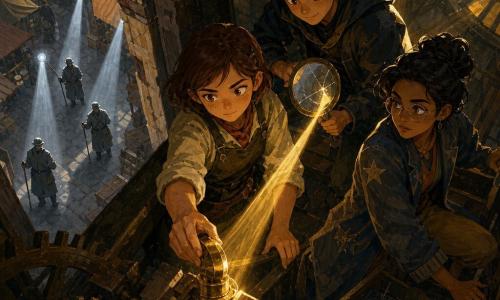
The darkness opened into a vast chamber that didn't feel like it should fit under the city. Above them, roots hung like chandeliers. Below, the floor shimmered with a web of silver lines—routes, pathways, connections.
In the center stood the loom.
It was enormous, made of iron and old wood, with moving parts that clicked and clacked steadily. Threads ran through it—some silver, some green, some bright as sunrise.
And some were black.
The black threads didn't look like ordinary thread. They looked like thin strips of night, cut from the space between streetlights. They drank the light around them. Where they touched the silver lines on the floor, the lines dimmed and twisted away, as if ashamed.
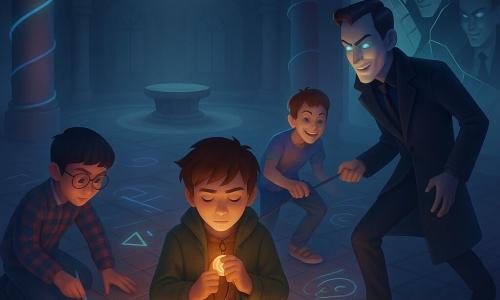
Near the loom stood a figure in a long coat the color of wet asphalt. Their face was hard to see, not because of a hood, but because your eyes slid off it, like trying to focus on smoke.
They held a shuttle in one hand and a roll of black thread in the other.
They were weaving.
Jun's whisper was barely audible. “That's… the Weaver.”
Ash whispered back, “Do we say ‘excuse me' or ‘stop doing that'?”
Mara's pulse hammered. She looked at the silver routes on the floor, at how they bent away from the loom, avoiding the black thread.
A thought struck her with sudden, icy clarity: the city was a story, and someone was editing it.
She stepped forward, voice louder than she felt. “Hey!”
The figure paused. The loom's clacking slowed but did not stop.
A voice came from the figure—calm, flat, like a customer service line. “Children are not scheduled for Loomline.”
Ash muttered, “Neither is this vibe.”
Mara lifted the map. “We found your stations. We know you're weaving something hostile.”
The figure tilted their head. “Hostile is a matter of perspective. I am weaving order.”
Jun shook his head. “That's not order. That's control.”
The Weaver's attention shifted to Jun, and Mara felt it like a cold finger under her collar. “Control prevents chaos.”
Ash crossed his arms. “Chaos is where all the good snacks come from.”
The Weaver did not laugh.
They lifted the black thread and let it run between their fingers. “The city grows too wild,” they said. “People take wrong turns. They find places they were not meant to. They dream bigger than their buildings. It makes the routes… messy.”
Mara's jaw clenched. “Messy is normal. Messy is alive.”
The Weaver's voice remained smooth. “Alive things can be tamed.”
Mara stepped closer until she stood at the edge of the silver routes on the floor. The map in her hands fluttered. The silver line on it pulsed, like it wanted to leap out and bite.
“What happens when you finish?” Mara asked.
The Weaver lifted the shuttle, and the loom clacked louder. A black thread slid through, stitching itself into the pattern beneath the city.
“People will go where they are told,” the Weaver said. “They will think it was their idea. They will stop looking for hidden doors. The squares will remain locked. The gates will become cages.”
Jun's face went pale. “The protected squares… they were never just parks.”
“They are knots,” the Weaver said, almost gently. “Anchors. Places where the city's old magic ties itself to the new. Iron and ivy. Gate and green. If you cut the knots, the magic unravels.”
Mara looked back, imagining Willowgrate's iron gates turning from guardians into prisons.
She swallowed her fear and did something she always did when she didn't know the next step:
She invented one.
“You're using a loom,” she said. “So we'll use… creativity.”
Ash blinked. “That's your plan? Creativity?”
“It's better than ‘panic politely',” Mara said.
Jun's eyes flicked to the loom. “If the squares are knots, then the routes are threads. We might not be able to fight the Weaver directly… but we could change the pattern.”
The Weaver's head tilted again. “Children cannot out-weave me.”
Mara smiled, sharp and bright. “You've never met kids with markers and boredom.”
Ash grinned. “We're basically a natural disaster.”
Mara unfolded the metro map.
The silver routes shimmered, alive.
And for the first time, she realized the map wasn't just showing them the city.
It was listening.
Chapter 4: Drawing New Doors
Mara held the map up like a shield. The paper fluttered, eager, as if it wanted to become something else.
Jun leaned close. “It's responsive,” he whispered. “Like—like a sketchbook that turns drawings into directions.”
Ash dug into his backpack. “I have a pen. A good one. It writes on wet paper.”
Mara almost laughed. “Of course you do.”
Ash shrugged. “I'm prepared for sudden poetry.”
The Weaver's fingers tightened on the black thread. The loom's clacking grew faster, and the black strands on the floor spread like spilled ink.
Mara's mind raced. If the city was a story, then the map was the page. And if the Weaver was rewriting routes, maybe they could… add something the Weaver hadn't planned for.
Something playful. Something unpredictable.
Something creative.
“Jun,” Mara said, “tell me one thing the Weaver can't stand.”
Jun glanced at the posters on the platform beyond. “Choice,” he said. “Unplanned connections.”
Mara nodded. “Then we make connections.”
She took Ash's pen.
Her hand hovered over the map. The lines on it shifted, trying to anticipate her. The silver route to Loomline glowed, and the words HOSTILE WEAVE seemed to press up through the paper like a bruise.
Mara drew a dot.
Just a dot, between two stations that weren't connected.
The paper warmed.
The dot sank in, as if the ink had become a seed.
A new station name wrote itself, slowly, in neat silver letters:
SUNSPOT.
Ash let out a breathy laugh. “That's adorable.”
The Weaver's head snapped toward the map. The air in the chamber tightened, as if the roots above had become wires.
“You cannot add stations,” the Weaver said, voice suddenly sharper. “Only the city may—”
“Maybe the city likes us,” Ash said brightly.
Jun pointed at the floor. “Look!”
A thin silver line unfurled from the new dot on the map, threading toward Loomline. On the chamber floor, a matching line lit up, cutting through the dimness like a crack in a wall.
Where the silver line touched a black thread, the black thread hissed—not aloud, but in the way your skin knows when milk has gone off.
It recoiled.
Mara drew again, faster now.
Another dot. Another name:
POCKET GARDEN.
A silver line blossomed across the floor, curving around the loom like a ribbon thrown in a dance. The black threads hesitated, as if confused.
Ash whooped softly. “We're making loopholes!”
“We're making doors,” Mara said.
The Weaver moved, gliding toward them. The coat swayed like a curtain in a draft. The loom clacked harder, feeding black thread into the pattern.
The floor's black lines surged toward Mara's feet.
Jun grabbed her arm. “Mara—!”
Mara didn't step back. She drew one more station, right beside Loomline, as close as she dared.
This one she named without thinking, straight from the iron gates and the ivy and the feeling of safety in her chest:
GRIFFIN GREEN.
The map flashed, bright as a phone screen in a dark room. The silver lines on the floor flared.
And with a sound like a breath being released, an iron gate rose from the tiles between Mara and the onrushing black threads.
It was smaller than the square gates above, but it had the same curling patterns—thorns and feathers, swans and spirals, and yes, a cat-like griffin with a judgmental face.
The gate slammed shut with a decisive clang.
The black threads hit it and stopped, writhing like worms against salt.
Ash stared. “You just—drew—an actual gate.”
Mara's hand shook around the pen. “Apparently.”
The Weaver stood on the other side of the gate, face still hard to focus on, but their anger was clear in the way the air around them tightened.
“This is vandalism,” the Weaver said.
Jun's voice rose, steady now. “It's revision. The city isn't your worksheet.”
Mara looked down at the map. The new stations glowed softly. They felt… friendly. Like street corners that remembered your name.
But she could also feel the pull of the Weaver's pattern, heavy and insistent.
Jun flipped through his notebook, then looked up. “Mara, the squares are knots. If we strengthen the knots—if we connect them creatively—the hostile weave can't choke the routes. It'll have to go around.”
Ash nodded fast. “We make a mess the Weaver can't tidy.”
Mara's mind filled with images: iron gates linked by silver lines, pocket gardens blooming under stairwells, sunspots on rooftops where people could pause and breathe.
“A network,” she said. “A creative one. Not just secret stations—secret rest stops. Places that make people curious.”
The Weaver's voice slid through the gate. “Curiosity leads to trespass. Trespass leads to danger.”
Mara met the blurry face with her own stubborn gaze. “Curiosity also leads to art. To solutions. To kids figuring out what adults missed.”
Behind them, the loom clacked and clacked, trying to drown her out with certainty.
Mara turned to Jun and Ash. “We need more than three stations,” she said. “We need a pattern big enough to hold.”
Jun nodded. “We should connect the squares. Use the gates as anchors. Make a route the Weaver can't predict.”
Ash grinned. “A rebellion, but with better signage.”
Mara held the map out between them like a shared secret. “Then let's draw.”
They crouched on the woven tiles, shoulder to shoulder, and began to add stations—carefully at first, then bolder.
Jun suggested names that felt like puzzles: MIRROR STEP. THUNDER QUIET. RAIN LIBRARY.
Ash added ones that made Mara laugh: SNACK TUNNEL. FREE SOCK CORNER.
“Absolutely not,” Mara said, smiling despite herself.
“Fine,” Ash said, scribbling. “SOCK MUSEUM.”
Jun snorted. “Compromise: SOCK ARCHIVE.”
As they drew, silver lines spread across the chamber floor, weaving a new pattern over the old. Not neat. Not symmetrical. But alive—full of loops, detours, and bright surprises.
The black threads pushed, trying to reclaim space, but now they had to deal with gates and gardens and sunspots. They snagged and slowed, like a bully tripping over toys left deliberately in the hallway.
The Weaver's voice sharpened into something almost human. “Stop.”
Mara stood, map pressed to her chest. “No,” she said. “We're not done.”
And somewhere above, in Willowgrate's protected squares, the iron gates creaked softly, as if listening for their names.
Chapter 5: The Night the Gates Sang
The chamber trembled.
Not like an earthquake. Like a drum being tapped—testing the sound of the world.
The Weaver lifted both hands, and the black threads rose from the floor in thin ribbons, twisting in the air. For a moment they looked almost beautiful, like ink in water. Then they snapped toward the silver routes the kids had drawn, lashing at them, trying to bind them tight.
Jun grabbed Mara's sleeve. “If it wraps the new lines, it'll strangle them.”
Ash looked around wildly. “We need… scissors? A sword? A very angry hamster?”
Mara's gaze flicked to the iron gate she'd drawn—the one with the griffin-cat. It stood firm, humming faintly, like a tuning fork.
“The gates,” Mara said. “They're made of old iron. Old rules. They can hold magic.”
Jun understood instantly. “We link them.”
“How?” Ash demanded, voice high.
Mara lifted the map again. The new stations glowed, but one spot pulsed brighter than the rest: GRIFFIN GREEN.
It wasn't just a station name.
It was an invitation.
Mara pressed her palm to the map, right over Griffin Green, and pictured the iron gates above—Gorse Square, Alder Square, Bracken Square—their black patterns like frozen music.
“I'm a resident,” she whispered, and felt silly and powerful at once. “I belong here.”
The map warmed beneath her hand. The silver line connected to Griffin Green brightened until it was almost white.
The iron gate in front of them shivered.
Then, with a sound like wind through branches, the gate's patterns began to glow.
The thorns and feathers lit up, line by line, until the whole thing shone like a drawn constellation.
Ash stared. “Mara… it's singing.”
It wasn't a song you heard with your ears. It was a vibration in your ribs, a feeling of being recognized.
Jun stepped closer, eyes wide. “The gates are… responding to the network.”
The black threads slammed against the glowing iron and recoiled, snapping back like burnt string.
The Weaver took a step back, coat rippling. “This is not permitted.”
Mara's voice steadied. “You don't get to decide what the city permits.”
Jun held up his notebook. “The city's magic runs on connection, not control. You're trying to turn it into a straight line.”
Ash added, “Straight lines are boring. Also, they make you walk into lampposts.”
The Weaver's hand tightened, and the loom clacked so fast it became a buzzing, angry sound. More black thread poured through, thickening the hostile pattern beneath their feet.
Mara's mind flashed with fear: what if the Weaver overwhelmed their new routes? What if the gates above locked forever? What if the city became a place where curiosity was punished with wrong turns and closed doors?
Then she remembered something small: how she used to draw chalk doorways on the pavement as a little kid, pretending they led to pirate ships or moon bases. Most people stepped over them without noticing. But sometimes another kid would stop and step through, and for a second the ordinary street became a stage.
Creativity wasn't a weapon like a sword.
It was a door you drew when there wasn't one.
“Mara,” Jun said urgently, “we need to anchor the network to something bigger. Something the Weaver can't ignore.”
Mara looked up at the roots hanging above, glowing faintly. They came from the trees in the squares, from rooftop gardens, from every planted strip along sidewalks. In this eco-city future, green wasn't decoration. It was infrastructure. It was life support.
“It's all connected,” Mara whispered. “The roots. The gates. The routes.”
Ash nodded, catching on. “So we connect the routes to the roots.”
Jun's eyes shone. “Yes. Make the new lines… feed the city. Not just travel through it.”
Mara raised the pen again and drew one final station at the center of their messy, brilliant network.
She named it:
ROOTLIGHT.
The moment the name formed, the chamber's air changed. The firefly lamps brightened. The roots overhead glowed, not faintly now, but warmly—like a thousand tiny lanterns waking up.
Silver lines on the floor rose slightly, becoming threads of light. They reached upward, touching the hanging roots.
And the roots answered.
They pulsed, and the light traveled up them, racing through the earth, into the squares above, into every planted pocket of the city.
The iron gate before the Weaver blazed.
Far above, in Willowgrate, old gates began to hum in harmony. Not loudly. Not enough for most adults to notice over their podcasts and dinner plans. But enough for the city to feel it.
Enough for the magic to remember itself.
The Weaver staggered as if hit by a gust of wind. Their voice, when it came, was thin. “You are making it… unpredictable.”
Mara stepped closer to the glowing gate. “Good,” she said. “The city isn't a machine. It's a living thing.”
The black threads writhed, trying to hold on, but now the silver network was fed by rootlight. Where the black touched the silver, it didn't just hiss.
It frayed.
Slowly, the hostile weave began to come undone. Not all at once—no dramatic explosion—but like a bad knot finally giving up after patient fingers keep working at it.
Jun exhaled shakily. “It's weakening.”
Ash swallowed. “So what now? Do we… arrest the Weaver? Do we tell a teacher?”
Mara almost laughed at the idea of explaining to a teacher that they'd battled urban knitting under the metro.
The Weaver stood very still. The loom's clacking slowed. The black thread sagged in their hand like tired smoke.
“You will regret this,” the Weaver said, but there was less certainty now, and more fear.
Mara's voice softened, surprisingly. “You don't have to do this,” she said. “If you're scared of chaos, learn to make something with it. Draw a door instead of building a wall.”
For a moment the blurry face seemed to sharpen—just a little—like someone peeking out from behind a curtain.
Then the Weaver stepped backward into the shadow behind the loom.
And vanished.
The loom gave one last clack… clack… clack…
Then it went silent.
The chamber held its breath again.
And in the quiet, Mara felt the city's pulse—steady, messy, bright.
Chapter 6: Morning on the Silver Route
The train returned them to Gatehouse Station as gently as if it didn't want to wake anyone.
When they climbed back up through the gatehouse door, the square looked the same—ivy, paths, winter-bare branches reaching into the sky.
But it didn't feel the same.
It felt… slightly more awake.
The iron gates of Gorse Square gleamed, though no one had polished them. The griffin-cat looked less judgmental and more like it was trying not to smile.
Ash stretched. “So. We saved the city with arts and crafts.”
Jun tucked his notebook away carefully. “With applied imagination.”
Mara held the map, now perfectly still. The silver routes were still there, but they no longer wriggled like secrets trying to escape. They lay calmly, like a promise kept.
“What happens now?” Ash asked.
Mara looked at the map. New stations shimmered faintly, hidden unless the light hit them just right. Sunspot. Pocket Garden. Rootlight. Mirror Step. Rain Library. Even—unfortunately—Sock Archive.
“They're there,” Mara said. “If someone needs them. If someone looks.”
Jun nodded. “The city will choose who sees. That's how it stays kind.”
Ash tilted his head. “And the Weaver?”
Mara thought of the smooth voice, the fear under it. “They ran,” she said. “But hostile ideas don't disappear forever. They try on new coats.”
Jun's expression was serious. “So we keep the network alive.”
Mara smiled, small and determined. “We make things. We leave good doors.”
They walked out of the square together. The city beyond was bright with morning—buses whispering past, cyclists gliding by, rooftop gardens catching the sun like green crowns.
At the metro entrance, a regular map hung behind glass. Mara glanced at it, expecting it to look plain again.
It did.
And then, just for a second, in the reflection of the passing crowd, she saw a faint silver dot appear near Willowgrate.
SUNSPOT.
A tired-looking woman paused, frowning at the map like she'd forgotten something important. Then her face softened. She stepped away from the usual route and headed down a side street, as if following an idea.
Ash noticed too. “Did you see—”
“Yes,” Mara whispered.
Jun smiled. “The city's giving people options.”
They stood on the pavement, three almost-twelve-year-olds in a city that pretended it was ordinary.
Mara tucked the map into her jacket. It wasn't heavy, but it felt important, like a pencil that could redraw a maze.
“Same time tomorrow?” Ash asked, trying to sound casual and failing.
Mara looked up at the iron gates of the square, at the vines and solar trees, at the big, buzzing, mysterious city.
“Tomorrow,” she said. “And the day after that.”
Jun nodded. “We'll keep creating.”
Because creativity wasn't just making something pretty.
Sometimes it was making a path where someone else had tried to erase it.
And in Willowgrate, under the old gates that remembered how to sing, the city kept its secret stations ready—waiting between heartbeats—for anyone brave enough to draw a new door.