Chapter 1: The Trees That Remember
Mina lived in Brightroot Quarter, where the sidewalks were made from recycled glass that caught the sun like spilled candy, and where the air always smelled faintly of mint and rain.
The old trees were the real guardians.
They stood in careful lines between apartment buildings and rooftop gardens—plane trees and chestnuts, thick as pillars, their bark scarred with the century. People said they'd been planted in the early 1900s, back when the city still wore soot like a coat and horses clopped over cobblestones. Now the trees wore fairy lights in winter and bird nests in spring. They drank the city's noise and gave back calm.
Mina was eleven, small for her age, sharp-eyed, and famous in her building for noticing things other people stepped over. She noticed how the wind changed direction near the oldest chestnut, as if it had manners. She noticed how the streetlamp outside the bakery flickered only when someone lied. She noticed, most of all, when something went wrong.
It started with the market.
Brightroot Market sat at the edge of the quarter, tucked under an elevated train line that rumbled like a distant dragon. It was the kind of place where you could buy dragonfruit and bicycle parts, dumplings and secondhand books, and hear five languages before you reached the honey stall. The market felt like a living room for the neighborhood—warm, noisy, and a little messy.
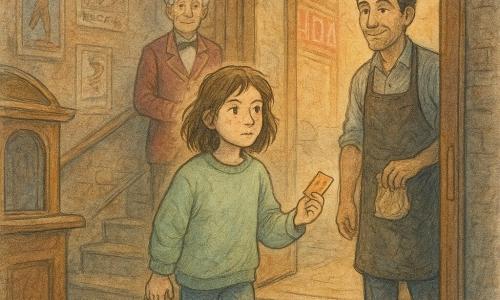
One Tuesday after school, Mina went to pick up mushrooms for her grandmother. She threaded between crates of oranges and bouquets of herbs.
“Two coins for a smile, three if you tell me a secret,” called Mr. Jasso at the flower stall.
Mina smiled anyway. “Secrets are expensive.”
He winked. “Then I'll settle for news.”
Mina had news, but she didn't like it.
A white notice had been pasted on a pillar near the entrance, so bright it looked rude in the shadowy aisle.
REDEVELOPMENT NOTICE.
SURVEYORS WILL ARRIVE.
THE MARKET WILL BE ASSESSED FOR “STRUCTURAL IRREGULARITIES.”
The words were printed in a clean font that tried to pretend it wasn't threatening.
“Structural irregularities?” Mina muttered. The market had stood here longer than her dad had been alive. It had survived storms and strikes and the time someone tried to sell a “genuine unicorn horn” that turned out to be a painted umbrella handle.
An old woman selling ribbons leaned toward Mina, her eyes shiny as black buttons. “They're coming for the spaces between things,” she whispered.
“What does that mean?”
The woman's mouth tightened. “It means they don't like what they can't measure.”
Mina bought the mushrooms and hurried home. On the way, she crossed through Brightroot's central green, where the oldest trees made a cathedral of branches. The air under them always felt different—cooler, softer, as if the city held its breath.
Near the largest chestnut, Mina saw a symbol scratched into the bark: a simple spiral, like a curled fern.
She had seen that spiral before.
On rooftops.
She looked up. Between leaves and lamplight, a shadow moved—quick, confident, human-shaped. Then it was gone, swallowed by the skyline.
Mina's heart gave a small, stubborn thump.
If there was a patrol on the roofs, it meant something was happening. It meant the city was waking up its quieter defenses.
And Mina, who had never liked being told to wait for grown-ups, decided she would find out why.
Chapter 2: A Footstep on the Skyline
That night, Mina couldn't sleep. The train hummed in the distance. Somewhere, a siren wailed and then faded, like a note held too long.
She lay on her bed with her window cracked open, listening to the leaves of the old trees talk to each other in a language that sounded like paper rustling. Brightroot Quarter was safe, everyone said. Protected. But Mina had learned that “safe” was not the same as “unchanging.”
A soft tap came at the window.
Mina sat up so fast her blanket slid to the floor.
Tap. Tap-tap.
She crept over and pulled the curtain aside.
On the fire escape outside, balanced like a dancer on the narrow metal rail, stood a boy in a dark hoodie. Not a grown-up. Not even a teenager, really—maybe thirteen. His hair stuck out in spiky tufts as if he had slept inside a laundry basket. A thin silver cord looped around his wrist, and the end of it trailed into the night like a line of moonlight.
He grinned when he saw her. “You're the one who looks up.”
Mina opened the window a cautious inch. “Who are you?”
“Call me Lark.” He tilted his head. “You're Mina. You buy mushrooms like they're classified information.”
“I buy mushrooms because my grandmother makes soup.”
“Soup is important. So is noticing.” Lark lowered his voice. “Did you read the notice at the market?”
Mina's stomach tightened. “Everyone did.”
“Not everyone understood it.” Lark's eyes flashed toward the trees below. “They're sending surveyors. The kind that don't just measure wood and stone.”
Mina opened the window wider. “What kind?”
“The kind that can't stand magic.” Lark said the word softly, like it was a candle flame. “They call it ‘irregularities' so they can scrub it away.”
Mina swallowed. She had always known magic existed, the way she knew the city had tunnels and old songs and secrets under its streets. In Brightroot Quarter, magic wasn't fireworks. It was small and steady. It was the way a lost cat always found its way home through the green. It was the way the trees kept the air clean even when the rest of the city choked.
“What does this have to do with rooftops?” she asked.
Lark's grin returned. “Because the rooftops are where the city keeps its spare stars. And the patrol keeps watch so no one steals them.”
“That sounds… ridiculous.”
“It is,” Lark agreed cheerfully. “And also true. Listen, Mina. The roof patrol is short a pair of eyes. The market is in danger. The trees are worried.” He nodded toward the chestnut, barely visible in the dark. “And you—” he pointed at her “—are the kind of kid who won't sit still while someone takes your neighborhood apart.”
Mina's pulse beat in her throat. “You're inviting me?”
Lark held out his hand. The silver cord around his wrist lifted, as if it had its own curiosity.
“Just for a walk,” he said. “A rooftop walk.”
Mina glanced at her bedroom door. Her grandmother would be asleep, her breathing deep and steady. Mina could leave a note. She could be careful. She could—she stopped herself before she found too many excuses. Autonomy, her grandmother always said, was doing the right thing without someone holding your elbow.
Mina grabbed her sneakers, her jacket, and a small flashlight. Then she wrote on a scrap of paper:
Went out for air. Back soon. Love you.
It wasn't a perfect lie. It was a tiny truth with a missing piece.
She climbed out onto the fire escape.
The night air hit her like cool water. The city's lights spread out below, windows glowing like a thousand little aquariums. Lark climbed first, up and over the railing to the roof, moving with the ease of someone who had practiced in storms.
Mina followed, more slowly. Her palms were damp. Her shoes scraped.
Lark reached down and steadied her arm. “Don't fight the height,” he murmured. “Make friends with it. It's just space that hasn't decided what it wants to be yet.”
Mina got her feet on the gravelly rooftop and stood up.
From here, the city looked different. The streets were lines of dark ribbon. Cars were small beetles. The elevated train was a silver snake. Above it all, the wind moved like an invisible animal.
Lark pointed across the rooftops. “That's our route. Quiet as possible.”
Mina took a breath. The skyline waited.
And then, with one careful step, she became part of it.
Chapter 3: The Roof Patrol and the Map of Breath
They crossed three buildings by way of low walls and metal ladders. Mina's fear didn't vanish, but it shifted into something sharper and more useful: attention. She watched where she put her feet. She listened for loose gravel. She tasted the air.
On the fourth roof, someone was waiting.
A tall woman sat on the edge like it was a park bench, her boots swinging over the drop. She wore a long coat lined with patches that looked like stitched-on constellations. Her hair was braided tight, and a pair of round glasses reflected the city lights, making her eyes look full of tiny moons.
“Late,” she said, without turning her head.
Lark raised both hands. “Brought a recruit.”
The woman finally looked. Her gaze landed on Mina and felt like a measuring tape made of smoke—careful, not unkind.
“This is Mina,” Lark added quickly. “She sees things.”
Mina cleared her throat. “Hi.”
The woman nodded once. “I'm Sable. Roof Patrol. We don't make trouble. We prevent it.” She jerked her chin at Mina. “How's your balance?”
“Unpopular,” Mina said honestly.
Lark snorted. Sable's mouth twitched, almost a smile.
Sable stood and walked to a small wooden box near a vent. The box was painted the color of wet stone and sealed with a brass latch. She opened it, and Mina felt a sudden hush in the air, as if the city leaned closer to listen.
Inside was a map.
Not paper. Not cloth. It looked like a sheet of thin, dark glass with lines of light running through it—streets, rooftops, trees, riverways. The lines moved slowly, like they were breathing.
“This is the Map of Breath,” Sable said. “It shows where the city is alive.”
Mina stared. Brightroot Quarter pulsed softly on the map, lit in green-gold. The market was a warm knot of light. The old trees were bright veins.
And along the edge of the market's glow, there was a spreading stain of dull gray.
“What's that?” Mina asked.
Sable's voice turned quieter. “Surveyors. Not the normal kind. They carry rules like hammers. They tap places like your market and listen for anything that sounds like wonder.” She closed her fingers gently over the map, as if she could comfort it. “If they find it, they mark it. If it's marked, it gets ‘fixed.'”
“Fixed how?” Mina asked, though she already suspected.
“Smoothed out. Simplified. Redeveloped.” Lark's grin had disappeared.
Mina's hands curled into fists. “Can't we just tell people? Protest?”
Sable shook her head. “Some will listen. Some won't. The surveyors don't care about votes. They care about certainty.” She looked at Mina. “Magic survives in places that are loved, and in people who choose to protect it. Quietly. Cleverly.”
Mina swallowed. “So what do we do?”
Sable snapped the latch shut and slid the box under her arm. “We keep the market unmeasurable.”
Lark brightened a little. “We make it confusing.”
Sable shot him a look. “We make it resilient.” Then, to Mina: “The market has a heart. Every true place does. A small anchor of old magic. If the surveyors find the heart, they'll cage it and the market will turn into a hollow shell with nice lighting.”
Mina pictured Brightroot Market replaced by a polished mall with identical shops and music that sounded like elevators. Her throat tightened.
“Where's the heart?” she asked.
Sable's gaze slid toward the dark line of rooftops leading to the elevated tracks. “Under the market. In the oldest basement, behind a door no one remembers. The heart is called the Lanternseed.”
Mina repeated the word silently. Lanternseed. It sounded like something you planted in darkness to grow light.
Sable adjusted her coat. “We go tonight. Before the surveyors return at dawn.”
Mina's stomach flipped. “Tonight?”
Lark leaned in, voice low and excited. “You wanted to save the market, didn't you?”
Mina looked over the edge of the roof at the city below—streetlights, late buses, tiny human lives. She thought of her grandmother's soup, of Mr. Jasso's flowers, of the ribbon woman's warning.
Autonomy wasn't comfort. It was choice.
“Yes,” Mina said. “Tell me what to do.”
Sable nodded once, as if this was the answer she'd been waiting for. “First rule: on the roofs, you don't borrow courage from others. You find your own.”
Mina breathed in. The wind tasted of rain and metal.
“Okay,” she said. “Let's go.”
Chapter 4: The Market's Hidden Door
They traveled above the streets like a secret thought. Sometimes they moved across rooftops; sometimes they used narrow maintenance bridges that Mina had never noticed from below. Once, they crossed a roof garden where tomatoes glowed faintly in the dark, each one holding a little warmth like a pocketed sunset.
“City magic,” Lark whispered, brushing a leaf. “It's not loud. It's persistent.”
When they reached the market, it looked asleep from above. The tarps were folded. The stalls were shadows. A single light burned near the bakery, and Mina saw the streetlamp flicker once, twice—like it was nervous.
Sable led them to the back of the market, where delivery trucks usually parked. A metal door sat half-hidden behind stacked crates. It was painted the same gray as the wall, a color meant to be ignored.
“There,” Sable said.
Mina frowned. “That's just a service entrance.”
Sable touched the door lightly with two fingers. “It is. And it isn't.”
She leaned close and murmured something that sounded like a lullaby spoken backward. Mina didn't catch the words, but she felt them—like warm steam curling around her ears.
The door's outline shimmered. For a moment, it looked older, its paint peeling back to reveal dark wood beneath, carved with tiny spirals.
“The patrol doesn't do fireworks,” Sable said. “We do reminders.”
Lark reached into his pocket and pulled out a small key made of what looked like bone. “Found this in a gutter last winter,” he said proudly. “Gutters are like the city's pockets. Full of weird.”
Sable took the key and slid it into the lock.
Click.
The door opened on a stairwell descending into darkness. A smell rose from below—damp stone, old spices, and something like toasted sugar.
Mina clicked on her flashlight, but Sable placed a hand on it. “Not yet. Let your eyes adjust. Darkness is part of the bargain.”
They went down.
The stairs were narrow, the walls close. Mina could hear her own breathing and the faint, distant rumble of trains overhead. At the bottom, the stairwell opened into a basement corridor lined with abandoned shelves.
Boxes sat like sleeping animals. Old signs leaned against the wall—FRESH PEACHES, BEST NOODLES, TODAY ONLY—each one a little faded, each one still proud.
“This place remembers,” Mina whispered.
“That's why it matters,” Sable said.
They reached another door, smaller than the first. It was iron, painted black, and it had no handle.
In the center was a spiral, like the one on the chestnut tree.
Mina's skin prickled. “How do we open it?”
Sable looked at her. “Not with a key.”
Lark shifted from foot to foot. “Not with a crowbar either. Tried once. Didn't like it.”
Sable pointed to Mina's chest. “The city answers people who pay attention. You noticed the spiral on the tree.”
Mina nodded slowly.
“Put your hand on the symbol,” Sable instructed. “And tell it why you're here. Not out loud, if you don't want. But honestly.”
Mina's mouth went dry. What if she got it wrong? What if the door refused her?
Then she remembered the notice. The gray stain on the map. The word “fixed.”
She stepped forward and placed her palm on the cold spiral.
It was colder than winter metal, but under that cold there was a throb—steady, patient, like a heartbeat behind a wall.
Mina closed her eyes.
I'm here because this market is ours, she thought. Not mine alone. But it's part of our lives. It feeds us. It makes us less lonely. And you… you are part of it.
Her hand warmed. The iron softened beneath her palm, not melting, not changing shape—just becoming less certain. Like it was remembering it could be more than a door.
A thin line of light appeared around the edges.
The door sighed open.
Lark let out a low whistle. “Nice.”
Mina's eyes stung with something she refused to call tears. “It opened.”
Sable's voice was approving. “You didn't ask permission. You asked responsibility.”
Beyond the door was a chamber the size of a small shop, lit by a glow that didn't come from any bulb. The walls were brick, but each brick was etched with tiny scenes—people buying bread, people laughing, people arguing about the price of fish. Generations of ordinary magic, pressed into clay.
In the center sat a lantern.
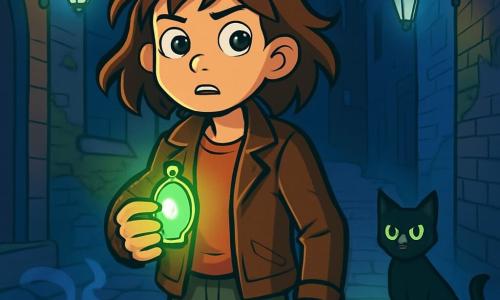
Not hanging. Not resting on a table. It hovered an inch above the floor like it had forgotten gravity was a rule. Its glass was cloudy, and inside it was a seed the size of Mina's thumb, pulsing with soft gold light.
“The Lanternseed,” Sable said.
Mina stepped closer. The light didn't hurt her eyes. It felt like summer afternoons and warm tea.
Lark crouched beside it. “So we just… take it somewhere safe?”
Sable shook her head. “If we remove it, the market loses its anchor. The surveyors might still flatten it. We need to shield it.”
Mina stared at the lantern. She could feel the city's hum through the floor. “How?”
Sable's fingers tightened on the strap of her box. “We plant a decoy above. Something measurable. Something they'll think is the source.”
Lark's eyebrows rose. “Like—”
“Like a fake heart,” Mina said, understanding snapping into place like a puzzle piece. “If they trap the fake, the real one stays hidden.”
Sable nodded. “Exactly.”
Mina looked around the chamber. “What can we use?”
Lark rummaged through a crate and pulled out a cracked snow globe with a tiny plastic palace inside. He shook it, and the glitter inside swirled like a blizzard. “This?”
Sable grimaced. “Too obvious.”
Mina's gaze fell on a stack of old market tokens—small brass coins used once for a neighborhood festival. She picked one up. It was worn smooth by hands. It had the spiral stamped on one side.
“This,” Mina said slowly. “These have been in people's pockets. They've been wished on without anyone saying it.”
Sable's eyes softened. “Good.”
Lark leaned closer. “But how do we turn a coin into a decoy heart?”
Sable opened the wooden box again. Inside, beneath the Map of Breath, lay a small jar of dark soil and a bundle of thin twigs tied with green thread.
“From the oldest trees,” she said. “They protect Brightroot. They'll lend us a little defense if we're careful.”
Mina held the token tight. “Then let's be careful.”
Above them, faint footsteps sounded on the street outside—too early for delivery drivers. Too measured.
Sable's head snapped up. “They're here.”
Mina's heart leapt. “Now?”
Lark's grin returned, thinner this time. “Told you they didn't wait for dawn.”
Sable's voice turned crisp. “We don't have long. Mina—your hands. You started the door. You'll start this.”
Mina's palms felt suddenly too small for the task. But she nodded.
Autonomy, she told herself. Find your own courage.
She knelt beside the hovering lantern and held the brass token above it.
The Lanternseed's light brightened, as if it recognized another piece of itself.
“Tell it what to do,” Sable murmured. “Not a spell. A promise.”
Mina breathed in.
“Protect the market,” she whispered. “Protect the people who keep it alive. And if someone comes with cages and paperwork… let them catch the wrong thing.”
The token warmed. The air smelled briefly of oranges and rain.
The light shifted—thin threads of gold reaching up, wrapping the brass coin in a gentle glow until it looked like a tiny sun caught in metal.
Sable placed the twigs around it in a small spiral. She poured a pinch of soil, which fell upward for a moment before settling as if it had changed its mind.
The token's glow steadied. It became… heavier in the air. More important.
“A decoy heart,” Lark whispered, impressed.
Sable lifted it carefully. “Now we have to put it somewhere they'll find.”
Footsteps above again. A metallic tap, like a cane on concrete, though Mina knew it wasn't a cane.
Sable closed the jar and snapped the box shut. “Up. Quiet.”
They slipped back through the iron door. Mina pressed her palm to the spiral again, and it closed with a soft click.
They hurried up the stairs.
At the service entrance, Sable paused. “We need a place in the market that looks like a ‘structural irregularity.'”
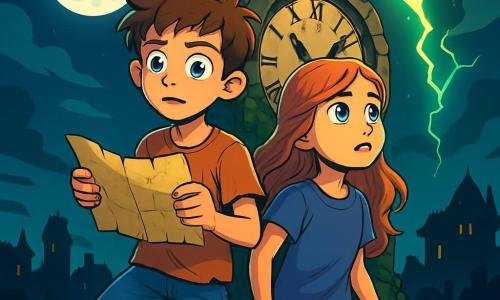
Lark pointed toward the old clock tower at the market's center, where a broken clock face stared at the night with blind numbers. “There. Everybody thinks it's just decorative.”
Sable nodded. “Perfect. Mina—can you climb?”
Mina swallowed. The tower was tall. The ladder inside would be narrow. But her feet were already moving.
“I can,” she said. “I will.”
Chapter 5: Surveyors in Gray
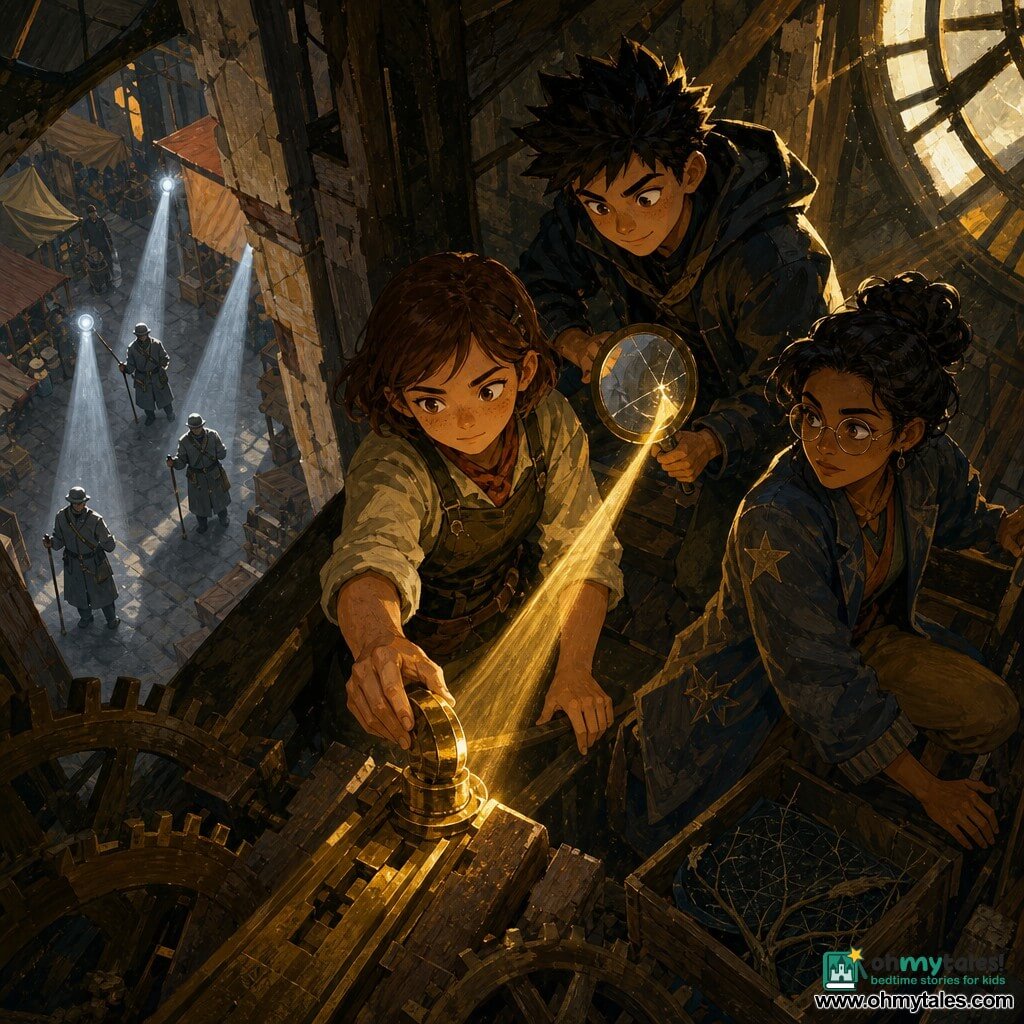
The clock tower's interior smelled of dust and old pennies. Mina climbed first, her flashlight off, her fingers finding rungs by feel. Lark followed. Sable climbed last, the decoy token wrapped in a cloth.
Halfway up, Mina heard voices below—calm, flat voices that made her think of printers and polished shoes.
“…permission to access substructure…”
“…irregular energy readings…”
“…recommend immediate containment…”
Mina froze.
Lark whispered, “Keep going.”
Mina forced her hands to move again. Her arms trembled, but each rung was a decision. Up. Up. Up.
They reached a small platform near the top where the broken clock mechanism sat like a sleeping machine. Through gaps in the wooden slats, Mina could see the market floor below, dark and empty.
Except it wasn't empty anymore.
Three figures walked between the stalls. They wore light-gray coats that didn't wrinkle, and their shoes made no sound. Each one held a long metal rod with a glass bulb at the end. The bulbs glowed faintly, searching.
Surveyors.
They moved like they were afraid of catching dirt.
One stopped beneath the clock tower and raised the rod. The bulb brightened, pointing upward like a finger.
“It's sensing the Lanternseed,” Mina whispered, horrified.
Sable's voice was steady but urgent. “Then we're on time.”
She unfolded the cloth and revealed the brass token, still glowing softly. In the dim tower, it looked like a captured sunrise.
Sable handed it to Mina. “You place it. You started this.”
Mina's throat tightened. “Where?”
Sable pointed to the old clock mechanism. “Inside the housing. Make it look like a forgotten part. The surveyors will interpret it as a ‘source.'”
Mina crawled across the platform, careful not to creak the boards. She found a hollow space behind the gears, where an old bell once might have hung. She slid the token inside.
For a moment, nothing happened.
Then the clock tower trembled gently, like a dog shaking off water. The air thickened with the smell of rust and thyme. The token's glow spread outward in thin lines, threading through the wooden slats, sinking into the tower's bones.
Below, the surveyor's bulb flared bright white.
“There,” one of them said. “Confirmed. Concentrated anomaly.”
Mina's stomach sank and lifted at the same time. They'd taken the bait.
The second surveyor reached into their coat and pulled out a square metal frame, like a picture frame with no picture. They held it up toward the clock tower.
The frame hummed.
Mina felt the hum in her teeth.
Sable's eyes narrowed. “Containment grid.”
Lark whispered, “If they cage the tower, what happens?”
Sable's answer was quiet. “They'll drain the decoy. The tower will go dull. Maybe crack. But the market's true heart will stay hidden.”
Mina watched as the frame's edges lit up, drawing invisible lines in the air. The surveyors moved in practiced formation, building an unseen box around the tower.
Mina gripped the railing until her knuckles hurt. Part of her wanted to scream at them, to throw something, to make them look up and see that the market wasn't a math problem.
But Sable had said: quietly, cleverly.
Autonomy wasn't just acting. It was choosing how.
The third surveyor paused, head tilting, as if listening.
Mina held her breath.
The surveyor lifted their rod again, scanning. The bulb swept past the tower, then lowered toward the ground—as if it was about to detect the real Lanternseed below.
“No,” Mina breathed.
She couldn't let them find it. She couldn't rely on Sable or Lark to decide everything. This was her neighborhood, her market. She had to do something herself.
Mina glanced around the platform. She saw an old rope, frayed but still strong, used once to raise the bell. She saw a bucket of dusty tools. She saw a cracked mirror, left by some long-ago repair worker.
An idea sparked—quick, bright, risky.
“Mina?” Lark whispered, reading her face. “What are you thinking?”
“Distraction,” Mina mouthed.
Before Sable could stop her, Mina grabbed the cracked mirror and angled it through the slats toward the surveyors below. The decoy token's glow, already threaded through the tower, caught the mirror's surface.
Light leapt.
It scattered into a dozen thin beams, bouncing off metal stall frames and glass jars left behind. The market floor filled with moving lines of gold, like sunlight through water.
The surveyors froze.
Their bulbs flickered, confused. Their rods swung, trying to make sense of too many reflections.
“Signal fracture,” one said sharply.
Mina's heart hammered. She kept moving the mirror, sending the beams skittering. The market looked briefly enchanted, alive with dancing light.
Lark stared at her, wide-eyed. “That's… actually brilliant.”
Sable's mouth tightened, but her eyes held something like pride. “Careful, Mina. Don't let them trace it back to you.”
Below, the surveyors turned their attention fully to the clock tower. The containment frame hummed louder.
Then, with a sound like a book slamming shut, the invisible grid snapped into place. The clock tower shuddered, and the token's glow dimmed—pulled inward, trapped.
The surveyors lowered their rods.
“Anomaly contained,” one said.
They turned and walked away, their coats barely stirring the air.
Mina sagged, her arms shaking from holding the mirror. When the last gray coat vanished into the shadows, she let the mirror drop into the bucket with a soft clink.
Silence flooded back in.
Lark exhaled. “We did it.”
Sable didn't relax yet. She watched the market below, listening. “We delayed them. But the market will feel the loss of that light. We need to make sure the real heart stays strong.”
Mina swallowed. “How?”
Sable looked at her. “By feeding it.”
Mina blinked. “With what?”
Sable's gaze flicked toward Brightroot Quarter, toward the old trees. “With choice. With attention. With people doing for themselves what they usually expect others to do.”
Mina understood, slowly.
“The market needs us,” she said. Not a dramatic us—the whole neighborhood. Ordinary people, showing up.
Sable nodded. “Tomorrow, when the sun rises, you start.”
Mina stared down at the sleeping stalls. The surveyors had left, but their grayness lingered like a bad taste.
Mina straightened. “Okay,” she said. “I will.”
Chapter 6: The Morning the Market Woke
Mina slipped back into her apartment before sunrise. She washed her hands, hid her sneakers, and crawled into bed just as her grandmother's kettle whistled in the kitchen.
In the morning, her grandmother looked at Mina over her glasses.
“You have rooftop dust in your hair,” she said calmly, as if commenting on the weather.
Mina froze with her spoon halfway to her mouth. “I—”
Her grandmother stirred her tea. “When I was your age, I climbed a factory chimney to rescue a pigeon with a string around its leg.” She sipped. “Did you do something brave or something foolish?”
Mina's cheeks burned. She decided honesty was a better lantern than excuses.
“Both,” she admitted. “The market is in danger.”
Her grandmother's eyes sharpened. “Tell me.”
So Mina did, carefully. She didn't share everything—Sable had a right to her secrets—but she told enough: surveyors, redevelopment, the feeling that something important was being erased.
Her grandmother listened without interrupting. When Mina finished, she set her cup down.
“Autonomy,” her grandmother said, “is not doing everything alone. It is choosing your actions and owning them.” She pointed her spoon at Mina. “What will you do now?”
Mina's heart steadied. “I'm going to make people show up for the market. Today.”
Her grandmother nodded once. “Good. Eat your breakfast. Then go.”
By nine o'clock, Mina was at Brightroot Market with a stack of handwritten signs. Her handwriting was messy but determined.
SHOW UP FOR THE MARKET.
BUY ONE THING.
SAY ONE KIND WORD.
REMEMBER THIS PLACE.
She taped them to pillars, to stall doors, to the bakery window. Mr. Jasso saw her and raised an eyebrow.
“New job?” he asked.
“New problem,” Mina said. “We need the market to be… alive. Loudly.”
Mr. Jasso read the sign. His mouth went soft. “Ah.”
He reached under his counter and pulled out a basket of flowers brighter than usual—marigolds, violets, sunflowers like small suns. He set them at the front of his stall.
“Two coins for a smile,” he announced to the empty aisle, voice carrying. “And today the secret is: this market is family.”
Other vendors began arriving. The ribbon woman nodded at Mina like she'd been expecting her. The baker hung a tray of cinnamon rolls in the window so the smell rolled out into the street like an invitation. Someone played music from a battered speaker—an upbeat tune that made feet want to tap.
People came.
At first, only a few: a mother with a stroller, an elderly man leaning on a cane, a teen buying dumplings before work. Mina greeted them all.
“Please,” she said, “buy something small. Talk to someone. Make it real.”
Some people laughed. Some looked confused. But they bought apples. They bought herbs. They bought a single ribbon.
Then the neighborhood began to do what neighborhoods do when they remember they can.
A group of kids from Mina's school showed up, filming on their phones. “Is this like… a community thing?” one asked.
“It's a keep-our-market thing,” Mina said.
They nodded, serious in the way preteens can be when they decide something matters. They bought pastries and posted videos. The market's name trended locally, not because it was fancy, but because it was loved.
Mina watched the air above the market, half-expecting gray coats to return. Instead, she noticed something else: the old trees at the edge of Brightroot Quarter seemed greener, their leaves catching light even when clouds moved in front of the sun.
At noon, Sable appeared, not on a roof this time, but at street level, blending in with the crowd. She bought a cup of tea and leaned toward Mina.
“You did it,” she murmured.
Mina frowned. “Did what?”
Sable nodded toward the market. It had become loud with life—laughter, bargaining, music, the clatter of crates. The clock tower stood in the center, looking ordinary. Too ordinary. Mina felt a pang for the decoy token trapped inside.
“The Lanternseed is feeding,” Sable said. “Not from spells. From choice. From people deciding this place matters and acting on it.”
Mina's throat tightened. “Will it be enough?”
Sable's gaze lifted to the elevated train line. “The surveyors prefer emptiness. It's easier to measure. They'll come back and find… this.” She let the word hang like a bright banner.
Lark popped up beside them, holding a skewer of grilled mushrooms. “Also, I convinced the noodle stall to offer a ‘Roof Patrol Special.' It's just noodles with extra chili, but it sounds heroic.”
Mina laughed, surprised by it. The laugh felt like another small flame.
A shadow fell across the market for a moment as a train passed overhead. The rumble was loud, but the market's noise rose to meet it, a chorus of ordinary people refusing to be quiet.
Mina looked around and felt something she hadn't expected.
Not just relief.
Power.
Not the kind from wands or lightning. The kind from deciding and doing.
Her grandmother's words returned: not alone. But choosing.
Mina stepped onto a low crate near the center aisle.
“Hey!” she called.
A few heads turned. Then more. The music lowered.
Mina's voice shook at first, then steadied. “This market isn't just shops. It's where we meet. It's where we share recipes and arguments and jokes. If anyone tells you it's ‘irregular'—” she made air quotes “—tell them it's human. Tell them it's ours.”
There was a beat of silence.
Then Mr. Jasso raised a flower like a flag. “Hear, hear!”
Laughter rippled. Someone clapped. Then another. The applause spread through the aisles, not thunderous, but persistent—like rain that refuses to stop.
Mina stepped down, cheeks hot, heart full.
Sable watched her with an expression Mina couldn't read entirely.
“You're a good lantern,” Sable said softly. “You don't burn people. You guide them.”
Mina swallowed. “So the market will be safe?”
Sable glanced up at the clock tower, then toward the old trees beyond. “Safe is a big word. But it will be protected. And it will be defended by something stronger than locks.”
“What?”
Sable looked at Mina. “A girl who looks up. And chooses.”
That evening, as the sun sank and streetlights blinked on, Mina walked home through Brightroot's central green. The oldest chestnut rustled its leaves.
She paused by its trunk and touched the spiral carved into the bark.
“Thank you,” she whispered, not sure who she was thanking—the tree, the city, the Lanternseed, herself.
Above, rooftops stretched like a dark ocean. Somewhere up there, Lark would be running, laughing into the wind. Somewhere, Sable would be watching the Map of Breath, making sure the gray stain didn't spread.
Mina headed home, her steps light.
She had saved the market, not by waiting for an adult with a plan, but by making a plan and inviting the world to help carry it.
Autonomy, she realized, wasn't a lonely thing.
It was a bright thing.
And the city, huge and mysterious, seemed to glow a little warmer around her as she walked.