Chapter 1: The Alleyway Signs
Mira liked the quiet parts of loud places.
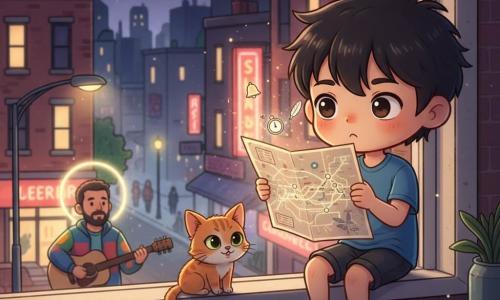
In Marrowgate City, quiet didn't mean empty. It meant a hidden strip between two noodle shops where the steam drifted like ghosts with good manners. It meant the back stairwell of the subway station where someone had painted a tiny moon on the third step. It meant the old alleys—venelles, her grandmother called them—slim as bookmarks, their bricks inked with symbols from the mid-1800s: loops like question marks, stars with too many points, ladders leading nowhere.
Most people hurried past those signs. They were busy with screens and schedules and the kind of tired that stuck to their shoulders.
Mira noticed because she collected noticing. She was twelve, small for her age, with hair that refused to choose a direction and a calm that made teachers assume she was listening even when she was thinking about something else entirely.
This morning, she walked home from school with a tote bag full of library books and one mission she couldn't exactly write down in a planner.
The city was getting… sleepy.
Not in the normal way, like after a long day. Marrowgate's sleepiness had a different flavor, like a candle trying to burn under a glass. Streetlights blinked slower. Buses arrived with a sigh. Even pigeons looked as if they were considering naps on the wing.
Grandma Nessa called it “the Big Fatigue.”
“It's a city illness,” Grandma had said the night before, stirring soup in a pot that smelled like garlic and thunderstorms. “It creeps in when we stop giving. When we take more than we return.”
Mira had frowned into her spoon. “Give what? Money?”
“Kindness. Time. Attention,” Grandma said. “Little gifts. Big ones. And sometimes… magic.”
Mira didn't argue. In Marrowgate, magic was as normal as parking tickets. You could buy enchanted shoelaces at the corner kiosk, the ones that tied themselves if you whispered please. The mayor's office had a whole department for minor miracles—mostly dealing with weather that felt too dramatic.
“But why me?” Mira asked.
Grandma tapped Mira's forehead with a floury finger. “Because you can be still long enough to hear the city's bones creak.”
That sounded unpleasant, but Grandma's eyes were serious.
“Follow the signs,” Grandma added. “The old ones. They were painted when the city was young and brave. They point to places that remember how to wake it up.”
So Mira was following the signs.
And today, the ladder symbol on the brick wall—three rungs, a dot at the top—seemed darker than usual, as if it had been redrawn overnight.
She turned into the narrow alley it pointed toward.
A gust of cool air slipped through, smelling faintly of popcorn.
Halfway down, a poster was pasted on the wall. It was an old-fashioned movie poster, the kind with dramatic shadows and glamorous faces.
Except the face blinked.
Mira stopped, her sneakers squeaking on damp stone. The painted woman on the poster turned her head slightly, as if listening.
Then the woman's painted eyes met Mira's real ones.
The woman smiled, slow and secretive, and lifted a painted hand to knock on the inside of the paper.
Mira's heart didn't slam like it might have for someone braver or jumpier. It just… tightened, like a drawstring.
“Okay,” Mira whispered. “That's new.”
The poster's mouth moved soundlessly, shaping a word Mira couldn't hear. Behind the woman, the background of the poster flickered: a velvet curtain, a slice of stage light, the hint of seats.
And the name at the bottom, in peeling gold letters, read:
THE LUMEN PICTURE HOUSE.
Mira had heard of it. Everyone had, in the way people “hear” about a closed building they never visit. It sat three streets from the river, boarded up and blamed for rats, graffiti, and teen dares.
But Mira was looking at an invitation that could blink.
The poster winked.
Mira adjusted the strap of her tote bag and made a choice that felt less like courage and more like responsibility.
“I'm coming,” she told the paper.
The painted woman's smile widened, as if Mira had just tipped her a coin.
Chapter 2: The Cinema That Still Breathes
The Lumen Picture House looked like a sleeping giant in the afternoon light.
Its marquee was cracked, but the bulbs along the edges still glimmered now and then, like a heartbeat remembering itself. The front doors were chained, and a “CLOSED BY ORDER” sign hung at an angle, as if it had lost faith in being obeyed.
Mira stood across the street, letting the city move around her—rollerskates clacking, a delivery drone buzzing, someone laughing too loudly into a headset. The normal sounds made the cinema's silence feel thicker.
A boy on a scooter zipped past, slowed, and called, “Don't go in there! My cousin swears it eats phones!”
Mira raised a hand in a small wave. “Thanks.”
The boy blinked, not sure how to respond to politeness, and scooted away.
Mira circled the building, following the old signs on nearby walls. Someone had painted over most of them with bright murals—dragons wrapped around streetlamps, koi fish swimming across bricks—but the nineteenth-century symbols still peeked through like old handwriting beneath a new letter.
Behind the cinema, a side door waited under a metal awning. The door wasn't chained.
It was only… sulking.
A brass handle shaped like a lion's head hung low, its mouth open around a ring.
Mira put her hand on the ring. It felt warm, like someone had just held it.
“Hello,” she said, because Grandma always greeted places that had feelings.
The lion's eyes, tiny in the metal, seemed to sharpen.
Mira pulled.
The door opened with a sigh that sounded suspiciously relieved.
Inside, dust hung in the air like lazy glitter. The lobby was dim, but not dead. Posters lined the walls: heroes with capes, detectives with hats, monsters with charming grins. Their images shifted subtly, like fish beneath ice.
One poster showed a pirate ship. The painted ocean rolled. A tiny painted sailor waved desperately.
Mira waved back, just once, to be polite. The sailor looked stunned by being acknowledged and stopped waving, as if embarrassed.
At the ticket booth, a small bell sat on the counter. Mira didn't touch it. Something about the bell felt like it would start a chain reaction.
Instead, she cleared her throat.
“Excuse me?”
A voice floated down from somewhere above, dusty but amused. “We don't get many ‘excuse me' these days.”
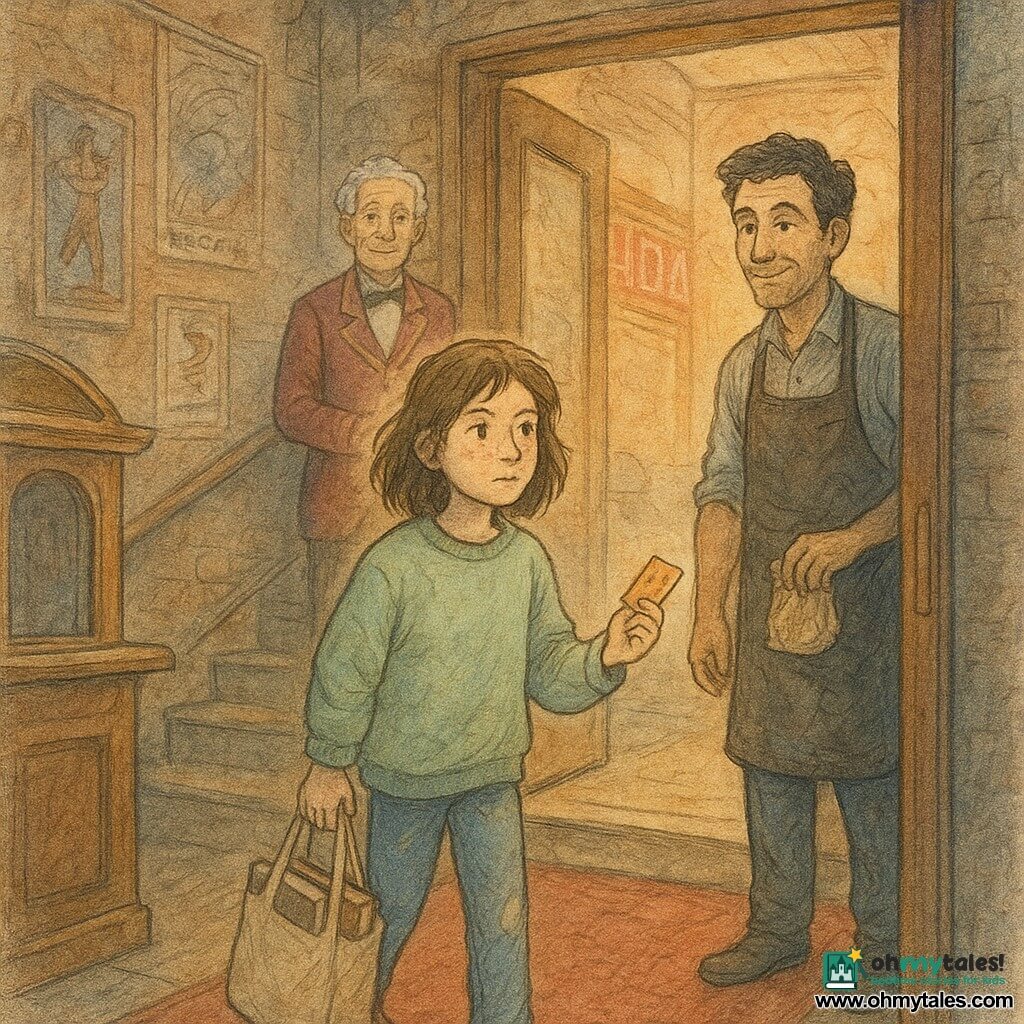
A figure appeared at the top of the staircase—an older man in a burgundy usher's jacket with gold piping. His hair was the color of movie popcorn when it's been left under the warmer too long. He leaned on the railing like it was a cane.
He looked at Mira with the careful attention adults usually saved for expensive items.
“Well,” he said. “A calm one. That's rare.”
Mira didn't move. “Are you… the owner?”
He chuckled. “Owner. Keeper. Doorman. Apologizer. My name is Mr. Penn. And you are?”
“Mira.”
“Mira,” he repeated, tasting the word. “You've come because the posters called you.”
Mira swallowed. “Yes.”
Mr. Penn descended the stairs, his shoes making soft shushing noises on the carpet. Up close, Mira noticed the jacket wasn't just burgundy. It was threaded with faint light, like someone had stitched dusk into it.
“You should know,” Mr. Penn said, “the Lumen doesn't call people for fun. It calls when Marrowgate gets tired enough to forget its own stories.”
Mira's tote bag felt heavier. “Grandma says the city has the Big Fatigue.”
Mr. Penn's face tightened, like a curtain drawn. “Then it's worse than I hoped.”
He gestured toward the hallway leading into the auditorium. “Come. We'll see what the posters have been doing.”
As Mira walked, the posters watched. Some looked curious. One looked jealous. Another looked like it wanted to offer her a sandwich but wasn't sure how.
The auditorium doors were open a crack, spilling a thin line of light onto the carpet.
Mr. Penn pushed them wider.
The inside smelled like velvet and old laughter. Rows of seats crouched in the dimness. The screen—enormous, pale—glowed softly, as if it had swallowed moonlight.
And on the screen, the city appeared.
Not a movie version. The real Marrowgate, seen from above, like a map made of moving lights.
Mira leaned forward. “How is that—”
“Don't ask it to explain,” Mr. Penn warned gently. “It gets shy.”
On the screen-map, a dark haze spread over certain neighborhoods. Streetlights dimmed as it passed. People slowed. Even the river's shimmer dulled, like silver left in a drawer.
Mira felt cold. “That's the fatigue.”
Mr. Penn nodded. “Yes. And it's feeding.”
“On what?” Mira asked.
Mr. Penn didn't answer immediately. Instead, he reached into his pocket and pulled out a small, worn ticket stub. He held it out.
“Take this,” he said. “It's a pass to the places between posters. The Lumen can show you what's missing.”
Mira took the stub. It prickled her fingertips, like static before a storm.
“And why would it show me?” she asked.
Mr. Penn's eyes softened. “Because you're the kind of person who notices when someone's hands are empty.”
Mira looked at the screen again. The dark haze thickened near the river.
Her calm was still there, but now it had a purpose, like a flashlight beam.
“What do I do?” she asked.
Mr. Penn pointed to a poster near the front row: a bright drawing of a street corner with a cart selling roasted chestnuts. The smoke curled in cheerful spirals.
The chestnut seller on the poster lifted his head, and his painted eyes met Mira's.
He tipped his hat.
Then he stepped forward—
—and pushed his way out of the paper.
Chapter 3: The Man from the Poster
The chestnut seller landed on the carpet with a soft thump, as if he'd jumped off a low step.
He was about the size of a real person, but a little too crisp around the edges, like an illustration that hadn't decided to become fully three-dimensional. His apron was stained with charcoal and sugar. His smile looked practiced, but his eyes looked tired.
He held a small paper bag of chestnuts.
“Fresh,” he announced, as if this was completely ordinary. Then he glanced at Mira and frowned. “Oh. You're a child.”
Mira lifted her chin. “I'm twelve.”
The seller squinted, as though checking a label only he could see. “Old enough for responsibility, young enough for hope. Annoying combination.”
Mr. Penn cleared his throat. “Mira, this is Corvin. He's… well. He's from one of the Lumen's brighter reels.”
Corvin bowed slightly. “At your service, and at your mercy.”
Mira didn't take the chestnuts yet. “Why are you out here?”
Corvin's smile slipped. “Because the posters are leaking.”
Mr. Penn looked sharply at him. “Leaking?”
Corvin held out his palm. A few grains of glittering dust drifted down, like golden sand. It sank into the carpet and vanished.
“Stories,” Corvin said quietly. “We're made of them. The Lumen keeps them in frames. But the city's fatigue is pulling at the edges. People forget to tell stories. Forget to share them. Forget to listen. So the stories start to unravel.”
Mira imagined the city like a blanket with threads being tugged loose. “And if they unravel…”
Corvin shrugged, too casually. “Then I become ink. Mr. Penn becomes a coat hanging in a dark hallway. The posters become paper again. The city becomes gray and heavy and—” He searched for a word. “Hungry.”
Mr. Penn's jaw tightened. “The Big Fatigue eats generosity first. Then it eats imagination. And when those go, everything else follows.”
Mira looked at the glowing map-screen. The dark haze had reached a hospital block. The lights there flickered, exhausted.
“What stops it?” Mira asked.
Mr. Penn gave her a tired smile. “The thing it can't digest.”
“Which is?” Mira pressed.
Corvin tossed a chestnut into his own mouth and crunched it thoughtfully. “Giving,” he said, mouth full. “The real kind. Not the ‘look at me, I'm wonderful' kind.”
Mira took the bag of chestnuts at last. The paper was warm.
“Okay,” she said. “So we… give the city something?”
Mr. Penn stepped to the aisle and pointed at the screen. “See those old signs in the alleys? They were painted by the Lantern Guild in 1849. They believed cities are living creatures. They fed Marrowgate with small acts—bread, blankets, songs, a hand on a shoulder. The signs marked the routes.”
Mira remembered the ladder symbol, the star, the loops. “Grandma said follow them.”
“She's right,” Mr. Penn said. “But the routes lead to places people avoid now. Places where tiredness gathers. If you bring generosity there—real, steady, no applause—then the fatigue weakens.”
Corvin leaned in, lowering his voice as if the seats might gossip. “And we must do it fast. Before the Lumen is nothing but dust and regrets.”
Mira stared at the ticket stub in her hand. It looked ordinary, but the numbers shimmered when she tilted it.
“What does this do?” she asked.
Mr. Penn took a small flashlight from his pocket and clicked it on. The beam hit the ticket stub, and the stub projected a thin line of light across the air, pointing toward the exit.
“A guide,” Mr. Penn said. “It will point you to the next sign when you're close. But it won't do the walking. That's your job.”
Mira's calm wrapped around her like a coat. She could feel fear underneath it, sure, but also something sturdier: the sense of being needed.
She tucked the ticket into her pocket. “Corvin comes with me?”
Corvin lifted the bag of chestnuts like a salute. “I insist. I'm very good at street corners.”
Mr. Penn opened the auditorium doors and the lobby brightened, as if relieved to have a plan.
“One more thing,” Mr. Penn said. He reached behind the ticket booth and pulled out a small tin lunchbox decorated with faded stickers—stars, a subway map, a cartoon owl.
He handed it to Mira. “This is a generosity kit.”
Mira opened it. Inside were simple things: a spool of thread, a tiny jar of honey, a clean handkerchief, a subway card with three rides left, and a folded note that read: FOR WHEN YOU DON'T KNOW WHAT TO SAY.
Mira looked up. “This is… oddly specific.”
Mr. Penn's eyes twinkled. “Cities are made of specifics.”
Corvin hooked his thumbs into his apron straps. “Where to first?”
Mira stepped outside with them, into the city's noise and wind.
The ticket stub warmed in her pocket and pulled, like a gentle tug on her sleeve, toward the river.
Chapter 4: Under the Bridge of Sleep
The river district should have smelled like wet stone and fried food and the sharp green scent of algae.
Today it smelled like nothing.
That was the first warning.
The second was the bridge.
Under Bridge Nine, people sat in a line against the wall, wrapped in blankets and silence. They weren't asleep, exactly. Their eyes were open, but unfocused, as if they were watching a movie playing behind their foreheads.
A busker's guitar lay on the ground beside him. His fingers hovered above the strings, frozen mid-song.
Mira's ticket stub burned slightly, pointing at a faded symbol painted under the bridge: a circle with a dot inside, like an eye that refused to blink.
Corvin's cheerful street-corner voice vanished. “This is bad,” he murmured.
Mira approached slowly. She crouched near the busker, careful not to startle him. “Hi,” she said softly. “Are you okay?”
No response.
She glanced at Corvin. “They're… stuck.”
Corvin nodded. “The fatigue makes people forget to move toward each other. It tells them, ‘Save your energy. Keep what you have.'”
Mira opened Mr. Penn's lunchbox. The handkerchief was folded neatly, like it had been waiting for this moment.
She looked at the busker's guitar. The strings were dusty. His lips were cracked.
Mira poured a little honey into the lid of the jar and held it near his mouth.
“Here,” she said. “Just a bit.”
His eyes flickered. His tongue touched the honey. He swallowed.
Color returned to his cheeks as if someone had turned the saturation up by one notch.
He blinked hard. “What—” His voice was raspy. “Did I… fall asleep standing?”
“You got tired,” Mira said. “It happens.”
The busker's gaze drifted to the people lined up under the bridge. His expression changed from confusion to alarm. “Oh no. Not again.”
“Again?” Mira asked.
He rubbed his face. “It comes some days. Like fog in your head. You sit down and suddenly it's been hours.” He looked at Mira properly then, noticing her size, her calm, the lunchbox. “Who are you?”
“Mira.”
Corvin stepped forward with a flourish that tried to hide his unease. “We're doing a neighborhood wake-up.”
The busker stared. “Is that… a job?”
“It is today,” Mira said.
She opened the lunchbox again and took out the subway card. She pressed it into the busker's hand.
“Go get water,” she told him. “And if you can, bring some back. For everyone.”
His fingers closed around the card as if it were a lifeline. “But this costs—”
“It's a gift,” Mira said. “No strings.”
The busker swallowed, eyes shining. “Okay. Okay. I can do that.”
He stood, wobbly but moving, and hurried toward the station.
Mira turned to the line of silent people. They watched her without really seeing.
She sat on the cold ground beside an elderly woman whose hands were empty and trembling. Mira unfolded the clean handkerchief and wrapped it gently around the woman's fingers, warming them.
The woman's eyes focused for a second. “My gloves,” she whispered. “I lost my gloves.”
“This will do for now,” Mira said.
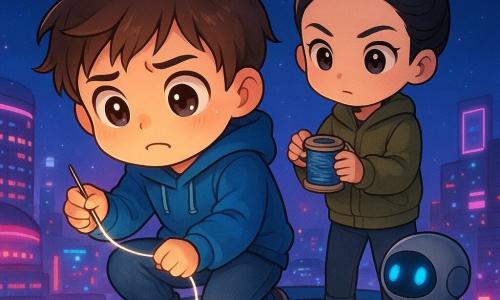
Corvin crouched by a teenager with a torn sneaker. He pulled the spool of thread from the lunchbox and started stitching the sole back on with surprising skill.
“You can sew?” Mira asked.
“I sell chestnuts,” Corvin said. “You think I don't fix my own life when it tears?”
Mira almost smiled. “Fair.”
She opened the folded note: FOR WHEN YOU DON'T KNOW WHAT TO SAY.
Inside, in neat handwriting, it read: SIT DOWN. BE THERE. LET THEM BORROW YOUR STEADY.
Mira felt something loosen inside her chest.
So she did.
She sat with people. She offered honey to dry mouths, tied a scarf, shared chestnuts until the bag was light. Corvin patched shoes and told mild jokes that didn't demand laughter but invited it.
A little girl—maybe six—blinked awake and stared at Mira's tote bag. “Books?” she asked as if the word were a memory.
“Yeah,” Mira said. “Want to hold one?”
The girl hugged a thick paperback like it was a heating pad.
As Mira gave, the air under the bridge shifted. The blank smell lifted. The river's dampness returned, along with the city's usual mix of odors: hot dog carts, car exhaust, wet concrete.
On the map in Mira's mind—because she could feel it even without the Lumen screen—the dark haze thinned under Bridge Nine. Not gone, but fraying.
The busker returned with bottles of water, breathless and determined. He began handing them out, speaking to each person like they mattered.
“Hey,” he told Mira quietly as she stood. “Why are you doing this?”
Mira hesitated. How did you explain a city's bones creaking?
“Because I live here,” she said. “And I don't want it to fall asleep forever.”
The busker nodded, like that was enough. “Then I'll help. I can play. Music wakes people up.”
“Good,” Mira said. “Play something generous.”
He laughed, surprised at the phrase, and began to strum. The first notes were shaky. Then they steadied, brightening the dim space under the bridge.
Mira's ticket stub warmed again.
It pointed toward the next sign.
Chapter 5: The Living Posters' Secret
Night settled over Marrowgate in layers—headlights, neon, window-glow, moonlight caught in puddles.
Mira and Corvin returned to the Lumen Picture House. The side door opened faster this time, like it recognized them.
Inside, the lobby felt less dusty. The posters moved more, as if the air had more room.
Mr. Penn waited by the ticket booth. He looked up quickly. “You've done one route.”
Mira nodded. “Under Bridge Nine. People were stuck. We… helped.”
Mr. Penn's shoulders relaxed a fraction. “The screen has brightened there.”
Corvin dropped into a worn velvet chair like a man whose knees had seen too much. “We gave away chestnuts,” he said mournfully. “Tragic.”
Mira rolled her eyes, but she was smiling.
Mr. Penn gestured toward the auditorium. “Come. There's something you need to see.”
On the glowing screen-map, the haze was still spreading, but unevenly now. A thin bright line cut through it near the bridge.
Mira stared. “That's us.”
“That's generosity,” Mr. Penn corrected. “You're just the hands.”
Mira liked that. It took the pressure off her chest.
Mr. Penn lifted a remote—an old, heavy thing with too many buttons—and clicked. The map zoomed in on the cinema itself. The Lumen sat like a dark tooth in the city's jaw.
“The fatigue is circling here,” Mr. Penn said. “It knows the Lumen is a lantern.”
“Then why not just… shine brighter?” Mira asked.
Mr. Penn's expression went complicated. “Because lanterns run on fuel.”
“What fuel?” Mira asked, already suspecting the answer.
Mr. Penn looked at the rows of empty seats. “An audience. Not just bodies. Attention. People who come, sit, and allow themselves to be moved. These days, everyone's attention is scattered into a thousand tiny pieces. The Lumen is starving.”
Corvin tossed a chestnut into the air and caught it. “We're a cinema with no watchers. A story with no ears.”
Mira felt a sting of guilt she hadn't earned. She'd been too busy with homework and after-school clubs and keeping her grandma company. She hadn't thought about feeding a cinema.
“How do we feed it?” she asked.
Mr. Penn looked at her as if she'd just opened a door. “You invite people. Not with tricks. With gifts.”
Mira blinked. “Like… free tickets?”
Mr. Penn nodded slowly. “And something else. Something that makes them feel safe enough to sit in the dark together.”
Mira remembered the line of people under the bridge—how sitting beside them had mattered. How being there was a kind of light.
She checked the lunchbox. The honey jar was half-empty. The handkerchief was gone. The thread was nearly finished. The subway card was gone too.
It looked like a box of missing things.
“We need more supplies,” Mira said.
Mr. Penn smiled. “The city provides, when you ask politely.”
Corvin stood. “I know a place,” he said. “There's an old corner shop that sells generosity like it's groceries.”
Mira raised an eyebrow. “That's not a real thing.”
Corvin's grin turned crooked. “In Marrowgate, it absolutely is.”
They left the Lumen and followed the alleys, guided by old symbols that glimmered faintly in the streetlight: a star, a spiral, an open hand.
The corner shop sat between a laundromat and a phone repair store. Its sign read: MRS. DALCA'S SUNDRIES.
Inside, the shelves held ordinary items—soap, batteries, canned soup—mixed with stranger things: jars of captured laughter (labeled DO NOT SHAKE), candles that smelled like your best memory, and a basket of socks that whispered compliments.
Behind the counter stood Mrs. Dalca herself, a sharp-eyed woman with silver hair piled like a storm cloud.
She looked Mira up and down. “You've been giving,” she said. It wasn't a question.
Mira nodded. “The city's tired.”
Mrs. Dalca snorted. “The city's always tired. That's what cities do. But this? This is the kind of tired that makes people stop holding doors.”
Corvin leaned on the counter. “We need supplies. For wake-ups. And for an audience.”
Mrs. Dalca's eyes softened, just barely. She reached under the counter and pulled out a paper bag, heavy with something. She set it in front of Mira.
“Bread rolls,” she said. “Still warm. Take them.”
Mira started to protest. “How much—”
Mrs. Dalca waved a hand. “Don't insult me with math. You can pay later by doing something kind for someone who annoys you.”
Corvin coughed, looking suddenly interested in a display of mints.
Mrs. Dalca added a bundle of small items: tea bags, adhesive bandages, a pack of cheap headphones, and a stack of plain tickets with a blank space at the top.
“The Lumen's tickets,” Mrs. Dalca said. “They've been waiting. They need names. Not fancy. Honest.”
Mira held the tickets like they were delicate. “How do I choose who gets them?”
Mrs. Dalca pointed at Mira's chest. “You'll know. Generosity isn't a lottery. It's attention with a spine.”
On the way out, Mira noticed a jar by the door labeled: SPARE CHANGE / SPARE COURAGE.
Mira didn't have coins. She reached into her pocket and pulled out her favorite pencil—a mechanical one with a tiny comet charm. She hesitated, then dropped it into the jar.
Corvin glanced at her. “That was a good pencil.”
Mira nodded. “I know.”
Outside, the city wind felt a little less heavy.
Mira's ticket stub tugged again, pointing not to another bridge this time, but toward the Lumen itself.
Corvin's grin returned. “Time to lure an audience,” he said. “With bread and bravery.”
Chapter 6: The Night the City Watched
Mira didn't make posters.
The city already had too many things shouting for attention. She did something quieter.
She walked routes the old signs suggested—down venelles, across plazas, through a market that stayed open late because it liked gossip—and she gave tickets to people who looked like they had forgotten they deserved a break.
A nurse leaving the hospital, shoulders slumped, got two tickets and a bread roll. Mira said, “For you and someone you like.”
The nurse blinked as if she'd been spoken to in a language she'd missed. “I… like my brother,” she said, surprised.
“Bring him,” Mira replied.
A delivery driver with rain in his eyelashes got a ticket and a cup of tea in a paper cup, because Mrs. Dalca had insisted Mira take a thermos too. Mira said, “Sit down for an hour. The city won't collapse without you.”
The driver laughed, then looked like he might cry, then laughed again. “It might,” he said.
“Not tonight,” Mira told him.
A woman in a business suit, staring into her phone like it was a trap, got a ticket and the cheap headphones. Mira said, “For music that isn't an emergency.”
The woman stared at Mira as if she'd just offered her oxygen. “Why?” she whispered.
Mira thought of Grandma's soup. The creaking bones of the city. The posters blinking in the alley.
“Because you're here,” Mira said. “And that's enough.”
By the time the moon was high, Mira's stack of blank tickets was mostly gone.
At the Lumen's side door, Mr. Penn waited, looking as nervous as an old man can look while still trying to be dignified.
Corvin stood beside him, now wearing a slightly cleaner apron, as if he believed in first impressions.
“You did it,” Mr. Penn breathed when Mira arrived.
“I invited,” Mira corrected. “They still have to come.”
Mr. Penn opened the door wider. Warm light spilled out, and for a moment it looked like the cinema was smiling.
They waited.
Marrowgate's night noises carried on: distant sirens, laughter, a train rattling like a long metallic snake.
Then footsteps.
The nurse arrived first, with a tired young man in a hoodie—her brother. They stopped at the door uncertainly.
Mr. Penn stepped forward and bowed. “Welcome,” he said, voice deep and gentle. “Thank you for coming.”
The brother blinked. “This place is real?”
“Very,” Corvin said, handing them each a bread roll like an offering.
Then the delivery driver appeared, wiping his hands on his pants. Then the woman with the phone, her face suspicious but curious. Then two teenagers who had been dared to come but had decided, halfway here, to bring their little sister too.
More people followed, drawn by something that wasn't advertisement but invitation.
Mira stood to one side, watching them enter. Each person looked a little lighter as they stepped through the doorway, like they were leaving a heavy backpack outside.
In the lobby, the posters stirred like leaves in a breeze. Characters leaned forward, eager.
Mr. Penn rang the bell at the booth. The sound was soft, not alarming—more like the first note of a song.
“Please,” he said to the crowd, “choose a seat. Let yourselves be held by the dark for a while.”
They filed into the auditorium. Mira went in last.
The screen glowed brighter the moment the first person sat down.
Corvin stood near the front like an usher who had once been a myth. Mr. Penn hovered by the aisle, hands clasped, as if in prayer.
Mira took a seat near the middle. Her tote bag rested at her feet, books like steady bricks.
The lights dimmed.
On the screen, the map of Marrowgate appeared again. The haze writhed, sensing attention turning against it.
Then the screen shifted.
A movie began—not one Mira recognized. It showed Marrowgate as it used to be: horse-drawn carts, gas lamps, the first painted signs blooming on brick. The Lantern Guild walked the alleys with buckets of paint and pockets full of bread, leaving symbols and kindness like breadcrumbs.
The audience leaned in.
Mira felt it: their attention, gathered like hands around a flame.
The haze on the screen-map shrank back from the bright neighborhoods. It still clung, but thinner, like smoke with no fire.
From the side aisle, a whispery sound rose. Mira turned.
One of the posters had started to tear at the edges, the paper fraying. A painted monster inside looked scared.
Mira stood and walked quietly over. Corvin followed, frowning.
“The fatigue is tugging,” he murmured. “It wants the stories.”
Mira looked at the tearing poster. The monster inside wasn't frightening up close—more like a confused dog with too many teeth.
Mira reached into her pocket and found her last chestnut, forgotten. She held it against the poster, right where the tear was worst.
It was a silly thing. A snack. A tiny gift.
But it was hers.
“Here,” she whispered. “For you. So you don't fall apart.”
The paper stilled.
The tear stitched itself closed, as if the poster had taken a breath and decided to keep going.
Corvin stared at Mira, unusually quiet. “You're… absurd,” he said, but his voice sounded fond.
Mira returned to her seat.
On-screen, the Lantern Guild painted an open hand symbol on a wall. The symbol glowed, and in the auditorium, Mira's chest warmed as if someone had lit a small lamp inside her ribs.
The audience laughed at a joke in the film, a simple one. The laughter rose, honest and unguarded.
The Lumen drank it in.
The map returned briefly, and the dark haze pulled back another step.
Not defeated, not yet.
But weakened.
Mira's eyes stung with tiredness of her own. The good kind, like after carrying something heavy for someone you love.
She thought: We're feeding the city.
And the city, finally, was learning to eat the right things.
Chapter 7: Morning, with Extra Light
By morning, Marrowgate sounded like itself again.
Not perfect. Cities weren't pets you could fix with a pat on the head. But the streetlights blinked normally, buses stopped sighing like drama students, and the river reflected the sky with a little pride.
Mira walked the venelles on her way home, the old signs faintly visible beneath newer paint. She could swear they looked sharper, like they'd been traced over with invisible care.
Her pocket felt strange without her favorite pencil. She missed the comet charm more than she expected.
At the corner near Mrs. Dalca's shop, Mira saw the jar again: SPARE CHANGE / SPARE COURAGE.
Something glinted inside.
She leaned closer.
It was her pencil.
The comet charm spun gently, as if caught in a tiny orbit.
Mira opened her mouth, startled.
Mrs. Dalca appeared in the doorway, arms crossed. “Don't look at me like that,” she said. “The city returns what you give. Sometimes. When it feels like it.”
Mira picked up the pencil carefully. “Thank you.”
Mrs. Dalca sniffed. “Thank the people who came to the Lumen. Thank yourself for asking. Now go. I've got customers who don't know they need soup.”
Mira walked on, pencil in hand, until she reached Grandma Nessa's apartment above the bakery.
Inside, Grandma was at the table, drinking tea and reading the paper as if the paper hadn't been wrong about everything for years.
She looked up as Mira entered and studied her face.
“Well?” Grandma asked.
Mira hung her tote bag on the chair. “The city watched a movie.”
Grandma's eyebrows rose. “That's all?”
Mira smiled, small but real. “We gave people bread and time and somewhere to sit in the dark together. It helped.”
Grandma nodded slowly, satisfied. “Generosity is a kind of electricity,” she said. “It keeps things running.”
Mira leaned her head on Grandma's shoulder for a moment, letting herself be twelve, letting the calm unwind.
“What happens now?” Mira asked.
Grandma kissed the top of her head. “Now you keep noticing,” she said. “You keep giving when you can. You don't have to save the city alone. You just have to remind it how to breathe.”
Mira thought of the posters, blinking in their frames. Of Corvin mending shoes with thread like it was magic. Of the busker's music under the bridge, turning stale air into something you could taste.
Outside, the city roared and hummed and clattered, alive and hungry in its ordinary way.
And somewhere, three streets from the river, a cinema that should have been silent was breathing light through its cracked marquee, waiting patiently for the next person who needed a story—and for the next small, steady gift that would keep the whole bright machine turning.